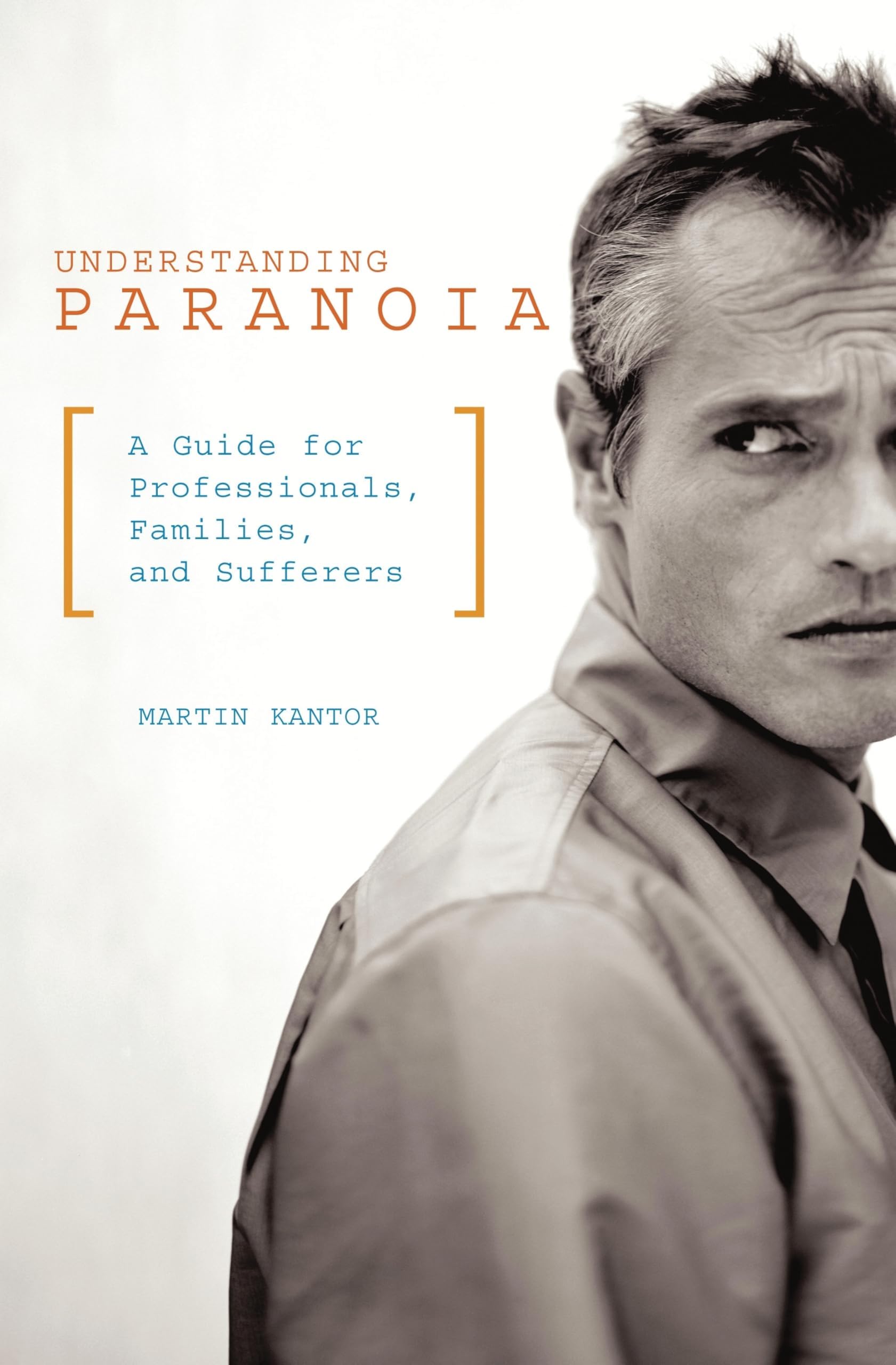
Understanding Paranoia: A Guide for Professionals, Families, and Sufferers
Product ID: 12558407
Buy anything from 5,000+ international stores. One checkout price. No surprise fees. Join 2M+ shoppers on Desertcart.
Desertcart purchases this item on your behalf and handles shipping, customs, and support to Vanuatu.
In this insightful book, the author vividly takes the reader inside the minds of people who are paranoid: experiencing delusions of persecution ranging from thinking others are out to get them to falsely believing they have physical illness. Kantor also explains to us other facets of the Paranoid Personality, including suspiciousness, hypersensitivity, extreme vigilance, simmering anger, and a tendency to blame others for and absolve oneself of almost everything. How does such paranoia affect one's life? Whether one is a paranoiac wanting to recover from the emotional disorder, or a person looking for the best way to deal with a paranoid husband, wife, friend, boss, or acquaintance, this book offers understanding and guidance. As Kantor explains, the term paranoid should not be used as a hurtful epithet. Paranoid individuals are no more or less evil than persons with any other emotional disorder, or for that matter, persons with a physical disorder. Paranoia is a disorder of the mind, not a flaw of character, says Kantor. Paranoid individuals are not invariably social misfits. They are found in all walks of life and in all professions, suffering from this disorder that distorts behavior and affects those with whom they come in contact, often in devastating ways. Politicians who write attack ads, spouses who beat or kill their partners, people in road or supermarket rage incidents are all among the possibly paranoid, as are students who perpetrate violence at their schools and fired employees who wreak violence at their former workplaces. Recognizing and treating paranoid behaviors can prevent or reduce antisocial activity and violence against individuals and society. Review: Very Thorough - This is written by an experienced professional and employs a lot of language that only those in the field would understand, but is also spot-on when identifying the characteristics of those with paranoid delusional disorder. A highly intelligent family member of ours has suffered from this mental illness for years, although to my knowledge she has never been formerly diagnosed even with decades of therapy, and has only grown worse with time. The author affirmed many of the things our family has witnessed and endured through decades of manipulation and emotional abuse by this loved one. Alas, as the doctor states, the road to treatment and recovery for this affliction is long, particularly because the patient's belief in her delusions is so strong that anyone who tries to point out why her accusations and suspicions are wrong, is immediately attacked and rejected, even her own psychiatrists. Still, it was a comfort to hear a voice educated on the subject affirm the reality of what we have experienced first-hand. Review: so interesting! - This book told me so much to help me understand a loved one, that in my entire life I could not make sense of! It described him to a t, and made me realize he can't help how he thinks. It also told me how you can get along with a paranoid individual in your life, when you have to. (NOT easy!) I recommend it to anyone who suspects their loved one is paranoid. It will make your life simpler.
| Best Sellers Rank | #1,281,069 in Books ( See Top 100 in Books ) #579 in Medical Mental Illness #1,524 in Popular Psychology Personality Study #1,991 in Medical Psychology Pathologies |
| Customer Reviews | 4.2 out of 5 stars 60 Reviews |
S**N
Very Thorough
This is written by an experienced professional and employs a lot of language that only those in the field would understand, but is also spot-on when identifying the characteristics of those with paranoid delusional disorder. A highly intelligent family member of ours has suffered from this mental illness for years, although to my knowledge she has never been formerly diagnosed even with decades of therapy, and has only grown worse with time. The author affirmed many of the things our family has witnessed and endured through decades of manipulation and emotional abuse by this loved one. Alas, as the doctor states, the road to treatment and recovery for this affliction is long, particularly because the patient's belief in her delusions is so strong that anyone who tries to point out why her accusations and suspicions are wrong, is immediately attacked and rejected, even her own psychiatrists. Still, it was a comfort to hear a voice educated on the subject affirm the reality of what we have experienced first-hand.
M**E
so interesting!
This book told me so much to help me understand a loved one, that in my entire life I could not make sense of! It described him to a t, and made me realize he can't help how he thinks. It also told me how you can get along with a paranoid individual in your life, when you have to. (NOT easy!) I recommend it to anyone who suspects their loved one is paranoid. It will make your life simpler.
A**R
Good Advice for families who deal with paranoia disorders
Dr. Kantor presents information in a logical order, in language that is easy to understand. Practical advice for family members dealing with a loved one with true paranoia disorders. Explaining the difference in paranoia, bipolar, and schizophrenia gives the reader a deeper understanding that allows one to communicate better with the loved one and theirs doctors.
W**W
Tough Love
This book makes for interesting reading but is not ideal for sufferers for several reasons. A large portion of the book is devoted to reckognizing the symptoms of paranoia in others. Second and more importantly, the book unconsciouly villainizes paranoids, the last thing a sufferer needs. What Kantor fails to observe is that sensitive people prone to emmotional extremes of a hostile nature, i.e. extreme anger, are also frequently excessively compassionate individuals. Reading about one defect after another, without the slightest mention of any redemptive qualities can be demoralizing and unconstructive.
P**N
Five Stars
Bought it to understand an ex. And this book hit the mark. He's textbook.
C**Y
Not for sufferers, somewhat offensive.
I was really hoping this would be a good book and help me out but sadly it is not. The author makes a lot of assumptions and the whole book seems more like his unqualified speculation rather than based on medical evidence. He is forthcoming and tells the reader that the people he calls "patients" were not his actual patients but rather stories he heard from other doctors or even read in the paper. However as the book goes on it becomes apparent that he, himself, is fabricating this anecdotes out of thin air just to prove some point. Even worse is that the points he makes are often stereotypes and could be offensive to sufferers or their families. Worse yet is that their is only one short chapter dedicated to sufferers and another to families. The rest of the book is largely geared toward professionals who can make all the judgment they want from the safety of their arm-chairs. To be more specific, the author casts a wide net of people he deems "paranoid" but at the same time makes these broad generalizations that can't possibly hold true. For example, he categorizes as paranoid everyone from the jealous husband, to war veterans, political activists, computer hackers, to kids who shoot up their schools, employees who go "postal", and of course the guy who thinks the government implanted a microchip into his penis. Now these groups wouldn't be so bad if he didn't also make these broad generalizations. Early on in the book he claims all paranoid individuals are angry people. Then he goes on to say all paranoid people hate themselves. Later he calls them all sadomasochists. With these complex psychological conditions like paranoia, I don't think you can make generalization like that. The fact that the author attempts to makes the whole book seem unprofessional not to mention somewhat offensive. To the books credit it does have a few pointers that might be helpful to some people with mild forms of paranoia. Its just that the book skims over these parts in a short chapter so it is not as helpful as it can be. All in all I don't feel like I learned anything significant by reading this book and I am not sure it helped me at all. Might be useful for a mental health professional but that is about it.
R**Y
Three Stars
Interesting perspectives.
D**M
Five Stars
Good discussion on paranoia and its causes
R**N
a must read if you suffer with paranoia
I have been suffering from paranoid and suspicious thoughts for a few years now. The first time was brought about by a huge amount of stress in my life including going bankrupt. Since then when I suffer a large amount of stress (which lets be honest we all do from time to time while trying to achieve more) I get paranoia attacks which can last for weeks if not months. As I'm sure you will know sometimes the paranoid thoughts are all consuming and prevent you from carrying out normal everyday duties and responsibilities. This was incorrectly diagnosed as depression by my GP and treated with anti depressants which actually made me more agitated and heightened the feelings of the paranoia. After read this book I stopped taking the pills and having tried to implement the strategies I am coping much better. I'm not saying this book is a quick fix but will really help you understand why you get the thoughts and ways in which you can manage them. Really helped me and I would highly recommend to anyone who suffers with paranoia.
A**R
Waste of money
I found this book to be full of contradictions. It was hard to find this author believable. I am someone looking for real answers for a family member with a paranoia-like mental illness. This author comes across as having all the answers which is not believable since there is still so much unknown about mental illness. A more humble approach would be better. Admitting you don't have all the answers is okay even from a medical professional. This was what I found to be true in Alistair Munro's book on Delusional Disorder, which albeit somewhat hard to read at times, gives a very well balanced and thoroughly researched view on this disorder. This book by Martin Kantor seems like a money grab.
S**T
Illuminating!!
From the small amount I have had time to read, it looks like it will be a very interesting, informative and helpful book.
Trustpilot
2 months ago
1 month ago