We remain fully operational. Our teams are working around the clock to ensure your deliveries continue safely.

DOWNLOAD THE APP


Copyright © 2025 Desertcart Holdings Limited
DOWNLOAD THE APP




Buy anything from 5,000+ international stores. One checkout price. No surprise fees. Join 2M+ shoppers on Desertcart.
Desertcart purchases this item on your behalf and handles shipping, customs, and support to Vanuatu.
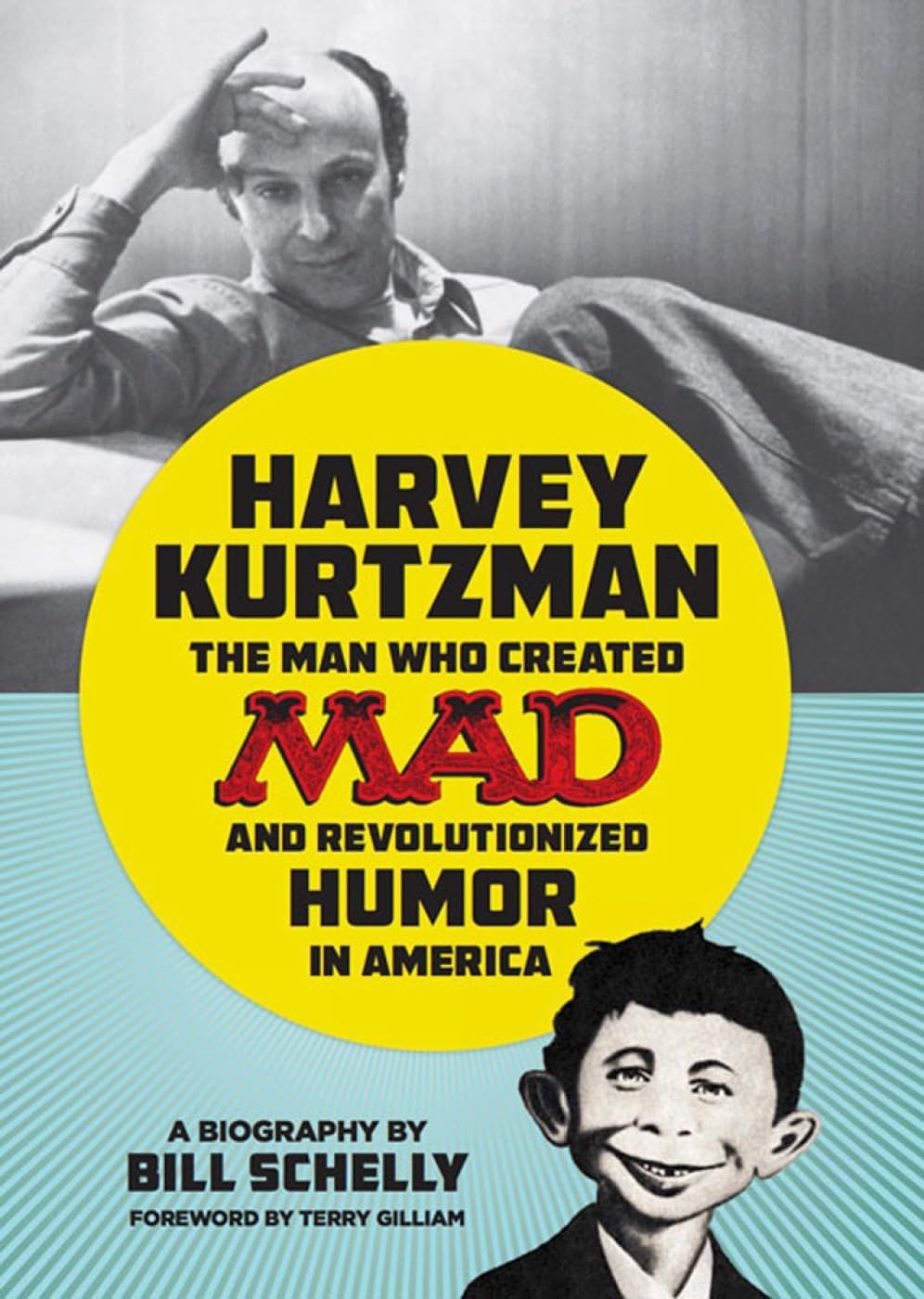
desertcart.com: Harvey Kurtzman: The Man Who Created MAD and Revolutionized Humor in America: 9781606997611: Schelly, Bill: Books Review: My Harvey Kurtzman - Harvey Kurtzman was a cultural icon of the 1950s and ‘60s. But he wasn’t as famous as other heroes of those times, so many details about his life are not widely known. That gap has been filled by Bill Schelly’s biography: Harvey Kurtzman—The Man Who Created Mad and Revolutionized Humor in America. The title is not overstated. Kurtzman may not have been photographed by Avedon, but he finally has the full-dress biography he deserves. It’s all here—Kurtzman’s Brooklyn-Bronx upbringing, his time in New York City’s High School of Music & Art (M&A), his apprenticeship in the downtown comic book mill and his hooking up with young publisher William M. Gaines. Kurtzman evolved from being a great war comics writer who painstakingly created vellum roughs from which M&A classmates like Will Elder would draw and ink the final strips, into the force behind Mad. And there he found his true calling—as a satirist. Mad “questioned the status quo at a time of social conformity, creating a mindset that grew into what came to be called the ‘counterculture,’” Schelly writes. It also inspired a generation of high school goof-offs like me. I read The Bedside Mad paperback at age 13, and was reduced to hysterics by the opening strip: Outer Sanctum, the story of Heap, a living garbage pile created by a mad scientist. I didn’t even realize it was a parody of an old radio show. As funny as the meticulously crafted story were Will Elder’s sight gags—like a man in his underwear fleeing in terror from Heap while his pants run in the opposite direction—and the repetitive Yiddishisms. Enflamed, I procured four of the five other Mad paperbacks then out: The Mad Reader, Mad Strikes Back, Inside Mad and Utterly Mad—and consumed them in one Saturday evening. Put together by Kurtzman, these collections contained all the great parodies of ‘50s culture: Starchie, Mickey Rodent, Superduperman, Hah Noon and, “What’s My Shine,” in which the Army-McCarthy hearings are restaged as a TV quiz show (the five-o’clock-shadowed McCarthy keeps saying, “point of order"). “Mad” was the perfect word to describe this stuff. “What were you on?” a fan asked Kurtzman. What I didn’t realize—until reading the increasingly tepid magazine itself—was that Kurtzman was no longer there. Don't ask how I even knew who Kurtzman was given that Gaines took his name off the paperbacks. Around that time, though, I stumbled onto Harvey Kurtzman’s Jungle Book, a darker, more adult paperback that he drew himself without assistance from Elder or anyone. The highlight was the Organization Male In the Gray Flannel Executive Suite, a parody of publishing in which an old man is pushed out of his job inking the black boxes in crossword puzzles by a younger man. (Kurtzman had actually worked on crossword puzzles, Schelly reports). Schelly tells the story of Mad and its wild success, its conversion from comic book to magazine at Kurtzman’s insistence and Kurtzman’s bitter split with Gaines over money and control. We follow Kurtzman through creation of the Jungle Book, (for which he was paid only $1,500), the frustrating Trump, Humbug and Help magazine years, and finally his seeming success with Little Annie Fanny, the lavish color comic strip he did in Playboy with Will Elder. In one Little Annie Fanny episode, Daddy Bigbucks kicks a legless man on a cart the day after Christmas to whom he had given money the day before. “Are there no prisons, are there no workhouses, the treadmill and the poor law—are they in full vigor?” he demands. The man’s legs appear as his cart falls over. None of this was easy. Kurtzman is portrayed as a suburban middle-class family man who struggled financially throughout his career and had to put up with micro-management from Hugh Hefner. Sometimes he was brought to tears. Such is the life of a freelancer. Schelly moves on to Kurtzman’s teaching career at the School of Visual Arts, and his later bouts with Parkinson’s and cancer. And he records the admiration of younger comic artists like Robert Crumb and Art Spiegelman, some of whom Kurtzman used in Help magazine. Schelly also lets us in on Kurtzman’s other work that is not so well known—like his version of The Christmas Carol, a planned book that would have been an early graphic novel. And there is at least one big scoop here—that the FBI investigated Kurtzman at J. Edgar Hoover’s behest, although it determined that he was no threat to the United States. It’s all well-sourced, with a full index, and very readable. Of course, I have a couple of quibbles. For one, I don’t agree with Schelly (or Kurtzman) that Jungle Book is less than Kutzman’s peak: I believe it is an underground masterpiece. But we all have our favorites in Kurtzman’s immense body of work. Bill Schelly has provided a solid biography. And this Kurtzman admirer thanks him heartily. Review: A Furshlugginer's Review. - Harvey was the "Cat's Meow" for cartoonists. He would hand back your art work to you with a tracing paper overlay peppered with notes and corrections. Then he would disappear and return shortly to hand you a frosted mug of beer. The point is Harvey wanted you to get it right but he wanted you to feel good about it. Mr. Schelly writes about Kurtzman the Cartoonist, Kurtzman the Editor and Kurtzman the Icon. Kurtzman is revealed as sui generis Mensch whose generosity to cartoonists big and small reminds me of the current John Stewart's disposition toward his fellow comedians. I think Mr. Schelly's biography of Mr. Kurtzman is TERRIFIC, but admittedly, I'm partial. Mr. Stout has written ( on this site) an eloquent and objective rational for reading this book. In yet another review in the Seattle Weekly News Mark Rahner says " if you could shine a black light on American Pop Culture, you'd see Harvey Kurtzman's DNA splattered all over it. And not just a little bit. A lot. Everywhere." I can only add to this that Mr. Schelly , an artist and Comics Scholar has really done his homework. His book is exhaustively researched. I particularly enjoyed reading Mr. Schelly's descriptions of Kurtzman's drawing process. Mr. Schelly also seems to have interviewed everyone from Robert Crumb to Gloria Steinem, from Bill Stout to Terry Gilliam. These interviews bring Kurtzman to life on the page. I think this book would make a GREAT movie. The question is whose hand would the producers cast to facsimilate the lyrical , animated, and elegant drawings of a modern master?
| ASIN | 1606997610 |
| Best Sellers Rank | #1,598,529 in Books ( See Top 100 in Books ) #651 in Fantagraphics Comics & Graphic Novels #998 in Biographies & History Graphic Novels #5,138 in Art History (Books) |
| Customer Reviews | 4.9 4.9 out of 5 stars (53) |
| Dimensions | 6 x 2 x 9 inches |
| Edition | Illustrated |
| ISBN-10 | 9781606997611 |
| ISBN-13 | 978-1606997611 |
| Item Weight | 2.88 pounds |
| Language | English |
| Print length | 464 pages |
| Publication date | April 28, 2015 |
| Publisher | Fantagraphics Books |
| Reading age | 16 years and up |
R**Z
My Harvey Kurtzman
Harvey Kurtzman was a cultural icon of the 1950s and ‘60s. But he wasn’t as famous as other heroes of those times, so many details about his life are not widely known. That gap has been filled by Bill Schelly’s biography: Harvey Kurtzman—The Man Who Created Mad and Revolutionized Humor in America. The title is not overstated. Kurtzman may not have been photographed by Avedon, but he finally has the full-dress biography he deserves. It’s all here—Kurtzman’s Brooklyn-Bronx upbringing, his time in New York City’s High School of Music & Art (M&A), his apprenticeship in the downtown comic book mill and his hooking up with young publisher William M. Gaines. Kurtzman evolved from being a great war comics writer who painstakingly created vellum roughs from which M&A classmates like Will Elder would draw and ink the final strips, into the force behind Mad. And there he found his true calling—as a satirist. Mad “questioned the status quo at a time of social conformity, creating a mindset that grew into what came to be called the ‘counterculture,’” Schelly writes. It also inspired a generation of high school goof-offs like me. I read The Bedside Mad paperback at age 13, and was reduced to hysterics by the opening strip: Outer Sanctum, the story of Heap, a living garbage pile created by a mad scientist. I didn’t even realize it was a parody of an old radio show. As funny as the meticulously crafted story were Will Elder’s sight gags—like a man in his underwear fleeing in terror from Heap while his pants run in the opposite direction—and the repetitive Yiddishisms. Enflamed, I procured four of the five other Mad paperbacks then out: The Mad Reader, Mad Strikes Back, Inside Mad and Utterly Mad—and consumed them in one Saturday evening. Put together by Kurtzman, these collections contained all the great parodies of ‘50s culture: Starchie, Mickey Rodent, Superduperman, Hah Noon and, “What’s My Shine,” in which the Army-McCarthy hearings are restaged as a TV quiz show (the five-o’clock-shadowed McCarthy keeps saying, “point of order"). “Mad” was the perfect word to describe this stuff. “What were you on?” a fan asked Kurtzman. What I didn’t realize—until reading the increasingly tepid magazine itself—was that Kurtzman was no longer there. Don't ask how I even knew who Kurtzman was given that Gaines took his name off the paperbacks. Around that time, though, I stumbled onto Harvey Kurtzman’s Jungle Book, a darker, more adult paperback that he drew himself without assistance from Elder or anyone. The highlight was the Organization Male In the Gray Flannel Executive Suite, a parody of publishing in which an old man is pushed out of his job inking the black boxes in crossword puzzles by a younger man. (Kurtzman had actually worked on crossword puzzles, Schelly reports). Schelly tells the story of Mad and its wild success, its conversion from comic book to magazine at Kurtzman’s insistence and Kurtzman’s bitter split with Gaines over money and control. We follow Kurtzman through creation of the Jungle Book, (for which he was paid only $1,500), the frustrating Trump, Humbug and Help magazine years, and finally his seeming success with Little Annie Fanny, the lavish color comic strip he did in Playboy with Will Elder. In one Little Annie Fanny episode, Daddy Bigbucks kicks a legless man on a cart the day after Christmas to whom he had given money the day before. “Are there no prisons, are there no workhouses, the treadmill and the poor law—are they in full vigor?” he demands. The man’s legs appear as his cart falls over. None of this was easy. Kurtzman is portrayed as a suburban middle-class family man who struggled financially throughout his career and had to put up with micro-management from Hugh Hefner. Sometimes he was brought to tears. Such is the life of a freelancer. Schelly moves on to Kurtzman’s teaching career at the School of Visual Arts, and his later bouts with Parkinson’s and cancer. And he records the admiration of younger comic artists like Robert Crumb and Art Spiegelman, some of whom Kurtzman used in Help magazine. Schelly also lets us in on Kurtzman’s other work that is not so well known—like his version of The Christmas Carol, a planned book that would have been an early graphic novel. And there is at least one big scoop here—that the FBI investigated Kurtzman at J. Edgar Hoover’s behest, although it determined that he was no threat to the United States. It’s all well-sourced, with a full index, and very readable. Of course, I have a couple of quibbles. For one, I don’t agree with Schelly (or Kurtzman) that Jungle Book is less than Kutzman’s peak: I believe it is an underground masterpiece. But we all have our favorites in Kurtzman’s immense body of work. Bill Schelly has provided a solid biography. And this Kurtzman admirer thanks him heartily.
K**O
A Furshlugginer's Review.
Harvey was the "Cat's Meow" for cartoonists. He would hand back your art work to you with a tracing paper overlay peppered with notes and corrections. Then he would disappear and return shortly to hand you a frosted mug of beer. The point is Harvey wanted you to get it right but he wanted you to feel good about it. Mr. Schelly writes about Kurtzman the Cartoonist, Kurtzman the Editor and Kurtzman the Icon. Kurtzman is revealed as sui generis Mensch whose generosity to cartoonists big and small reminds me of the current John Stewart's disposition toward his fellow comedians. I think Mr. Schelly's biography of Mr. Kurtzman is TERRIFIC, but admittedly, I'm partial. Mr. Stout has written ( on this site) an eloquent and objective rational for reading this book. In yet another review in the Seattle Weekly News Mark Rahner says " if you could shine a black light on American Pop Culture, you'd see Harvey Kurtzman's DNA splattered all over it. And not just a little bit. A lot. Everywhere." I can only add to this that Mr. Schelly , an artist and Comics Scholar has really done his homework. His book is exhaustively researched. I particularly enjoyed reading Mr. Schelly's descriptions of Kurtzman's drawing process. Mr. Schelly also seems to have interviewed everyone from Robert Crumb to Gloria Steinem, from Bill Stout to Terry Gilliam. These interviews bring Kurtzman to life on the page. I think this book would make a GREAT movie. The question is whose hand would the producers cast to facsimilate the lyrical , animated, and elegant drawings of a modern master?
C**N
The definitive book on Kurtzman
Don't expect to much art in this book as it is mostly a biography. But in a time when most of books about comic artists are mostly pictures and no words or context, this book does an amazing job of telling the whole story of Harvey Kurtz an, with even the smallest anecdotes. His story is not only of interest to comic fans, but is a story plagued with hits and misses, with moments of briliance and obscurity and honestly, of good and bad decisions. I just couldn't stop reading this book to know more about this genius of American culture. Fantagraphics does an excellent job of preserving great comic history with this book.
B**M
A great book about a remarkable unique funny man
When I was young in the 50's I read my younger brothers copies of Mad. Then I went to art school - from 1956 to '60 where Mad was part of the visual upheave taking place - in the early 60's I had the good fortune to meet and work with the creative genius Harvey Kurtzman! Being in his company was FUN all the time as work got done. In Bill Schelly's book I learned so much more about this amazing man who's humor was totally original as he was in life. It's a wonderful book and I'm still enjoying it. Thank you Bill Schelly for honoring HARVEY KURTZMAN. I love learning more about Harvey. Anyone buying this book will love meeting Harvey and learning about his life.
P**N
I've had a quick look through the book and it's beautifully illustrated. I'm very interested in reading about this terribly under-rated American satirist who changed humour and a way of seeing the world differently forever. I was lucky enough to meet the film director, Terry Gilliam recently and we chatted briefly about Mr. Kurtzman as Mr. Gilliam started his professional career with Kurtzman. He has written a brilliant foreword for the book.
M**N
This is an excellent biography of Harvey Kurtzman, one of the great comics practitioners of the 20th century and a satirist who influenced generations. While I was familiar with Kurtzman's work and have read many interviews with him, this book still provided information about Kurtzman that was new to me. I was unaware of his family situation while growing up and had no idea that he was associated with Esquire magazine for years as a consultant. Bill Schelly is even-handed in his evaluation of Kurtzman, providing an excellent analysis of his work and his generosity to other artists while still talking about his personal contradictions and poor choices. Kurtzman's work continues to be in print decades after its creation thanks to Fantagraphics and Dark Horse. For those who are familiar with it, this book will be a rewarding experience. For those unfamiliar with Kurtzman's work, this book is an excellent argument for its importance and for seeking it out.
A**R
great book - kurtzman is a genius
D**E
Very good biography of one of the true greats in the comic field.
Trustpilot
2 weeks ago
1 month ago