
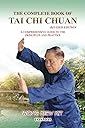
The Complete Book of Tai Chi Chuan: A Comprehensive Guide to the Principles and Practice- Revised Edition
Product ID: 142323733
Master the ancient Chinese art of Tai Chi Chuan with this informative guide. One of the most popular Chinese martial arts, Tai Chi Chuan is also one of the most effective stress relievers available. In China it is also used extensively for the prevention and treatment of illnesses, and its beneficial effects for health and fitness are now widely recognized in the West. The Complete Book of Tai Chi Chuan is a comprehensive and fascinating guide to the practical application and potential benefits of Tai Chi Chuan. Packed with step-by-step illustrations for practice at home, this tai chi guide covers everything you would want to know about this ancient art, including its benefits for mental, spiritual and emotional development. This tai chi book is both an ideal introductory guide and an invaluable reminder for those who have already taken classes. *Topics in The Complete Book of Tai Chi Chuan include: *Tai Chi Chuan as a Martial Art *The Concept of Yin-Yang and Tai Chi Chuan *The Historical Development of the Various Styles *Advice from the Great Masters *Techniques and Skills of Pushing Hands *Specific Techniques for Combat Situations *Taoism and Spiritual Development in Tai Chi Chuan *And many more Review: vastly informative, well written - I keep ordering more copies of this book because I inevitably give away my copies to friends. It's a great, broad introduction with lots of depth for long-time practitioners, too. The only feature I'm dubious about is the forms illustrated in the book (representing all the major tai ji chuan styles) are shortened a bit to make them easier to learn; that's hard to do from a book anyway, so I'd rather have a record of the complete forms as the master teachers practice them. That's a small issue, though, as they aptly introduce the differences between styles. The discussion of all aspects of ta chi is deep, illuminating, readable. Review: Incredibly valuable resource! - This is an excellent book. As a Shaolin martial arts practitioner I found this book easily informative both in theory and instruction. The author has written this in a way that grabs your attention, gives you the information you need to fully understand the concept and to practice it. I highly recommend!
| Best Sellers Rank | #248,868 in Kindle Store ( See Top 100 in Kindle Store ) #65 in Tai Chi & Qi Gong #79 in Martial Arts (Kindle Store) #85 in Martial Arts (Books) |
E**R
vastly informative, well written
I keep ordering more copies of this book because I inevitably give away my copies to friends. It's a great, broad introduction with lots of depth for long-time practitioners, too. The only feature I'm dubious about is the forms illustrated in the book (representing all the major tai ji chuan styles) are shortened a bit to make them easier to learn; that's hard to do from a book anyway, so I'd rather have a record of the complete forms as the master teachers practice them. That's a small issue, though, as they aptly introduce the differences between styles. The discussion of all aspects of ta chi is deep, illuminating, readable.
S**H
Incredibly valuable resource!
This is an excellent book. As a Shaolin martial arts practitioner I found this book easily informative both in theory and instruction. The author has written this in a way that grabs your attention, gives you the information you need to fully understand the concept and to practice it. I highly recommend!
T**R
Good Read, Authoritative, Genuine
Aside from WKK's typical need for a better editor with a more daring hand, this is a worthy addition to any Taiji practitioner's library. As for the one reviewer's comments about WKK's honest modesty on his Taiji lineage status, I would just add the following consideration: Taiji comes from Shaolin inasmuch as it was developed there much the same as all other Chinese martial arts can be said to have been developed at Shaolin Temple. So, to quip at his lack of a lineage in Taiji OUTSIDE of the supreme martial arts college throughout all of Buddhist China's history makes little sense to me. I have a Shaolin master and I know that he was trained in Taiji and his Taiji is very good and very particular, in fact. So to have had a good Shaolin master is to a large extent to have had a good Taiji master. Taiji is a major course of study within the Shaolin warrior monk's curriculum. So, to have actually had a Shaolin master teach you Taiji is a supreme bit of good fortune, indeed. WKK merely states that his Shaolin master was not of a distinguished Taiji lineage, which is not much of a detraction given that the master in question teaching WKK WAS a Shaolin master, which typically should by all reasonaing be better than a master of of Taiji that is removed completely from the Shaolin system for several generations. Also, WKK does not say that you should learn Taiji without an instructor, period. He says his book is a self-teaching device for those who are already under the instruction of a qualified teacher, or for someone who otherwise would have no instruction whatsoever. Though WKK obviously is well-versed in terminology and applications of Taiji, that is not the sole purpose of this book. He goes into historical background and explication of theory behind the techniques in Taiji combat and other areas. The areas on direct instruction on application seem pretty darned good, nontheless. Most Tai Chi instructors these days will be exceptional if they have familiarity in Tai Chi combat beyond the basics of elementary push hands. The bottom line is, yes of course you need an instructor if you can find one. He never contradicts this truth, he merely is providing good knowledge on Taiji for those who need it. Teachers invariably don't teach one-on-one exclusively, they teach a whole room full of students for about 2 hours or so. This book helps you to find out things you may never get the opportunity to even ask your sifu. If you can get past a few boring moralistic/sentimental-sounding sections here and there, and a charactistically dry presentation style overall, WKK is an extremely respectable resource on Taiji for most of us. He means well when he is boring, and he is informative and helpful most of the rest of the time. Most importantly, his information tends to be accurate, and is consistent with the Shaolin understanding of martial arts, which for most mainland Chinese experts is paramount mark of distinction.
G**W
As described
Very good reading and explanation
B**S
For any T'ai Chi practitioner
Whether you practice the Chen, Yang, Sun, Wu, or even Wudang forms, this book is for you. It is very detailed and easy to follow. Not only does it talk about each form, it discusses the philosophy and history of the art itself. It goes into Push Hands and the martial art aspect as well. Not into using T'ai Chi for self defense? It talks about the relaxation/healing powers as well. I think any martial artist needs to read this book. Many people do not understand what T'ai Chi is anymore: a martial art. Don't believe me? Look it up. Then read this book.
R**R
An excellent source of tai chi information
This book is an excellent source of information about tai chi, written by one of the foremost experts on tai chi. I don't know if this is his "best" book on tai chi because he has written so many good books on this subject, but I can say that it is one of his best.
M**E
Philosophy of Tai Chi
Great book that gives you the history, philosophy, and tai chi moves.
W**R
Pretty good
This book is a pretty good review of Tai Chi. I also purchased Yang Jwing-Ming's book "Tai Chi Chuan, Classical Yang Style" and I have enjoyed reading it much more. It gives a lot of background and insight behind Yang style Tai Chi and the different levels of achievment.
S**N
Amazing guide
Tremendous book! Most complete and well-written one i've read so far. Gives you amazing insights on the art of Tai chi chuan. Most-have companion when learning Tai chi (classes or DVD).
A**T
very good
very good
H**4
Un guide parfait
Un livre parfait comme une introduction en Tai chi même avant de commencer à pratiquer. Ecrit dans un langage claire et succinct, en se limitant à l'essentiel tout en restant compréhensible pour les lecteurs non-chinois. Un livre heureuse exception à l'heure où tout le monde écrit sur Tai chi en oubliant qu'il s'agit d'un art martial avant d'être détourner en gymnastique et chorégraphie fantasque.
J**S
Para iniciantes que queiram saber a história dos estilos de Tai Chi
Bem detalhado e com histórico rico sobre Tai Chi, as ilustrações dão ideia dos movimentos porém para iniciar a prática é necessário um professor.
D**N
A comprehensive and authorative reference in one book.
At last a book on Tai Chi Chuan that recognises and stresses IT IS A MARTIAL ART. Firstly, the author is critical of texts and common practise to hide or play down this aspect of Tai Chi. He also deals with practical combat applications and 'push hands' theory and techniques. Secondly, emphasis is particularly given to the fundamental importance of developing internal energy (chi/qi): in fact the author stresses throughout that it is the development of internal energy NOT strength that drives and develops proper Tai Chi Chuan practise. These two critical points really stand out; the author stresses that Tai Chi is just an 'elaborate dance' without them! An impressive text then from Grandmaster Wong Kiew Kit. Those who have read his other recent publications (i.e. Shaolin Kung Fu & Chi Kung) may find a good deal of overlap but I think this just stresses the inter-relationship and inter-dependence of internal (soft) and external (hard)systems, another point the author stresses throughout. The author's explanation of yin and yang is one of the clearest I have read! In fact the history, development and philosophy of Tai Chi Chuan and other internal systems is explained and is quite illuminating. The author also includes illuminating insights from past grandmasters. I found these plus his explanation of the difficulties in translating Chinese terms very useful and informative. There are numerous b/w illustrations: the ones illustrating stances and hand forms are very good but unless you have practised martial arts before the diagrams illustrating forms (sets) whilst fascinating are difficult to follow and you will need the expert instruction of a teacher. This book deals with the four/five major traditional styles of Tai Chi Chuan though I would have liked to have read references / explanation of other styles that have died out or are still practised today.
Trustpilot
2 weeks ago
1 month ago