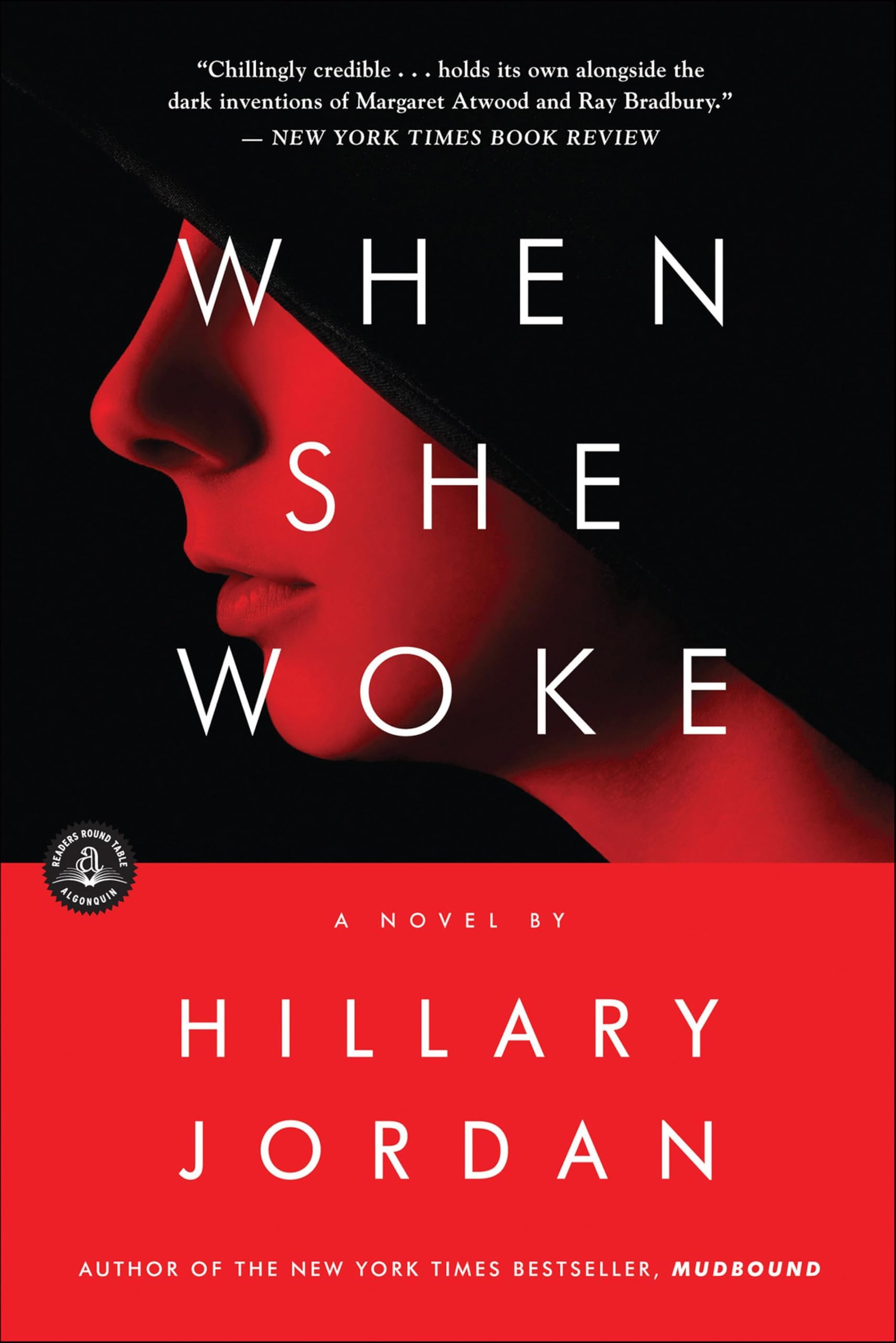
When She Woke: A Novel
Product ID: 146383962
Desertcart purchases this item on your behalf and handles shipping, customs, and support to Vanuatu.
When She Woke: A Novel - Kindle edition by Jordan, Hillary. Download it once and read it on your Kindle device, PC, phones or tablets. Use features like bookmarks, note taking and highlighting while reading When She Woke: A Novel. Review: great, but beef up the science - I don't usually take too kindly to the evil geneticist (my field) stereotype in fiction, but I can't resist a good dystopian novel. "When She Woke," by Hillary Jordan, is a compelling hybrid of Nathaniel Hawthorne's "The Scarlet Letter" and Margaret Atwood's "The Handmaid's Tale." In the future, after bombing of the west coast kills nearly a million and an epidemic of a "scourge" spreads mass infertility, "sanctity of life" laws enacted in Texas and a few other states make abortion murder. The guilty are punished with a gene-based treatment called melachroming, which changes their skin color. Chromes must then survive in a hostile society. In melachroming, an injection of manipulated viruses mutates the DNA in enough skin cells to turn a woman who's had an abortion bright red. (Other crimes assume different hues.) Eye color is spared, but in the first cases, blindness resulted. This was all very strange for me to read, since my new narrative nonfiction book is about an 8-year-old cured in 4 days of inherited blindness with a similar gene therapy procedure (...). For me, the nerd nitpicker, the science in "When She Woke" is too sparse and rather murky. The viral skin color lasts only four months, so the Chrome needs a booster. To make sure she gets one, the evil geneticists include in the virus a "compound" that induces paranoia and suicidality ("fragmenting"), timed to turn on when a never-described first compound activates it. How the suicide-inducing compound travels from the skin cells to brain cells is unclear. The author cleverly skirts the confusing science: "That was all Hannah, or anyone else other than the geneticists employed by the Federal Chroming Agency, knew; the exact science behind fragmentation was a closely guarded secret." But it needn't have been - gene therapy has been around since 1990. If the experts consulted for the book had included a virologist or molecular biologist, the author could have come up with a much more plausible and logical explanation for the mechanism of melachroming. But is scientific accuracy necessary in fiction? Not according to the Catalyst Workshop at the American Film Institute that I attended in 2005. This is a week-long immersion into the world of screenwriting, for scientists. My group dissected "The Day After Tomorrow," until finally our intrepid Hollywood screenwriter instructor smugly let us in on a secret: Getting the science correct in a feature film just doesn't matter. Plot and characters made "The Day After Tomorrow" a hit. So it is for "When She Woke," mysterious mutating melachromes notwithstanding. It's fast, compelling, and moving, with spirituality trumping science. I loved it. Review: An interesting combination of two classic novels, When She Woke makes for a good read - Hillary Jordan's 2011 novel When She Woke is a retelling of Nathaniel Hawthorne's The Scarlet Letter, set in a theocratic dystopian America reminiscent of Margaret Atwood's The Handmaid's Tale. I recently read both of those books, and couldn't get into Hawthorne at all, but found Atwood's novel one of the best I'd ever read. Thus, Jordan's mixture of the two piqued my interest, and while I wouldn't call it a classic, I did enjoy it a lot and would rate it closer to Atwood than Hawthorne. The setting in a future America where the religious right has taken over and there's no longer any separation of church and state - in fact, the US has a Secretary of Faith in the cabinet. A disease has wrecked havoc on fertility (much as in The Handmaid's Tale), which has combined with the religious slant to result in abortion having been outlawed as murder. Our protagonist is Hannah Payne (analog to Hester Prynne of The Scarlet Letter), who has had an abortion following an affair with the married Reverend Aiden Dale (the Rev. Arthur Dimmesdale update), but refused to name him as the father. The novel begins as Hannah wakes from the process of being chromed by the state of Texas for the crime of murder. Chroming turns the criminal's skin a shade based on their crime, is the punishment of the future, as it doesn't cost taxpayers as much as prison and isn't as cruel to the offender (at least, that's the line). As a convicted murderer, Hannah is a Red, and has to find her way in the world that reviles her. While Hannah has to navigate the now-hostile world, she also has to wrestle with herself. Having been raised in this theocratic world, she questions her place in it, her relationship with God, her faith itself, and her relationship with Aiden. This part of the novel is as compelling as the dystopian world, and if Hannah doesn't find all the answers, it's entirely believable, as how many are able to conclusively answer all of life's questions in reality? Jordan does an excellent job of synthesizing her two main inspirations. The modern language and the more relevant near future circumstances make When She Woke much more accessible than The Scarlet Letter. Jordan also does a good job of establishing her dystopian setting. It's not as strong as Atwood's work in The Handmaid's Tale, nor is Hannah's story as heart-wrenching as Offred's, but that's a high bar to compare a relatively new novelist to, When She Woke being Jordan's second novel. I listened to HighBridge's 2011 production of When She Woke, read by Heather Corrigan. Corrigan does an excellent job of giving voice to Hannah and her tale. The unabridged recording runs approximately 11 hours. When She Woke is a good novel that does a solid job of using its inspirations well while also taking the reader to new places. If you enjoyed either of The Scarlet Letter or The Handmaid's Tale, or dystopian novels in general, it's worth a read.
| ASIN | B0096BS448 |
| Accessibility | Learn more |
| Best Sellers Rank | #90,462 in Kindle Store ( See Top 100 in Kindle Store ) #100 in Political Fiction (Kindle Store) #143 in Political Fiction (Books) #414 in Contemporary Literature & Fiction |
| Customer Reviews | 4.2 4.2 out of 5 stars (1,829) |
| Edition | Reprint |
| Enhanced typesetting | Enabled |
| File size | 2.3 MB |
| ISBN-13 | 978-1616201845 |
| Language | English |
| Page Flip | Enabled |
| Print length | 353 pages |
| Publication date | September 18, 2012 |
| Publisher | Algonquin Books |
| Screen Reader | Supported |
| Word Wise | Enabled |
| X-Ray | Enabled |
R**S
great, but beef up the science
I don't usually take too kindly to the evil geneticist (my field) stereotype in fiction, but I can't resist a good dystopian novel. "When She Woke," by Hillary Jordan, is a compelling hybrid of Nathaniel Hawthorne's "The Scarlet Letter" and Margaret Atwood's "The Handmaid's Tale." In the future, after bombing of the west coast kills nearly a million and an epidemic of a "scourge" spreads mass infertility, "sanctity of life" laws enacted in Texas and a few other states make abortion murder. The guilty are punished with a gene-based treatment called melachroming, which changes their skin color. Chromes must then survive in a hostile society. In melachroming, an injection of manipulated viruses mutates the DNA in enough skin cells to turn a woman who's had an abortion bright red. (Other crimes assume different hues.) Eye color is spared, but in the first cases, blindness resulted. This was all very strange for me to read, since my new narrative nonfiction book is about an 8-year-old cured in 4 days of inherited blindness with a similar gene therapy procedure (...). For me, the nerd nitpicker, the science in "When She Woke" is too sparse and rather murky. The viral skin color lasts only four months, so the Chrome needs a booster. To make sure she gets one, the evil geneticists include in the virus a "compound" that induces paranoia and suicidality ("fragmenting"), timed to turn on when a never-described first compound activates it. How the suicide-inducing compound travels from the skin cells to brain cells is unclear. The author cleverly skirts the confusing science: "That was all Hannah, or anyone else other than the geneticists employed by the Federal Chroming Agency, knew; the exact science behind fragmentation was a closely guarded secret." But it needn't have been - gene therapy has been around since 1990. If the experts consulted for the book had included a virologist or molecular biologist, the author could have come up with a much more plausible and logical explanation for the mechanism of melachroming. But is scientific accuracy necessary in fiction? Not according to the Catalyst Workshop at the American Film Institute that I attended in 2005. This is a week-long immersion into the world of screenwriting, for scientists. My group dissected "The Day After Tomorrow," until finally our intrepid Hollywood screenwriter instructor smugly let us in on a secret: Getting the science correct in a feature film just doesn't matter. Plot and characters made "The Day After Tomorrow" a hit. So it is for "When She Woke," mysterious mutating melachromes notwithstanding. It's fast, compelling, and moving, with spirituality trumping science. I loved it.
G**T
An interesting combination of two classic novels, When She Woke makes for a good read
Hillary Jordan's 2011 novel When She Woke is a retelling of Nathaniel Hawthorne's The Scarlet Letter, set in a theocratic dystopian America reminiscent of Margaret Atwood's The Handmaid's Tale. I recently read both of those books, and couldn't get into Hawthorne at all, but found Atwood's novel one of the best I'd ever read. Thus, Jordan's mixture of the two piqued my interest, and while I wouldn't call it a classic, I did enjoy it a lot and would rate it closer to Atwood than Hawthorne. The setting in a future America where the religious right has taken over and there's no longer any separation of church and state - in fact, the US has a Secretary of Faith in the cabinet. A disease has wrecked havoc on fertility (much as in The Handmaid's Tale), which has combined with the religious slant to result in abortion having been outlawed as murder. Our protagonist is Hannah Payne (analog to Hester Prynne of The Scarlet Letter), who has had an abortion following an affair with the married Reverend Aiden Dale (the Rev. Arthur Dimmesdale update), but refused to name him as the father. The novel begins as Hannah wakes from the process of being chromed by the state of Texas for the crime of murder. Chroming turns the criminal's skin a shade based on their crime, is the punishment of the future, as it doesn't cost taxpayers as much as prison and isn't as cruel to the offender (at least, that's the line). As a convicted murderer, Hannah is a Red, and has to find her way in the world that reviles her. While Hannah has to navigate the now-hostile world, she also has to wrestle with herself. Having been raised in this theocratic world, she questions her place in it, her relationship with God, her faith itself, and her relationship with Aiden. This part of the novel is as compelling as the dystopian world, and if Hannah doesn't find all the answers, it's entirely believable, as how many are able to conclusively answer all of life's questions in reality? Jordan does an excellent job of synthesizing her two main inspirations. The modern language and the more relevant near future circumstances make When She Woke much more accessible than The Scarlet Letter. Jordan also does a good job of establishing her dystopian setting. It's not as strong as Atwood's work in The Handmaid's Tale, nor is Hannah's story as heart-wrenching as Offred's, but that's a high bar to compare a relatively new novelist to, When She Woke being Jordan's second novel. I listened to HighBridge's 2011 production of When She Woke, read by Heather Corrigan. Corrigan does an excellent job of giving voice to Hannah and her tale. The unabridged recording runs approximately 11 hours. When She Woke is a good novel that does a solid job of using its inspirations well while also taking the reader to new places. If you enjoyed either of The Scarlet Letter or The Handmaid's Tale, or dystopian novels in general, it's worth a read.
J**S
The author writes in an almost musical way, where I was captured by the story and main character. This was an incredible tale of growth and challenges. It was heavier on the Jesus than I would have ordinarily liked, but the faith aspect played such an important role in the society and in the personal journey of Hannah it woud have been strange without it.
D**A
Are you into this new trend in dystopian fiction? When She Woke is a good read, with a believable female protagonist and an interesting plot. I felt that some of the peripheral characters were flat in comparison, but it didn't matter, as so much of my mine was focused on the main character. Really good! Another great book in the same category is The Unit by Ninni Holmqvist.
S**T
Très intéressant, tout à fait conforme à mes attentes.
C**N
It isn't a masterpiece but I found it gripping. It's too long in some parts; the similarities to The Scarlet Letter are few but poignant; The Handmaid's Tale sure comes to mind, but above all the rendering of a dystopian future version of the USA is well made and chilling. One of those book for which the comment 'read it while it's still possible' is true.
V**D
I love a good dystopian novel and this one really didn't disappoint. I felt it to be so well-written, never overtly criticising the "State society" that Hannah, the narrator, has found herself falling a victim to, never descending into ranting about it or making it too obvious in the telling - instead Hannah lets things slip gradually, so that the reader only discovers the true horror of the society which Hannah and her contemporaries are living within at the same gradual rate. The facts of the State - the diseases, the nuclear bombs, the wars, the terrorists, the bigotry and fear are disclosed matter of factly and subtly so that I as a reader suddenly found myself immersed in a world which was utterly and frighteningly believeable and yet quite recognisable and familiar. The story itself seemed to be a modern retelling of Hawthorne's "The Scarlet Letter" with it being no coincidence that the character's crime is melachromed to the colour red, both linking it to this historical story (but with a modern twist - but then, let's face it,tales of bigotry, racism and women suffering at the hands of men are as old as time itself) and to the character's ultimate REDemption. I loved this story - the characters were beautifully developed and believeable, as was the story itself. It was stylishly told and I couldn't put it down for long. Like Hannah, I felt myself to be on a journey - and like Hannah, I had no idea where it was going to take me or what the end result would be. Too many stories are predictable in the end - but I was damned if I knew what Hannah's fate was going to be - even with only 11 pages left I had no idea if she would make it or not. I cannot recommend this book enough - I have found a new favourite author and I expect myself to be "Mudbound" and getting to grips with the author's first novel, very soon.
Trustpilot
2 months ago
4 days ago