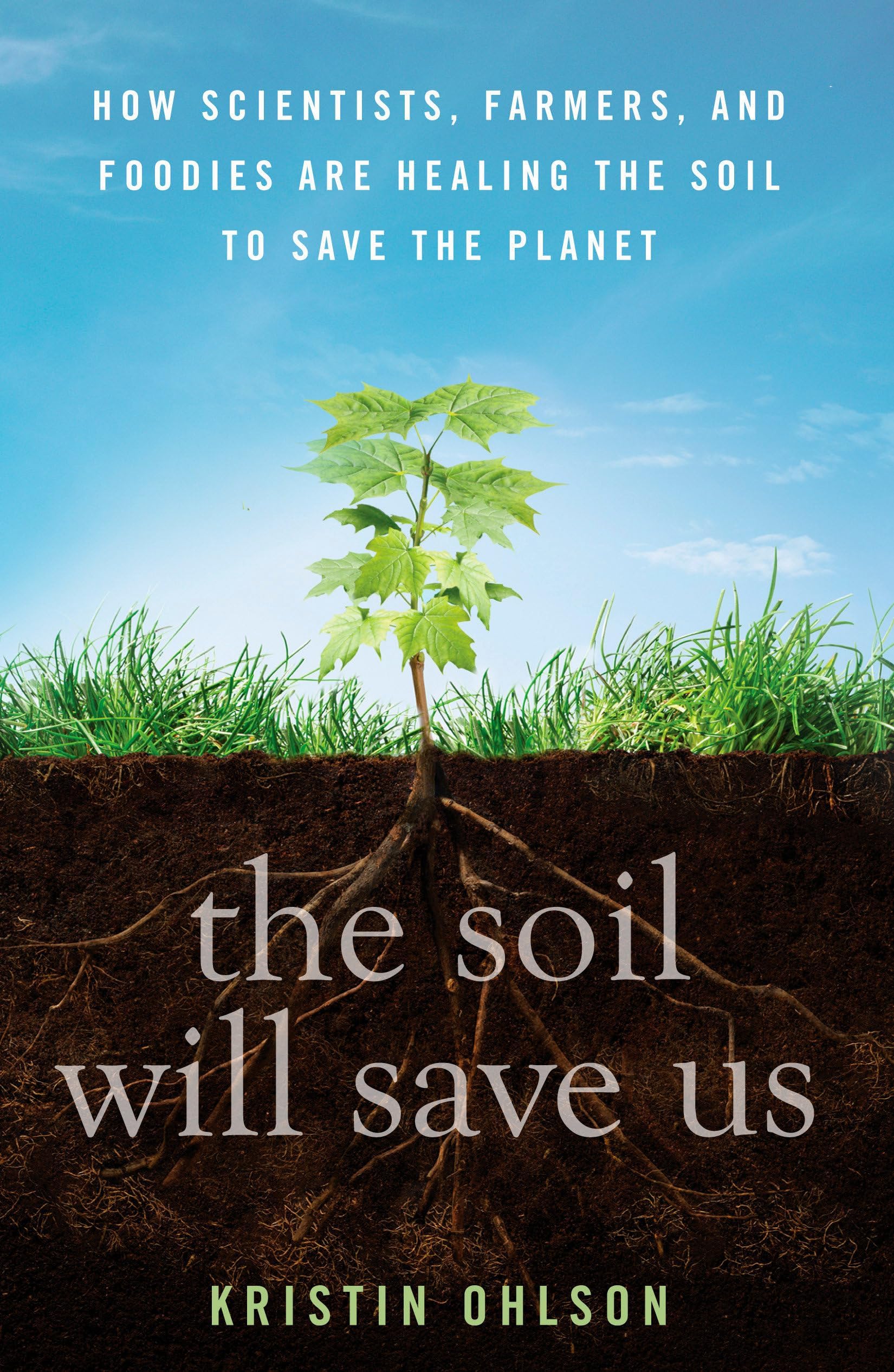
The Soil Will Save Us: How Scientists, Farmers, and Foodies Are Healing the Soil to Save the Planet
Product ID: 1564054
Buy anything from 5,000+ international stores. One checkout price. No surprise fees. Join 2M+ shoppers on Desertcart.
Desertcart purchases this item on your behalf and handles shipping, customs, and support to Vanuatu.
The Soil Will Save Us: How Scientists, Farmers, and Foodies Are Healing the Soil to Save the Planet [Ohlson, Kristin] on desertcart.com. *FREE* shipping on qualifying offers. The Soil Will Save Us: How Scientists, Farmers, and Foodies Are Healing the Soil to Save the Planet Review: Highly recommend - I highly recommend this book. Author Kirsten Ohlson highlights several points in her work discussing the importance of regenerative soil practices. Ohlson backs up her story through interview recounts with soil health visionaries such as University Professors, NRCS researchers, biologists, soil scientists, microbiologists, and highly innovative farmers. Ohlson covers all practical applications of soil regeneration through a trifecta of soil health practices that include mob-grazing, no-till planting, and cover crop cocktails. Her research suggests that not only will soil heal and rebuild under such methods, but also that healthy soils have the potential to capture carbon from the atmosphere and store it in the soil, combating climate change. Additionally, the author examines the substantial interest in carbon farming in the U.S. with an actual buyers’ market, making note that interested organizations will pay farmers to capture carbon via the carbon credit allowance, thereby attracting more farmers to capitalize on two cash crops rather than one per season. Lastly, the author turns her attention to U.S. Cities and the organic approach to landscaping. The transition to natural methods away from chemicals can have a similar impact on soil health as in the holistic agriculture practice. She credits findings of decreased lawn irrigation needs, reduced chemical treatments, and reduced flooding. Overall, I believe the author achieved her purpose in delivering a message of possible solutions to climate change in an approachable manner. I enjoyed reading this book, and I recommend it to anyone interested in holistic agricultural practices and soil health. Review: Fascinating book about the nexus of soil, food security and global warming. - Somewhere in primary school we learn that through the process of photosynthesis, plants use chlorophyll to remove carbon dioxide from the atmosphere, combine it with sunlight and convert it to carbon sugars which the plants use for energy. The oxygen is released back into the atmosphere and the plant consumes some of the carbon while depositing the excess in the soil around its roots in the form of humus. The carbon molecules provide structure to the soil, creating tiny air pockets and allowing the soil to absorb rainfall. The carbon also attracts tiny organisms which create their own mini-ecosystem and confer other benefits on the plants. In fact, up to 95% of our species diversity may be found below the soil. Various bacteria and nematodes control pests and attract other beneficial organisms to the plants. The loss of carbon from our soils dates back to the first agriculturalists who abandoned the hunter-gathered lifestyle in order to grow crops and manage livestock in a fixed location. Plowing and ripping land exposes soil carbon that in many cases has laid underneath the soil line for thousands of years to the air where the carbon combines with oxygen to form carbon dioxide and ends up in the upper atmosphere. Previously livestock roamed the earth, eating grass and plants and dropping manure to fertilise the soil, never staying long in one place to avoid predators. It is estimated that the world’s soil has lost up to 80 billion tons of carbon. There are various schemes proposed to remove excess carbon from the atmosphere to manage the impact of global warming, but photosynthesis is one the most efficient and cost effective available. Over the past few decades, farming practices aimed at improving soil quality through minimum tilling, planting of cover crops and intensive grazing in small areas have increased carbon levels in soils. Farmers who are using these regenerative agricultural practices benefit not only from the increase in yields, but the reduction in costs as less diesel, fertilizer and pesticides are required. Some farmers are also starting to benefit from carbon credit schemes. In The Soil will Save Us, Kristin Ohlson explains the carbon cycle and interlinkage of plants, animals and soil. She travelled extensively to interview and see some of the results of regenerative agriculture and is able to convey the technical information in a very accessible manner. We visit experimental plots in Ohio, farms in Australia, Zimbabwe and North Dakota, and along the way receive an assessment of the impact of US agricultural policy on farming methods. A fascinating book about the nexus of soil, food security and global warming.
| Best Sellers Rank | #123,616 in Books ( See Top 100 in Books ) #12 in Soil Science (Books) #152 in Environmental Science (Books) #167 in Environmentalism |
| Customer Reviews | 4.7 4.7 out of 5 stars (542) |
| Dimensions | 5.79 x 0.91 x 8.82 inches |
| ISBN-10 | 1609615549 |
| ISBN-13 | 978-1609615543 |
| Item Weight | 14.6 ounces |
| Language | English |
| Print length | 256 pages |
| Publication date | March 18, 2014 |
| Publisher | Rodale Books |
J**R
Highly recommend
I highly recommend this book. Author Kirsten Ohlson highlights several points in her work discussing the importance of regenerative soil practices. Ohlson backs up her story through interview recounts with soil health visionaries such as University Professors, NRCS researchers, biologists, soil scientists, microbiologists, and highly innovative farmers. Ohlson covers all practical applications of soil regeneration through a trifecta of soil health practices that include mob-grazing, no-till planting, and cover crop cocktails. Her research suggests that not only will soil heal and rebuild under such methods, but also that healthy soils have the potential to capture carbon from the atmosphere and store it in the soil, combating climate change. Additionally, the author examines the substantial interest in carbon farming in the U.S. with an actual buyers’ market, making note that interested organizations will pay farmers to capture carbon via the carbon credit allowance, thereby attracting more farmers to capitalize on two cash crops rather than one per season. Lastly, the author turns her attention to U.S. Cities and the organic approach to landscaping. The transition to natural methods away from chemicals can have a similar impact on soil health as in the holistic agriculture practice. She credits findings of decreased lawn irrigation needs, reduced chemical treatments, and reduced flooding. Overall, I believe the author achieved her purpose in delivering a message of possible solutions to climate change in an approachable manner. I enjoyed reading this book, and I recommend it to anyone interested in holistic agricultural practices and soil health.
C**S
Fascinating book about the nexus of soil, food security and global warming.
Somewhere in primary school we learn that through the process of photosynthesis, plants use chlorophyll to remove carbon dioxide from the atmosphere, combine it with sunlight and convert it to carbon sugars which the plants use for energy. The oxygen is released back into the atmosphere and the plant consumes some of the carbon while depositing the excess in the soil around its roots in the form of humus. The carbon molecules provide structure to the soil, creating tiny air pockets and allowing the soil to absorb rainfall. The carbon also attracts tiny organisms which create their own mini-ecosystem and confer other benefits on the plants. In fact, up to 95% of our species diversity may be found below the soil. Various bacteria and nematodes control pests and attract other beneficial organisms to the plants. The loss of carbon from our soils dates back to the first agriculturalists who abandoned the hunter-gathered lifestyle in order to grow crops and manage livestock in a fixed location. Plowing and ripping land exposes soil carbon that in many cases has laid underneath the soil line for thousands of years to the air where the carbon combines with oxygen to form carbon dioxide and ends up in the upper atmosphere. Previously livestock roamed the earth, eating grass and plants and dropping manure to fertilise the soil, never staying long in one place to avoid predators. It is estimated that the world’s soil has lost up to 80 billion tons of carbon. There are various schemes proposed to remove excess carbon from the atmosphere to manage the impact of global warming, but photosynthesis is one the most efficient and cost effective available. Over the past few decades, farming practices aimed at improving soil quality through minimum tilling, planting of cover crops and intensive grazing in small areas have increased carbon levels in soils. Farmers who are using these regenerative agricultural practices benefit not only from the increase in yields, but the reduction in costs as less diesel, fertilizer and pesticides are required. Some farmers are also starting to benefit from carbon credit schemes. In The Soil will Save Us, Kristin Ohlson explains the carbon cycle and interlinkage of plants, animals and soil. She travelled extensively to interview and see some of the results of regenerative agriculture and is able to convey the technical information in a very accessible manner. We visit experimental plots in Ohio, farms in Australia, Zimbabwe and North Dakota, and along the way receive an assessment of the impact of US agricultural policy on farming methods. A fascinating book about the nexus of soil, food security and global warming.
K**N
... Will Save Us" it seemed to me that a better title would have been "How We Will Save the ...
In reading "The Soil Will Save Us" it seemed to me that a better title would have been "How We Will Save the Soil". There is a lot of good information about soil conservation, but you don't find out until the last two pages about the potential impact of soil health on climate change -- and even those two pages seem have to be written almost as an afterthought. The information that the book presents on soil and climate is just the tip of the iceberg; for example, see the video at http://rodaleinstitute.org/regenerative-organic-agriculture-and-climate-change/. The book is a good primer on the role of microbes -- fungi and bacteria -- in maintaining soil health and sequestering organic carbon. But it neglects other equally important soil conservation and sequestration methods such as remineralization. The author describes the hard clay in her back yard as an example of "soil with few microbial aggregates", but a soil test would probably pinpoint the problem as excess magnesium requiring addition of calcium to loosen the soil. Minerals are the stuff of which microbes are made, and soil fertility and plant health can be dramatically improved by addition of basalt rock dust or sea minerals. remineralize.org http://www.motherearthnews.com/organic-gardening/supercharge-your-soil-with-minerals-zbcz1411.aspx#axzz3JcWEptD0 The book discusses the role of livestock in soil remediation. This is a controversial topic, in part because cattle are a major source of atmospheric methane. But anaerobic digesters can perform the same function as cow's stomachs on an industrial scale, without methane emissions, while providing useful energy co-generation: https://www.youtube.com/watch?v=6eXRfynD-M8 The book also neglects biochar, one of the most effective mechanisms for permanently sequestering carbon, improving soil fertility, and creating liquid fuels: http://climatestate.com/2014/02/17/biochar-the-next-stage-in-climate-action/ The book is a good introduction to soil and climate, but the interested reader should explore other information sources that better convey the full potential of land use for climate stabilization.
J**M
This book has really inspired me. I absolutely loved it and am keeping it in my bathroom to reread bit by bit. The writing is terrific, down to earth and humorous while giving us a clear understanding of how plants and microbes interact to cause climate changing possibilities. I highly recommend it.
A**T
I came to this really excellent book via a number of health books promoting a WFPB diet which, in turn, guided towards an interest in the soil. I had never, ever expected to be reading about the soil but it is a fascinating and hugely important subject. It is also optimistic. Perhaps in regenerating our soil, adding back the escaped carbon, there lies a simple and inexpensive way to ameliorate global warming. Ohlson has written an easy to read introduction that I highly recommend. I'd also note that the Netflix documentary 'Kiss the Ground' covers the same material in about an hour which might be of interest to those who are time constrained.
W**D
Ich wollte einfach wissen, was in anderen Welträumen an Bestrebungen im Gange sind, um die fragwürdigen Praktiken unser nach ökonomischen Grundsätzen ausgerichteten Landwirtschaft zu beleuchten, in Frage zu stellen und neue Wege aufzuzeigen. Das wird sichtbar, dass man sich auch andernorts, andernwelts sich rührt. Will heißen, Zukunft entsteht initial weltweit, wenn man es angeht. So das eine Buchbesprechung sein? Nein. Nur ein Statement.
S**N
This book is explain very well and good for gardener
A**R
Depuis que les pesticides ont envahi nos champs en 1980, l'agriculture a perdu son âme. Retrouvons les bénéfices des cover crops et de l'absence de labourage pour ramener du carbone dans notre terre, comprenons pourquoi tel ou tel minéral est important et comment le réintroduire dans la terre pour s'assurer un futur pour la culture de nos légumes favoris. Les phénomènes de ces dernières années sont explicables, comme les nuages de sable (en fait de la terre sèche et complètement dénutrie) qui révèlent la pauvreté de nos sols. Alors ce livre est un trésor pour nos esprits modernes qui veulent retrouver la terre de nos ancètres.
Trustpilot
1 month ago
5 days ago