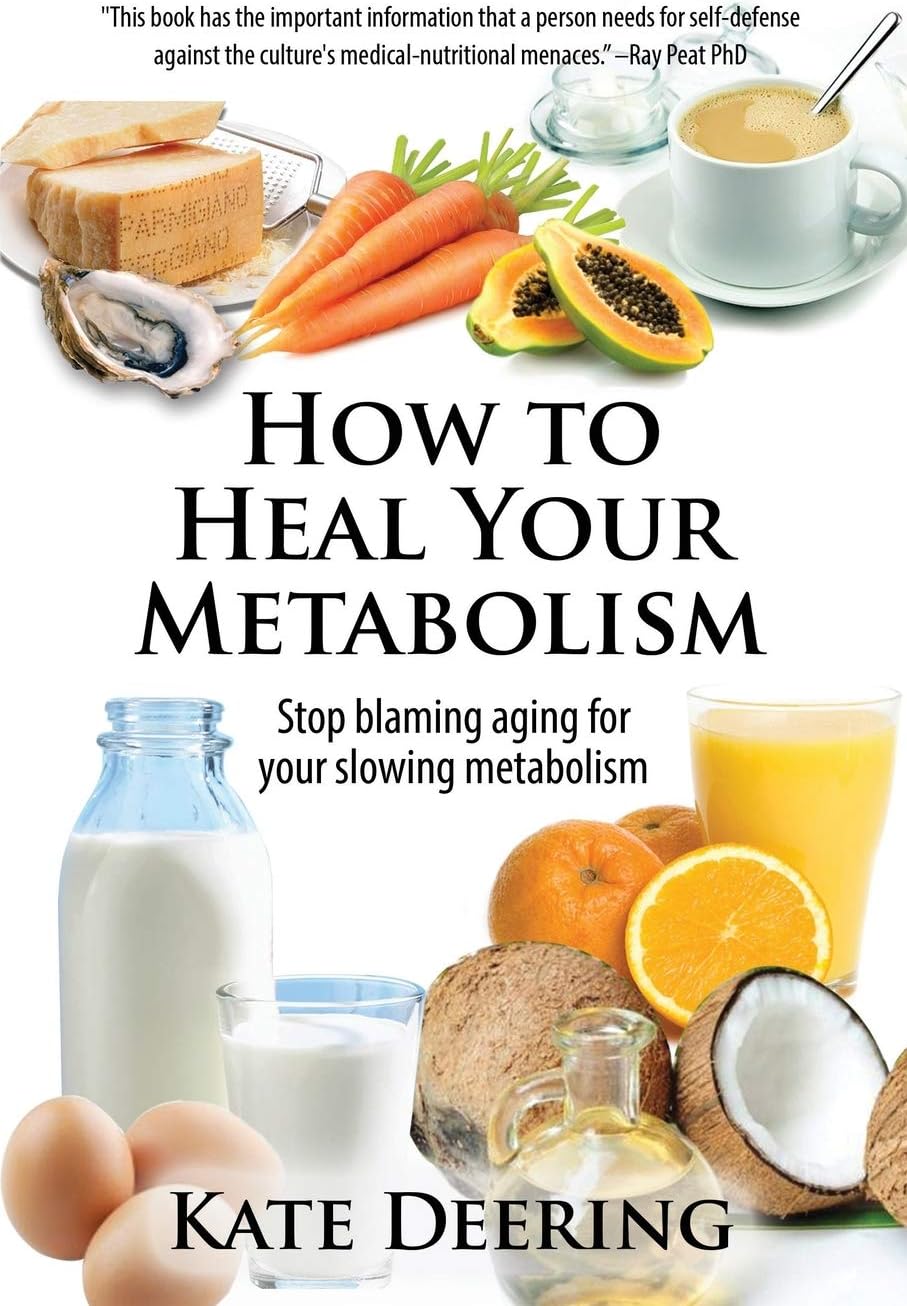
How to Heal Your Metabolism: Learn How the Right Foods, Sleep, the Right Amount of Exercise, and Happiness Can Increase Your Metabolic Rate and Help Heal Your Broken Metabolism
Product ID: 16445498
Buy anything from 5,000+ international stores. One checkout price. No surprise fees. Join 2M+ shoppers on Desertcart.
Desertcart purchases this item on your behalf and handles shipping, customs, and support to Vanuatu.
How to Heal Your Metabolism will help educate you on how eating the right foods, eating the right amount of food, consuming the right food supplements,consuming the right amount of water, sleeping and resting, doing the right amount of exercise, and finding happiness will increase your metabolic rate and help heal your broken metabolism.How to Heal Your Metabolism will question everything you thought you knew about health and nutrition. If you are ready to understand nutrition and health in a completely different light, then you need to read this book. Review: A nice addition to the "metablism equals health" library - I picked this book up while the Kindle version was on sale for 99 cents. My dollar was well-spent. Ms. Deering begins her book by telling her story of how under eating and over exercising, along with partying a little to hardily, damaged her health. Next she defines good health. In short, good health is having a high metabolism, which ensures that every process in our bodies is functioning optimally. Hint: thyroid function plays a huge role metabolism. So how do you go about raising your metabolism? As you might expect, what you eat is important. The bulk of the book explains which foods to eat for good metabolic health. There might be some surprises on the recommended and not recommended foods lists, depending on your nutritional education up to this point. Saturated fat, sugar, including fruit, and protein, especially milk and gelatin (via broth and collagen powder), get a thumbs up. Polyunsaturated fats, grains, legumes, and nuts get a thumbs down. Ms. Deering also warns of the dangers of too many leafy greens, especially uncooked, and over-reliance on muscle meats. Of course there's more to health than food. The remainder of the book addresses supplements (thankfully real food is recommended over expensive supplements), balancing blood sugar, exercise, sleep, water consumption (you might find more surprises in this section) and happiness. A nice FAQ section clarifies some points raised in the text, and we get a sample weekly menu plan, recipes, and best foods lists. Prior to reading this book I was familiar with the concept of better health through a higher metabolism. I was also aware of the dangers of polyunsaturated fats, the benefits of saturated fats, and the ins and outs of meat, broth, gelatin, milk, grains, legumes, nuts, vegetables, and fruits. However I hadn't before read a presentation put together as well as this one is. The material is organized in a such a way that one topic flows nicely to the next. You're not left wondering what the heck you should eat. I also had never before considered the suggestions for meal building given in the book. Being a reader of health books, many of them of the paleo persuasion, I'd picked up the idea that fruit should not be a main carbohydrate source and milk is an inadequate protein source. I'd also picked up the idea that a meal wasn't complete without a chunk of meat or eggs on my plate and that I should eat as many vegetables as I can choke down, especially leafy greens (I'm not a big vegetable lover). Happily, after reading Ms. Deering's book, I now have some new ideas for how to build meals that I enjoy and that will be good for me. I also have some ideas for including "snacks" in my meal plan to keep my book sugar stable. I rarely take notes when I read a book, but I took notes throughout this one. Overall, this is an excellent book that I highly recommend everyone read. There are some mistakes - typos, grammatical errors, and spelling mistakes - that a good editor could easily fix. I'd love to see a second edition with the mistakes corrected - I'd buy a second, paper back copy for myself in a heartbeat. Despite the errors, I give the book five stars. I may have only paid 99 cents for this book, but it's well worth the full price. Review: Amazing results after 2.5 months. Really improved the quality of my life. - Context: I bought this book, in July, and I have been implementing / following it's principles to the best of my ability ever since. I come from a Low-Carb/Paleo background, and I used to do strength training, but all of that changed when I found out I had cancer. After I realized that LowCarb/Paleo doesn't make you immune to cancer (as it is sometimes implied by some authorities) and also that I didn't knew enough about cancer, I started researching about different theories/nutritional approaches that I could implement, either therapeutically or after I got better. Eventually I came across Dr. Raymond Peat's articles, and although they can sometimes be a little cryptic, his ideas seemed very interesting and resonated with me, although I wasn't quite sure how to implement some of them in a more practical way, because he doesn't lay out a simple plan/approach. This book came exactly at the right time and provided me with a more practical set of principles, based on Dr. Ray's work (and others). What I did: - I increased my calorie intake from a maximum of 2500 Kcal (Low-Carb/Paleo), to more than 3000 Kcal a day (50%-60% Carbs), using whole foods, following the principles laid out in the book. - I stopped strength training (Wendler 5/3/1) because I needed a break and also to start enjoying exercise again, so I started doing isolation/bodybuilding stuff 2 times a week (1 movement for the biceps/triceps/pecs/abs/lats), and 2 days a week I started doing squats/deadlifts (light stuff), pushups/dips and some type of pull up. - Every training session lasts only 30 minutes, and I NEVER get to the point were I am breathing heavy, the point is to do more total reps/weight/total volume than last time on each exercise. - I started reintroducing dairy slowly, as I had really strong reactions to it (and some other foods as well, although not as intense), such as abdominal pain/"loose bowels", that would sometimes last for weeks. I started with cheese and then moved on to milk. - I started going to bed early EVERY day. Results: - My body fat went down, to the point I can now see my Abs and a lot of veins throughout my body, which lost it's "fluffy" type look. - My body weight went from 176 lbs to 163 lbs, although some was lost muscle because I stopped strength training. - My sleep it's not perfect (it hasn't been for a long time and it's still a work in progress), but it improved significantly in quality, since it's much deeper than before and it's usually full of dreams. - Temperature (under the tongue) has upped from some cadaveric lows to close to normal levels (36.4 to 37.2 degrees throughout the day) and it's still a work in progress I think. - I can drink milk again (at least up until 800 mL in a row), without any noticeable adverse reactions, and there is no more sensitivity to any of the foods that previously gave problems as well. - I think that there was also a redistribution of fat throughout my body (less fat In my face, arms and legs), but I'm not 100% sure, as I don't have a lot of fat anymore. - My head feels clearer, my ability to think has definitely improved. - I just feel better overall. P.s.: This journey hasn't been all rosy, in spite of all of the positive changes that I have described. There were some setbacks along the way, but you will have to push forward (within reason) in order to be successful with this approach, particularly if you have high stress hormones throughout the day, in which case you will feel like crap for a while, because those hormones will go down, so that your thyroid can slowly start taking over, and that might take a while, depending on you particular situation. Dairy tolerance will start going up also, in time. Keep increasing the amounts progressively, and don't be afraid to cut dairy off, for a day or two, if you start having adverse reactions. Let the body "reset" then start again from where you left off or a lower amount.
| Best Sellers Rank | #53,058 in Books ( See Top 100 in Books ) #33 in Physiology (Books) #109 in Nutrition (Books) #369 in Diets & Weight Loss (Books) |
| Customer Reviews | 4.6 out of 5 stars 1,397 Reviews |
A**.
A nice addition to the "metablism equals health" library
I picked this book up while the Kindle version was on sale for 99 cents. My dollar was well-spent. Ms. Deering begins her book by telling her story of how under eating and over exercising, along with partying a little to hardily, damaged her health. Next she defines good health. In short, good health is having a high metabolism, which ensures that every process in our bodies is functioning optimally. Hint: thyroid function plays a huge role metabolism. So how do you go about raising your metabolism? As you might expect, what you eat is important. The bulk of the book explains which foods to eat for good metabolic health. There might be some surprises on the recommended and not recommended foods lists, depending on your nutritional education up to this point. Saturated fat, sugar, including fruit, and protein, especially milk and gelatin (via broth and collagen powder), get a thumbs up. Polyunsaturated fats, grains, legumes, and nuts get a thumbs down. Ms. Deering also warns of the dangers of too many leafy greens, especially uncooked, and over-reliance on muscle meats. Of course there's more to health than food. The remainder of the book addresses supplements (thankfully real food is recommended over expensive supplements), balancing blood sugar, exercise, sleep, water consumption (you might find more surprises in this section) and happiness. A nice FAQ section clarifies some points raised in the text, and we get a sample weekly menu plan, recipes, and best foods lists. Prior to reading this book I was familiar with the concept of better health through a higher metabolism. I was also aware of the dangers of polyunsaturated fats, the benefits of saturated fats, and the ins and outs of meat, broth, gelatin, milk, grains, legumes, nuts, vegetables, and fruits. However I hadn't before read a presentation put together as well as this one is. The material is organized in a such a way that one topic flows nicely to the next. You're not left wondering what the heck you should eat. I also had never before considered the suggestions for meal building given in the book. Being a reader of health books, many of them of the paleo persuasion, I'd picked up the idea that fruit should not be a main carbohydrate source and milk is an inadequate protein source. I'd also picked up the idea that a meal wasn't complete without a chunk of meat or eggs on my plate and that I should eat as many vegetables as I can choke down, especially leafy greens (I'm not a big vegetable lover). Happily, after reading Ms. Deering's book, I now have some new ideas for how to build meals that I enjoy and that will be good for me. I also have some ideas for including "snacks" in my meal plan to keep my book sugar stable. I rarely take notes when I read a book, but I took notes throughout this one. Overall, this is an excellent book that I highly recommend everyone read. There are some mistakes - typos, grammatical errors, and spelling mistakes - that a good editor could easily fix. I'd love to see a second edition with the mistakes corrected - I'd buy a second, paper back copy for myself in a heartbeat. Despite the errors, I give the book five stars. I may have only paid 99 cents for this book, but it's well worth the full price.
M**A
Amazing results after 2.5 months. Really improved the quality of my life.
Context: I bought this book, in July, and I have been implementing / following it's principles to the best of my ability ever since. I come from a Low-Carb/Paleo background, and I used to do strength training, but all of that changed when I found out I had cancer. After I realized that LowCarb/Paleo doesn't make you immune to cancer (as it is sometimes implied by some authorities) and also that I didn't knew enough about cancer, I started researching about different theories/nutritional approaches that I could implement, either therapeutically or after I got better. Eventually I came across Dr. Raymond Peat's articles, and although they can sometimes be a little cryptic, his ideas seemed very interesting and resonated with me, although I wasn't quite sure how to implement some of them in a more practical way, because he doesn't lay out a simple plan/approach. This book came exactly at the right time and provided me with a more practical set of principles, based on Dr. Ray's work (and others). What I did: - I increased my calorie intake from a maximum of 2500 Kcal (Low-Carb/Paleo), to more than 3000 Kcal a day (50%-60% Carbs), using whole foods, following the principles laid out in the book. - I stopped strength training (Wendler 5/3/1) because I needed a break and also to start enjoying exercise again, so I started doing isolation/bodybuilding stuff 2 times a week (1 movement for the biceps/triceps/pecs/abs/lats), and 2 days a week I started doing squats/deadlifts (light stuff), pushups/dips and some type of pull up. - Every training session lasts only 30 minutes, and I NEVER get to the point were I am breathing heavy, the point is to do more total reps/weight/total volume than last time on each exercise. - I started reintroducing dairy slowly, as I had really strong reactions to it (and some other foods as well, although not as intense), such as abdominal pain/"loose bowels", that would sometimes last for weeks. I started with cheese and then moved on to milk. - I started going to bed early EVERY day. Results: - My body fat went down, to the point I can now see my Abs and a lot of veins throughout my body, which lost it's "fluffy" type look. - My body weight went from 176 lbs to 163 lbs, although some was lost muscle because I stopped strength training. - My sleep it's not perfect (it hasn't been for a long time and it's still a work in progress), but it improved significantly in quality, since it's much deeper than before and it's usually full of dreams. - Temperature (under the tongue) has upped from some cadaveric lows to close to normal levels (36.4 to 37.2 degrees throughout the day) and it's still a work in progress I think. - I can drink milk again (at least up until 800 mL in a row), without any noticeable adverse reactions, and there is no more sensitivity to any of the foods that previously gave problems as well. - I think that there was also a redistribution of fat throughout my body (less fat In my face, arms and legs), but I'm not 100% sure, as I don't have a lot of fat anymore. - My head feels clearer, my ability to think has definitely improved. - I just feel better overall. P.s.: This journey hasn't been all rosy, in spite of all of the positive changes that I have described. There were some setbacks along the way, but you will have to push forward (within reason) in order to be successful with this approach, particularly if you have high stress hormones throughout the day, in which case you will feel like crap for a while, because those hormones will go down, so that your thyroid can slowly start taking over, and that might take a while, depending on you particular situation. Dairy tolerance will start going up also, in time. Keep increasing the amounts progressively, and don't be afraid to cut dairy off, for a day or two, if you start having adverse reactions. Let the body "reset" then start again from where you left off or a lower amount.
M**.
Fantastic information, even for someone working in nutrition for decades .
This book is based upon the research and concepts of Dr Ray Peat. He has a website with loads of great articles, but they're heavily science-based and a bit abstract at times for laypeople, nor does he lay out a specific dietary plan but Kate has compiled his 50+ years of research into a very easy-to-understand guide. It is not a quick fix, fad diet or restrictive approach. Like Kate, I worked in fitness and nutrition for decades and also fell prey to the "carbs are evil/Sugar is evil/fruit is evil" mentality and my body has definitely suffered for that long-term. Being in my 50s now I was struggling with hormone swings, night sweats, weight gain and terrible insomnia which just made everything unbearable. Within days of implementing a few of the basic concepts here, I was sleeping like a baby. I was also looking forward to meals for the first time in ages. What's every bit as valuable as the physical benefits I experienced are the mental and emotional benefits. Folks in the fitness industry tend to be rather perfectionistic and the current cult-like fervor of the fasting, IF and keto brigade are good examples of not seeing the forest for the trees. Cherry picking minimal benefits while ignoring the massive long-term negative effects is a one-way ticket to eventual hormonal imbalance, weight gain, insomnia and constant fatigue; all the long term effects of those current trends. For those of you ready to let go of that and enjoy energy, sleep and lovely meals again, you will love this book. If you're looking for a new diet with a quick-fix for lots of weight loss, this isn't it. This book will bring much needed sanity and energy into your life, which you can then translate into doing more of what you love. If you're on social media, check out Kate on FB or IG as well, she shares great information all the time and is easily to connect with if you have questions.
P**R
Simple and real...learn how to make food your best friend in your quest for health!
I definitely recommend this book for a real education based on metabolic nutrition. Our body is a biological machine, and we need to treat it as such. No tricks, no fads, and no extremes. This is a very easy read and a great resource that I go back to again and again to dig deeper into my understanding of how my body is using the food that I choose. I recognize very quickly when I make choices that don't support my health. When I follow the guidelines in this book, I feel better, sleep better, think better, feel stronger, have more energy, and lose weight. Kate is not selling a diet, she's giving you an education so you can create a real nutrition plan to support your active lifestyle and heal from the abuse that a lifetime of eating from a broken food industry and biased nutrition research has heaped upon your body. Read it, start small and build with experience. Reread and practice. It's about a lifestyle, not a diet or a quick fix. Learn how to take care of yourself and make a real change in your health!
S**Y
Good info but be extremely careful!!
H**S
BEST BOOK FOR TOTAL HEALTH & WELLNESS ON THE MARKET!
Trying to lose weight, gain energy, better sleep and mood? This is the only book you need to read! Forget what the dietitians, nutritionists and medical doctors tell you about nutrition, buy & read this book! As a certified personal trainer, I have been schooled in how nutrition plays into a client's total wellness, and how we are to support our client's goals in this arena. I have followed this schooling, which mirrors what dietitians, nutritionists and medical doctors disperse, but nothing has worked for years - for me personally or for my clients. Then, I hired Kate as a Nutrition Coach and now own her book. This book is scientifically-based on how your physiology works. Kate describes this process in an understandable, viable methodology. Follow the chapters in this book and change how you live and you will achieve better health… weight loss (if desired), better sleep, more energy and improved mood. Kate's book takes a scientific process and makes it very simplistic. And, if it isn't simplistic enough… hire Kate as your Nutrition Coach and she will guide you through the process.
L**R
Read this book and don't look back!!!!
As a long-time healthcare and fitness professional, I thought that I understood the physiology of metabolism. However, in a practical sense I was still paying homage to the "calories in, calories out" mantra of the 20th century when it came to my own nutrition and training choices. In 2014 I started studying brain-based training (Z-Health Performance) and was introduced to some of concepts that Kate discusses. It would not be an overstatement to say that this book shifted my paradigm when it comes to what I eat, FULL STOP. It helped me see how what I was consuming (or not consuming) was affecting my metabolism and, by virtue of that, my overall health. For example, after almost 25 years of avoiding meat and the superfood known as gelatin I decided to change my choices. Information and techniques for assessing if and when foods are appropriate for you as an individual are clearly explained so that you can make the changes in your diet and lifestyle that will be the most beneficial. This book is an easy-to-read game changer when it comes to understanding how to nourish and care for your body in ways that foster true health. I love it so much that I would like to buy a case of books and give them out to family, friends, patients, clients.....all of the people whom I care about. Welcome to the 21st century and the world of generative energy!!!
D**B
Back to Basics
After years of reading about every possible new way to eat, I was struck by Deering's back-to-basics approach. It sounded familiar and a lot like the stuff I was reading 25 years ago. It was also pretty much in line with Ayurvedic principles, which are 5,000 years old. It's a bit more complex than Keto or low-carb because it doesn't exclude any one food group and requires attention to the ideal ratio of macronutrients (protein, carbs, and fat); however, it's worth the effort. All the same, it felt right so I tried it for 6 months and you can see from the photos that my metabolism actually increased--by a lot. I went from a "slow" score of 898 in May 2022 to a "normal" score of 1,079 (the "score" equals calories burned at rest) in May 2023. I started following her macronutrient recommendations in Jan. 2023. The other great thing about her method of eating is that I find that by adding carbs back into my diet, I sleep a lot better. By the way, "carbs" does not have to mean bread, pasta, etc. In fact, most of my carbs come from apples, orange juice (pulp-free), milk and honey, etc. In any case, it's a lot to wrap your head around but it's worth trying. I had to listen to the book AND read it AND refer back to it repeatedly. I also worked with Kate Deering for a few months which really helped me to grasp the suggestions that I still did not understand well. I hope you'll give it a try.
J**I
Very helpful book
Good book and good price
L**U
Highly recommended!!
After one year of reading for first time this book I must say that my life has changed. Indeed, I gained weight but finally I see how everything makes sense. My body feels much better, the cold hands disappeared, my body temperature is warmer and most of the cravings disappeared. I am loosing weight slowly and my body starts to look very nice again, just that now I know that it is healthy, nice and actually healthy!
C**W
Must-read for everyone!
Loved it! Highly educational but not shoving opinions down your throat. Super straight forward information about how your body works and what it needs in order to be supported and function optimally
A**L
A lot learnt in here
I thought muscle meats aren't that much harmful but I've learnt a lot in here and came to know about the 8 super protein rich foods
O**S
Muy interesante
Muy recomendable para ver como funciona el ideario de Ray Peat. Por otro lado creo que esta dieta es para constituciones pitta.
Trustpilot
3 weeks ago
2 weeks ago