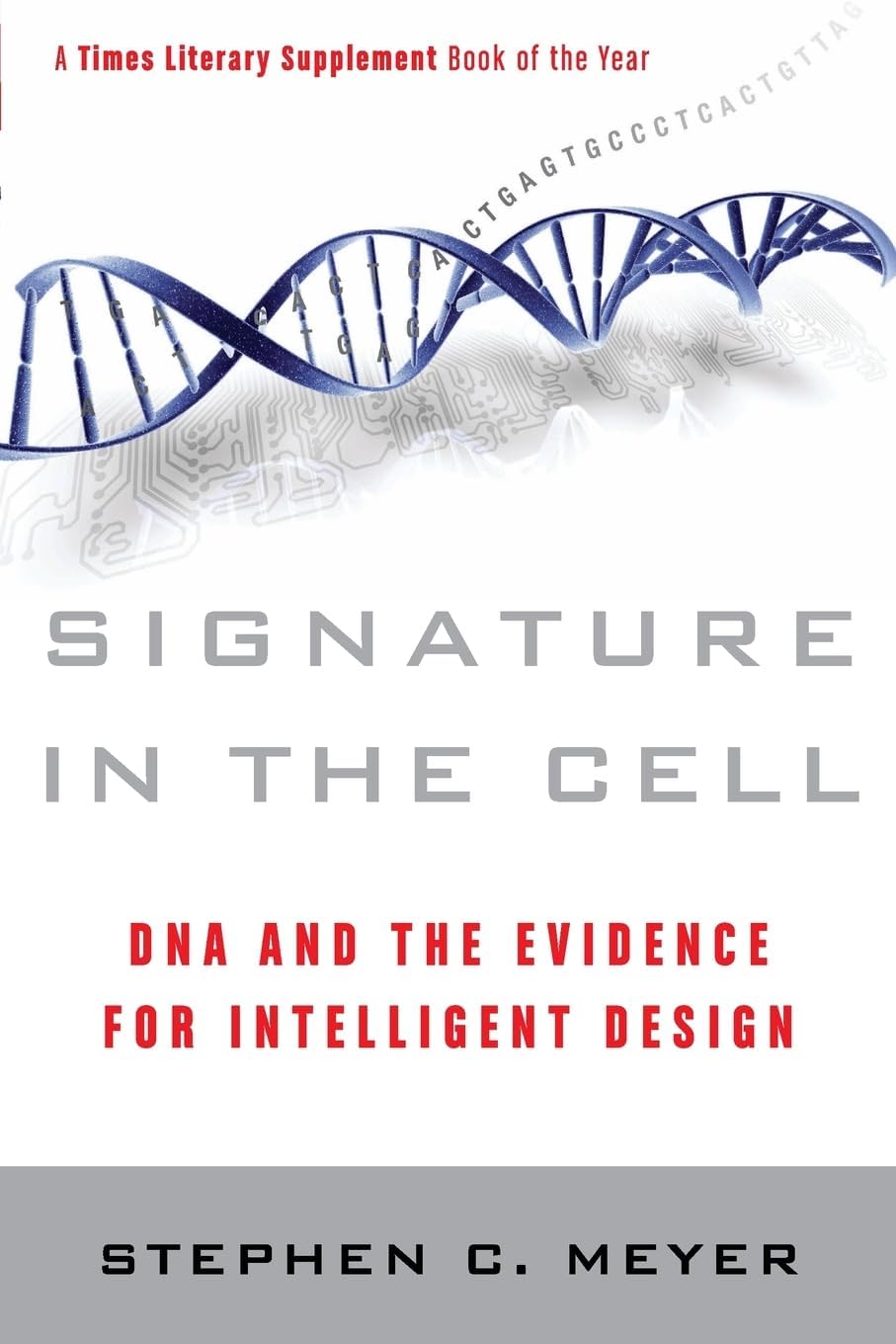
Signature in the Cell: DNA and the Evidence for Intelligent Design ― As Featured in the Film, The Story of Everything
Product ID: 1695408
Buy anything from 5,000+ international stores. One checkout price. No surprise fees. Join 2M+ shoppers on Desertcart.
Desertcart purchases this item on your behalf and handles shipping, customs, and support to Vanuatu.
“ Signature in the Cell is a defining work in the discussion of life’s origins and the question of whether life is a product of unthinking matter or of an intelligent mind. For those who disagree with ID, the powerful case Meyer presents cannot be ignored in any honest debate. For those who may be sympathetic to ID, on the fence, or merely curious, this book is an engaging, eye-opening, and often eye-popping read” — American Spectator Named one of the top books of 2009 by the Times Literary Supplement (London), this controversial and compelling book from Dr. Stephen C. Meyer presents a convincing new case for intelligent design (ID), based on revolutionary discoveries in science and the biological information stored in DNA. Tackling the central mystery of the origin of life, Meyer argues that Charles Darwin’s theory of evolution as expounded in The Origin of Species did not, in fact, refute ID. If you enjoyed Francis Collins’s The Language of God , you’ll find much to ponder—about evolution, the digital code in DNA, and intelligent design—in Signature in the Cell . What is the signature in the cell, and what does it reveal about the origin of life? The DNA Enigma: Delve into the mystery of how the digital information in DNA first arose—the question that materialistic evolutionary theories have been unable to answer. Specified Complexity: Discover the concept of specified information, the unique hallmark of intelligent agency, and see how it appears in the cell’s molecular machinery. Critique of Chemical Evolution: A comprehensive review of the failures of leading scientific theories—from chance to self-organization—to explain the origin of the first life. Evidence for Intelligent Design: Follow the step-by-step argument as Meyer makes a positive, evidence-based case for an intelligent cause as the best explanation for the information at the heart of life. Review: Placing Intelligent Design right next to Darwinism for anyone to see - I read “Signature in the Cell” by Stephen Meyer. What a fantastic journey through his mind as he shepherded the idea of making “intelligent design” an acceptable explanation for the origin of life in the scientific community. (This was the man who they talked about taking away his doctorate because he didn’t really believe the answers he had to put on tests in order to pass). It was this article that I read about a dean of philosophy, Thomas Nagel, who had been convinced to give up his Darwinian faith after reading Stephen’s book that got me to pick it up and read it. The world has always been viewed through history by leading scientists and philosophers concluding “that behind the exquisite structures of the living world was a designing intelligence”. This all changed with Darwin. Natural selection and mutations would now become the explanations of how we came to be. The discovery of DNA by Watson and Crick would present a dilemma to the scientific world: what is the origin of the biological information in DNA? Meyer gives us a history of evolutionist attempts to explain the origin of life. One section entitled “Oparin to the Rescue” tells of us a young Soviet scientist who proposes in 1922 that the chemical reactions taking place long ago were the original building blocks of life and afterwards Darwinian natural selection took over creating life. I love his Marxist motivations in seeing evolution as a proof of Marxist materialism. It was in 1953 that a experiment by Stanley Miller showed the possibility that lightning mixing with the prebiotic soup of the planet could create amino acids the building blocks of protein. This was a crown of glory for evolutionists searching for the origin of life. It was the other discovery in 1953 of DNA that would shake that crown off of their heads. Meyer gives us a great description of the factory within the cell. The centerpiece is the DNA and its ability to produce and transmit the code to building proteins. This peek into the molecular world is well done, but it also explains the “chicken or the egg” problem of DNA. “The production of proteins requires DNA, but the production of DNA requires proteins”. The problem is bigger than that as Meyer explains: “The discovery of life’s information-processing systems…has made it clear that scientists investigating the origin of life must now explain the origin of at lest three key features of life. First, they must explain the origin of the system for storing and encoding digital information in the cell, DNA’s capacity to store digitally encoded information. Second, they must explain the origin of the large amount of specified complexity or functionally specified information in DNA. Third, they must explain the origin of the integrated complexity—the functional interdependence of parts—of the cell’s information-processing system.” He will spend 8 chapters looking into the various attempts to explain this information phenomenon. He is doing this with an eye upon what will become obvious: creating information requires intelligence. Meyer is going to use his knowledge of “historical sciences” to put “intelligent design” right next to “Darwinian evolution”. The same reasoning that would allow one to stand or fall is the same reasoning that would allow the other to stand or fall as a potential explanation for the origin of life. This may seem unnecessary or too wordy; but in fact he is doing a beautiful job in making “intelligent design” a theory that cannot be dismissed. Charles Lyell and Charles Darwin both used “causes now in operation” to legitimize their theories. He is setting up the criteria for how “historical sciences” can be used by their determination of the “best” explanation for how something happened in the past. That sets the stage for his discussion of the many tributes to chance, necessity or a combination of the two that evolutionists use to explain the origin of life. He will quote college textbooks that will enshrine in young minds “the chance association” that created life. One text says: “Given so much time, the impossible becomes possible, the possible probable and the probable virtually certain.” He will team up with William Demski’s knowledge of mathematical odds to show that it is impossible for chance to be the explanation of creating a string of functional arrangement of bases and amino acids. He will refer to Douglas Axe: “Axe has compared the odds of producing a functional protein sequence of modes (150-amino-acid) length at random to the odds of finding a single marked atom out of all the atoms in our galaxy via a blind and undirected search.” What I found interesting in this discussion is that by 1966 many mathematicians were shocked to find biologists so willing to hang their theories of the origin of life on chance alone. He described a conference entitled: “Mathematical Challenges to Neo-Darwinism”. That conference ended with the biologists insisting that as long as their was a single possibility that it might of happened in a “cosmic jackpot” moment they were not willing to let go of that possibility as their official explanation. Not a lot has changed since then. He will deal with the ideas that DNA was a self organizing accident way back when. Even this accident if it could be shown to be chemically induced, cannot explain the intelligent data that the accident created. He refers to Michael Polanyi. “The flow of electricity obeys the laws of physics, but where the electricity flows in any particular machine depends upon the arrangement of its parts—which, in turn, depends on the design of an electrical engineer working according to engineering principles. And these engineering principles, Polanyi insisted, are distinct from the laws of physics and chemistry that they harness.” “The laws of acoustics and the properties of air do not determine which sounds are conveyed by speakers of natural languages. Neither do the chemical properties of ink determine the arrangements of letters on a printed page.” “Then he took a step that made his work directly relevant to the DNA enigma: he insisted that living things defy reduction to the laws of physics and chemistry because they also contain a system of communications—in particular, the DNA molecule and the whole gene-expression system…as with other systems of communication, the lower-level laws of physics and chemistry cannot explain the higher-level properties of DNA. DNA base sequencing cannot be explained by lower-level chemical laws or properties any more than the information in a newspaper headline can be explained by reference to the chemical properties of ink.” He shares his thinking of Polanyi’s thoughts that led him to his own breakthrough on the idea that laws of attraction brought the four different amino acids together which would create the information that makes living things what they are. His final dismissal of the theories of attraction came from a simple view of a DNA diagram that he had seen many times before but now, with Polanyi thoughts in his head, he sees that “there are no differential bonding affinities there. Indeed, there is not just an absence of differing bonding affinities; there are no bonds at all between the critical information-bearing bases in DNA…A force has to exist before it can cause something. And the relevant kind of force in this case (differing chemical attractions between nucleotide bases) does not exist within the DNA molecule.” It is great having Meyer give us a step by step evolution of his thinking as he marshals his thoughts to give us a great explanation of what he considers to be the best explanation of the information coded in DNA: intelligent design. The tone is always respectful as he describes the different ideas floated around. He does take the liberty of using a “Cat in the Hat” idea of the “voom”, something that cleans messes up as something that evolutionists are looking for so they do not have to deal with the explaining of origin of life information. He will go on to talk about “RNA world” where the RNA appears and creates the DNA. All worth reading, but I enjoyed his take on all of the computer simulations that are used to find ways of creating life. They all proved his point. They were only valid when the programmer set winning parameters or set targets for the chance to find. What all the programs had in common was the touch of “intelligent design” provided by the writers of the programs. I will list his headings that describe “intelligent design” as the best explanation for the origin of life as exemplified by the information in DNA. 1. No Other Causally Adequate Explanations 2. Experimental Evidence Confirms Causal Adequacy of ID 3. ID is the Only Known Cause of Specified Information That last point has been illustrated in the book with several descriptions of classroom exercises involving random letters and locking mechanisms. These personal touches of life experiences made the book so much more readable and personable to me. I already have been using his letter illustrations when I talk with kids at school about the book I am reading. I have read several books conveying this same information and have found each of them enlightening. Meyer has repeated the job they have done, but has not just refuted Darwinism as previous authors have done; he has carefully placed an alternative explanation, intelligent design, right next to Darwinism for everyone to compare. I cannot recommend this book too strongly!!! Review: Thorough Discussion of Leading Evolutionary Origin of Life Research & ID Theory - The author of Signature in the Cell: DNA and the Evidence for Intelligent Design, Dr. Stephen C. Meyer, is the director of the Discovery Institute’s Center for Science and Culture, a former tenured professor at Whitworth University, the author of two other best-selling books, Darwin’s Doubt: The Explosive Origin of Animal Life and the Case for Intelligent Design and The Return of the God Hypothesis, and a contributing author to several other books and articles.1 Meyer received his Ph.D. in the philosophy of science from the University of Cambridge in 1991 after earning an M.Phil from Cambridge in 1987 and working as a geophysicist from 1981-1985.1 Meyer is a founder of the intelligent design movement alongside others such as Michael Behe and William Dembski.2 Meyer personally adheres to an old-age view of creation as part of his Christian faith.2 Signature in the Cell presents a thorough argument for intelligent design as the ultimate origin of life by examining the specified complexity of genetic information packaged as DNA. Meyer unveils the intricacies of DNA with a progressive narrative tracing the historical scientific discovery of the DNA enigma and the present state of research including the implications that point to a designer as the best scientific explanation for the origin of information essential for life. First, Meyer develops the history of origin of life research and explores the implications of biological information in DNA. He demonstrates the improbability of the existence of the long pieces of information encoded in DNA (Shannon information) based on Claude Shannon’s “The Mathematical Theory of Communications” before articulating the second additionally astounding component of DNA information: functional specificity. Meyer explains that “building a living cell not only requires specified information; it requires a vast amount of it—and the probability of this amount of specified information arising by chance is ‘vanishingly small.’”3 Beyond this, he reveals a final layer of complexity in the need for “a sizable preexisting suite of proteins for processing that [DNA] information”3 that could only have arisen from preexisting proteins and DNA – a chicken and egg type problem that even current research could not explain from a purely naturalistic approach. Moreover, Meyer clarifies the superior explanatory power of intelligent design when compared to naturalistic origin of life theories. He exposits the careful approach of the scientific method to infer the best causal explanations for observed phenomena and elimination of illegitimate explanations. He specifically elucidates the causal adequacy criterion in historical science where historical scientists “identify causes that are known to have the power to produce the kind of effect, feature, or event in need of explanation”3 and reveals how scientists such as Charles Lyell, Charles Darwin, and Michael Scriven all affirm the importance of causal adequacy. Meyer then proceeds to demonstrate how intelligent design is the superior explanation for the origin of life as he develops the relationship between the specified complexity of DNA and the only observed source of specifically complex information in the universe: intelligent agents. Lastly, Meyer begins to conclude the book with the three reasons that convinced him of the superior explanatory power of intelligent design. First, the lack of other causally adequate explanations pushed Meyer away from “chance-based” naturalistic theories that did not explain the generation of information and only ignored the problem. In fact, research according to these theories demonstrated that specified complexity could not arise from undirected chemical processes, but it could arise experimentally with artificial direction from intelligent agents—humans. Thus, Meyer’s second reason the causal adequacy of intelligent design confirmed by experimental evidence including prebiotic simulation experiments by Miller, evolutionary algorithms by Richard Dawkins, and ribozyme engineering.3 Third, the fact that intelligent design is the only known cause of specified information convinced Meyer to fully embrace intelligent design. To conclude his work, Meyer humbly but directly confronts claims that intelligent design is a pseudoscience and only a religious viewpoint by again demonstrating its scientific validity and explaining why philosophical implications of an intelligent designer do not contradict the scientific validity of the intelligent design theory. Meyer’s work demonstrates three primary strengths. First, the writing and argumentation are exhaustingly thorough with very detailed and direct articulation of each concept. Second, the entire book contains excellent evidence and appropriate citations both in supporting intelligent design and in equitably presenting naturalistic viewpoints on the origin of life. Third, the content engages the reader through personal accounts and vivid illustrations that adequately model the scientific concepts presented to allow laypeople to adequately grasp the core ideas necessary to understand some basics of science and origin of life research. Meyer’s work exhibits one primary weakness: its age. Having been originally published in 2009, over a decade of research has been conducted since the book’s publication. Consequently, the book cannot address certain specific research studies that have been published after the book’s publication. A second smaller weakness is the book’s lengthiness. Excluding the bibliography, appendices, prologue, and epilogue, the main content of the book is a grueling 452 pages long. However, as aforementioned, the beneficial tradeoff is Meyer’s thoroughness and extensive argumentation for every concept. This book strengthened my understanding of the analytical aspect of specified complexity and the simple yet amazingly detailed revelation in nature of the intelligent designer. I never previously had delved into how DNA is more than complex; it is specified and carefully patterned like the intricate blueprints necessary for any engineering marvel. I enjoyed how the book acted as a guide exposing the intricacies of the purposefully designed instructions and machinery of the miniature factory of each cell. Overall, this book excellently presents the case for intelligent design through a careful examination of the cell’s biological coding and subsequent functionality. I would highly recommend this book for laypeople and professionals looking for a clear-cut and relatively concise defense of the intelligent design theory and thorough discussion of the scientific method. Literature Cited: 1. About. (n.d.). Stephen C. Meyer. Retrieved November 8, 2021, from https://stephencmeyer.org/about/ 2. “Scripture and Science in Conflict?: An Interview with Stephen C. Meyer by Stephen Meyer.” (n.d.). Ligonier Ministries. Retrieved November 8, 2021, from https://www.ligonier.org/learn/articles/scripture-and-science-in-conflict 3. Meyer, S. C. (2009). Signature in the Cell: DNA and the Evidence for Intelligent Design. New York, NY: HarperCollins Publishers Inc.


| Best Sellers Rank | #25,989 in Books ( See Top 100 in Books ) #26 in Science & Religion (Books) #84 in History & Philosophy of Science (Books) #119 in Christian Apologetics (Books) |
| Customer Reviews | 4.8 out of 5 stars 1,739 Reviews |
H**N
Placing Intelligent Design right next to Darwinism for anyone to see
I read “Signature in the Cell” by Stephen Meyer. What a fantastic journey through his mind as he shepherded the idea of making “intelligent design” an acceptable explanation for the origin of life in the scientific community. (This was the man who they talked about taking away his doctorate because he didn’t really believe the answers he had to put on tests in order to pass). It was this article that I read about a dean of philosophy, Thomas Nagel, who had been convinced to give up his Darwinian faith after reading Stephen’s book that got me to pick it up and read it. The world has always been viewed through history by leading scientists and philosophers concluding “that behind the exquisite structures of the living world was a designing intelligence”. This all changed with Darwin. Natural selection and mutations would now become the explanations of how we came to be. The discovery of DNA by Watson and Crick would present a dilemma to the scientific world: what is the origin of the biological information in DNA? Meyer gives us a history of evolutionist attempts to explain the origin of life. One section entitled “Oparin to the Rescue” tells of us a young Soviet scientist who proposes in 1922 that the chemical reactions taking place long ago were the original building blocks of life and afterwards Darwinian natural selection took over creating life. I love his Marxist motivations in seeing evolution as a proof of Marxist materialism. It was in 1953 that a experiment by Stanley Miller showed the possibility that lightning mixing with the prebiotic soup of the planet could create amino acids the building blocks of protein. This was a crown of glory for evolutionists searching for the origin of life. It was the other discovery in 1953 of DNA that would shake that crown off of their heads. Meyer gives us a great description of the factory within the cell. The centerpiece is the DNA and its ability to produce and transmit the code to building proteins. This peek into the molecular world is well done, but it also explains the “chicken or the egg” problem of DNA. “The production of proteins requires DNA, but the production of DNA requires proteins”. The problem is bigger than that as Meyer explains: “The discovery of life’s information-processing systems…has made it clear that scientists investigating the origin of life must now explain the origin of at lest three key features of life. First, they must explain the origin of the system for storing and encoding digital information in the cell, DNA’s capacity to store digitally encoded information. Second, they must explain the origin of the large amount of specified complexity or functionally specified information in DNA. Third, they must explain the origin of the integrated complexity—the functional interdependence of parts—of the cell’s information-processing system.” He will spend 8 chapters looking into the various attempts to explain this information phenomenon. He is doing this with an eye upon what will become obvious: creating information requires intelligence. Meyer is going to use his knowledge of “historical sciences” to put “intelligent design” right next to “Darwinian evolution”. The same reasoning that would allow one to stand or fall is the same reasoning that would allow the other to stand or fall as a potential explanation for the origin of life. This may seem unnecessary or too wordy; but in fact he is doing a beautiful job in making “intelligent design” a theory that cannot be dismissed. Charles Lyell and Charles Darwin both used “causes now in operation” to legitimize their theories. He is setting up the criteria for how “historical sciences” can be used by their determination of the “best” explanation for how something happened in the past. That sets the stage for his discussion of the many tributes to chance, necessity or a combination of the two that evolutionists use to explain the origin of life. He will quote college textbooks that will enshrine in young minds “the chance association” that created life. One text says: “Given so much time, the impossible becomes possible, the possible probable and the probable virtually certain.” He will team up with William Demski’s knowledge of mathematical odds to show that it is impossible for chance to be the explanation of creating a string of functional arrangement of bases and amino acids. He will refer to Douglas Axe: “Axe has compared the odds of producing a functional protein sequence of modes (150-amino-acid) length at random to the odds of finding a single marked atom out of all the atoms in our galaxy via a blind and undirected search.” What I found interesting in this discussion is that by 1966 many mathematicians were shocked to find biologists so willing to hang their theories of the origin of life on chance alone. He described a conference entitled: “Mathematical Challenges to Neo-Darwinism”. That conference ended with the biologists insisting that as long as their was a single possibility that it might of happened in a “cosmic jackpot” moment they were not willing to let go of that possibility as their official explanation. Not a lot has changed since then. He will deal with the ideas that DNA was a self organizing accident way back when. Even this accident if it could be shown to be chemically induced, cannot explain the intelligent data that the accident created. He refers to Michael Polanyi. “The flow of electricity obeys the laws of physics, but where the electricity flows in any particular machine depends upon the arrangement of its parts—which, in turn, depends on the design of an electrical engineer working according to engineering principles. And these engineering principles, Polanyi insisted, are distinct from the laws of physics and chemistry that they harness.” “The laws of acoustics and the properties of air do not determine which sounds are conveyed by speakers of natural languages. Neither do the chemical properties of ink determine the arrangements of letters on a printed page.” “Then he took a step that made his work directly relevant to the DNA enigma: he insisted that living things defy reduction to the laws of physics and chemistry because they also contain a system of communications—in particular, the DNA molecule and the whole gene-expression system…as with other systems of communication, the lower-level laws of physics and chemistry cannot explain the higher-level properties of DNA. DNA base sequencing cannot be explained by lower-level chemical laws or properties any more than the information in a newspaper headline can be explained by reference to the chemical properties of ink.” He shares his thinking of Polanyi’s thoughts that led him to his own breakthrough on the idea that laws of attraction brought the four different amino acids together which would create the information that makes living things what they are. His final dismissal of the theories of attraction came from a simple view of a DNA diagram that he had seen many times before but now, with Polanyi thoughts in his head, he sees that “there are no differential bonding affinities there. Indeed, there is not just an absence of differing bonding affinities; there are no bonds at all between the critical information-bearing bases in DNA…A force has to exist before it can cause something. And the relevant kind of force in this case (differing chemical attractions between nucleotide bases) does not exist within the DNA molecule.” It is great having Meyer give us a step by step evolution of his thinking as he marshals his thoughts to give us a great explanation of what he considers to be the best explanation of the information coded in DNA: intelligent design. The tone is always respectful as he describes the different ideas floated around. He does take the liberty of using a “Cat in the Hat” idea of the “voom”, something that cleans messes up as something that evolutionists are looking for so they do not have to deal with the explaining of origin of life information. He will go on to talk about “RNA world” where the RNA appears and creates the DNA. All worth reading, but I enjoyed his take on all of the computer simulations that are used to find ways of creating life. They all proved his point. They were only valid when the programmer set winning parameters or set targets for the chance to find. What all the programs had in common was the touch of “intelligent design” provided by the writers of the programs. I will list his headings that describe “intelligent design” as the best explanation for the origin of life as exemplified by the information in DNA. 1. No Other Causally Adequate Explanations 2. Experimental Evidence Confirms Causal Adequacy of ID 3. ID is the Only Known Cause of Specified Information That last point has been illustrated in the book with several descriptions of classroom exercises involving random letters and locking mechanisms. These personal touches of life experiences made the book so much more readable and personable to me. I already have been using his letter illustrations when I talk with kids at school about the book I am reading. I have read several books conveying this same information and have found each of them enlightening. Meyer has repeated the job they have done, but has not just refuted Darwinism as previous authors have done; he has carefully placed an alternative explanation, intelligent design, right next to Darwinism for everyone to compare. I cannot recommend this book too strongly!!!
E**N
Thorough Discussion of Leading Evolutionary Origin of Life Research & ID Theory
The author of Signature in the Cell: DNA and the Evidence for Intelligent Design, Dr. Stephen C. Meyer, is the director of the Discovery Institute’s Center for Science and Culture, a former tenured professor at Whitworth University, the author of two other best-selling books, Darwin’s Doubt: The Explosive Origin of Animal Life and the Case for Intelligent Design and The Return of the God Hypothesis, and a contributing author to several other books and articles.1 Meyer received his Ph.D. in the philosophy of science from the University of Cambridge in 1991 after earning an M.Phil from Cambridge in 1987 and working as a geophysicist from 1981-1985.1 Meyer is a founder of the intelligent design movement alongside others such as Michael Behe and William Dembski.2 Meyer personally adheres to an old-age view of creation as part of his Christian faith.2 Signature in the Cell presents a thorough argument for intelligent design as the ultimate origin of life by examining the specified complexity of genetic information packaged as DNA. Meyer unveils the intricacies of DNA with a progressive narrative tracing the historical scientific discovery of the DNA enigma and the present state of research including the implications that point to a designer as the best scientific explanation for the origin of information essential for life. First, Meyer develops the history of origin of life research and explores the implications of biological information in DNA. He demonstrates the improbability of the existence of the long pieces of information encoded in DNA (Shannon information) based on Claude Shannon’s “The Mathematical Theory of Communications” before articulating the second additionally astounding component of DNA information: functional specificity. Meyer explains that “building a living cell not only requires specified information; it requires a vast amount of it—and the probability of this amount of specified information arising by chance is ‘vanishingly small.’”3 Beyond this, he reveals a final layer of complexity in the need for “a sizable preexisting suite of proteins for processing that [DNA] information”3 that could only have arisen from preexisting proteins and DNA – a chicken and egg type problem that even current research could not explain from a purely naturalistic approach. Moreover, Meyer clarifies the superior explanatory power of intelligent design when compared to naturalistic origin of life theories. He exposits the careful approach of the scientific method to infer the best causal explanations for observed phenomena and elimination of illegitimate explanations. He specifically elucidates the causal adequacy criterion in historical science where historical scientists “identify causes that are known to have the power to produce the kind of effect, feature, or event in need of explanation”3 and reveals how scientists such as Charles Lyell, Charles Darwin, and Michael Scriven all affirm the importance of causal adequacy. Meyer then proceeds to demonstrate how intelligent design is the superior explanation for the origin of life as he develops the relationship between the specified complexity of DNA and the only observed source of specifically complex information in the universe: intelligent agents. Lastly, Meyer begins to conclude the book with the three reasons that convinced him of the superior explanatory power of intelligent design. First, the lack of other causally adequate explanations pushed Meyer away from “chance-based” naturalistic theories that did not explain the generation of information and only ignored the problem. In fact, research according to these theories demonstrated that specified complexity could not arise from undirected chemical processes, but it could arise experimentally with artificial direction from intelligent agents—humans. Thus, Meyer’s second reason the causal adequacy of intelligent design confirmed by experimental evidence including prebiotic simulation experiments by Miller, evolutionary algorithms by Richard Dawkins, and ribozyme engineering.3 Third, the fact that intelligent design is the only known cause of specified information convinced Meyer to fully embrace intelligent design. To conclude his work, Meyer humbly but directly confronts claims that intelligent design is a pseudoscience and only a religious viewpoint by again demonstrating its scientific validity and explaining why philosophical implications of an intelligent designer do not contradict the scientific validity of the intelligent design theory. Meyer’s work demonstrates three primary strengths. First, the writing and argumentation are exhaustingly thorough with very detailed and direct articulation of each concept. Second, the entire book contains excellent evidence and appropriate citations both in supporting intelligent design and in equitably presenting naturalistic viewpoints on the origin of life. Third, the content engages the reader through personal accounts and vivid illustrations that adequately model the scientific concepts presented to allow laypeople to adequately grasp the core ideas necessary to understand some basics of science and origin of life research. Meyer’s work exhibits one primary weakness: its age. Having been originally published in 2009, over a decade of research has been conducted since the book’s publication. Consequently, the book cannot address certain specific research studies that have been published after the book’s publication. A second smaller weakness is the book’s lengthiness. Excluding the bibliography, appendices, prologue, and epilogue, the main content of the book is a grueling 452 pages long. However, as aforementioned, the beneficial tradeoff is Meyer’s thoroughness and extensive argumentation for every concept. This book strengthened my understanding of the analytical aspect of specified complexity and the simple yet amazingly detailed revelation in nature of the intelligent designer. I never previously had delved into how DNA is more than complex; it is specified and carefully patterned like the intricate blueprints necessary for any engineering marvel. I enjoyed how the book acted as a guide exposing the intricacies of the purposefully designed instructions and machinery of the miniature factory of each cell. Overall, this book excellently presents the case for intelligent design through a careful examination of the cell’s biological coding and subsequent functionality. I would highly recommend this book for laypeople and professionals looking for a clear-cut and relatively concise defense of the intelligent design theory and thorough discussion of the scientific method. Literature Cited: 1. About. (n.d.). Stephen C. Meyer. Retrieved November 8, 2021, from https://stephencmeyer.org/about/ 2. “Scripture and Science in Conflict?: An Interview with Stephen C. Meyer by Stephen Meyer.” (n.d.). Ligonier Ministries. Retrieved November 8, 2021, from https://www.ligonier.org/learn/articles/scripture-and-science-in-conflict 3. Meyer, S. C. (2009). Signature in the Cell: DNA and the Evidence for Intelligent Design. New York, NY: HarperCollins Publishers Inc.
G**D
A fair and comprehensive treatment of the issues involved.
Having spent most of my career working in applied science (electrical engineering, software engineering), it was the recognition of control-systems in nature (e.g., the flight of the hummingbird, dragonfly, and butterfly) and the design required to make them viable which, in part, led me to eventually reject the Darwinism in which I was inculcated from my youth and to seek a more viable explanation for our origin. This, in turn, led to a reexamination of the Bible - which I had thoroughly rejected in my earlier years - and my eventual arrival as a convinced creationist and born-again Christian at the age of 34. Since the question of origins figured so importantly in my unexpected conversion, upon initially becoming a Christian I had a fairly extensive library on the related subjects. However, as I grew in my time as a Christian, I came to understand my primary calling to be that of understanding and teaching the Bible itself. Thus, over time, my focus shifted away from science/apologetics and increasingly toward the Scriptures. Yet, over the years, I have maintained a healthy interest in the subject of origins and apologetic evidence that the world around us reveals compelling evidence for a Master Designer (Rom. 1:20), rather than being the unintentional achievement of chance over vast ages of time. And so it was with great interest that I purchased the kindle edition of Stephen Meyer's Signature in the Cell at the recommendation of a colleague. I was not disappointed! It seems to me (and many others) that this book is destined to become a classic of our time. Not only is it very readable, but manages to take some fairly complex aspects of microbiology and genetics and make them (mostly) accessible to anyone who would care to spend the time to find out why the "open and shut case" for Darwinism, despite the media and educational system's best efforts to convince us, remains anything but "a fact." (To be fair, Meyer's treatment concerns information needed for the origin of life, not so much the possibility of subsequent descent with modification which is the domain Darwin's theory. Of course there is still the question as to whether such modifications produce or damage information - creationists asserting the latter. But this is not treated by Meyer as he has more than enough on his plate. If he can make the case that life cannot realistically arise by chance, then the case for intelligence as the best explanation stands.) At issue, is information. Two exciting technologically-driven developments are happening in tandem which have the potential to topple the reigning paradigm of Darwinism: 1) biotechnology has uncovered the stunningly complex world within the "simple cell"; 2) our information age is bringing an increasing appreciation among the general populace concerning the nature of information and how it is produced. Concerning this second aspect, Meyer observes: "We live in a technological culture familiar with the utility of information. We buy information; we sell it; and we send it down wires. We devise machines to store and retrieve it. We pay programmers and writers to create it. And we enact laws to protect the "intellectual property" of those who do. Our actions show that we not only value information, but that we regard it as a real entity, on par with matter and energy. [Par. 283]" The wonderful and mysterious thing about information is that it goes beyond the strictly material realm - pushing into regions which modern "science education" has often sought to rule as "off-limits" from rational investigation - seeking rulings in the court systems to prohibit the use of information as evidence as if it were purely the realm of fantasies and fairies. Far from such flights of fancy, it is this mysterious information which is at the heart of the computer revolution itself: "A blank magnetic tape, for example, weighs just as much as one "loaded" with new software--or with the entire sequence of the human genome. Though these tapes differ in information content (and value), they do not do so because of differences in their material composition or mass. [Par. 310]" Day-to-day, our culture completely relies on this mysterious immaterial entity: "When a personal assistant in New York types a dictation and then prints and sends the result via fax to Los Angeles, some thing will arrive in L.A. But that thing--the paper coming out of the fax machine--did not originate in New York. Only the information on the paper came from New York. No single physical substance--not the air that carried the boss's words to the dictaphone, or the recording tape in the tiny machine, or the paper that entered the fax in New York, or the ink on the paper coming out of the fax in Los Angeles--traveled all the way from sender to receiver. Yet something did. [Par. 303]" It turns out that one of the central points of the book concerns the question of where information originates? Meyer makes the case that the only known source of specified information is intelligence. In fact, the book becomes a guided tour of sorts where the reader accompanies Meyer turning over various popular stones (theories) to find whether the sort of information evident within biological systems can truly be said to be found under one of them. Of course, those with a Biblical conviction know that there is One Stone which contains the explanation for the origin of specified complexity, but this stone, as we know, is one which cannot be admitted into the classroom because it involves the realm of the supernatural which the hobbled "what we see is all there is"science of our day has ruled as outside of the realm of rationality and therefore as inadmissible for consideration. And so "common sense" has been ruled "nonsense": "Our commonsense reasoning might lead us to conclude that the information necessary to the first life, like the information in human technology or literature, arose from a designing intelligence. But modern evolutionary biology rejects this idea. [Par. 348]" And so we have this perplexing situation where the only known source of information is intelligence (which, interestingly, has no meaning except as it becomes evident to other intelligent agents), but the study of its origin and the obvious implications - intelligent design - is deemed as "unintelligent" and a simple repackaging of "creationism under the covers." (Meyer makes a sound and important case that intelligent design is not creationism, nor can or should it be.) Although the implications of information found in biology and living systems are off-limits in the classroom, the man-in-the-street is well equipped to recognize such implications in other areas more visible to the senses: "Visitors to Mt. Rushmore in South Dakota infer the past action of intelligent design upon seeing some unusual shapes etched in the rock face. Why? The shapes on the hillside are certainly unusual and irregularly shaped, and thus, in this context, improbable. But beyond that, observers recognize a pattern in the shapes that they know from an independent realm of experience, from seeing the faces of ex-presidents in photographs or paintings. The patterns on the mountain match patterns the observers know from elsewhere. [Par. 5821]" For those of us with experience in the information sciences this inability to admit evidence of information pointing to intelligence into the classroom borders on lunacy. How can it be off-limits to talk about the implications of information in living systems in the classroom when the larger part of the technological revolution is entirely dependent on advances in information produced by the benefits of science and engineering through agents of rational intelligence? No, we are urged, the rational way to explain all this complexity is chance (which nobody has ever seen clean a garage!). Even worse, this is the best we hold out for the hope of a meaningful life to our students! Be motivated! Have a fulfilling and challenging life! Go out and change the world! But just remember: in the end, you are nothing more than random chemistry which slithered out of a pool of slime. Meyer draws upon the work of mathematician William Dembski in several chapters when discussing the type of information which Meyer and other intelligent design advocates are on about. This is very helpful information because it distinguishes between chance events which are sure to happen verses those which surpass available probabilistic resources. "Dembski illustrated this by asking me to imagine flipping a coin 100 times and then writing down the exact sequence of heads and tails that turned up. He pointed out that if I was bored enough to do this, I would actually participate in an incredibly unlikely event. The precise sequence that occurred would have a probability of 1 chance in 2 to-the-100th (or approximately 1 in 10-to-the-30th). Yet the improbability of this event did not mean that something other than chance was responsible. After all, some sequence of that improbability had to happen. Why not this one? [Par. 2950] . . . the occurrence of an improbable event alone does not justify eliminating the chance hypothesis. [Par. 3076]" The fact that we view the particular sequence of coin tosses that was generated as being insignificant is another indicator that intelligence was not involved. As Meyer makes plain in his discussion, we humans have a built-in baloney detector of sorts which we use everyday to distinguish between events which are realistically produced by chance from those which we deem to be "crooked" or "rigged." We deem chance outcomes to be crooked or rigged (unfairly influenced toward a decided outcome) when we notice patterns or specified (pre-determined) results: "How improbable does an event have to be to justify the elimination of a chance hypothesis? If we begin to detect a pattern in an improbable sequence of events, at what point should our doubts about the chance hypothesis lead us to reject it as untenable or unreasonable? As a blackjack player repeatedly wins against the house, or a ball repeatedly falls in the same hole, or as a die repeatedly comes up on the same side, or as we observe an event that implies that great odds were overcome in the past--at what point do we finally conclude that enough is enough, that something besides chance must be in play? How improbable is too improbable? The answer is, "That depends." It depends on the improbability of the event in question. But it also depends upon how many opportunities there are to generate the event. [Par. 3086]" This is a key theme of the book: the question is not whether chance can produce results, but what kind of results chance can realistically produce given the amount of time and the specificity of the required outcome. Chance can and does produce results -- indeed must produce a result whenever it operates. The question is whether the result squares with the odds required based on the time, resources, and intentional specificity (designed complexity or purpose) of the result. This specified information is the polar opposite of random noise -- which every communication engineer well knows. And it is precisely the difference between noise and specified patterns, in a communication signal for example, which encodes information which finds its origin (and any interpretive meaning) in intelligence. But this is saying nothing more than the SETI (the Search for Extra-Terrestrial Intelligence) project takes at face value: the reception of an encoded signal of specified complexity from deep space would rightly be deemed evidence of intelligence. So here we have a group of critical thinking scientists searching the skies on a project (often fawned over by the media and intelligentsia) seeking evidence and using methodology which has been ruled as "non-science" by our courts and deemed inadmissible to your average school classroom. Go figure! No wonder we are producing confused students these days?! Along the way, Meyer discusses the probability associated with generating a modest protein (which, by the way, is just a small part of what would be needed for life): The odds of getting even one functional protein of modest length (150 amino acids) by chance from a prebiotic soup is no better than 1 chance in 10-to-the-164th. [Par. 3467]" "Another way to say that is the probability of finding a functional protein by chance alone is a trillion, trillion, trillion, trillion, trillion, trillion, trillion times smaller than the odds of finding a single specified particle among all the particles in the universe. [Par. 3477]" He also produces a calculation by Demski, which generously allows a long-age universe with every observable particle dedicated to another chance attempt each second to show that the odds related to the simple protein far exceed the probabilistic resources of the universe. This rather sobering reality doesn't stop some cosmologists who retreat to mathematical theory in an attempt to envision an"inflationary cosmology" allowing for an essentially limitless number of parallel universes in a vain attempt to bolster the probabilistic resources. Never mind that much of the theory involved has more in common with a belief in pink elephants and Alice in Wonderland than reality. "Consider the "Boltzmann brain" phenomenon, for example, over which quantum cosmologists have been greatly exercised. Within inflationary cosmology, it is theoretically possible for a fully functioning human brain to pop spontaneously into existence, due to thermal fluctuations in the quantum vacuum, and then disappear again. Such an entity has been called a "Boltzmann brain." Under standard conditions for bubble-universe generation in inflationary cosmology, Boltzmann brains would be expected to arise as often, or more often, than normal occurrences in our universe. Indeed, calculations based upon some inflationary cosmological models lead to a situation in which these free-floating Boltzmann brains infinitely outnumber normal brains in people like us. [Par. 8511]" Because of Meyer's background in the history of science, some of the most interesting parts of the book discuss developments and approaches to science, including events leading to the famous discovery of the double-helix of DNA. Meyer is no slouch when it comes to biological systems, following a path through numerous alternative theories which have been put forth as the odds have continued to grow against a chance explanation for the origin of living systems. For example, one such theory which is presently thought to offer relief in the beleaguered quest to explain life without an intelligence cause (the "RNA world") is shown to be of little help in truly addressing issues of the origin of the needed information. An especially helpful aspect of the book is a brief analysis of algorithmic examples and computer programs which are put forth in an attempt to show that complex information can be produced without intelligence. In every case, the experiment itself is shown to be tainted by the introduction of the intelligence of the experimenters themselves, usually in subtle and unintentional ways which are not valid. It turns out to be a bit like the Heisenberg uncertainty principle in that the study of the unintelligent origin of information by experiments set up by intelligent agents is fraught with the subtle coupling of intelligence into the experimental system or procedure. As a software developer, this is something I'd been convinced of when reading extravagant claims of computer-based "proofs of evolution" even before reading Meyer. "...the very fact that these experiments required so much intervention seemed significant. By involving "programming" and "engineering" in simulations of the origin of life, these new approaches had introduced an elephant into the room that no one wanted to talk about, especially not in the methods sections of scientific papers. [Par. 5303]" Meyer exposes similar experimental corruption in relation to "prebiotic soup" origin of life experiments where conditions are carefully controlled by the intelligence of the experimenters who are seeking to show how the results could all come about by chance. "Most origin-of-life researchers recognized that, even if there had been a favorable prebiotic soup, many destructive chemical processes would have necessarily been at work at the same time. Simulation experiments of the type performed by Stanley Miller had repeatedly demonstrated this. They have invariably produced nonbiological substances in addition to biological building blocks such as amino acids. Without intelligent intervention, these other substances will react readily with biologically relevant building blocks to form biologically irrelevant compounds--chemically insoluble sludge. To prevent this from happening and to move the simulation of chemical evolution along a biologically promising trajectory, experimenters often remove those chemicals that degrade or transform amino acids into nonbiologically relevant compounds. They also must artificially manipulate the initial conditions in their experiments. For example, rather than using both short-and long-wavelength ultraviolet light, which would have been present in any realistic early atmosphere, they use only short-wavelength UV. Why? The presence of the long-wavelength UV light quickly degrades amino acids. [Par. 3712]" Given the breadth and depth of the book, it is nearly impossible to touch on all that is valuable in the text. Suffice it to say that the book is a tour de force treatment of the secular (but not Biblical) puzzle of the origin of life and related topics. Time and time again, Meyer returns to the same quandary: intelligent design is admissible as applied in various venues of historical investigation (involving abductive reasoning), but for some reason it is ruled out in relation to biological analysis of how life came to be. One can sense his frustration at this unfairness in numerous passages. For example: "... anthropologists who discovered the ancient cave paintings in Lascaux, France, knew of only one cause capable of producing representational art. Consequently, they inferred the past activity and presence of intelligent agents. Moreover, they could make this inference confidently without any other evidence that intelligent agents had been present, because the presence of the paintings alone established the probable presence of the only known type of cause--intelligence--of such a thing. [Par. 5421]" "in hypothetical and real-world cases, the inference to intelligent design as the best explanation for the origin of specified information is straightforward and unproblematic--except, for some, when considering the origin of life. [Par. 6545]" As important and needed as the intelligent design movement is, it can only go so far. It can point to the evidence for an active intelligence. It can even infer some of the attributes of that intelligence (e.g., the more sophisticated the information, its encoding, and its associated storage and transmission system, the higher the intelligence). But it can never escape beyond the "glass ceiling" of nature to the intelligence itself. As Christians, we know that this is where natural revelation reaches its limits and special revelation (the Bible) enter the picture. And the Bible makes plain that although God speaks through both (Ps. 19), where man has only natural revelation at his disposal, he is considered to be lost and in great darkness (Isa. 9:2; Luke 1:79). Thus, intelligent design can point to an intelligence, but cannot answer whether that intelligence be a Designer with a capital "D." Nor can it convey His self-revelation to His Creatures. This is the proper and admitted limit of the intelligent design movement. Without special revelation, it is unable to provide answers which only God's self-revelation can provide. Especially as to why it is that men admit information as evidence of intelligence in many venues of historical investigation except those of a cosmological nature with associated teleological implications? For these answers, we must turn to special revelation: "John 3:19-20 And this is the condemnation, that the light has come into the world, and men loved darkness rather than light, because their deeds were evil. For everyone practicing evil hates the light and does not come to the light, lest his deeds should be exposed."
D**E
An Absolutely Scientific Argument for Design
Ignorance is on display in the reviews of those readers who claim that Stephen C. Meyer's book Signature in the Cell: DNA and the Evidence for Intelligent Design is "not science." Meyer meets this argument against the design hypothesis (and a host of others) head on in this excellent book that will capture both the scientific mind and the lay reader's attention equally well. Anyone who claims this book is not science has simply not read it. There is far more scientific evidence for the theory of intelligent design presented in this book than there is scientific evidence for the theory of evolution in Darwin's The Origin of Species, if for no other reason than because of the vast increase scientific knowledge about the nature of life since Darwin's day. Meyer intricately describes living cells not as "homogenous and structureless globubles of protoplasm" as Haeckel described them in the 19th Century, but as sophisticated information processing systems and as nanotechnology micro-manufacturing wonders. As Meyer unfolds the story of mankind's increasing understanding of the nature of life, the reader is captivated by what otherwise could be rather dull scientific reading. Instead, he treats the pursuit for understanding about the origin of life much like a mystery writer would. It captured my attention to the degree that I couldn't put the book down. As you read this book you will marvel at the intricacies of the cell's information storage and processing technology. You will be awestruck by the sophistication of the cell's protein manufacturing capabilities. And you will (minimally) be compelled to at least consider the possibility that some kind of intelligent designer had to be behind all of this information and technology. Meyer does an excellent job of describing the nature of the historical sciences which seek to answer the question of causation. He also does a fine job of describing the scientific method of inference to the best explanation. In addition, He dispenses thoroughly with each of the competing origin of life theories based on chance, natural law, or a combination of the two. Perhaps Meyer's keenest insight comes when he points out that the various origin of life experiments, while failing to explain the origin of information in the cell by natural or material causes, actually provide experimental evidence of the necessity for intelligent design. Whenever scientists manipulate the chemical products of experiments to produce the desired result, program virtual organisms in their cyber evolutionary worlds, or synthesize designer ribosomes in the RNA world, they simply substitute their own designing intelligence for that of the original designer in their experimental efforts to demonstrate the origin of life apart from design. There were a few times when I felt as though Meyer was belaboring a point, but considering the negative reception that the design hypothesis has received from most of the established scientific community this is understandable. This book ought to be the 21st century equivalent of Darwin's The Origin of Species in terms of its impact on the thinking of the scientific community about the origin of life. Unfortunately, the explanatory power of the evolutionary paradigm is presently being propped up by the scientific establishment, not because the design hypothesis is unscientific, but merely because of the theological implications of this powerful explanation for the origin of life. God's Undertaker: Has Science Buried God? I previously reviewed John Lennox's book "God's Undertaker" calling it the design mystery novel and said that it was the finest book I had read on the intelligent design controversy. Meyer's book now supplants that one as the finest book in this raging debate. I believe this one is better because it reads even more clearly and is more in depth. Almost 20% of the book is documentation, much of which I believe should have been in the text of the book itself. Taken together, these two fine works by these highly qualified philosophers of science should come to be seen as the final nail in the coffin for Neo-Darwinism. Will that be the case? Only time will tell, but I fear the evolutionary paradigm may have had too much time to consolidate its position of power before scientists were able to discover the ultimate designer's "Signature in the Cell." I hope I am wrong. Please read this excellent book, regardless of where you stand in the intelligent design debate.
D**L
Who's signature?
I come to this book with two peeves, one pet, the other a stray that is beginning to wear out its welcome. My pet peeve is fanatics who attack ID out of ideological compulsion, rather than using the "think" cells hidden deep within their brains to evaluate and argue. That includes most of the reviewers who gave the book 1 or 2 stars so far. Meyer, we are told, is "lazy," a "creationist," "idiot," "fraud," and "liar" who hawks "error-prone" "snake-oil," "gobbledygook," "pseudo-science." We should read Richard Dawkins new Greatest Show on Earth instead (I did -- it isn't about the origin of life, you numbskulls). One "reviewer" blasts the book after reading four sentences, and gets 69 of 128 "helpful" votes. Another "reviews" the first few pages and calls Meyer a liar. Hardly any negative reviews even try to point to any scientific errors. Two exceptions: reviews by A Miller and K. M. Sternberg are worth reading. Sternberg's is particularly eloquent. (Though having written a couple books on the historical Jesus, I tend to wonder about the objectivity, awareness, and / or good sense of someone who thinks there is no evidence for the life of Jesus!) My second peeve is a growing dislike for the way Discovery Institute often packages its arguments. I visited DI a year ago when another ID book came out -- I won't name it, seeing no need to embarrass the author. His presentation essentially said, "Look at all the wonders of creation. How can evolution possibly explain all that?" When Q & A time came, I was the only one to ask any critical questions. "That sounds impressive, but why don't you engage the explanations evolutionary biologists offer for those features?" Like the talk, the book (he gave me a copy) simply ignored detailed arguments. This book does much better. Meyer's critics to the contrary, he does offer detailed scientific and philosophical arguments. Signature is NOT mainly about evolution per se - it is about the origin of life. It is, therefore, not strictly parallel to Dawkins' books or arguments -- ID is in a sense broader than evolution as a theory, since it seeks to explain things that evolution does not. My main beef is the book is too long. While many of Meyer's illustrations are interesting, he uses too many, and repeats himself too often. Meyer should chop out some of the remedial 7th Grade biology, cut some stories and the "I was in Akron when I thought A and in Baton Rouge when B occurred to me" stuff, and cut the book in half. The first-person auto-biographical is overworked. No one thinks you're neutral, Stephen -- so just argue! Don't pretend your conversion to ID was purely scientific -- reasonable people understand that people act under a mixture of motives, and the unreasonable ones are not worth arguing with. Dawkins, Behe, Stephen Hawking, and Darwin for that matter write serious arguments without losing ordinary readers; models that Meyer could profitably shoot for. But the issue here is the origin of life, and when Meyer finally gets to it, he argues it well, I think. The central chapters seem to cover most of the main issues well. He discusses different solutions, and explains fairly clearly why they do not work, and why some sort of design seems preferable. It is interesting that none of Meyer's critics here dispute those arguments. (Again, Miller and Sternberg come closest, but do not really engage his most important points.) I wish, however, that Meyer had expanded those central chapters, and discussed in more detail leading rival contemporary hypotheses. Many of his secondary arguments work, too. I suppose one can't complain if a philosopher of science writes a lot about the philosophy of science, and I suppose those arguments are made necessary by attempts to marginalize ID proponents through the sheer power of wordplay. Pardon the self-indulgence, but as I wrote in Truth Behind the New Atheism, in response to Dawkins' attempts to marginalize ID proponents: "David Bohm once defended science as 'openness to evidence.' The best scientist -- or theologian -- is not someone who shouts 'heresy!' when he hears strange views, but one who listens carefully and responds with reason and evidence. When it comes to ultimate questions, 'openness to evidence' is the definition that counts." The scientific evidence is what matters, and I would have liked to have seen more detail on that. Still, all in all, a strong ID perspective on the origin of life.
L**G
Positive case for design
First a note on the reviews I have been reading on this book: A lot of the one star book reviews seem to be attacking Dr. Meyers, and not the topic of his book. Please let us get something out of the way up front. "Signature of the Cell" is not about Stephen Meyer, the Discovery Institute or God for that matter. It is about an argument, and a lot of the negative (and positive, let's be honest) reviews seem to overlook this fact. There is a lot of spin on both sides of the Intelligent Design debate. One side often states that Judge Jones III was appointed by George W Bush, while another side makes certain we know that Judge Jones III was previously a former Head of a Liquor Control Board. Please let us approach this topic with reason and give our honest-if biased-opinions. In "Signature in the Cell", Dr. Meyers walks us through what information is and the different ways information is defined, created and discovered. He also goes into great detail on probability theory and the history of scientific reasoning. He then lays out the history of origins of life research including a fascinating exposition of the discovery of the DNA double helix, and the surprise of specified information that lies within. Dr. Meyers argues why the current OOL theories fail to explain how the first cell could have arisen by chance alone due to the insufficient probabilistic resources (temporal as well as physical) of the universe. He further argues why self organization/bio-chemical predestination models do not provide an adequate explanation for the origin of life. He also explains why the RNA world and other current models fail to explain the OOL, or what Dr Meyers calls the "DNA enigma" The DNA Enigma is that which researchers have not been able to uncover. That is, the origin of specified information or digital code in every living cell. The information in the DNA molecule is not only complex, but has specified complexity. All of the current OOL models Dr. Meyer critiques contain what he terms the "displacement problem" That is they push back the source of the information or assume that the information simply occured or merely ignore the source, and put it on the back burner. In the book Dr. Meyers explains why evolutionary computer simulations and that why trying to manufacture "life in the lab" are actually very good examples of ID and are ideal cases for design theory. Dr. Meyer does not make an appeal from ignorance or a "God of the Gaps" argument, but makes a positive case for design in OOL. Dr. Meyer appeals to the same historical branch of science that Darwin employed, and argues that if ID theory is arbitrarily deemed unscientific then Darwin's theory would fail to be classified as scientific on the same reasoning. For those that say that "ID is not science", please read chapter 18 of the book-"But is it Science?" Following are the headings for the reasons Dr. Meyers regards ID as science, specifically historically scientific.. Reason 1: The case for ID is based on Empirical Evidence. Reason 2: Advocates of ID use Established Scientific Methods. Reason 3: ID is a Testable Theory. Reason 4: The Case for ID Exemplifies Historical Scientific Reasoning. Reason 5: ID Addresses a Specific Question in Evolutionary Biology (OOL). Reason 6: ID Is Supported by Peer-Reviewed Scientific Literature. (You'll have to read the book for the details.) "Signature in the Cell" is not "Creationist Tripe", but a 600 page argument. Dr. Meyers does not necessarily argue for a God as the intelligent agent behind the OOL, but that an intelligent agent is the most likely cause of the specified information in the double helix and information processing systems of the cell. Dr. Meyers argument is not that "It is way too complicated to understand so therefore God did it" but an appeal to what we know about how information is created and that information comes from minds, or agents. As some like to say and I'm paraphrasing several ID opponents here.."Let's not kid ourselves, we all know who Dr. Meyers means when he says an intelligent agent, he means God" Well maybe, or if your ontology will allow, probably, but both Richard Dawkins and Francis Crick believe in, or are at least sympathetic to an intelligent agent as the cause of life on earth. They just believe that the intelligent agent was or could have been extra-terrestrial. The panspermia theory too has it's problems, and ultimately pushes back the OOL or "DNA Enigma" to an earlier time and certainly from what we know of the universe, one is stopped by the previously mentioned wall of probabilistic resources. In the epilouge Dr. Meyers opens the door to some of the latest discoveries of the hierarchical nature of DNA information storage. Quite interesting really, Super folders, folders within folders in optimized locations for efficient retrieval. He also touches briefly on what used to thought of as "Junk DNA" or non protein coding regions of the DNA molecule. What was once considered to be only leftovers and redundancies from transcriptions can now be shown to work as a sort of operating system. It will be interesting to see what comes from the ongoing research.. Dr. Meyer concludes the book in Appendix B with solid critique of multiverse theories and in chapter 17 provides a very powerful answer(rebuttal) to the ubiquitous "Who designed the designer?" question (challenge). There IS an answer to the DNA Enigma, and Dr Meyer's positive argument is that life on earth was caused ~3-4 billion years ago by an intelligent agent, most likely God. Perhaps he is correct.
M**A
The best ID book so far.
This book is for several reasons the best so far written by a proponent of intelligent design (ID). Although limited in scope (it basically restricts itself to the question of the origin of life), it is at the same time comprehensive, which is to say that at over 600 pages it thoroughly covers the topic. But more importantly, it is eminently readable and its explanations are models of clarity. For instance, Meyer's treatment of the notion of information and his explanation of the difference between Shannon information and functional information is the clearest and easiest to understand that I have seen so far (and I am pretty well read in this particular genre). If you have an open mind and can read only one book on the subject of ID, I recommend this one. Meyer was a working professional in geophysics when he chanced upon a debate about the origins of life. It was for him one of those events that changes the course of one's life. He became fascinated with the question, "Can one make a scientific case for the proposition that intelligent design was involved in the creation of life on earth?" He believed that it was possible, and applied to the doctoral program of Cambridge University in England. He was accepted and subsequently earned a Ph.D. in philosophy of science. His thesis addressed that question. Since then, he has been refining and expanding his thinking on the subject, and this book is the summation of that work. Using the same inferential methods as are used in the other historical sciences (geology, paleontology, evolutionary biology, archeology, etc.) Meyer argues that ID is the most reasonable explanation for the origin of life, from a scientific perspective. (There is not a single religious argument for ID in the entire book.) It becomes clear on reading this book that unless you reject the possibility of ID on a priori grounds (for example if you are a philosophical materialist) Meyer's conclusion is inescapable: ID is the best explanation for the origin of life, given our current understanding of the laws of nature and the nature of probability. The only reason to reject this conclusion is on religious or metaphysical (not scientific) grounds. There are those who would argue that materialism is "proved" by modern science. This book clearly demonstrates that they are wrong. It should be noted that although Meyer does not address the adequacy of the neo-Darwinian synthesis to explain the evolution of life on earth, there is one fact that he presents, almost in passing, which by itself destroys the Darwinian explanation of macro-evolution (the emergence of new body plans, organ systems, structures, or processes). This fact is an experimental finding presented in a peer reviewed paper by Douglas Axe that the ratio of sequences of 150 amino acids that fold into a three dimensional structure to those that don't is roughly 1 in 10^70. Now 10^70 is a very, very large number, which makes 1 in 10^70 very small indeed. Why is this fact so devastating to the neo-Darwinian synthesis? Because it is a central tenet of the theory that new proteins, which are essential to any macro-evolutionary advance, arise by random mutations to existing proteins. (I simplify somewhat here--the mutations actually occur in the genome.) But every protein found in nature folds into a three dimensional structure. When one factors in the facts that most proteins are considerably longer than 150 amino acids (average length 300, some as long as 1000), that macro-evolutionary advances usually involve not just one, but many proteins working together, that not all proteins that fold are functional, and that natural selection cannot work until there is something functional to select, the probability that any macro-evolutionary advance can occur to be selected becomes so infinitesimally small as to be virtually impossible. It is even impossible that one could occur on any of all the possible earth-like planets in all the galaxies in the known universe since the Big Bang. One final note. If you are reading this, and you have actually come to the ID debate with an open mind, I urge you to ignore the one-star reviews. This book is far too good to be deserving of only one star by any objective review, even if the reviewer disagrees with its conclusions. I suspect that the majority of writers of one star reviews have not even read it. There is really only one reason that someone would give this book one star, and that is that THEY DON'T WANT YOU TO READ IT. If these people had the power enjoyed by the medieval church or today's Taliban where it is in control, they would certainly ban this book (and the others they disagree with). Fortunately for freedom of expression and for those of us who wish to have access to all the information to make up our own minds on the subject, they don't possess that power.
B**L
Searching For The Truth
"Signature in the Cell" is a very powerful book written by Dr. Stephen Meyer. He searches for truth. His basic goal is to walk the high road and simply review the origin of life mystery using the science of biology with assistance from probability mathematics. His book also reviews the history of Darwin's work addressing natural selection, along with gene mutation unknown by Darwin before his death (Neo-Darwinism). Neo-Darwinism is now considered as fact by a number of scientists/academians and has now been extrapolated by some to explain the understanding of how life originated and evolved into all species, including the human species with an immaterial intellect. Darwinian theory for a number of biologists explains all biological life through an evolved, undirected process via. space, time, and chance. Meyer notes at the beginning of the book how natural selection starts after cell replication, but points out it doesn't provide an explanation for solving the origin of life mystery. Meyer identifies this mystery at the beginning. He notes that "evolutionary theory could not explain the origin of the first life because it could not explain the origin of the genetic information in DNA". As a result, he weaves through how the DNA works in building proteins, the information stored (specified information) in the DNA, the history of design, and clues to causes. Then, he eliminates chance as an answer for determining the origin of genetic information in the DNA to build a minimal cell, as well as elimination of self-organization and RNA world hypotheses for solving the origin of life mystery. Then, Meyer explains that the informational arrangement of bases in the DNA is a language to construct proteins and is best explained by intelligence, not chance, self organization or RNA hypotheses. He compares the intelligence theory with other origin of life theories. As a result of this comparsion, he argues that the intelligence theory provides "inference to the best explanation" (IBE) above all other origin of life theories. This is how Darwin argued for the superiority of his theory of natural selection over other theories. The IBE for intelligence is powerful, as it shows that only immaterial intelligence can properly arrange the genetic information to construct the proteins for developing the first cell. It will be interesting to see if anyone can develop a better IBE. I believe Meyer has put together an IBE for the origin of life that threatens the foundations of biological science as we know it today. Meyer then discusses the definition of science and how it is made into a moving target to satisfy the Darwinian establishment in court and academian settings for eliminating other theories such as intelligence. Actually it is amusing to see how this works. To think the Dover trial was settled by using the term "methodological naturalism" to place a science definitional barrier between immaterial information and materialism. How convenient, yet amusing. Darwinist are simply playing games and not searching for truth, which for me as an engineer is puzzling. Meyer completes his book by showing the explanatory power that the theory of intelligent design exposes. For example, he explains that junk DNA is not really junk. He states: "The discovery in recent years that nonprotein-coding DNA performs a diversity of important biological functions has confirmed this prediction." The intelligent design theory opens up a completely new area of research not provided by Darwinists. In summary, the "Signature of the Cell" and the information it provides, calls for biologists to explore a new scientific area, rather than just the "old" Darwin area, which explains little or truly nothing about the mystery of life. I placed a written note on the last page of the book that reads: "It seems after reading this book that Intelligent Design theory looks much more sophisticated and complex than Darwin's. In fact Darwinism looks antique and behind the times." Meyer has written a book that is ground breaking and will be around for some time to come as foundational. Those interested in the Darwinism vs. Intelligence debate should definitely read this book; and if they do not believe immaterial Intelligence can be used in science, refute the IBE provided by Meyer. I really doubt if anyone can, because I believe it is "Truth".
A**R
The best biological history book I have ever seen
This book is just great. I say this as a former scientist and a still-believer in God. A quotation out of the book is the following: "The theory does not challenge the idea of evolution defined as change over time or even common ancestry, but it does dispute the Darwinian idea that the cause of all biological change is wholly blind and undirected.". This is describing in the best possible way what this book is about; and exactly this has also been that what has driven me during my whole biological study. I was always unhappy that in most of the theories the wrong and atheistic suggestion has been given to us young people, that believe would be only something like a ritual and not a biological necessity. Here it has been just very well described how the intelligent power behind all is necessary to even understand the biologigal processes - at least a little, if ever. Thanks for your studies, dear Stephen C. Meyer. May God the Almighty bless you for this! Yours, André
L**D
I would recommend for those who want to study about ID and ...
Very systematic arguments for ID. The concept of ID cannot be simply ignored as the author systematically proved its existence. I was thoroughly enjoying and astonished the wisdom of the Creator, despite the author never addressed about the creator. I would recommend for those who want to study about ID and DNA. May God bless the author for his wonderful arguments and presentation!
C**N
Eccezionale e completa analisi scientifica dell’origine della vita biologica
Un libro rivoluzionario. Da biologo devo esprimere sincera ammirazione per il lavoro del Dr. Stephen Meyer.
V**Y
The Da Vinci Code of biology - and it's all true!
150 years ago, Charles Darwin wrote a ground-breaking book called "The Origin of Species." At that time, Darwin was unable to explain the origin of life. Now, at last, we've identified the process that created life. And its implications will blow your mind. Read this book, and you'll see the cell in a whole new light. Dr. Stephen Meyer, the author of "Signature in the Cell," is a scholar who trained at Cambridge University, where he completed his Ph.D. on the origin of life, and who has been working in the field ever since. His book is a masterly survey of current theories on the origin of life. Just look at all the chemistry and biology professors who read his book and loved it! See [...] New evidence, which has appeared in the last 10 to 15 years, points strongly in one direction: the first cell was constructed according to a carefully coded program. It was designed by an extremely intelligent programmer. Every living cell today has a built-in operating system embedded in its genome, which is far more advanced than anything human programmers have ever designed. Read the book and judge for yourself!
R**S
Excelente libro
Excelente libro
Trustpilot
1 month ago
2 weeks ago