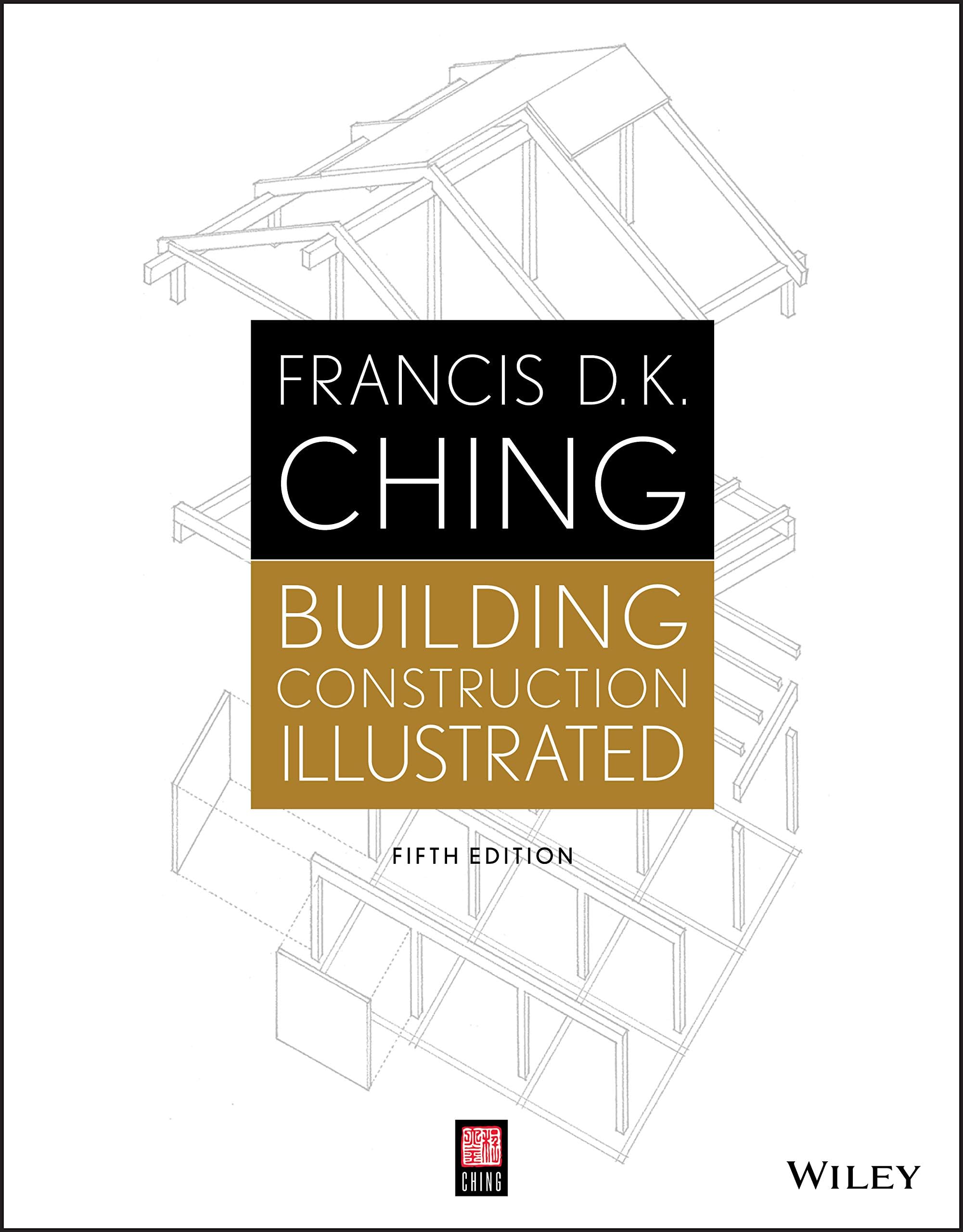
Building Construction Illustrated
Product ID: 1782389
Buy anything from 5,000+ international stores. One checkout price. No surprise fees. Join 2M+ shoppers on Desertcart.
Desertcart purchases this item on your behalf and handles shipping, customs, and support to Vanuatu.
The classic visual guide to the basics of building construction, now with a 3D digital building model for interactive learning For over three decades, Building Construction Illustrated has offered an outstanding introduction to the principles of building construction. This new edition of the revered classic remains as relevant as ever, providing the latest information in Francis D.K. Ching's signature style. Its rich and comprehensive approach clearly presents all of the basic concepts underlying building construction. New to this edition are digital enhancements delivered as an online companion to the print edition and also embedded in e-book editions. Features include a 3D model showing how building components come together in a final project. llustrated throughout with clear and accurate drawings that present the state of the art in construction processes and materials Updated and revised to include the latest knowledge on sustainability, incorporation of building systems, and use of new materials Contains archetypal drawings that offer clear inspiration for designers and drafters Reflects the 2012 International Building Codes and 2012 LEED system This new edition of Building Construction Illustrated remains as relevant as ever, with the most current knowledge presented in a rich and comprehensive manner that does not disappoint. Review: A Treasury of Architectural Graphics, to be Used with Other Books - I have been searching for books that guide the reader through the design of an ideal home. I purchased BUILDING CONSTRUCTION ILLUSTRATED, by Francis Ching, because of its large reader base and exceptionally favorable reviews. Based on my search, I rate this book as best in its class, i.e., among books that help architects to prepare drawings for commercial building construction. However, this is not a practical book for designing, renovating, or repairing a home. I suggest two books that are more useful for readers with a residential interests. WHAT IT CONTAINS Ching’s book is primarily a catalog of detail drawings, arranged in these chapters: 1. The Building Site 2. General Structural Issues 3. Foundations 4. Floors 5. Walls 6. Roofs 7. Moisture & Thermal Protection 8. Doors & Windows 9. Stairs, Fireplaces, Space Layout, etc. 10. Interior Finishes 11. HVAC & Electrical 12. Materials & Fasteners APPENDIX. Dimensions, Loads, Fire Protection, Noise, etc. The book has about 500 pages. The drawings number in the thousands, so there is a lot of information on each page. I can’t imagine any other construction book that has a greater volume of sheer detail. The drawings are extensively annotated. The annotations are as important as the drawings themselves, providing an education about each assembly. In addition to the detail drawings, Ching includes a number of illustrated tutorials on various topics, such as structural forces, that are informative and well rendered. Unfortunately, in this fifth edition, the text is almost illegibly small and light. The spidery font is a disaster. Even with strong glasses and good lighting, reading the text is a chore. Also, the graphics tend to be somewhat too small. The book is printed entirely in monotone black, or maybe it’s dark grey. These flaws seriously undermine the usability of the book. WHAT IT ISN’T Ching’s book is not a design guide. It is like a trunk full of building blocks that contains no guidance in assembling the blocks. Ching does not distinguish between methods and materials of different merit. For example, the book passes no judgement on flat roofs, active and passive solar heating, and forced-air heating, all of which have serious shortcomings. Also, it provides only limited coverage of fundamental design issues, including energy efficiency, comfort, and indoor health. This book is not for residential applications. Its attempt to cover both commercial and residential construction proves to be impractical. The two worlds of construction have little commonality of methods or materials. The great bulk of this book is oriented toward commercial construction, for example, with coverage of heavy steel and concrete structures. Someone who is designing a home would have to search for needles of useful information in this haystack. BETTER BOOKS FOR RESIDENTIAL DESIGN & CONSTRUCTION For those interested in residential design and construction, I recommend two books that are more useful, and certainly more accessible, than Ching’s book. The best design guide for homes is SUPER HOUSE: DESIGN YOUR DREAM HOME FOR SUPER ENERGY EFFICIENCY, TOTAL COMFORT, DAZZLING BEAUTY, AWESOME STRENGTH, AND ECONOMY, by Donald Wulfinghoff. This uniquely user-friendly guide uses eight “Steps” to create an ideal home from foundation to roof, or to deal with any individual part of a house, such as replacing the windows. It goes straight to the most desirable methods and materials, ignoring the rest. It pursues energy efficiency, comfort, health, strength, and durability throughout. Also, it warns the reader of commonplace bad practices to avoid. The best comprehensive reference book for residential construction data is THE VISUAL HANDBOOK OF BUILDING AND REMODELING, by Charlie Wing. It illustrates residential structures and materials in great depth, but offers no systematic design guidance. The diagrams and formatting of both books use color very effectively. In addition, SUPER HOUSE uses hundreds of color photographs to illustrate good and bad practices. Review: Carpentry 101 - Great book
| Best Sellers Rank | #253,086 in Books ( See Top 100 in Books ) #39 in Architecture (Books) #136 in Architectural Drafting & Presentation |
| Customer Reviews | 4.6 out of 5 stars 691 Reviews |
N**Y
A Treasury of Architectural Graphics, to be Used with Other Books
I have been searching for books that guide the reader through the design of an ideal home. I purchased BUILDING CONSTRUCTION ILLUSTRATED, by Francis Ching, because of its large reader base and exceptionally favorable reviews. Based on my search, I rate this book as best in its class, i.e., among books that help architects to prepare drawings for commercial building construction. However, this is not a practical book for designing, renovating, or repairing a home. I suggest two books that are more useful for readers with a residential interests. WHAT IT CONTAINS Ching’s book is primarily a catalog of detail drawings, arranged in these chapters: 1. The Building Site 2. General Structural Issues 3. Foundations 4. Floors 5. Walls 6. Roofs 7. Moisture & Thermal Protection 8. Doors & Windows 9. Stairs, Fireplaces, Space Layout, etc. 10. Interior Finishes 11. HVAC & Electrical 12. Materials & Fasteners APPENDIX. Dimensions, Loads, Fire Protection, Noise, etc. The book has about 500 pages. The drawings number in the thousands, so there is a lot of information on each page. I can’t imagine any other construction book that has a greater volume of sheer detail. The drawings are extensively annotated. The annotations are as important as the drawings themselves, providing an education about each assembly. In addition to the detail drawings, Ching includes a number of illustrated tutorials on various topics, such as structural forces, that are informative and well rendered. Unfortunately, in this fifth edition, the text is almost illegibly small and light. The spidery font is a disaster. Even with strong glasses and good lighting, reading the text is a chore. Also, the graphics tend to be somewhat too small. The book is printed entirely in monotone black, or maybe it’s dark grey. These flaws seriously undermine the usability of the book. WHAT IT ISN’T Ching’s book is not a design guide. It is like a trunk full of building blocks that contains no guidance in assembling the blocks. Ching does not distinguish between methods and materials of different merit. For example, the book passes no judgement on flat roofs, active and passive solar heating, and forced-air heating, all of which have serious shortcomings. Also, it provides only limited coverage of fundamental design issues, including energy efficiency, comfort, and indoor health. This book is not for residential applications. Its attempt to cover both commercial and residential construction proves to be impractical. The two worlds of construction have little commonality of methods or materials. The great bulk of this book is oriented toward commercial construction, for example, with coverage of heavy steel and concrete structures. Someone who is designing a home would have to search for needles of useful information in this haystack. BETTER BOOKS FOR RESIDENTIAL DESIGN & CONSTRUCTION For those interested in residential design and construction, I recommend two books that are more useful, and certainly more accessible, than Ching’s book. The best design guide for homes is SUPER HOUSE: DESIGN YOUR DREAM HOME FOR SUPER ENERGY EFFICIENCY, TOTAL COMFORT, DAZZLING BEAUTY, AWESOME STRENGTH, AND ECONOMY, by Donald Wulfinghoff. This uniquely user-friendly guide uses eight “Steps” to create an ideal home from foundation to roof, or to deal with any individual part of a house, such as replacing the windows. It goes straight to the most desirable methods and materials, ignoring the rest. It pursues energy efficiency, comfort, health, strength, and durability throughout. Also, it warns the reader of commonplace bad practices to avoid. The best comprehensive reference book for residential construction data is THE VISUAL HANDBOOK OF BUILDING AND REMODELING, by Charlie Wing. It illustrates residential structures and materials in great depth, but offers no systematic design guidance. The diagrams and formatting of both books use color very effectively. In addition, SUPER HOUSE uses hundreds of color photographs to illustrate good and bad practices.
R**N
Carpentry 101
Great book
D**V
Fantastic Resource, Tons of Information & Great Graphics!
Once again, Mr. Ching has taken his classic Building Construction Illustrated to a whole new level! The 5th Edition adds great new information on sustainability, new materials & practices and updates building MEP systems. As a 20+ year architect, I find my copies of his book to be my favorite references - they are never far from my hand for both residential and commercial projects. My ONLY complaint about the 5th edition is the type size and style... it's TINY! Maybe they were trying to make room to cram in more information, or maybe it is my aging eyes, but the text in this book is very small, very thin and very narrow, making it very hard to read! Despite that, this is a must have for design students, professionals, do-it-yourselfers and yes, even contractors!
J**7
Informative for a low voltage infrastructure guy that knows enough ...
Informative for a low voltage infrastructure guy that knows enough about construction to be dangerous! I used this to help me with my house addition that I quarter backed myself. Developed blueprints, worked with the city for approvals, and gathered the various trades (framer, drywaller, plumber, etc. Electrical I did myself with a C10 standing behind me) Some may think it's a bit pricey, but considering the cost of your project, this is a drop in the bucket.
M**H
College book
My son wanted this book to help with his studies and it has helped him greatly at college .
W**S
Extremely helpful book. Would recommend if you're in the fields of architecture and building construction.
Great book. Unlike the other review, I found the text to be very legible. This book is extremely helpful if you work in the architecture or building construction field. It covers almost everything you need to know, and has a clear labeled drawing for everything in the book.
C**N
Everything perfect. Thanks!
Everything perfect. Thanks!
L**O
good
If you want to draw people, animals, environments that actually exist, or anything like that, this book won't help you at all. There's also nothing in this "How to Draw" book about value or shading, at all. The book seems to be written by working concept artists for other working concept artists. Why someone already gainfully employed in their chosen profession would need a manual on the rudiments of their craft is a mystery for you to solve, dear reader
M**S
A very good Book.
Excellent book for everybody..
J**S
Great guide
Great text that shows clearly how building assemblages come together, and using standards and conventions from the industry. If you want to learn how buildings work, this book is for you.
T**D
Very nice book
This book is really helpful and i am glad i ordered it😄
A**R
Highly recommend!
I used this book when I was doing my degree in Architecture and it saved my life when it came to articulating the technical build up of components and it helped me understand details. The images are clear and the accompanying text is easy to understand. Francis D. K. Ching always produces great books.
N**I
... basically the same with the technology of the day great piece of work
This book is a classic over the years and it has maintained the standard and regulations of the profession it is basically the same with the technology of the day great piece of work
Trustpilot
2 weeks ago
1 month ago