We remain fully operational. Our teams are working around the clock to ensure your deliveries continue safely.

DOWNLOAD THE APP


Copyright © 2025 Desertcart Holdings Limited
DOWNLOAD THE APP
Buy anything from 5,000+ international stores. One checkout price. No surprise fees. Join 2M+ shoppers on Desertcart.
Desertcart purchases this item on your behalf and handles shipping, customs, and support to Vanuatu.
💧 Stay ahead with contactless precision—because your liquid level deserves smarter sensing!
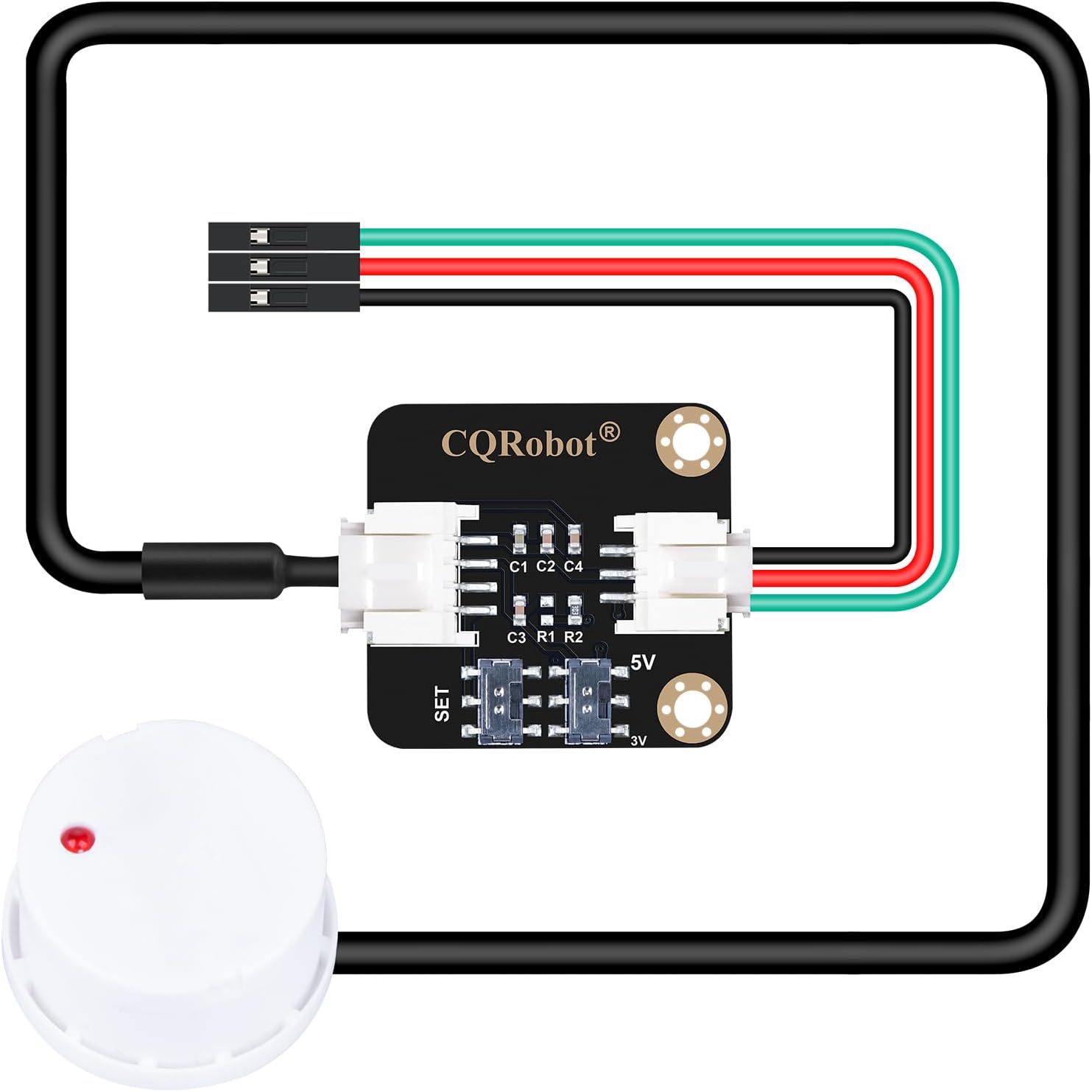
The CQRobot Non-Contact Water/Liquid Level Sensor offers high-sensitivity, interference-resistant detection of liquid levels through non-metallic container walls up to 13mm thick. With a rapid 500ms response time and selectable 3.3V/5V output, it’s engineered for seamless integration with Arduino, Raspberry Pi, and other motherboards. Ideal for industrial, agricultural, aquarium, and chemical applications, it ensures safe, reliable monitoring of diverse liquids including corrosive substances, all without direct contact or sensor fouling.


| ASIN | B07ZMHJ6NN |
| Best Sellers Rank | #34,930 in Industrial & Scientific ( See Top 100 in Industrial & Scientific ) #2 in Liquid Level Sensors |
| Brand Name | CQRobot |
| Current Rating | 50 Milliamps |
| Customer Reviews | 4.5 4.5 out of 5 stars (403) |
| Item Weight | 0.05 Kilograms |
| Manufacturer | CQRobot |
| Material Type | Ceramic |
| Maximum Supply Voltage | 5 Volts (DC) |
| Model | CQRSENYW001 |
| Mounting Type | Surface Mount |
| Output Type | analog voltage, analog current |
| Part Number | CQRSENYW001 |
| Response Time | 500 Milliseconds |
| Sensing Distance | 13 Millimeters |
| Specific Uses For Product | industrial production, aquarium, chemical liquid, agriculture, gardening |
| Style Name | Non-Contact Type-1 |
| Upper Temperature Rating | 105 Degrees Celsius |
C**D
Perfect for XMas tree water level measurement
My Christmas tree savior. I used this to monitor the water level in my Christmas tree. It worked perfect. My previous sensor got all gummed up and had calcium deposits on it, this worked flawlessly and came out clean at the end of the season. It took a little effort to get the ESPHome device to interpret the frequency signal but that was mostly my learning effort....it was only a few lines of code. You end up with 4 distinct levels which is perfect for my use case. Sensor board + ESP device fit into basically an Altoids tin.
J**F
Works as described
So Far these are doing a great job. Finding a good mounting point was problematic. These can detect water through some pretty thick walls, but it isn't very consistent when reading a PVC Pipe. I'm using this product to measure when water is present in the drain pipe so it can turn on the pump. I had to create a "clean-out" port and attach the sensor to the plug. It works, but allows water to build up before switching on the pump and turns off too early. So I let it trigger, then pump for additional time to let it get empty.
J**S
Solid product!
I used this in conjunction with a 5 gallon bucket, a cheap aquarium pump I had laying around, an Esp32 and a smart plug with home assistant. I have a dehumidifier with no reservoir in a room I did not want to cut a discharge line hole in, so I ran a line to a bucket, hot glued this sensor to the top of the bucket, wired up to my Esp32 as an input then set up the automation in home assistant. When the level sensor is active, it triggers an automation to turn on the smart relay which turns on the pump for 30 seconds and then shuts off. Simple fix for me and has been running strong for a year now.
J**T
$3 Gift card
Looks Nice but I haven’t assembled it yet so I’m not sure if it even works.
T**S
Works Great and Easy to Install
Super easy to install and set up. Works perfectly for detecting liquid levels without any contact, and it’s compatible with Arduino and Raspberry Pi just as advertised. Does exactly what it’s supposed to—great little sensor for projects.
M**J
Si, el producto cumple con lo esperado
J**N
Great! Works as advertised! Will buy more!
Does just what I expected. Thanks to some free Python code available online which I modified to my needs, I had this hooked to my old pi1b above my sump pump emaling me if the water level reaches the sensor before I even thought to check the time, so, it took, like, minutes from unboxing to deployment! Will buy again!
R**.
Works great with Reef Pi
Works great using my Reef Pi, and a good choice if you cant drill into your container for the optical switch. Plug and play and for those interested I'm using Pin 18. Mine did come with a cable going from the 3 pin board connector to three single Female Dupont connectors to be able to plug onto the pin outs of the raspberry pi/breakout board. Pi recognized it instantly as an input. The board that comes with the sensor has two switches, one is a "set" that reverses the polarity, the other selects the voltage 3V & 5V, i have mine set 3.3V for the output to the Pi GIPO. Supply power to the sensor is still 5V regardless of the switch position. The only issue i saw was there is no adjustment screw for sensitivity, as can be seen in the picture of the installed sensor, . I did have to make sure the glass was clean on the inside of the tank, also using the 3M adhesive strip moved it off of the glass which helped with a false trigger. There is a little bit of a sweet spot when it comes to distance from the glass. After that sweet spot was found, as seen in the second picture, the screen shot from my Reef Pi shows it working normally. The distance not not an issue when i placed it on my plastic ATO bucket. Side note, it also worked on my ceramic coffee mug when i was bench testing it. I will probably get a few more as i expand my setup, the fact that these can be placed externally is extremely useful.
E**O
Sensor de nivel de líquido sin necesidad de contacto directo con el líquido. La ventaja que tienen este tipo de sensores por una parte es que no sufren la corrosión ni la acumulación de cal que tienen los que están en contacto directo con los líquidos. Este sensor una de las utilidades que tiene es determinar cuando el nivel de líquido de un tanque alcanza un cierto nivel. Puede usarse para calcular la lluvia acumulada o para avisarnos de cuando debemos rellenar un depósito de agua para riego de plantas o avisarnos de cuando debemos vaciar la cubeta en la que recogemos el agua del aire acondicionado. Os recomiendo ponerlo en una caja estanca, quedando solo el sensor fuera y dejando dentro el arduino, raspberry, esp32 o el microcontrolador que uses. Por uno de los huecos puedes sacar un alimentador o instalar un usb en la caja para recargar la batería, en caso de querer usarlo así.
J**Y
Le capteur à été utilisé avec un mcu pour contrôler le niveau de remplissage d’eau d’un réservoir d’un système et le vidanger lorsqu’il est plein. Le problème est que lorsqu’une goutte d’eau éclabousse au hasard la lentille du capteur, ce dernier s’active alors de manière erronée tant et aussi longtemps que la goutte persiste sur cette dernière. Dans ma situation, cela occasionnait une vidange erronée du réservoir. J’ai dû opter pour un autre type de capteur (capacitif) afin de palier à la situation…
T**O
Ces capteurs fonctionne hyper bien il me permettent de remplir et de contrôler le niveau d'un réservoir avec un Arduino
F**A
Complemento para Arduino o Raspberry de alta calidad, bien protegido y fabricado con esmero, este sensor permite comprobar el nivel en un depósito sin entrar en contacto con el líquido, ideal para aplicaciones industriales, un lujo para tener en clase… PRESENTACIÓN: Viene en una pequeña cajita, protegido con una bolsita sellada anti-UV, lo que garantiza que lo recibamos en buenas condiciones. No trae ningún tipo de manual, aunque en la web del fabricante disponen de una página exclusiva para este set, con una explicación exhaustiva del montaje, con ejemplos de posicionamiento, esquema de pruebas e incluso códigos de ejemplo, tanto para Arduino como Raspberry: _ Sensor de nivel de líquido sin contacto, adecuado para instalar en las paredes externas de recipientes, depósitos o tanques, sin contacto directo con líquido, sin corrosión, sin deterioro por ácidos y álcalis, libre de incrustaciones u otros desechos. _ La sonda tiene un diámetro de 28 mm., la placa es de 30 x 30 mm, el cable entre sonda y placa mide 48 cm. y por el otro lado el cable a la micro-controladora mide 30 cm. _ La sonda puede detectar el nivel de agua hirviendo, ya que soporta trabajar hasta 105 °C, y tiene un acabado IP67, lo que permite trabajar a la intemperie… _ Tratamiento especial para interferencias y campos electromagnéticos… _ Especial para contenedores NO METÁLICOS, como plástico, vidrio, cerámica, etc… _ La distancia de detección puede alcanzar 12 mm _ Tiene un interruptor para seleccionar el voltaje de entrada, entre 3 y 5 V. _ Tiene un interruptor para seleccionar el modo de funcionamiento, abierto o cerrado. Pensado especialmente para aplicaciones industriales, este es un dispositivo listo para su uso. Simplemente hay que conectarlo a una placa de Arduino o Raspberry según el esquema indicado en la web del fabricante. Un lujo para tener en Institutos y Escuelas para aulas de robótica, electrónica y mecánica de fluidos. Nosotros hemos realizado la prueba con una placa Arduino UNO cargada con el código fuente del fabricante, una jarra de cristal de 6 mm. de grosor y ha detectado perfectamente cuando el nivel a llegado al módulo de tres líquidos diferentes, agua, aceite y gaseosa con muchas burbujas… Ha sido muy interesante… En resumen, si buscas una sonda de nivel de líquidos, especial para usar por el exterior del contenedor, esta es una de las mejores opciones, muy bien fabricado, con la información necesaria en la web del fabricante… Ideal para aplicaciones industriales, comerciales y sobre todo para uso educativo en Secundaria o Formación Profesional… Saludos!!!
F**A
Complemento para Arduino o Raspberry de alta calidad, bien protegido y fabricado con esmero, este sensor permite comprobar que un líquido llega a un determinado nivel por medio de un sistema fotoeléctrico de alta precisión… PRESENTACIÓN: Viene en una pequeña cajita, protegido con una bolsita sellada anti-UV, lo que garantiza que lo recibamos en buenas condiciones. No trae ningún tipo de manual, aunque en la web del fabricante disponen de una página exclusiva para este set, con una explicación exhaustiva del montaje, con ejemplos de posicionamiento, esquema de pruebas e incluso códigos de ejemplo, tanto para Arduino como Raspberry: _ Sensor de nivel por contacto, con una estructura de diodo emisor incorporado y fototransistor, encapsulados, haciendo que no entren en contacto directo con el líquido. _ La sonda tiene un diámetro de 20 mm., tiene un encapsulado de plástico, goma de estanqueidad y un sistema de rosca y tuerca para sujetarla a la pared del recipiente. _ La placa es de 30 x 30 mm, el cable entre sonda y placa mide 48 cm. y por el otro lado el cable a la micro-controladora mide 30 cm. _ La sonda puede detectar líquidos calientes hasta un límite de 105 °C. _ Tratamiento especial para interferencias y campos electromagnéticos… _ Tiene un interruptor para seleccionar el voltaje de entrada, entre 3 y 5 V. _ Se puede instalar en cualquier posición, horizontal, vertical, diagonal, cabeza abajo… Pensado especialmente para aplicaciones industriales, este es un dispositivo listo para su uso. Simplemente hay que conectarlo a una placa de Arduino o Raspberry según el esquema indicado en la web del fabricante. Un lujo para tener en Institutos y Escuelas para aulas de robótica, electrónica y mecánica de fluidos. Nosotros hemos realizado la prueba con una placa Arduino UNO cargada con el código fuente del fabricante, varios vasos de cristal, plástico y metal, con líquidos diversos como agua, aceite, gaseosa, agua hirviendo y chocolate caliente muy espeso… Ha detectado todos los niveles con precisión así que tocaban la punta de la sonda, a destacar que no le afectó el vapor del agua hirviendo ni la densidad el chocolate… Perfecto… En resumen, si buscas una sonda de nivel de líquidos de calidad superior, con detección óptica y lista para conectar a un micro-controlador, esta es la opción de lujo, con calibración y sensibilidad garantizadas y una estética fácil de usar… Ideal para profesionales… Saludos!!!
Trustpilot
1 week ago
1 month ago