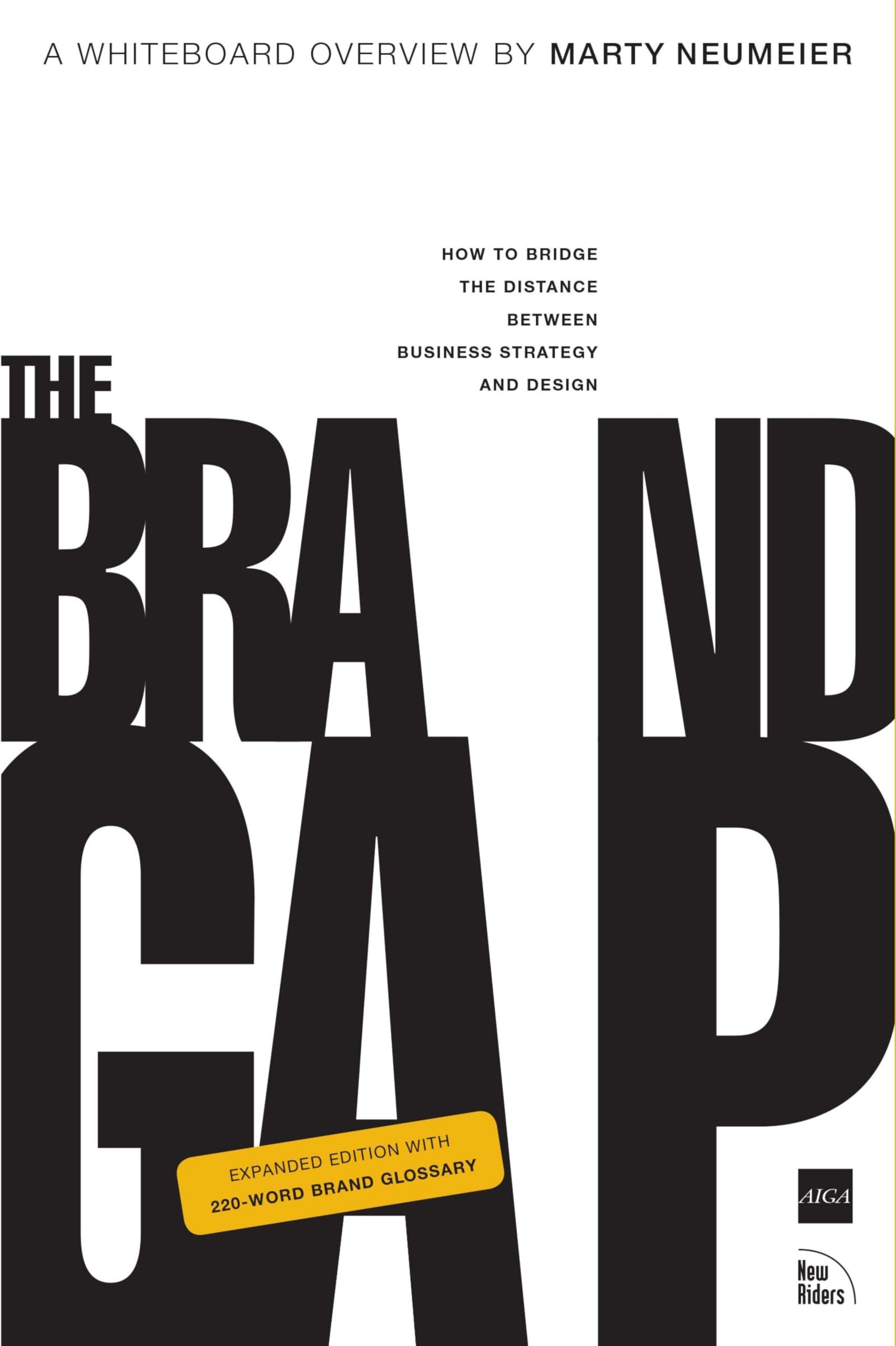

The Brand Gap: How to Bridge the Distance Between Business Strategy and Design
Product ID: 1868262
Buy anything from 5,000+ international stores. One checkout price. No surprise fees. Join 2M+ shoppers on Desertcart.
Desertcart purchases this item on your behalf and handles shipping, customs, and support to Vanuatu.
THE BRAND GAP is the first book to present a unified theory of brand-building. Whereas most books on branding are weighted toward either a strategic or creative approach, this book shows how both ways of thinking can unite to produce a “charismatic brand”―a brand that customers feel is essential to their lives. In an entertaining two-hour read you’ll learn: • the new definition of brand • the five essential disciplines of brand-building • how branding is changing the dynamics of competition • the three most powerful questions to ask about any brand • why collaboration is the key to brand-building • how design determines a customer’s experience • how to test brand concepts quickly and cheaply • the importance of managing brands from the inside • 220-word brand glossary From the back cover: Not since McLuhan’s THE MEDIUM IS THE MESSAGE has a book compressed so many ideas into so few pages. Using the visual language of the boardroom, Neumeier presents the first unified theory of branding―a set of five disciplines to help companies bridge the gap between brand strategy and customer experience. Those with a grasp of branding will be inspired by the new perspectives they find here, and those who would like to understand it better will suddenly “get it.” This deceptively simple book offers everyone in the company access to “the most powerful business tool since the spreadsheet.” Review: eye opening, easy and quick read - I purchased this book on a whim and boy am I glad I did. As a designer and someone with a little marketing knowledge and experience I had a very general idea of what branding is. This book was very inspirational in laying down a business minded approach to the identity that your customes see you as and not what you think your identity is. It does not suggest large, intense studies and thousands of dollars spent on focus groups and so on. It illustrates the questions you should ask and the answers you should search for to create "magic" in the new economy. Reading this could not have come at a better time. The knowledge it reinforced assisted me in talking up a deal to design for a company run by a Stanford grad with 15 years of marketing experience. Simply put.... for a book with a $15 cover price, you get more then your money worth. Quick, easy, and vey educational. his book has made me want to read up more on the internal workings of branding to reinforce my design and business skills. there is a thin line between a goo designer and a great comunicator. Review: The best part of the book is the design and style - Clear and to the point. Marty Neumeier articulates his “best practices” to branding, debunks old myths and brings fresh perspective to helping businesses communicate themselves in the most effective and strategic ways. He explains the gap between creativity and strategy is often too large and therefore business are suffering. The left and right brain are not working together. The answer to the mile-wide gap? Neumeier argues it is the charismatic brand. He explains getting this brand requires 5 disciplines: Differentiate, Collaborate, Innovate, Validate, Cultivate. The entirety of the book is unpacking these disciplines and applying them to real-world experiences. The down side to this book is the examples are not all relevant; many of the examples are outdated. For example: he referenced on page 97 how web pages cram too much data on the home page and are unappealing to read. However, the majority of today’s web pages are specifically designed with ascetics and simplicity in mind. He also mentions technology phobia and the fear of web design, while in today’s world that is not the case. Overall, the application of the 5 disciplines are relevant in any persons context, despite some of the outdated references. The book is marketing heavy, but does not present itself with advertising jargon; he is not writing exclusively to advertisers or business executive, but to a much larger audience. Although it is marketing heavy, it is still applicable to the common man. The best part of the book is the design and style. He writes with simplicity in mind. He expresses his points clearly, with examples, and clarity. Neumeier’s packaging of the book is a manifestation of his own beliefs. It goes against the grain of the typical book layout; presented with lots of pictures, large fonts, creative sayings and captivating graphics. The book is like none I have seen. He implements two 2 of the 5 disciplines: differentiated and innovative. Must read for anyone wanting to better communicate their product.



| Best Sellers Rank | #37,135 in Books ( See Top 100 in Books ) #3 in Product Management #27 in Advertising (Books) #215 in Entrepreneurship (Books) |
| Customer Reviews | 4.5 out of 5 stars 1,618 Reviews |
A**H
eye opening, easy and quick read
I purchased this book on a whim and boy am I glad I did. As a designer and someone with a little marketing knowledge and experience I had a very general idea of what branding is. This book was very inspirational in laying down a business minded approach to the identity that your customes see you as and not what you think your identity is. It does not suggest large, intense studies and thousands of dollars spent on focus groups and so on. It illustrates the questions you should ask and the answers you should search for to create "magic" in the new economy. Reading this could not have come at a better time. The knowledge it reinforced assisted me in talking up a deal to design for a company run by a Stanford grad with 15 years of marketing experience. Simply put.... for a book with a $15 cover price, you get more then your money worth. Quick, easy, and vey educational. his book has made me want to read up more on the internal workings of branding to reinforce my design and business skills. there is a thin line between a goo designer and a great comunicator.
A**H
The best part of the book is the design and style
Clear and to the point. Marty Neumeier articulates his “best practices” to branding, debunks old myths and brings fresh perspective to helping businesses communicate themselves in the most effective and strategic ways. He explains the gap between creativity and strategy is often too large and therefore business are suffering. The left and right brain are not working together. The answer to the mile-wide gap? Neumeier argues it is the charismatic brand. He explains getting this brand requires 5 disciplines: Differentiate, Collaborate, Innovate, Validate, Cultivate. The entirety of the book is unpacking these disciplines and applying them to real-world experiences. The down side to this book is the examples are not all relevant; many of the examples are outdated. For example: he referenced on page 97 how web pages cram too much data on the home page and are unappealing to read. However, the majority of today’s web pages are specifically designed with ascetics and simplicity in mind. He also mentions technology phobia and the fear of web design, while in today’s world that is not the case. Overall, the application of the 5 disciplines are relevant in any persons context, despite some of the outdated references. The book is marketing heavy, but does not present itself with advertising jargon; he is not writing exclusively to advertisers or business executive, but to a much larger audience. Although it is marketing heavy, it is still applicable to the common man. The best part of the book is the design and style. He writes with simplicity in mind. He expresses his points clearly, with examples, and clarity. Neumeier’s packaging of the book is a manifestation of his own beliefs. It goes against the grain of the typical book layout; presented with lots of pictures, large fonts, creative sayings and captivating graphics. The book is like none I have seen. He implements two 2 of the 5 disciplines: differentiated and innovative. Must read for anyone wanting to better communicate their product.
K**6
A great book for basic knowledge for creating a brand/or for re-evaluating your brand
This book helps an organization how to build its brand. This book is appropriate anywhere from a sole proprietorship all the way up to a corporate branding strategy. It should be noted that this book is a foundational learning book. Mastering the principles described in this book will put a person on the right track for creating a solid brand, but it is not all inclusive. The author includes past company experiences to illustrate his points and make them more vivid to the reader. The book is based upon five disciplines of branding: differentiate, collaborate, innovate, validate, and cultivate. The author suggests, throughout the book, that it is the mastering of these five disciplines that creates a brand. Perhaps the best thing about this book is the simplicity of it. With five simple disciplines, each of the are expanded upon throughout the book, one develops a strong foundational knowledge of the principles within the book by the time he/she reaches the end. The book seems short and sweet because it does not read like a novel as many popular books do. Too many non-fiction books these days contain narratives that are much longer than the main points to the chapters... sometimes creating misses or near misses with regards to making a clear and strong point. This book does not fall into that trap. The illustrations are short and simple and make the point seem pronounced. Perhaps the best feature of this book for those that lead busy lives is the fact that you only need to read this book once. There is a summary and glossary at the end of the book that highlights key points made throughout the entire book. So, once a person reads and understands the material once, the summary will aid in keeping the memory of important points fresh with a quick glance. What makes this book so great, the end summary, is also what seems to make this book weak. It feels as though a person is just starting to "get in the groove" of the book and then there is the summary. The summary is absolutely appropriate and largely beneficial for keeping the material fresh, but it feels as though the last 30ish% of the book was removed to make room for the summary and glossary. The book seems to have a sudden ending. I expected a few more chapters tying together the material covered in the previous chapters, allowing for deeper insights. This book gives individuals a short and simple process for creating a brand. It offers appropriate insight for those that are not highly developed in branding and it is a short book that can easily be read within a week, even for those with busy schedules. The end book summary keeps the material fresh for busy people as well without having to re-read the entire book. The glossary included also aids those with a lack of business terminology. If you're just getting started with creating a brand and have little business experience, this book is a good one for you.
M**Y
I constantly quote this book & recommend it often!
Great book! It has really helped frame brand building for me. Love Marty!
D**A
Junk food for thought.
The book starts off with a bang and really grabbed my attention throughout the first half. After that the book fizzles out a bit and the information starts to lose some of its glimmer. The Brand Gap prides itself on being such a short title about a large subject. Well, I think the book could have been even shorter. It reads like a bloated blog post and interjects random visuals that are only sometimes helpful. The Brand Gap is also quaintly outdated. At one point the author talks about how most websites are poorly designed and shows an example of something ala 1998. Well...A LOT has changed since this book was published (2006) and there are numerous examples of gorgeous, and useful websites on the market today. Granted, there's lots of bad design out there, but things have, and are, getting better. A particularly embarrassing example is the author's use of Amazon's market share to elucidate his point about creating a focused brand. He gloats about Amazon losing 30% of it's market share after extending it's repertoire beyond books. Well guess what...the joke is on us now. Amazon magically broke the curse of expansion and their sales have risen 219% to $34.2 billion between 2006 and 2010. This NEEDS to be addressed in the book, otherwise the author's use Amazon's statistics is simply misinformation. It takes away a lot of the books credibility. And speaking of credibility...For a book that stresses the importance of design and aesthetics, it needs to take a look in the mirror. The typesetting in the book is "horsey" and wouldn't even be acceptable in a first-semester graphic design course. Sure, I'm splitting hairs here, and most people wouldn't notice the typographic nuances, but a book that is half about design needs to take things like this seriously. It's ironic that the author claims that aesthetics build trust, however his own book leaves a lot of aesthetic loose ends. The book is littered with many "a-ha" moments and interesting tidbits, but I don't feel like I have much more of an understanding of branding than I did before I read the book. It's a fun read, but nothing I would say anyone absolutely had to read.
V**N
"The Brand Gap"; a helpful and practical description of branding
Marty Neumeier in his book “The Brand Gap” brings a simple clarity to the concept of brand, provides five clear axis by which brand is created, and leaves the reader with a helpful glossary pf terms used in the branding industry. Neumeier reveals common misconceptions about brand, first in terms of what brand is not; brand is not logo, brand is not corporate identity, and brand is not product. Neumeier defines brand as “A brand is a person’s gut feeling about a product, service, or company. It’s a GUT FEELING because we’re all emotional, intuitive beings, despite our best efforts to be rational. It’s a PERSON’S gut feeling, because in the end the brand is defined by individuals, not by companies, markets, or the so-called general public. Each person creates his or her own version of it. While companies can’t control this process, they can influence it by communicating the qualities that make this product different than that product. When enough individuals arrive at the same gut feeling, a company can be said to have a brand. In other words, a brand is not what YOU say it is. It’s what THEY say it is.” (Kindle Locations 109-114) Neumeier presents brand using five axis of discipline: differentiate, collaborate, innovate, validate, and cultivate. In terms of differentiation, Neumeier quotes brand consultant Greg Galle of Creative Capital; “demand unambiguous answers to three little questions: 1) Who are you? 2) What do you do? 3) Why does it matter?” (Kindle Locations 213-216). Collaborate is represented in terms of allegory; “Building a brand today is a little like building a cathedral during the Renaissance. It took hundreds of craftsmen scores of years, even generations, to complete a major edifice." (Kindle Locations 327-328). Innovate calls for zagging when others are zigging; “Would-be leaders in any industry must come to grips with a self-evident truth—you can’t be a leader by following. Admittedly, it’s difficult to zag when every bone in your body says zig.” (Kindle Locations 439-441) To validate Neumeier quotes copywriter Steve Bautista: “When people talk to themselves, it’s called insanity. When companies talk to themselves, it’s called marketing.” (Kindle Locations 680-681). Neumeier provides some handy tricks that help reveal the strength of a company’s brand. To cultivate is the act of orienting the brand to the truth; “Drama coach Stella Adler often told her students, “Don’t act. Behave.” Living brands are not a stylistic veneer but a pattern of behavior that grows out of character. When the external actions of a company align with its internal culture, the brand resonates with authenticity. If a brand looks like a duck, quacks like a duck, walks like a duck, and swims like a duck, then it must be a duck. If it swims like a dog, however, people start to wonder.” (Kindle Locations 770-773) And from Neumeier's helpful "Brand Glossary", an example; "frankenbrand - A poorly aligned brand, often resulting from a merger or acquisition; a dysfunctional brand" (Kindle Locations 1119-1120) Neumeier’s “The Brand Gap” is a wonderful perspective on brand. Neumeier is a guru, and his examples provide a long history of involvement. Some of the examples are dated, but the overall effect is of deep experience, rather than simply dated war storied of a branding veteran.
M**Y
Defining Brand
Marty does an excellent job of defining what brand is and isn’t. Highly recommend reading this book if you’re a freelancer or agency owner.
T**N
Branding for the rest of us
I am not a CEO, owner, entrepreneur, SVP of marketing, nor do I work in a company struggling to turn a fourth-tier brand into a world beater. Those are the native audiences for this wonderful, finish-it-in-a-plane-ride book. I'm a writer and consultant trying to explain branding to fundraisers, and what I intensely like about Marty Neumeier's brief "whiteboard overview" (his phrase) of branding is that it answers ALL my questions about branding and brand strategy quickly, simply, with nicely selected examples. It starts with what branding is NOT (not your logo, not your visual ID, not your products). Then it defines what it truly is, "A brand is a person's gut feeling about a product, service, or company." That's in the first couple of pages. But of course there's so much more. I love a good, insight-rich how-to book the way others love a good mystery. The Brand Gap is among the best.
R**H
Most Imp Brand book
This book is an eye opener. It goes in different direction. Which is true
D**T
Full of insight. Short, sharp and to the point. My kind of book.
Full of insight. Short, sharp and to the point. My kind of book.
M**E
Awesome
If there is one book you should read concerning branding, it's this one. Marty explains clearly how design and branding should be used together and how you build your brand.
J**K
top author
top
S**I
Some of the illustrations/diagrams in the book are not hi resolution
The book is good and works well on the kindle app some of the illustrations or diagrams are very poor in resolutions thats very disappointing. Overall content is easy to read and good.
Trustpilot
1 month ago
1 month ago