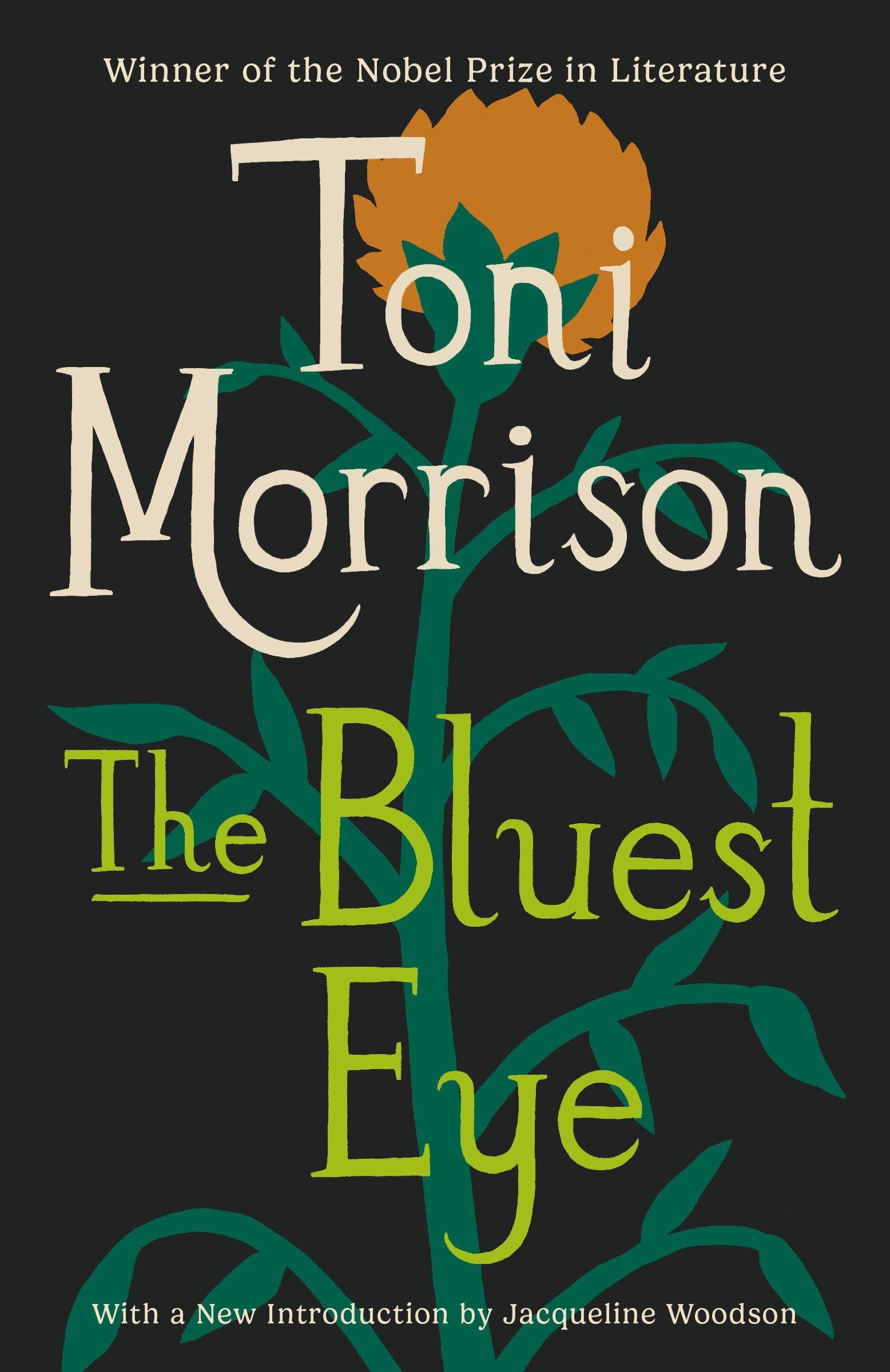
The Bluest Eye: A Novel (Vintage International)
Product ID: 1961447
Buy anything from 5,000+ international stores. One checkout price. No surprise fees. Join 2M+ shoppers on Desertcart.
Desertcart purchases this item on your behalf and handles shipping, customs, and support to Vanuatu.
From the Publisher Review: A classic - The Bluest Eye is a classic for the powerful themes that continue to relate to society today. As Toni Morrison mentions in her foreword, we all know what it feels like to be disliked or rejected, be it for a moment or for a suspended period of time. Moving beyond this statement, we all know what it feels like to be dissatisfied with our appearance. Even if we are generally happy with how we look, there will be periods of time when we wish that we were "prettier." The media bombards with with images of the feminine (and masculine) ideal. Advertisements tell us how we can look sexier and be more confident (by buying their products). We are constantly told that we are not up to standard and ought to try harder to look like the ideal. The problem is that we can try our whole lives and never look like the "ideal." Toni Morrison's The Bluest Eye examines the intersectionality of race, class, gender, and age in the oppression of black people through beauty ideals and the pressure to conform to them. She does this through sketches in the lives of multiple characters of different backgrounds and across generations. Generally, I'm not very fond of novels that move around so much, as it makes it difficult to get to know any particular character, but this technique works for Morrison's novel. Rather than events moving the plot forward (like most novels), the plot takes us through the lives of different characters in order to show how the white beauty ideal influences black people of different temperaments, class, and circumstances . . . causing them to internalize racism. This does mean that there is a lot of narrating going on. At times, I even found it hard to focus on the page. For the most part, however, I felt that Morrison does a good job moving the plot forward. It definitely helps that her writing is strong and interesting with many, many beautiful, powerful lines that moved my heart. Once I started The Bluest Eye, I was reluctant to put down the novel for lengthy periods of time. Most importantly, these sketches show us how people come to be the people that they are today. Humans are not born to be terrible. The way our natures interact with the environment to which we are exposed shapes our character. There were characters who I disliked early in the book only to realize later that they were not such terrible beings. At least, not at first. Things happened, and maybe their response wasn't the healthiest, but they lived at some point in their lives. Until they internalized racism and began to believe that they deserved the bad things that happened to them. That people couldn't change. The most notable example of the influence of internalized racism is in the home of the Breedloves. Learning about the lives and thoughts of Mrs. and Mr. Breedlove helped me to better understand the environment in which Pecola grew up. Thinking about how Pecola and her brother's lives could have been different helped me to realize how oppression not only influences the people with whom it comes into immediate contact but also their children and the generations to come. (Compare the parenting Pecola receives to the parenting Claudia receives.) I also want to note how Morrison uses the Dick and Jane primer to emphasize the psychological element to oppression. The Dick and Jane primer portrays the ideal white family. The way its grammar and structure falls apart in the first pages of the novel reminds me of horror movies where a seemingly benign and pleasant scene falls apart to become something terrifying. In the same way, the lives of the black families, particularly that of the Breedloves, will upend in The Bluest Eye. The inclusion of distorted sections of the primer at the beginning of certain chapters foreshadows this. The Bluest Eye is haunting and beautiful. At the same time, it is terrible and brutal in its honest portrayal of the interlinking systems of oppression through race, class, gender, and age. There are explicit scenes of domestic violence, rape, and sex, as well as a pervasive sense of hopelessness. Nevertheless, there is life, love, and tenderness behind seemingly harsh acts. As Claudia says at the beginning of the novel, "since why is hard to handle, one must take refuge in how." Building upon this statement, if we can learn how things come to be, then we can learn how to ensure history does not repeat itself. We can learn how to keep future generations from sharing Pecola's end. Review: Well written social commentary about how we value others - This is the first novel I have read by Morrison, but I was aware of her iconic status as a writer before reading The Bluest Eye. Prior to reading this book, I read and was thoroughly impressed by “Red at the Bone” by Woodson. Woodson wrote that she was influenced and inspired by Morrison, which is primarily what led me to The Bluest Eye. Morrison’s legendary reputation is well earned. Her writing is superb and original. If someone gave me an excerpt written by Morrison, likely I could guess the author. Her writing is rich in description and raw truth. She does not placate or sugar coat. Morrison instead shocks and assaults the reader by shining a spotlight on the harsh truth. The Bluest Eye is uncomfortable, thought provoking and powerful. If you are considering reading The Bluest Eye, be aware there are some potentially triggering themes, including: incest, child molestation, one of the characters is a child predator, and some of the characters are sex workers. The major theme throughout the novel are the effects of pressure on women and young girls to conform to cultural and societal standards of beauty. Using a multi-generational storyline and a cast of female characters, Morrison challenges readers to think about where women get their sense of value and worth, and how that is impacted by the standards of beauty that are programmed into all of society. Morrison assumes the bitter truth that meeting societal standards of beauty results in better treatment and a higher social status. The story tackles how women’s lives are negatively affected if they cannot meet the beauty standard (such as having blue eyes, hence the novel’s title). In short, this novel offer rich social commentary about how we value people. I understand and agree wholeheartedly with the social commentary being made by Morrison. In summary, the story is about Pecola Breedlove, an 11-year-old black girl. Her mother, who she calls Mrs. Breedlove, works as a housekeeper and nanny for a wealthy white family. Her father, Cholly, is a drunk and does not work. The story begins and ends with Pecola, but Morrison gives extensive background on Pecola’s parents. Mrs. Breedlove was born and raised in the south and comes from a large family of origin. As a young woman, Mrs. Breedlove is a hard worker who cares for her family of origin despite it not being easy for her because she is born with a deformed foot. When she marries Pecola’s father and starts her own family, they move north. In her new community, Mrs. Breedlove feels isolated and alone. She is not accepted by the northern women who have different accents, clothes, and behavior expectations than where she came from in the south. When Mrs. Breedlove becomes pregnant with Sam, Pecola’s brother, during her pregnancy she loses two of her teeth. Once she loses her teeth, all hope of fitting in and belonging is lost to Mrs. Breedlove. In this pivotal event, she becomes resigned to the idea that she will never have friends. Mrs. Breedlove escapes into her work. Her only sense of belonging is with the family that pays her to clean their home and care for their daughter. There Mrs. Breedlove feels she has acceptance, appreciation, and control. In her own chaotic and unstable home, she feels out of control. In her employer’s home, she can adequately provide a safe, comfortable, organized, and orderly life. As a result, she comes to feel her own family and home are a nuisance to be endured, rather than a blessing. She sees her family as a burden and prefers caring for the white wealthy family’s home and daughter over her own home and children. Pecola’s father, Cholly Breedlove, had a traumatic childhood. His mother abandoned him on a trash heap when he was nine days old and likely was mentally ill. His father likely never knew about his existence, until Cholly seeks him out later when he’s a young adult, but his father summarily dismisses him with cursing. Spoiler alert - Cholly commits incest with Pecola while drunk and impregnates Pecola. With Pecola’s mother and father largely absent from her life and abusive when they are present, Pecola befriends and regularly visits sex workers that live nearby. They treat her to outings and food. The sex workers and some of her peers are her friends through whom she temporarily finds some comfort. However, through a mixture of media, friends, family, and cultural messaging Pecola is programmed to believe that she is “ugly.” She absorbs the cultural messaging that blue eyes are the prettiest eyes, and that hers do not meet the beauty standards. She learns to hate the way she looks. Woven throughout the story it is indicated how desperately Mrs. Breedlove and Pecola desire to possess the societal standard for physical beauty. Each are convinced it would change their lives if they could achieve having blue eyes and perfect teeth, for example. At one point, Pecola even approaches a former “Reverend “who is rumored to have a special connection with God, to request that she be given blue eyes. In what is arguably the weirdest scene in the book, the “Reverend” instead gives Pecola some poison, and tells her to feed it to a dog. When Pecola does this, the dog dies causing her even further trauma. Morrison does not spare Pecola and drives her point into readers until the end. Pecola eventually becomes unhinged and disengages from reality. Pecola’s former friends abandon her. She can no longer tell what is real and she creates a pretend friend who eventually abandons her too. Morrison is relentless in making her point and the tone of this novel is sad, hopeless, and desperate. She does not show her characters mercy in her pursuit to illustrate how the standards of beauty effect women and young girls. There are few redeeming characters, and no characters are spared the impact of the damage of not meeting societal beauty standards. Some characters that start out with some redeeming qualities are stripped of them by the end of the novel. This is not a light read but it is a literary wonder and may expose readers to new ways of seeing the world if they are brave enough to consider the raw perspectives of the characters.

| Best Sellers Rank | #2,325 in Books ( See Top 100 in Books ) #27 in Contemporary Literature & Fiction #44 in Coming of Age Fiction (Books) #215 in Literary Fiction (Books) |
| Customer Reviews | 4.5 out of 5 stars 17,969 Reviews |
C**L
A classic
The Bluest Eye is a classic for the powerful themes that continue to relate to society today. As Toni Morrison mentions in her foreword, we all know what it feels like to be disliked or rejected, be it for a moment or for a suspended period of time. Moving beyond this statement, we all know what it feels like to be dissatisfied with our appearance. Even if we are generally happy with how we look, there will be periods of time when we wish that we were "prettier." The media bombards with with images of the feminine (and masculine) ideal. Advertisements tell us how we can look sexier and be more confident (by buying their products). We are constantly told that we are not up to standard and ought to try harder to look like the ideal. The problem is that we can try our whole lives and never look like the "ideal." Toni Morrison's The Bluest Eye examines the intersectionality of race, class, gender, and age in the oppression of black people through beauty ideals and the pressure to conform to them. She does this through sketches in the lives of multiple characters of different backgrounds and across generations. Generally, I'm not very fond of novels that move around so much, as it makes it difficult to get to know any particular character, but this technique works for Morrison's novel. Rather than events moving the plot forward (like most novels), the plot takes us through the lives of different characters in order to show how the white beauty ideal influences black people of different temperaments, class, and circumstances . . . causing them to internalize racism. This does mean that there is a lot of narrating going on. At times, I even found it hard to focus on the page. For the most part, however, I felt that Morrison does a good job moving the plot forward. It definitely helps that her writing is strong and interesting with many, many beautiful, powerful lines that moved my heart. Once I started The Bluest Eye, I was reluctant to put down the novel for lengthy periods of time. Most importantly, these sketches show us how people come to be the people that they are today. Humans are not born to be terrible. The way our natures interact with the environment to which we are exposed shapes our character. There were characters who I disliked early in the book only to realize later that they were not such terrible beings. At least, not at first. Things happened, and maybe their response wasn't the healthiest, but they lived at some point in their lives. Until they internalized racism and began to believe that they deserved the bad things that happened to them. That people couldn't change. The most notable example of the influence of internalized racism is in the home of the Breedloves. Learning about the lives and thoughts of Mrs. and Mr. Breedlove helped me to better understand the environment in which Pecola grew up. Thinking about how Pecola and her brother's lives could have been different helped me to realize how oppression not only influences the people with whom it comes into immediate contact but also their children and the generations to come. (Compare the parenting Pecola receives to the parenting Claudia receives.) I also want to note how Morrison uses the Dick and Jane primer to emphasize the psychological element to oppression. The Dick and Jane primer portrays the ideal white family. The way its grammar and structure falls apart in the first pages of the novel reminds me of horror movies where a seemingly benign and pleasant scene falls apart to become something terrifying. In the same way, the lives of the black families, particularly that of the Breedloves, will upend in The Bluest Eye. The inclusion of distorted sections of the primer at the beginning of certain chapters foreshadows this. The Bluest Eye is haunting and beautiful. At the same time, it is terrible and brutal in its honest portrayal of the interlinking systems of oppression through race, class, gender, and age. There are explicit scenes of domestic violence, rape, and sex, as well as a pervasive sense of hopelessness. Nevertheless, there is life, love, and tenderness behind seemingly harsh acts. As Claudia says at the beginning of the novel, "since why is hard to handle, one must take refuge in how." Building upon this statement, if we can learn how things come to be, then we can learn how to ensure history does not repeat itself. We can learn how to keep future generations from sharing Pecola's end.
K**Y
Well written social commentary about how we value others
This is the first novel I have read by Morrison, but I was aware of her iconic status as a writer before reading The Bluest Eye. Prior to reading this book, I read and was thoroughly impressed by “Red at the Bone” by Woodson. Woodson wrote that she was influenced and inspired by Morrison, which is primarily what led me to The Bluest Eye. Morrison’s legendary reputation is well earned. Her writing is superb and original. If someone gave me an excerpt written by Morrison, likely I could guess the author. Her writing is rich in description and raw truth. She does not placate or sugar coat. Morrison instead shocks and assaults the reader by shining a spotlight on the harsh truth. The Bluest Eye is uncomfortable, thought provoking and powerful. If you are considering reading The Bluest Eye, be aware there are some potentially triggering themes, including: incest, child molestation, one of the characters is a child predator, and some of the characters are sex workers. The major theme throughout the novel are the effects of pressure on women and young girls to conform to cultural and societal standards of beauty. Using a multi-generational storyline and a cast of female characters, Morrison challenges readers to think about where women get their sense of value and worth, and how that is impacted by the standards of beauty that are programmed into all of society. Morrison assumes the bitter truth that meeting societal standards of beauty results in better treatment and a higher social status. The story tackles how women’s lives are negatively affected if they cannot meet the beauty standard (such as having blue eyes, hence the novel’s title). In short, this novel offer rich social commentary about how we value people. I understand and agree wholeheartedly with the social commentary being made by Morrison. In summary, the story is about Pecola Breedlove, an 11-year-old black girl. Her mother, who she calls Mrs. Breedlove, works as a housekeeper and nanny for a wealthy white family. Her father, Cholly, is a drunk and does not work. The story begins and ends with Pecola, but Morrison gives extensive background on Pecola’s parents. Mrs. Breedlove was born and raised in the south and comes from a large family of origin. As a young woman, Mrs. Breedlove is a hard worker who cares for her family of origin despite it not being easy for her because she is born with a deformed foot. When she marries Pecola’s father and starts her own family, they move north. In her new community, Mrs. Breedlove feels isolated and alone. She is not accepted by the northern women who have different accents, clothes, and behavior expectations than where she came from in the south. When Mrs. Breedlove becomes pregnant with Sam, Pecola’s brother, during her pregnancy she loses two of her teeth. Once she loses her teeth, all hope of fitting in and belonging is lost to Mrs. Breedlove. In this pivotal event, she becomes resigned to the idea that she will never have friends. Mrs. Breedlove escapes into her work. Her only sense of belonging is with the family that pays her to clean their home and care for their daughter. There Mrs. Breedlove feels she has acceptance, appreciation, and control. In her own chaotic and unstable home, she feels out of control. In her employer’s home, she can adequately provide a safe, comfortable, organized, and orderly life. As a result, she comes to feel her own family and home are a nuisance to be endured, rather than a blessing. She sees her family as a burden and prefers caring for the white wealthy family’s home and daughter over her own home and children. Pecola’s father, Cholly Breedlove, had a traumatic childhood. His mother abandoned him on a trash heap when he was nine days old and likely was mentally ill. His father likely never knew about his existence, until Cholly seeks him out later when he’s a young adult, but his father summarily dismisses him with cursing. Spoiler alert - Cholly commits incest with Pecola while drunk and impregnates Pecola. With Pecola’s mother and father largely absent from her life and abusive when they are present, Pecola befriends and regularly visits sex workers that live nearby. They treat her to outings and food. The sex workers and some of her peers are her friends through whom she temporarily finds some comfort. However, through a mixture of media, friends, family, and cultural messaging Pecola is programmed to believe that she is “ugly.” She absorbs the cultural messaging that blue eyes are the prettiest eyes, and that hers do not meet the beauty standards. She learns to hate the way she looks. Woven throughout the story it is indicated how desperately Mrs. Breedlove and Pecola desire to possess the societal standard for physical beauty. Each are convinced it would change their lives if they could achieve having blue eyes and perfect teeth, for example. At one point, Pecola even approaches a former “Reverend “who is rumored to have a special connection with God, to request that she be given blue eyes. In what is arguably the weirdest scene in the book, the “Reverend” instead gives Pecola some poison, and tells her to feed it to a dog. When Pecola does this, the dog dies causing her even further trauma. Morrison does not spare Pecola and drives her point into readers until the end. Pecola eventually becomes unhinged and disengages from reality. Pecola’s former friends abandon her. She can no longer tell what is real and she creates a pretend friend who eventually abandons her too. Morrison is relentless in making her point and the tone of this novel is sad, hopeless, and desperate. She does not show her characters mercy in her pursuit to illustrate how the standards of beauty effect women and young girls. There are few redeeming characters, and no characters are spared the impact of the damage of not meeting societal beauty standards. Some characters that start out with some redeeming qualities are stripped of them by the end of the novel. This is not a light read but it is a literary wonder and may expose readers to new ways of seeing the world if they are brave enough to consider the raw perspectives of the characters.
S**A
Good book but know what you're getting into beforehand.
(SPOILERS UPCOMING!!) This was my first Toni Morrison book so I definitely did not expect what was going to happen in the book. The physical quality of the book is great and the text was easy to read. My prior knowledge of this book and the author was simply what I read on the back. I was expecting it to be a more emotionally difficult read but not as disturbing as it became. The story follows three young black girls in 1940's USA: Claudia and Frieda (who are sisters) and Pecola. The namesake of the book comes from Pecola's obsession to have blue eyes to be accepted by her peers, who, in a society where whiteness is the beauty standard, make fun of her. The book definitely does not hold back on the issue of racism and especially focuses on internalized racism and oppression within the black community as most of the characters are black. It covers a couple of complex matters like wealth, class, societal beauty standards, family, and womanhood. (SPOILERS START) The way Toni Morrison talks about these issues is refreshing as she doesn't hold back and presents it in the way that these issues are in real life; raw, ugly, and complicated. The characters who face oppression in these books rarely, if ever see justice and the novel instead focuses on how they cope with it and the impact of it. The book is written very beautifully and is filled with a cold dose of reality for people who have not experienced oppression or societal pressure to the point that these characters have. The only issue I have with the book involves two scenes. One scene details Pecola's rape by her father, and another includes a character named Soaphead Church. The first scene goes into a little too much detail then I would like about the situation, making it seem a bit erotic in nature. A reminder that Pecola is only around 11-12 years old, if I remember correctly. Because of the way Morrison portrays and explains the actions of Pecola's father's thinking that lead to the rape, it leaves me with complicated feelings. There is also another excerpt where a young mixed man, Soaphead Church, writes about his love for little girls and mentions, though not as thorough as the rape scene, touching them and doing it in a way that they "enjoyed". The largest criticism of the book I have is that many of the scenes in which a character is assaulted is told from a point of view that focuses on the thoughts and actions of the abuser rather than the victim and, of course, shows how they try to justify their actions. Morrison never portrays any of their thinking as right or wrong, but just is. As someone who finds it hard to justify any sort of assult or abuse, it was very hard to finish this book. Great read but I would suggest reading another one of her books like Sula or Song of Solomon as this is definitely the hardest book, emotionally speaking, of Toni Morrison's to finish.
T**I
The Bluest Eye is a lyrically written painfully beautiful narrative with a didactic style (especially when compared with ...
Listed as one of the most often challenged or banned books, Toni Morrison’s The Bluest Eye warrants being read, reread, and discussed. It offers avenues through which powerful conversations can occur, and our teachers as much as our students need to engage with this complex text. The Bluest Eye is a lyrically written painfully beautiful narrative with a didactic style (especially when compared with the more oft taught canonical American Novels that represent time as linear and plot as a series of events that build toward a crescendo) that engages with beauty, poverty, perception, love, sex, sexuality, friendship, bullying, birth, death, happiness and cruelty. It is a coming of age story that may at first seem to lightly dismiss topics that would, in other works, serve as climactic tragedies. Rape, incest, domestic violence and death serve, in the context of the novel, as almost a backdrop that sets off the real insidious danger that pervades the lived experiences and interactions the characters have throughout the course of the novel: idealized beauty. This idealized beauty is intertwined with issues of race, class, and gender and this novel and serves as a metaphor for a variety of social ills. In addition to offering beautifully written lyrical prose and a means of discussing narrative form, this novel gives a powerful opening to discussions of power, hegemony, heterosexism and classism and would be ideal to discuss various lenses through which we as scholars read not only our novels but our lives. Although the novel includes topics that could be seen as unsavory, they are far from gratuitous and are absolutely essential to the themes being investigated: in addition to beauty, power dynamics, social mores, institutionalized racism in schools and other timely topics are all included. In the scope of the novel the sexual violences are enmeshed with the overall narrative that questions the effects of a culture which values a rigid ideal of beauty, an ideal that is realized only by white children with blonde hair, and follows characters through the seasons of their existence, creating a cast of characters whose travails are well written and developed using non-linear sequencing which adds to the destabilizing effect of the prose. This novel would fit well in a curriculum that asks students to investigate questions of power, compares narrative voices and various ways in which stories are told, or as a suggested text for an individual research project on societal norms or stereotypes. Students who have read Sharon Flake’s The Skin I’m In or Laurie Halse Anderson's Speak in middle school will be challenged and rewarded with The Bluest Eye, as it develops themes from such works and provides richer and more mature text. This text is suggested by the Common core to be read in grade 11 or 12 and would pair well with Chaucer’s Canterbury Tales and Faulkner’s As I lay Dying (specifically investigating the different approaches to discussing sexism by the various characters within the text, for example asking students to discussing how their age, class and race may influence the character’s perceptions of how they are treated.) Another familiar text for students to use to compare and discuss is Hamlet (Students could be asked to think about Ophelia and Hamlet’s interactions through the various critical lenses of gender/feminism, class and power.) Overall, despite the challenges The Bluest Eye has received to being taught in the classroom, the overwhelming opportunities for rich discussion and the literary merit of the book far outweigh any challenge related to teaching it. This text has and will continue to be read and reread within schools because of rather than in spite of the violence and sexual content as the novel asks students, teachers, and readers in general to question stereotypes and ideals of beauty and success. I highly recommend it!
T**E
The Bluest Eye by Toni Morrison
My book review is also posted on my blog at [...]. Here is the text from that review: I recently read The Bluest Eye by Toni Morrison. I chose to read this because of an article that I read about a parent who was attempting to ban this book from her child's school library on the basis of it being "pornographic." The Bluest Eye is the fictional account of a young black girl in the years following The Great Depression. It deals with racism, incest, and child molestation as well as issues surrounding our culture's obsession with beauty and how it's defined. The same week that I read this book, which is fiction, I also read the real-life stories of Jaycee Dugard, who was held captive by a child rapist and pedophile for 18 years, and Melissa Moore, whose father was a serial killer who tortured and murdered women. I talked about these books in my Readin' post here. So, all three books deal with the difficult issues of child abuse, rape, incest, and pedophilia among other things. But two of the books are based on real, actual events, and one was a fictional story. I'll let you guess which stories were the most horrific. As I said in my Readin' post on the two non-fiction books, truth is stranger than fiction. The Bluest Eye was published in 1970, and was Toni Morrison's first novel. It is a beautifully written little book that deals with difficult issues. There is a scene where a young girl is raped by her father, but that is representative of the culmination of a myriad of issues that swirl around the characters. Incest is not the primary focus of the novel, but the brutality of the scene brings all of the issues faced by this one little girl to a crushing denouement. In 1970, I was in the 8th grade and was about the same age as the characters in this book. I compared my life and experiences as a young, middle class, white girl with blue eyes to those of the young black girls growing up in Ohio in the early 1940s. The black girls in this book compared themselves not only to the white girls (and white baby dolls), but to each other. Your beauty, i.e. ugliness, was defined by the darkness of your skin and the nappiness of your hair. The lighter the skin and straighter the hair, that is the closer you were to the white girls, the prettier you were deemed to be. The ramifications of these definitions impacted your ability to be loved and to love. Our culture continues to be obsessed with often unrealistic definitions of what constitutes beauty - anoxeric looking women with long legs and large busts. Barbie dolls. For a mother raising five daughters, this is the theme in the book that resonated the most with me. I can see why this book is on high school reading lists. In just 200 pages, you are provided with innumerable teachable lessons. My kids read it for an assignment, and I would recommend it to others especially if you want to generate great dialogue about real life issues. It is very difficult to sit down with your kids, cold turkey, and say let's talk about racism or sexism or beauty and conformity issues. It just does not happen that way. They shut down. If you see what they are reading at home or in school, you can open the door to talk to them. I have often picked up a book that they have read (if I haven't read it before), and then talked to them about it. You will be surprised how quickly you can generate a lively conversation. You might learn something new about a book that you had not considered before, and the bonus is that you might even learn something new about your kid. My nephew, after seeing the last three books that I read, suggested that I read something a little lighter next. Like a physics book.
K**I
Interesting exploration of race, family and self-esteem
Toni Morrison is difficult for me to appreciate. I suspect that it's because I primarily consume books through listening to them on audiotape, and Ms. Morrison narrates all of her books. I am curious if my ability to appreciate her books would increase if either (a) I read them traditionally or (b) someone else narrated. Either way, it's an experiment to be done in the future. For now, my rating is a 3 out of 5 stars. I rarely give out 5 stars; 3 stars is a solid rating for me. The book is an avante-garde literary exploration of race, self-esteem and family, both the culturally dominant (e.g. "white") version and the underrepresented culture of African-Americans. As with Beloved, Ms. Morrison explores difficult topics: incest, rape, self-hatred and family structure. What makes this book interesting is how she explores these topics. She juxtaposes classic "Dick and Jane" prose with both formation (run-on repetition) and the very different reality of African-Americans. I was unable to appropriately appreciate the skill of Ms. Morrison until I finished the book and read some analyses, but again, I refer to my initial musings about the mode of delivery interfering with my ability to appreciate the artistry of the novel. After reading a few articles, and referring to Bookrags' (always adept) summary and analysis, I realize that the book is quite clever in the way it proposes to the reader that African-Americans, while living in the same country as whites, do not have the same experiences, even when living next door to each other. This book was chosen by my book club I think for the BLM movement in the U.S. right now (July 2020) and as such, is a timely choice. I think the way Toni Morrison lays out her ideas and theories are both intricate and interesting. I recommend this book, but perhaps not in audible form, as I don't find her narrative style to be as listenable as other narrators.
K**W
Must read
It was one of the best books yet! Highly recommend it!
T**N
powerful and thought provoking
"The Bluest Eye" is a powerful and thought-provoking novel written by Toni Morrison, first published in 1970. Set in the 1940s in Lorain, Ohio, the story revolves around the life of a young African American girl named Pecola Breedlove. The novel explores themes of racial identity, beauty standards, and the devastating effects of internalized racism on individuals and communities. Here's a review of "The Bluest Eye": Compelling Narrative: Toni Morrison's writing is beautifully poetic, drawing readers into the lives of the characters with vivid descriptions and emotive prose. The storytelling is immersive and holds your attention from beginning to end. Exploration of Racial Identity: One of the central themes of the novel is the quest for identity, particularly the struggle for racial identity in a society that values whiteness as the standard of beauty and worth. Morrison delves deep into the psychological impact of racism on young black girls like Pecola, who yearns for blue eyes as a symbol of beauty and acceptance. Complex Characters: The characters in "The Bluest Eye" are multidimensional and realistic, each grappling with their own personal demons and insecurities. Pecola's journey is particularly heartbreaking as she faces constant rejection and abuse, which leads her to question her own self-worth. Social Commentary: The novel serves as a powerful social commentary on the damaging effects of racism and the perpetuation of beauty standards that exclude people of color. It forces readers to confront uncomfortable truths about society's role in shaping perceptions of beauty and self-esteem. Non-linear Narrative: Morrison employs a non-linear narrative structure, which adds depth to the storytelling. The perspectives of various characters are interwoven, providing different viewpoints on the events of the novel and allowing readers to see the story from multiple angles. Impactful Themes: "The Bluest Eye" addresses themes of abuse, incest, and the brutal reality of growing up in a racially oppressive environment. These themes can be difficult to read about, but they are essential to the story's exploration of the characters' lives and experiences. Historical and Cultural Context: The novel also offers insights into the African American experience during the mid-20th century, shedding light on the challenges faced by black communities and the lasting scars of slavery and discrimination.
Trustpilot
2 months ago
1 week ago