Buy anything from 5,000+ international stores. One checkout price. No surprise fees. Join 2M+ shoppers on Desertcart.
Desertcart purchases this item on your behalf and handles shipping, customs, and support to Vanuatu.
🥄 Cultivate your own creamy legend—Greek yogurt, perfected at home!
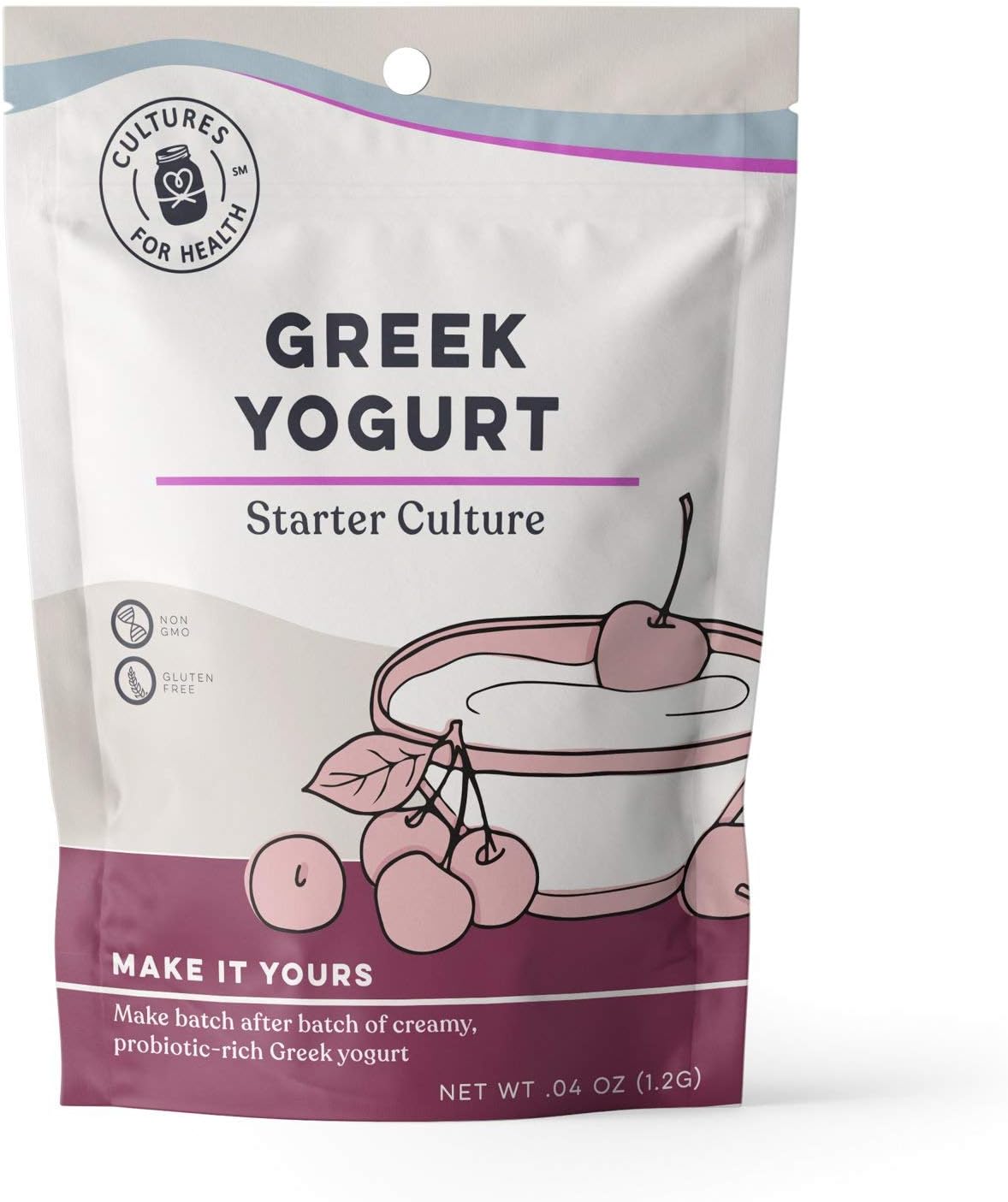
Cultures for Health Greek Yogurt Starter Culture offers two packets of freeze-dried heirloom probiotic cultures that enable you to make thick, protein-rich Greek yogurt at home. Designed for reuse, this gluten-free, non-GMO starter delivers authentic tangy flavor and creamy texture, ideal for smoothies, snacks, and recipes. Each batch is third-party tested for safety, making it a reliable choice for health-conscious DIY yogurt enthusiasts.


| ASIN | B002HPHR0W |
| Age Range Description | 24 Months and Above |
| Allergen Information | Gluten Free |
| Best Sellers Rank | #8,036 in Grocery & Gourmet Food ( See Top 100 in Grocery & Gourmet Food ) #2 in Yogurt Starter Cultures |
| Brand | Cultures For Health |
| Brand Name | Cultures For Health |
| Container Type | Pouch |
| Cuisine | Greek |
| Customer Reviews | 3.8 out of 5 stars 1,978 Reviews |
| Flavor | Greek |
| Manufacturer | Cultures for Health |
| Number of Items | 1 |
| Number of Pieces | 2 |
| Package Information | Pouch |
| Part Number | 9572441 |
| Size | 1 Pack (2 Packets) |
| Specialty | Gluten Free, Low Carb |
| UPC | 766789572441 814598020285 |
A**R
Fantastic results
I ended up using UHT organic whole milk because it's all I had available. The instructions said to avoid it, but in reading online I found that it's fine to use, and that you can skip the initial heating to 160 degrees F with UHT milk so I gave it a try. I added the culture at 110 degrees F and used a wire whisk to mix it in. Then I put it into my Instant Pot on the yogurt setting. After 5 hours it was still liquid and after 7 it was only just barely starting to set, so I let it go for a full 12 hours, and in the morning it was set but still soft. I left it in the fridge to strain through cheesecloth for a couple of hours, and when it was done I had nice, thick Greek-style yogurt. It tastes fantastic right out of the strainer. It's very similar in flavor and texture to Fage brand Greek yogurt, which is my favorite. I put a few ounces to start my next batch in a safe place in the fridge. I'm looking forward to having a regular supply of fresh organic yogurt for a fraction of the cost of store-bought.
G**O
Dud starter
I've been making homemade Greek yogurt for years with great results, so I know what I'm doing. I switched to this starter because my current culture had become ropy, and I was hoping a fresh heirloom culture would solve the problem. It didn't — because the batch failed entirely. I followed the instructions precisely: heated one gallon of whole milk to 180°F, cooled it in an ice bath to 110°F, whisked the starter into warm milk before adding to the full gallon, and incubated in my Instant Pot on the same setting I always use. After 14+ hours, the milk was still completely liquid. The starter also left brown flecks floating at the top that never dissolved properly — not a good sign. I had to throw out an entire gallon of milk. After posting about this I discovered many other reviewers experienced the exact same thing — liquid that never set, brown flecks, total failure. This appears to be a recurring quality control issue with this product, not user error. I wish I had read the reviews more carefully before purchasing.
A**T
Wow! Just when I thought my Greek style yogurt was good...NOW it's Great! 👍
I've been making my own yogurt for about 25 years, using a store-bought plain yogurt with cultures and in several different types of yogurt makers, mostly Oster brand 1-quart, but also Salton, and a Waring 2-quart. I only recently began using a powdered starter. Until I bought an Oster Mykonos Greek Digital Homemade Yogurt Maker, 2-Quart CKSTYM1012 maker in 2014, I never would strain yogurt and wasn't even aware you could. I wish I had known about it sooner because I really can't stand runny, bitter yogurt, which would frequently happen over the years. I prefer a firm, mildly tart yogurt....just short of being sour cream! 😁 Note: The Oster Mykonos Greek square yogurt maker comes in a digital CKSTYM1012 and manual CKSTYM1010 option, but both come with ONE 1-quart rectangle container and 6 small glass containers. I prefer to use only the 1-quart container, so I bought an extra Mykonos Greek yogurt maker and swapped the individual jars for the rectangle container. So I do TWO 1-quart rectangle containers per batch. Since getting the Greek yogurt maker, I will never go back to unstrained yogurt again. As for a starter, in the past, I would start my first batch using a plain yogurt with active cultures from the grocery store, usually Mountain High brand in So. Calif. For subsequent batches, I would use a few heaping tablespoons (about 1/3 cup) of the current batch for the next batch, and so on. It wasn't until 2016 that I started using a freeze dried starter by Yo Gourmet that I would buy here on Amazon and use for about every 5th batch, using two heaping tablespoons of yogurt reserved from the current batch as the starter for the next batch. I looked into other brands, including this Cultures for Health, but saw the negative reviews about the first batch turning out awful, that I hesitated to try it. However, a week ago, when I tried to order more Yo Gourmet yogurt starter, Amazon was out, so I decided to try this Greek Yogurt start by Cultures for Health and am I glad I did! I just made my first batch two days ago using my usual process [below] and my first batch came out perfect! It's firm with very little tartness 👍 The photos attached shows my first batch using ONE packet of Cultures for Health. In the cup shown, I have about 2/3 of a cup of yogurt on top of 1/3 cup chopped up trail mix (done in my Vitamix dry container) that I keep a running batch of to add to each serving of yogurt. This is the process I've been using for 6-years with the Oster Mykonos 2-quart yogurt maker: * Heat 9 cups (or slightly more than a half gallon) of whole milk in our GE Microwave for 23 minutes on High to achieve 180° - 185° - I use a 2-quart Pyrex glass measuring bowl * Cool to between 106° - 110° * Put ONE .5 or .6 gram powdered starter into a separate 2-cup Pyrex measuring cup and pour a cup of the cooled milk into the starter and stir/whisk until dissolved. Add back to the main batch of milk and stir in. - subsequent batches....I use two heaping tablespoons or about 1/3 of a cup of the previous batch's yogurt and mix in the same as above. * When I pour the milk into the yogurt maker containers, to ensure I achieve an optimal mix of milk and starter, I alternate pouring the milk into both 1-quart containers, back and forth, back and forth, so neither container has more active cultures than the other. * Cook the yogurt for 15 hours (12 hours is the minimum I will do because I prefer firm yogurt) * After the yogurt is cooked, cover the containers and place in the fridge for a minimum of 8-hours * After 8-hours, transfer the chilled yogurt to the strainers and put back in the fridge for at least 6-hours. * Pour out the strained liquid. Enjoy!
E**H
updated review
I raised my review from a 4 star to a 5 star. I successfully made my second batch of yogurt- used whey from the previous batch as the starter. I could smell it fermenting at 5 hours and pulled it out of the incubator at 6 hours. I think the flavor had improved a bit and I'm looking forward to sampling the finished product tomorrow. So far really enjoying the product and no complaints at all! Original review: I've been making greek yogurt for a few months now, but I used a store-bought yogurt as the starter. My results were never "bad" but I didn't feel like I was getting the right consistency between the batches (some were perfect, and some were a bit thick), so I decided to try this product as the starter. I'd read various reviews indicated that the first batch wouldn't set or tasted terrible, so I was prepared for some disappointment and the first round and just made a one quart batch. I did cheat a bit- the recipes that I had made in the past indicated to heat the milk to 185 degrees before cooling to 110 degrees. The instructions for this kit indicated to heat the milk to 160 degrees before cooling- I cooked mine to 185... The kit indicated to incubate the milk for 5 hours and that if it hadn't set yet- to continue to check every two hours- up to 12 hours total. Mine hadn't set at 6 hours but was firmly set by 8 hours. They recommend tilting the container to see if the yogurt has set but afterwards I realized that I could tell just by the smell of fermentation that nothing had happened at 6 hours but that it set somewhere before 8 hours had elapsed- so you can also use the sniff test before tilting the bowl if you want. The only thing that seemed to be missing from the instructions was the step to actually strain your yogurt after its fermented and let it chill for a few hours. So my understanding is that these instruction tell you how to make a batch of regular yogurt but don't tell you how to make "greek" yogurt. The taste was a bit rough, but the instructions indicate to set some yogurt aside (or I set aside the whey after straining) to use it as a starter for the next batch. Instructions indicate that the flavor should improve dramatically with each batch and then you should be able to scale up your batch size afterwards once you get consistent results that your happy with. Another note was that their instructions include directions for both activating the starter (cool it for two hours covered after fermenting) and directions for a regular batch using starter from a previous batch (no cooling period) All in all-I'm happy with my first batch and really looking forward to seeing if I can get really consistent results and fantastic flavor in the future!
M**G
Good yogurt, not as smooth as I thought it might be.
Texture did not turn smooth completely in my batches. Not sure why. Tasted fine. Could be I did something that caused to be a bit lumpy almost like a smoother small curd cottage cheese. I ate the whole batch and enjoyed it.
T**N
Very easy, and very little process, big money saver too
This has been a pretty easy thing to learn. Still working on getting the right length to incubate for the right texture. 1st attempt failed but was my fault as I fell asleep and went like 10hr incubate basically the bacteria went too far and broke down the milk too much and turned it back to a watery consistency. I just repurposed the batch into frozen cubes and added a few cubes to the 2nd batch that came out great and now have premade . I wrapped in cheesecloth and hung over a bowl in the fridge. Also I used a ninja that had yogurt setting and very easy
C**.
Not enough/Unviable Culture
Would not set yogurt using double the starter. I have made lots of yogurt in our yogurt maker. Went 12 hours at 110 following the instructions provided. No action. Thinking in the very unlikely event that my thermometer has gone haywire, and I added the culture at too high a temperature, I stirred the second packet right in to the milk sitting at 110 in the yogurt maker. After another 12 hours, there is a slight film at the top, and a slight cultured taste. That's failure. Either the very small amount in each packet is not sufficient, (about 1/2 teaspoon in each packet) or the culture is not really viable. Total waste of money
V**.
Makes great yogurt
Cultures For Health makes a good starter, and I have been very satisfied with the yogurt. I have made ten batches of this yogurt so far with very good and consistent results. All but the first and second rounds (to fully activate the culture) have been a gallon each. The first (1 quart) was lightly set, and the second (2 quarts) was fully set after 7 hours. I use two pots and a lid to make a double-boiler, a digital smoker thermometer to monitor the temperature of the milk on the stove (heated slowly to 190 degrees and held for 10 minutes or so) and in the cooling bath. There is no stirring during the heating process, so some milk sticks to the bottom of the non-stick pot, but it peels off easily. It takes about an hour on a low burner to bring a gallon from fridge temp to 190, and there’s nothing to do but check the temperature on the remote digital display. After cooling to 110 degrees, I whisk in the starter from the last batch. A sous vide cooker in a foam cooler (made a hole in the lid) holds the 4 quarts in a water bath at 110 degrees for 5 to 7 hours. Any extra cultured milk sits in containers up out of the water: the cooler holds a constant air temperature. When it's done, everything cools down on the counter for a while, and then goes in the refrigerator and lasts me about a month. Batches 2-10 were started with 2 cups of last month’s yogurt that was frozen for 4 weeks and defrosted for a day or two in the refrigerator. The defrosted culture smells good and activates to make consistently good yogurt. I use whatever cow's milk is on sale or reduced, 1% to whole, as long as it isn’t ultra-pasteurized. One packet of dehydrated starter has provided months of yogurt. The second packet is in the refrigerator, in case I need to do a restart someday. I recommend this yogurt starter.
Trustpilot
3 weeks ago
1 week ago