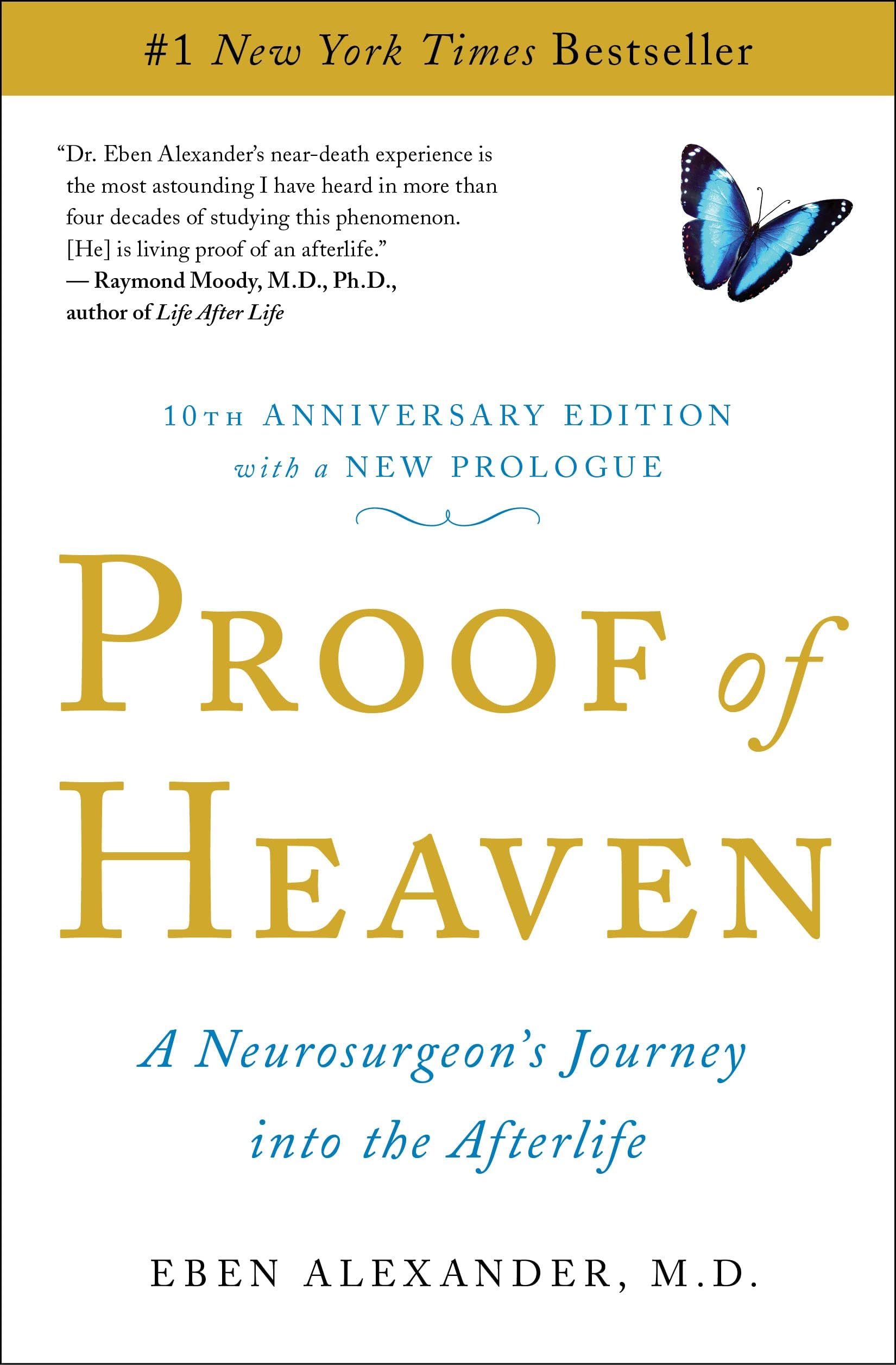
Proof of Heaven: A Neurosurgeon's Journey into the Afterlife
Product ID: 199517
🌌Explores the afterlife
📖300+ pages of insights
🧠Neuroscience meets spirituality
Buy anything from 5,000+ international stores. One checkout price. No surprise fees. Join 2M+ shoppers on Desertcart.
Desertcart purchases this item on your behalf and handles shipping, customs, and support to Vanuatu.
🌟 Discover the Unseen: A Journey Beyond the Ordinary!
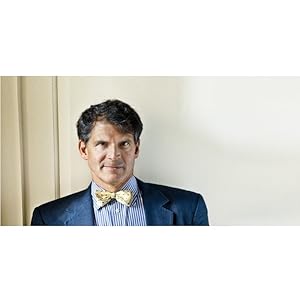
Proof of Heaven is a groundbreaking memoir by neurosurgeon Dr. Eben Alexander, detailing his near-death experience and the profound insights he gained about consciousness, spirituality, and the afterlife. This compelling narrative invites readers to explore the intersection of science and the metaphysical, challenging traditional views on life and death.
| Best Sellers Rank | #3,976 in Books ( See Top 100 in Books ) #6 in Near-Death Experiences (Books) #7 in Christian Eschatology (Books) #9 in Reincarnation (Books) |
| Customer Reviews | 4.4 out of 5 stars 25,345 Reviews |
L**A
A Book That Stays With You
I picked this up as a birthday gift for my son. What makes it different is that it’s written by a neurosurgeon, someone who approached everything from a scientific mindset. That perspective adds a layer of depth that makes you stop and really think about things in a new way. Pros: • Thought-provoking and easy to follow • Unique perspective from a medical professional • Blends personal experience with science and reflection • Keeps you engaged the whole way through • Sparks deeper questions about life and beyond Cons: • May not resonate the same for everyone depending on beliefs Overall: Whether you read it for curiosity, comfort, or just a different perspective, it’s one of those books that makes you pause and reflect. Not something you rush through—something you sit with.
P**R
Beyond Science and Religion...Endorsement and Support from another NDE survivor
As someone who has experienced an NDE, and struggled with many of the same things that Eben discusses here, I am not surprised at the response that many are having to this book. To say "people who have NDE experiences often find the telling of their story, while trying to impart the information they receive during their experience, a difficult task," would be an understatement as vast as the universe. The clinical aspects of Dr. Alexander's experience are what make this story unique, along with his outright conversion from a "Scientific Reductionist" to someone who sees clearly that consciousness and the vast majority of "what is," are found outside of our space/time universe and current medical or science books. To get the most out of any book on NDEs, and especially one that intertwines a very personal journey to find family and self, you must start with an open mind and heart. Unfortunately, those who have already hardened their views on both sides of the spectrums of Science and Religion, will dismiss much of what anyone writes on this topic, because it doesn't fit their narrow, dogmatic view of the world. Even worse, it forces them to look outside of their safe little boxes, and take the effort to learn, while being open to the possibility that current models of both science and faith are a good starting point, but not the ENTIRE answer. Einstein's quote at the beginning of the chapter "A Final Dilemma" says it best... "I must be willing to give up what I am in order to become what I will be." Whether you begin as a Christian, a Buddhist, Quantum Physicist or a simple seeker of knowledge beyond current understanding, moving outside of the constructs of your current ways of thinking is imperative to discovery. Fundamentalism, whether it be religious or scientific, is really no different than intellectual bigotry, closed to expanded thoughts, or encompassing new ways of looking for expanded information. Eben's book embraces both worlds, and does so gracefully, without discounting any specific ideology. Eben's experience was certainly deeper, and far more expansive than most I have read (including my own NDE). I do agree that the lack of detail about his time in "heaven" (a term that I find limiting) is frustrating to a point. And yet, the need to spend much of this book on the technical side of his coma, his quest and victory regarding his family (past and present), as well as touching on the scientific aspects of the current science regarding external consciousness, make this short book an excellent jumping-off point for deeper study and discussion. And there's the rub... After experiencing my own NDE (in 1996), I spent almost two obsessive years trying in vain to "connect the dots of knowledge imparted to me," before putting it all back "in a box" so that I could get on with living my life. Through a series of events over the past two years, I find myself very much back into "telling the story." I now realize that no book, video, or movie is able to even scratch the surface of answering the great questions of life after death, consciousness, and how they all relate to quantum theory. Expecting "the answers" from a book of this size and configuration is naïve and lazy at best. There is a reason that the section in this book called "Reading List" is expansive. Much has been written on this topic from both the spiritual and scientific approach. If you are a true seeker of the truth, you will not start or end your journey for knowledge with Eben's book. Instead, you will appreciate the facts of his experience, the unique medical reality of his coma, and the amazing revelations about family, love and the eternal nature of consciousness, as the BEGINNING of the journey to true understanding. While this book in not an expansive, all-inclusive answer to the melding of Science and Religion, I give it 5 stars for being an important, unique story, bringing focus to the need for a global change in the perception and understanding of reality, consciousness and the interconnectedness of everything in creation.
M**N
Interesting Perspective
While I have to disagree with the title Proof of Heaven that this book was actually not proof of heaven, I found the premise and the experience shared in this book quite fascinating. Dr. Alexander talks about his experiences while in a coma from a serious bacterial meningitis attack that is quite rare and shuts down the neo-cortex of the brain, the part that makes us, basically, human, and puts him in a coma he was not expected to live through or return from. He shares his vivid memories of experiences he had in a place outside of this realm of existence, memories of acceptance, love, inclusiveness, connectedness, peace, calm and so many good things. The main point that of love, unconditional and overwhelming, in a way that isn't even able to be expressed on this world. Dr. Alexander considers this absolute proof of God and Heaven, where I see it as proof that there is something after this life, but not necessarily the religious versions of God and Heaven as we have been told in the Bible or through other religious upbringings. I find the concept of unconditional love fascinating, and somewhat comforting, and I definitely like the perspective of life of some sort, existence and consciousness of some sort, after this body fades away, especially now that I have been diagnosed with a terminal illness, and thinking about death and dying is something that has come to my mind sooner than it would for most people. I enjoyed his personal stories about his journey. I appreciated his honesty about how he was not really a believer prior to this experience, that he was a staunch man of science, to a point, and how this changed that. I like the way he now weaves these two things--the science and the faith--together to be a better doctor and a better person. I like that he provides other resources and information for the reader to read, to consider, and to decide for themselves what they think happened. I went to many of his other resources and read them and even saw him in some video where he was interviewed about his experiences. It's all very compelling... and again, somewhat comforting, especially to me. See, I have a terminal illness, and I know my death is more imminent than I had original expected it to be... life and death, this life and the afterlife, have both been big on my mind. This book did provide me some comfort, some feeling that there might be something else out there beyond this. I think I needed that. At the same time, there was some compelling stories that tied some things in his life together in a way that seems only able to happen outside of this realm. You'll have to read his story to learn more about it. If you're interested, but not sure about buying the book, look him up online and read some of the places where he talks about near death experiences with others who have had them too. Fascinating stuff, and it might help you make up your mind if this is something you want to consider buying or not. I consider it money well spent, if for nothing but the fascination factor. If you're not a believer, this book might make you think about an afterlife differently. If you are a believer, I think this book can really reenforce your faith. If you're a skeptic, you might still find this book fascinating in what it shares about how to live your life now. I think it's well worth considering and picking this one up to read, and he tells the story in a compelling way. There is enough technical and medical/scientific information to make you feel informed, but not so much it's bogged down. And there is enough personal anecdote and experience to feel you're reading a story too. Good balance.
T**E
Love - How Many of Us Can Grasp What This Truly Means?
"Proof of Heaven "is a book written about a near-death-experience that all - those who believe in heaven, and those who do not - will find provocative. What makes this near-death-experience (NDE) story unique and interesting is the Author, Eben Alexander, Md, a highly trained neurosurgeon who spent fifteen years on the faculty of Harvard Medical School. Eben, like many trapped by science and the secular culture, was convinced that NDEs were caused by, and based on the natural shutting down of body's physiologic function in death. He repeatedly called God and heaven into question - how these could exist? His scientific world over the years undermined his ability to consider there was something larger. My interest in this subject began in late 1979 when my father shared with me that he had had an NDE while his body was shutting down due to uremic poisoning. My father, a proud man, told me that he had traveled through a dark tunnel towards a bright light when he found his parents standing his way, telling him that "he was not ready." Two years later, participation an executive management program at Columbia University introduced me to Roger Blackwell, the top university-based consumer marketing expert in the U.S., who was part of a national task team studying NDEs. He spent nearly three hours sharing his team's observations and findings. I have been an eager student of NDEs ever since. Eben was not prepared for what he personally experienced in late 2008 when his body shut down due to an attack on his brain by E. coli meningitis. His consciousness found itself submerged something like mud. He had no idea where he was, who he was, or where he came from. He was in a place of pulsing, pounding darkness, and a smell like feces. There was no sense of time. At first, he felt that there was no difference between him and the half-creepy environment that surrounded him. A light then appeared out of the darkness and he heard a living sound - "the most beautiful music one could ever hear." The light came closer and found it was not a light but rather something he could see through, an entry to another realm. He then found himself in a completely new world. He felt like he was being born, not reborn. Below him was something that looked like earth but was not. Someone was traveling next to him, a beautiful girl. She gave him a look that exuded love beyond all the different types of love he had ever experienced. It was something higher, and pure. They were flying over trees, fields, streams, waterfalls, and people, people who were laughing. She spoke to him without words in three parts: 1. You are loved and cherished by God, dearly, forever. 2. You have nothing to fear. 3. There is nothing you can do wrong. She added he would see many things, but, eventually, he would go back. He then found himself entering "an immense void, completely dark, infinite in size, but also infinitely comforting. He then experienced God, the Creator, the Source, who is responsible for making the universe and all that is in it... While there was no distance between him and God, he could sense the vastness of the Creator and how miniscule he was compared to God... He was told that Evil was necessary because without it free will was impossible, and without free will, there would be no growth, no forward movement, no chance for us to become what God longed for us to be. Love was overwhelmingly dominant in our world and would be ultimately triumphant." He encountered God while in a reality of consciousness completely free of the limitations of his physical brain. He learned that human experience continues beyond the grave and that life is not meaningless. In life and after, human experience falls under the gaze of a God who loves and cares about each one of us. "He was taught that only one thing matters - love. Love is the basis of everything. Love is unconditional. Love is the reality of realities, the incomprehensibly glorious truth of truths that lives and breathes at the core of everything that exists or that will ever exist, and no remotely accurate understanding of who and what we are, can be achieved by anyone who does not know it, and embody it in all their actions. This is not just the most important emotional truth but also the most important scientific truth." Eben, "I was blind and now I see." He now feels it his duty, his calling, to tell people about what he saw beyond the body and beyond this earth. We must end the big lie, culture's belief in matter as the core reality and that all else - thought, ideas, consciousness, emotions, spirit - were merely productions of it. A big mistake is to believe God does not exist or is impersonal. "There is no need to fear the world and build ourselves up through fame or wealth or conquest. Our truest, deepest self is completely free and has no need for the things of the world. We need to get in touch with this miraculous aspect of ourselves. We need to cultivate it and bring it to light. This being is within ourselves and it is the being God intended us to be. How do we get closer to this part of self - manifesting love and compassion?...prayer and meditation." The author learned his beautiful companion was a sister who had died several years earlier, a sister he had never known and had never seen. He recognized her as his guide when another family member shared a picture of her after he returned. This is a very provocative book, one that all should read. There is much more to life than most appreciate.
R**B
Review of Proof of Heaven by Eden Alexander III, M.D.
Proof of Heaven was both interesting and surprisingly suspenseful; I always looked forward to picking it up and continuing my reading. The author is an impeccably educated and highly respected neurosurgeon who had been adopted and followed in the professional footsteps of his adoptive father; had been an experienced shy diver in college; married and had children; longed to meet his birth family and finally did; somehow contracted a very rare bacterial meningitis; and while moving toward death in a coma, claims to have gone to heaven where he met God, an angel, and had other unquestionably (for him) heavenly experiences that he lived to share with others, asserting that collectively they represent "the single most real experience of my life." A fascinating and gripping story!--but that said, it's time to take a close look at the author's claim, namely, that there is "Heaven" after death, or more generically, that consciousness survives death. I think it not unreasonable--indeed, fundamental--to require of someone who insists his or her experience proves consciousness survives bodily death both to have died and subsequently to have returned to life sometime prior to making such an assertion. Any claim to have experienced death and to know what occurs after it without having first died would seem absurd on its very face. Indeed, initially Alexander claims to have died: "My experience showed me that the death of the body and the brain are not the end of consciousness, that human experience continues beyond the grave." (I think it premature to claim having experienced "death of the body" if one's respiratory, circulatory, and digestive systems are functioning, and only the nervous system is damaged--however severely.) So, I could only shake my head in wonderment when he claimed later not to have died but to have had a NEAR death experience (NDE). Throughout, he refers to his experience as an NDE and compares the experiences of other NDE survivors to his own, noting--until nearly the end of his book--that his NDE was similar to those recounted by other NDE survivors save their meeting deceased relatives and reviewing their life's good and bad actions: "I experienced none of these events, and taken all together they demonstrate the single most unusual aspect of my NDE." Then, in a patently self-contradictory statement, he writes, "At the risk of oversimplifying, I was allowed to die harder, and travel deeper, than almost all NDE subjects before me." With a sentence like that, I don't think he need worry about oversimplifying. So, we have an author claiming to know what happens to consciousness after death based on his own experience of death even though he repeatedly admits that he had not died at any time prior to his claim. For me, this turns his assertion of having entered the foyer of heavenly life into evidence that, at most, he had arrived only at the derriere of his earthly life. My second quandary is the medium responsible for his right to claim he was in heaven, namely, sensing and feeling: While in what he calls the "Realm of the Earthworm's-Eye View," he notes, "...gradually this sense of deep, timeless, boundaryless immersion gave way to something else: a feeling like I wasn't really part of this subterranean world at all, but trapped in it." A little further down, he writes, "I heard an occasional dull roar," and, "the movement round me became less visual and more tactile...," and, "then I became aware of a smell." Later, after he had passed through the portal of heaven, he was told something by an angel, and her "message flooded me with a vast and crazy sensation of relief." When he's in the Core (of heaven), he writes, "Seeing and hearing were not separate in this place where I now was. I could hear the visual beauty of the silvery bodies of those scintillating beings above, and I could see [sic] the surging, joyful perfection of what they sang." It's curious to me that sensation, however modified his seeing and hearing were in heaven, were, nonetheless, one of his modes of knowing. This would make earthly hearing and seeing weak analogues of their heavenly counterparts, but more remarkably, not only our consciousness survives death, but also our senses! This implies that the material organs of sight and hearing are not essential to these capabilities. We do know that we can hear music in our mind that we are not hearing with our ears and see things in our mind that are not present to our eyes under two conditions: we're dreaming, or we've consciously induced them. But Alexander insists he is not dreaming and others are generating the sounds, sights, and smells. Although his claim fits his theory of post-death consciousness, he never died, and for those of us who are still pre-dead, a dreaming or inducing explanation is simpler and less fantastical. Also, we do know that physical eyes and ears are essential to earthly seeing and hearing under either of the main concepts of the body-mind relationship: that we are a mind (soul, spirit) trapped in a body and finally freed of it upon death, or we exist as an inseparable body-mind unity. Under the first condition, there would have to be some plausible theory to explain how the soul retains senses once it's left the body. Under the second condition, body and soul exist only as an integrated entity, at death extinguishing together. A related problem, advanced by his description of consciousness after death, is duality--or, if you will, the multiplicity of separately distinguishable beings/things/experiences in the post-death realm. Alexander's heaven eliminates the ego but retains distinct beings outside himself (for example, he doesn't claim to be God or the angle). Okay, maybe he wants to suggest that none of these separate and distinct beings have an ego, but something has to account for his recognizing that they (perceivable beings, music, smells, visuals of various kinds) are real and are not just his projections. Maybe they exist like thoughts, perceptibly existing immaterial objects. The only problem with this is that we conjure our thoughts, and subconscious mechanisms conjure our dreams. I'm sure Alexander is not suggesting that his heaven is populated by conjured images--and he insists they're not dreams--but I don't see how he can escape the conundrum. Celestial existence for Alexander often seems conceptually similar to earthly experience, differing primarily in quality and seeming often little more than exquisite extensions of ordinary life. He does write, "The blurring of the boundary between my awareness and the realm around me went so far at times that I became the entire universe." What is surprising about this statement is the "at times." At one point in my life, I was an intermittent TMer. After several years of erratic adherence to my meditation practice, I routinely experienced extended periods non-dualistic absorption into a unitary bliss, timelessness, spacelessness, even occasional out-of-body consciousness. Thus, "at times" I had earthly experiences that were not dissimilar to what he describes as a peak heavenly experience--and I didn't have to die to experience them, making me wonder just how other-worldly they are. Alexander states that "up there" there's no emotional distinction between "inside" and "outside" because changes of "mood" experienced there are so vast as to include and affect both the mood feeler and his or her surroundings simultaneously. Commenting further on emotions, he writes, "All the human emotions are present [in heaven]...." Does he really want to assert that greed, avarice, lust, hate, and other such emotions reside with love in God's paradise? This completely contradicts other statements about the heavenly environment. He does mention evil, as necessary for there to be free will, which is required "for us to become what God longer for us to be." However, he does not raise the issue of moral behavior as a prerequisite for heaven or as even affecting one's access to or enjoyment of heaven. Should I ever enter Alexander's rapture, I hope not to attend a dance and see Mother Theresa grinding with Adolph Hitler. But maybe I will, given that "in the larger picture love was overwhelmingly dominant, and it would ultimately be triumphant" over evil. Finally, the author's recitation of numerous failed attempts to explain his mental states while in a coma go only so far as demonstrating that extremely rare phenomena are less susceptible to explanation than are common ones. I hardly think that such a recognition would startle anyone. So, at best, I see Proof of Heaven as an engaging addition to NDE literature and at worst, an unsupported, indeed self-contradictory and sloppily analyzed, claim to a reality that fails to meet even the most obvious precondition: One has actually to die, not just come close to it, before earning the right to assert the post-death condition of consciousness. Of course, my concern about basing a belief in an afterlife on Alexander's experience while in a coma is irrelevant to whether or not there is an afterlife. I just don't think Proof of Heaven gets us any closer to proving it than we were with former NDE accounts. He may have been "allowed to die harder" than previous NDEers, but like them, he didn't die. I think he should have remained more the scientist upon coming out of his coma and considered his experience as evidence of what the brain may still do after the cranial cortex is compromised. Rather than counting on eternal consciousness, I think we should work on coming to terms with death's being the close of our one and only, randomly engendered, and unrepeatable existence. If we awake to having been mistaken and find ourselves in another dimension, nothing will be lost. If we don't awaken in paradise, we will not grieve it. In the meantime, we won't violate the knowable and will experience how precious, fleeting, and irreplaceable life is--ours and that of all other beings. It might be easier to have compassion for one another, if we don't presume that upon death we're whisked off to "a better place" where we'll all be reunited in bliss.
R**O
from a Roman Catholic layman
Nota Bene: I am ASSUMING for the sake of this comment that the account rendered in the book is real, i.e. it is a sincere effort by a real human being with a real MD degree to relate, in good faith, an experience he believes in good faith that he had. I am ASSUMING that this book and story are not a cynical fabrication by someone who is looking to fool the gullible, nor an attempt to make a quick buck writing about something that will sell books. I have not made a *substantial* attempt to verify the existence of Eben Alexander nor to verify his degree and positions. I have not had a NDE myself. Whatever knowledge I have of them is strictly based on those of other people, often obtained quite indirectly. The first NDE I had heard about while I was on a retreat in 1968. It was a "negative" -- meaning frightening -- NDE. Eben Alexander's account of a NDE is of particular interest because it occurred in a hospital setting while the subject was under intense scrutiny and because the subject is a neurosurgeon. That he entered the experience more-or-less as an unbeliever makes it even more interesting. The book is also interesting about what it says about Eben himself and his family. He comes across as a very good man who is surrounded by a very loving family. Having said that, I will say that I found his account of his vision (I say "vision" as his story is an attempt to relate the audio-visual aspects of a memory of an event that was presumably not "audio-visual" in the usual sense of the word, as his sense organs were not functioning, and the experience no doubt transcended "audio-visual-olfactory-tactile" experience.) to be a bit amusing. I say "amusing" not in a disrespectful way, but to convey the, well, amusement, I guess, of seeing a grown, educated, American man find out, via a truly extraordinary experience which certainly appears to be a gift from God, that which the Catholic and Eastern Orthodox churches have been trying to tell people for the past 2000 years, and Protestant churches for the past 500: God is Love. God LOVES us. Eye has not seen nor has ear heard what God the Father has in store for us. God's love is universal. God transcends what we call time and space. (Actually, philosophers have been telling us THAT for a VERY long time.) There are non-corporeal beings who know, love, and serve God. Evil in the World is a consequence of free will. Etc. etc. These are things we all SHOULD have learned in Catechism and had reinforced through our own lives of prayer and particular relationship with God through the person -- at least for Christians -- of Christ Jesus. That the good Lord saw fit to arrange this particular experience for Dr. Alexander both speaks to the love of God, and to the difficulty Man has discerning His purpose in particular instances. While his experience and vision are extremely interesting, there are no surprises for a Christian, and probably none for a Jew either. (I am not sure how most Muslims would think of this, so I won't try to guess.) Also, Eben's NDE was tailored for his particular needs, apparently, as appears to generally be the case for the more credible NDEs. He saw and heard (and felt and was made aware of and was infused with) the things to which he, in particular, needed to be so exposed. Regarding the book itself: it is an easy read, but very moving. Toward the end I found myself blubbering like a baby, as I related to an experience one of his sons had. There is something like a surprise ending that, of course, I will not reveal. The book makes some recommendations in terms of websites (including one started by Dr. Eben Alexander and an associate) for those who wish to learn more about NDEs and other spiritually transforming experiences. He also includes a book list that is quite broad in its scope. It includes books by the Dali Lama, Douglas Hofstadter (a strict materialist), Francis Collins (a life scientist and a believer) and many others in a variety of fields. Oddly, his list does NOT include Christian mystics like St. Theresa of Avila and St. John of the Cross, nor anything about Heaven by someone like Peter Kreeft. I suspect that Dr. Eben Alexander is not familiar with these authors. Buy it. Read it. Spend some time on your knees.
T**S
This is an Excellent Book That Merges Science and Spirituallity
Dr. Alexanders book is right on and his final conclusion: That we are all One Consciousness and not really individuals is inescapable. Jesus said "Whatsoever you do to the least of your brethren you do to me" What did this mean? That he's standing around with a clip board keeping track of what we're doing to each other? He obviously understood that he was God Consciousness and was trying to tell us that we are too. There is no individualized consciousness being created by a brain. We are all the same consciousness looking out of every set of eyes both human and otherwise. So anything we do both good and bad we are literally doing to ourselves. Look into the eyes of your youngest relative and understand that what is looking back is YOU! This is why the NDE experiencer feels everything they've done to others in the life review because there are no others! The illusion of being an individual is just breaking down in the process of awakening. The truth is at the level of pure consciousness - I am you, you are me we are one. Just what is being explained in this book. Below is my analysis of the fallacies of "Brain Worship" Religion of Brain Worship Vs. Science as to an Explanation of Consciousness The Religion of Brain Worship The tenants of the religion summarized. Though no individual brain cell has ever been measured to be conscious, think, feel, intend or Love Brain Worshipers take it as a matter of faith that a conglomeration of such cells produces all of the above thereby creating the individual and "mind". Though no empirical measurement of consciousness has ever been done Brain worshipers take it as a matter of faith that the brain is generating consciousness. Brain worshipers believe the brain can take electrical vibrations and translate them into subjective seeing and hearing. The high priests of Brain Worship keep secret mathematical transforms that relate electrical activity or PET activity in the brain to consciousness. The Brain Worshipers have faith that an unconscious and mechanistic universe created consciousness. The Brain Worshipers believe that billions of individual brains produce billions of individualized consciousness in millions of species. The high priests of Brain Worship understand secret parameters that would allow each consciousness to be recognized as being individualized. The high priests of Brain Worship can explain how each individualized consciousness came to occur at a specific co-ordinate in space time. In other words though there were billions of other body pairs producing babies before I was born they can explain why my consciousness is paired with my body vs a body that showed up previously or after my birth date. The governing premise of Brain Worship is order comes out of randomness. The high priests can explain why I'm randomly created here and cannot randomly be created "exist" somewhere else simultaneously. The high priests can explain why we can only exist once throughout the entire infinity of time. Why the forces that create us suddenly stop working after we die. Though it's obvious we can only know what is in the Mind the priests assure us there actually is a physical universe out there. The high priests of Brain Worship can look at a bunch of cells in my brain and verify that the tune to "Lets Go Fly a Kite" is embedded there. Without asking me of course. The high priests of Brain Worship say that because stimulating the brain can produce "hallucinations" that that proves the brain is doing it all. Though consciousness has to exist in order to perceive these hallucinations in the first place. Brain worshipers believe that since millions of verifiable perceptions have occurred while persons have claimed to be out of body that an invisible brain pops out of the head and does the perceiving during these events. Brain worshipers believe even though metabolic processes are shutting down during trauma the brain still manages to produce a higher level of consciousness then ever occurs during healthy operation. Brain worshipers believe even though metabolic processes are shutting down during trauma the brain produces rapturous feelings of unconditional Love. Something that never happens in a healthy brain. Brain worshipers have secret knowledge that explains why during an NDE everyone feels connected to everyone and everything else. Brain worshipers always claim to be critical thinkers and have science on their side even though they have no mathematics, or empirical data to support their claims. They claim to use Occam's razor as to simplest explanations yet everything they say is convoluted and can't explain observable phenomenon. Brain Worship is a religion based on faith alone! Science Experiments in Quantum physics have proved that consciousness is necessary to collapse the wave function at both the Quantum and macro levels. There is no such thing as time. We can only know about what is in Consciousness and not any actual Universe - out there. The body and brain are within Consciousness. Consciousness is a field effect, the Zero Point field, not a point source effect. Since consciousness is a field effect the One consciousness expresses in all forms. Despite appearances of separation and isolation each life form has the same consciousness. The questions of specific birth at a specific time is irrelevant since the same consciousness shows up in all cases. The question of billions of individualized consciousness being generated is irrelevant since all consciousness is one and the same. Consciousness is what sees or hears not the brain. Any type of perception including "hallucinations", visions, or dreams are realities in other dimensions that consciousness is tuning into. During NDE consciousness disengages from the illusion of brain allowing more perfect perception. During NDE the illusion of separation is gone and consciousness knows itself as being everywhere, everything, and everywhen. Since only consciousness can know anything then consciousness must know everything. Since consciousness is the basis of all form it must be eternal. That which knows everything and is eternal is known as God. Since we are consciousness we are eternal and one with God. Since unconditional Love is what consciousness experiences during NDE then we are unconditional Love. Occam's razor
A**L
Explanations of Consciousness
Dr. Alexander writes about his personal near death experience (NDE), which was unique in its causes and somewhat different than most reported NDEs. His insights are deeply personal, and the doctor stresses the impossibility of using language to describe what happened to him - or at least his remembrance of it - but he determined that the experience was valid and had a purpose. The purpose was to allow him to expose the fact that consciousness survives the death of the body. Like many other NDEs reported his is both unique and common. Much like the survivors of the Titanic, each has their own special story but all of the stories swing around the common theme of shipwreck. Evidence of the doctors experience actually comes from a source not mentioned by him. As he detailed in the book, his near death was the result of a specialized bacteriological agent that, if it was loosed upon humanity, could destroy at least half the people on earth in a year. And while he talks for awhile about this bacteria and what it could do, it is actually a minor part of his story. There is the key. As a rock solid scientists and medical man, in other circumstances his ENTIRE focus would be on that potentially mass killing agent and not on his personal experience. But in this instance his entire focus is on his remembered incident. This focus is unusual in the extreme for a person with the author's background. This should tell the reader that Dr. Alexander is absolutely sincere and deeply believes that what he saw, heard, felt, and otherwise went through was absolutely real. The author does not spend any time on philosophy or trying to explain the conundrum of life. Descartes' "ghost in the machine" doesn't concern him. He tells us that consciousness is nothing like any philosopher has told us or could ever tell us. What the doctor has said is life and consciousness are so vast and mysterious that they cannot be explained in language or comprehended by our earthly minds. Deeply within creation is what he sometimes terms a creator, but he stresses that our minds cannot grasp what this reality is or means. With this he moves far beyond human experience as a foundation for truth. He clearly denotes that our minds cannot find or determine truth and could not comprehend it if we did find it - at least through observation and measurement. What he describes is beyond measurement and science. While the doctor does not say it, his ideas mean that all our philosophy and science will not attain the ultimate goal of understanding existence because we are not capable of such understanding. His result is neither rational or irrational, it is beyond any kind of rationality. In the final boiled down explanation he tells us love is the key to the universe and that we can, through meditation and other semi-spiritual means, move closer to that truth. This idea is not new, and in fact reaches back thousands of years to the very beginnings of humanity. Thus, the doctor offers little that is new outside of his individual experience. The book is easy to read and understand and gives the reader a good insight into the doctor's mind. Dr. Alexander is a brilliant man and has a mind honed to a fine edge by his education and insights. Well worth the time to read. His list of other reading sources on NDE is excellent. AD2
P**S
Very interesting read and a good book to share.
I asked someone, who was of the Faith, do you believe in people coming back from the dead, of the dead being raised? And he said a loud "NO. Well, only one in a million." I unfortunately replied, "I'm shocked, you are a doubting Thomas"....after all, we had just discussed that Jesus was alive and dead at the same time. It's easy to understand why, when reading this book. Doctors have all been told, it's not possible, yet Acts 26:8 Says that God will raise the dead, it does not give an answer of how many, it says it is not a thing that is incredible. The Bible is from God, written long ago, so the number now is incalculable, how many, or will be, it happens every day. The author himself exposes this and the adage "Nothing ventured, nothing gained." ....you'll love this book!
P**E
La vie après la mort vue par un neurochirurgien revenant de "l'au-delà"
Un livre passionnant et empreint de spiritualité. Je le recommande vivement à tous ceux qui sont curieux d'en apprendre plus sur les NDE ou expériences de mort imminente. Le docteur Eben Alexander arrive bien à mettre en mot sa fabuleuse expérience, et à en tirer des conclusions pertinentes.
S**A
Wonderful,clarifying
It is an easy reading, the content is Amazing, very straight to the point, destinos not the end, we re here expeciencing and we ll go Back home.
T**R
An Outstanding Story - A Remarkable Book
In this book, Dr. Eben Alexander describes his astonishing Near Death Experience (NDE), which according to the author stands out quite a lot compared to other peoples' NDEs documented in the past. As a regarded and experienced neurosurgeon, Alexander has a vast knowledge of the brain, and has performed many operations on patients brains over the years of his career. Up until it happened to himself, Dr. Alexander believed that NDEs were complex phenomena produced by the brain, as he thought (as most materialists) that consciousness is a (yet unexplained) phenomenon produced by the brain. His own Near Death Experience, which he had for the duration of about 7 days when he fell into a coma due to a very rare and potentially deadly E coli infection, turned Dr. Alexander's materialist world view up side down. It's a very personal, well written and edited book. In short chapters the author alternates between accounts of his NDE, the parallel events unfolding in the Intensive Care Unit and detailed medical reports on his condition, as well as personal accounts of the events unfolding with his family at this time. Skillfully he weaves in personal stories which at first glance seem unrelated, yet in the end masterfully complete the picture. Dr. Alexander does a great job in the effort of putting his emotions and accounts on paper. The reader feels a if he/she really gets to know the author, especially from an emotional side. In the Appendix at the end of the book, infectious disease specialist Dr. Scott Wade, who treated Dr. Alexander during his coma gives his medical report and opinion on the matter. Dr. Alexander's NDE and the circumstances of his recovery appear to be outstanding in the following regards: ------------------------------------------------------------------------------------------------------------- - He is a trained & experienced neurosurgeon (cutting edge of science on the brain) - His particular type of E coli (menengitis) infection was pretty unique in regards to the very low probability of infection and his miraculous and full recovery - The Infection switched off almost 100% of the Doctor's brain activity - The long duration of the NDE - The lack of rememberence of his own personality during the NDE The only negative point I have to raise: As with most American prints, the paper quality moderate, quite frankly, even with the hardcover edition. The book jacket however is beautiful to look at and very well designed. Summary ------------- An great & inspiring book that should be part of everyone's library.
V**L
Interessantissimo libro da leggere...
Interessantissimo libro da leggere, che consiglio vivamente. L'originale in inglese è sicuramente preferibile, per chi conosce bene la lingua, alla versione in italiano, che, come tutte le traduzioni, non riesce a rendere a pieno il contenuto. La storia esperenziale del Dott. Eben Alexander è, nell'ambito della bibliografia sulle EPM, sui generis. Si tratta del racconto di quanto accadutogli durante un coma di 7 giorni, descritto con l'essenzialita' e la sobrietà tipica dello scienziato che, per natura, vuole descrivere i fatti... Un bel libro da rileggere di tanto in tanto. Lo consiglio a gutti.
Trustpilot
3 weeks ago
1 month ago