We remain fully operational. Our teams are working around the clock to ensure your deliveries continue safely.

DOWNLOAD THE APP


Copyright © 2025 Desertcart Holdings Limited
DOWNLOAD THE APP
Buy anything from 5,000+ international stores. One checkout price. No surprise fees. Join 2M+ shoppers on Desertcart.
Desertcart purchases this item on your behalf and handles shipping, customs, and support to Vanuatu.
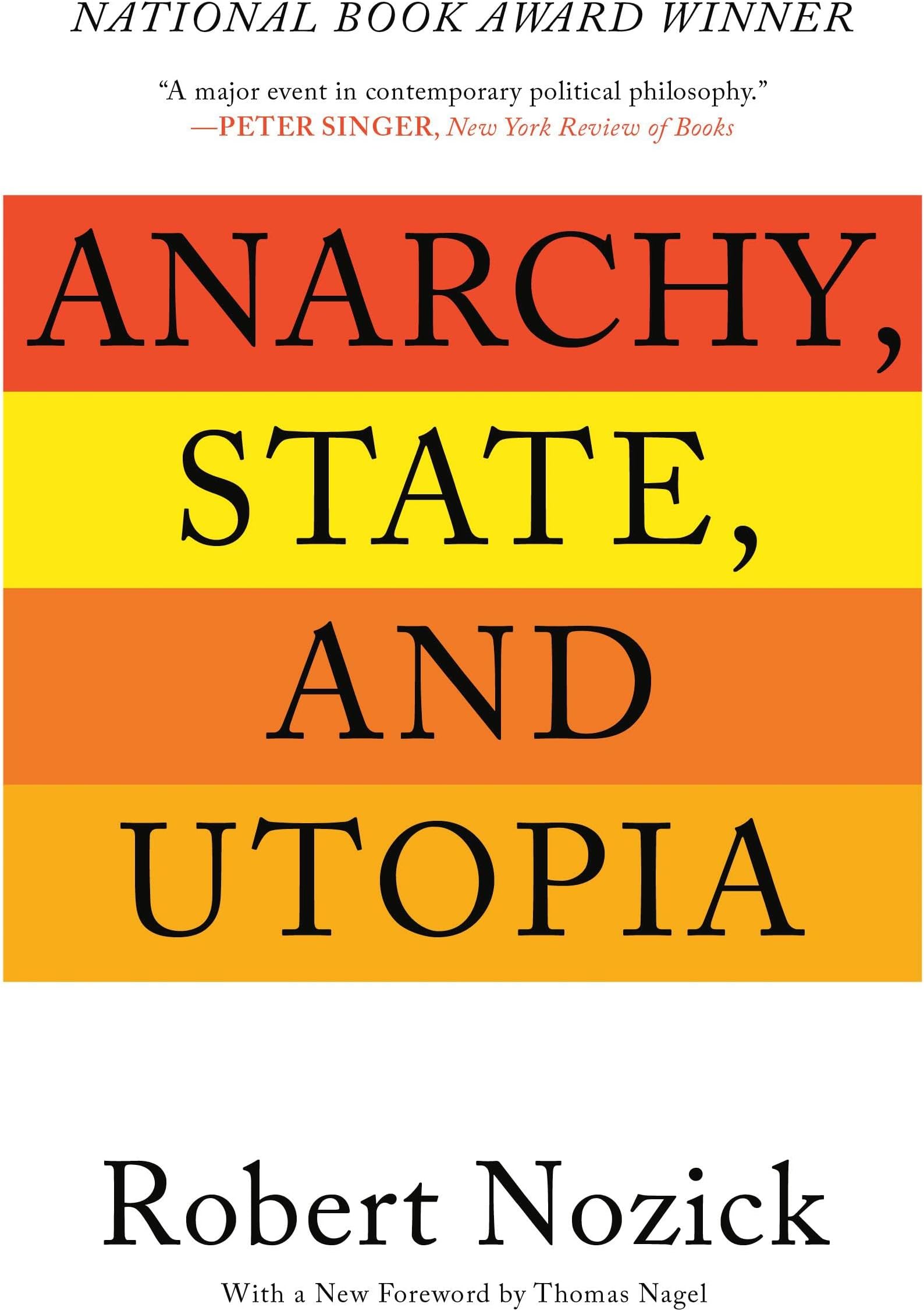
Anarchy, State, and Utopia [Nozick, Robert] on desertcart.com. *FREE* shipping on qualifying offers. Anarchy, State, and Utopia Review: Profound analysis on the role of state - Excellent analysis on the morally appropriate organization of a state from many angles. The reasoning is complex at times and the narrative is not always easy to follow, but the conclusions are well thought out and compelling. Definitely recommended for everyone interested in political philosophy no matter what your current opinions are on the subject. The book is not just presenting one “truth”, but explores a number of alternative views with a conclusion well grounded in the arguments presented. I don’t think you need to agree with the author’s conclusions, at least I enjoyed and was impressed by the quality of the argumentation as such. Review: Nozick and Rawls. Deep Thinkers on opposite sides of American thought. - You can get a wonderful overview of the book on Wikipedia. So, rather than try to provide such an overview here, let me offer a few comments on what reading along these lines has meant to me. Nozick's book is an outstanding logical development, building a philosophical framework upon a presuppositional base of preeminence of individual rights. I've read it cover-to-cover with interest and profit. This book provides an intellectual base to the school of Libertarianism that so attracts people in Ayn Rand's prose. Notably, I have read late-in-life interviews with Nozick in which he said that he became less libertarian as he got older. This book really should be read in conjunction with John Rawls' "A Theory of Justice," which I have not yet finished cover-to-cover due to its length and unavailability as an audiobook. After reading the most famous parts in Rawls book, I did finish a few good summaries and commentaries on the "Theory of Justice." Rawls and Nozick were contemporaries in the Philosophy Department at Harvard, and are leading minds on the left and right, respectively, of the American philosophical spectrum. The Nozick logic leads to a world of perfect individual rights. In this world, charity becomes dependent on the free will of individuals who choose to grant charity. In this world, the more harsh aspects of Social Darwinism become morally permissible. However, the economist's problem of Moral Hazard (the freeloader problem) is completely solved. One who holds individual rights to be preeminent sees this Nozick system as perfectly satisfying the Golden Rule (aka principle of reciprocity), because at the formation of the social contract, all agree to accept individual rights as preeminent, thus "doing unto others as we would have them do to us." The Rawls logic stems from applying the Golden Rule prior to developing the social contract behind a "veil of ignorance," in which founders/citizens do not yet know the circumstances and advantages of their birth. While complete individual rights may have been present while drawing up the social contract "behind the veil of ignorance," once out in society a measure of compassion and charity becomes almost obligatory, due to agreements made behind the veil of ignorance. In this world, the more harsh aspects of Social Darwinism will not be allowed by the social contract. However, this world is more susceptible to economist's problem of Moral Hazard (the freeloader problem) than Nozick's world. Interestingly, both the Nozick and Rawls approach can be reconciled with both the Golden Rule and Kant's Categorical Imperative, as can Ayn Rand's thesis (and I've read papers by philosopher graduate students and Ph.D graduates doing so). My bottom line? If men and women were gods and goddesses, either of these systems could make a happy world. The problem is that we are not.
| Best Sellers Rank | #56,001 in Books ( See Top 100 in Books ) #44 in United States National Government #99 in Political Philosophy (Books) #125 in History & Theory of Politics |
| Customer Reviews | 4.5 4.5 out of 5 stars (558) |
| Dimensions | 5.45 x 1.25 x 8.25 inches |
| Edition | Reprint |
| Grade level | 11 and up |
| ISBN-10 | 0465051006 |
| ISBN-13 | 978-0465051007 |
| Item Weight | 13.6 ounces |
| Language | English |
| Print length | 400 pages |
| Publication date | November 12, 2013 |
| Publisher | Basic Books |
| Reading age | 13 years and up |
L**O
Profound analysis on the role of state
Excellent analysis on the morally appropriate organization of a state from many angles. The reasoning is complex at times and the narrative is not always easy to follow, but the conclusions are well thought out and compelling. Definitely recommended for everyone interested in political philosophy no matter what your current opinions are on the subject. The book is not just presenting one “truth”, but explores a number of alternative views with a conclusion well grounded in the arguments presented. I don’t think you need to agree with the author’s conclusions, at least I enjoyed and was impressed by the quality of the argumentation as such.
D**Y
Nozick and Rawls. Deep Thinkers on opposite sides of American thought.
You can get a wonderful overview of the book on Wikipedia. So, rather than try to provide such an overview here, let me offer a few comments on what reading along these lines has meant to me. Nozick's book is an outstanding logical development, building a philosophical framework upon a presuppositional base of preeminence of individual rights. I've read it cover-to-cover with interest and profit. This book provides an intellectual base to the school of Libertarianism that so attracts people in Ayn Rand's prose. Notably, I have read late-in-life interviews with Nozick in which he said that he became less libertarian as he got older. This book really should be read in conjunction with John Rawls' "A Theory of Justice," which I have not yet finished cover-to-cover due to its length and unavailability as an audiobook. After reading the most famous parts in Rawls book, I did finish a few good summaries and commentaries on the "Theory of Justice." Rawls and Nozick were contemporaries in the Philosophy Department at Harvard, and are leading minds on the left and right, respectively, of the American philosophical spectrum. The Nozick logic leads to a world of perfect individual rights. In this world, charity becomes dependent on the free will of individuals who choose to grant charity. In this world, the more harsh aspects of Social Darwinism become morally permissible. However, the economist's problem of Moral Hazard (the freeloader problem) is completely solved. One who holds individual rights to be preeminent sees this Nozick system as perfectly satisfying the Golden Rule (aka principle of reciprocity), because at the formation of the social contract, all agree to accept individual rights as preeminent, thus "doing unto others as we would have them do to us." The Rawls logic stems from applying the Golden Rule prior to developing the social contract behind a "veil of ignorance," in which founders/citizens do not yet know the circumstances and advantages of their birth. While complete individual rights may have been present while drawing up the social contract "behind the veil of ignorance," once out in society a measure of compassion and charity becomes almost obligatory, due to agreements made behind the veil of ignorance. In this world, the more harsh aspects of Social Darwinism will not be allowed by the social contract. However, this world is more susceptible to economist's problem of Moral Hazard (the freeloader problem) than Nozick's world. Interestingly, both the Nozick and Rawls approach can be reconciled with both the Golden Rule and Kant's Categorical Imperative, as can Ayn Rand's thesis (and I've read papers by philosopher graduate students and Ph.D graduates doing so). My bottom line? If men and women were gods and goddesses, either of these systems could make a happy world. The problem is that we are not.
T**3
An Excellent and Novel Application of Lockean Natural Right's Theory
Robert Nozick's Anarchy State and Utopia attempts to provide three different arguments for two different conclusions. The first argument is that anarchy is an impossible system, and thus it is necessary (both morally and practically) to have at least a minimal state. The second argument is that there are no practical, moral, or positive reasons to institute provisions into a state more than a minimal state. The final argument is that a utopian world is one where individuals are free to decide the utopian model they prefer without external limitations prohibiting that decision (outside of those set within each particular small community that, if they did not exist, would fundamentally change the character of that particular community). I found both his arguments and conclusions convincing, and many of his views on the nature of rights I found compelling. Still, his writing style can be difficult. He is an academic (a Harvard academic no less), and his chief concern is addressing other academics and people who would understand these academics. He does not go as far as Immanuel Kant in Prolegomena to Any Future Metaphysics and say that if you do not understand him that the subject is too advanced for you and you should give up on political philosophy. Nevertheless, it should be stated somewhere that if you cannot grasp his ideas, you need to read the source texts in order to gain that foundational knowledge. Of these foundational texts, John Rawls's A Theory of Justice may be the most important. I personally have only read excerpts. This made part 2, which addresses Rawls's book directly, significantly more difficult to appreciate. The book receives four out of five stars because readability is crucially important. While most of his targeted audience would understand his prose, this does not mean that he could not attempt to make the writing more consumable by more people. Every writer must make it their mission to have the widest possible audience, and he did not.
M**.
Insightful and Ethical Political Philosophy
A very challenging work of philosophy. Not an easy read, but a very rewarding one; Robert Nozick clearly and exhaustively lays out the groundwork for a truly ethical and consistent analysis of politics and government. The book arrived promptly and was exactly as advertised. Excellent service.
R**R
Best read in conjunction with John Rawls' "A Theory of ...
Best read in conjunction with John Rawls' "A Theory of Justice," Nozick's book is a classic of political thought. He advances a simple, elegant, and difficult-to-argue-with libertarianism, one that forms a foundation for libertarian thinking today. Whether or not you agree with him, this is essential reading for anyone trying to understand libertarian philosophy today.
D**L
What we all know is true, but do not necessarily know why.
Nozick's book is difficult to read, but it is worth the effort. One does not read AS&U from front to back. One must read, reread, reflect, and reread again to understand the ideas offered. People who have not read and understood the ideas of Nozick and his colleague John Rawls really should not bother with writing about the political economy, for they have nothing useful or interesting to say.
W**T
The greatest book on Political Philosophy of all time. Really I should say more about it but unfortuantely I am too busy writing a dissertation on this book instead.
M**N
Sehr gut erlätert, wie ein liberaler Staat und eine liberale Gesellschaft aussehen kann. Grundrechte des Individuums sthen im Mittelpunkt. rechte des Staates können nur abgeleitet sein.
P**R
Anarchy, State, and Utopia is the most creative work in defense of right-libertarianism that has ever been written. It is unfortunate that much of the secondary literature is uncharitable or misreads Nozick's arguments, for they are actually more subtle and effective than people may believe at first glance. If you take the time to look through every footnote, you'll realize that Nozick already knows all the objections and solutions, but leaves the reader to figure it out for themselves. He challenges the reader enormously, and he probably knew that there was no point in responding to critics who simply misunderstood his work. This book should only be read by those with a background in philosophy; it will be confusing and labyrinthine to anyone else. There are other good libertarianism books out now (like Michael Huemer's Problem of Political Authority), but those are just cogent and intelligent. Nozick is a higher caliber level philosopher (look at his other works, especially in Philosophical Explanations) and is a *genius*. ASU is written by a special and *brilliant* mind, and must be appreciated slowly. The first time you read it (if you make it through) you might not be so impressed. But the more you learn elsewhere, turn back to ASU, and notice how much deeper your understanding becomes each time. You need incredible knowledge to even begin appreciating and truly understanding what is said here by Robert Nozick.
A**K
Brilliant writer. Fascinating ideas. Compelling philosophy. Just wouldn't purchase anything from PBC Distributors. Had a terrible experience.
J**.
Puntual.
Trustpilot
1 day ago
3 weeks ago