![Criterion Collection: Harakiri [Blu-ray] [1962] [US Import]](https://m.media-amazon.com/images/I/61G8GzSp-8L._AC_SL3840_.jpg)



Criterion Collection: Harakiri [Blu-ray] [1962] [US Import]
Product ID: 216799406
Details
- ColourColour
- FormatBlu-ray
- LanguageEnglish
- ManufacturerCRITERION
- Number of discs1
Buy anything from 5,000+ international stores. One checkout price. No surprise fees. Join 2M+ shoppers on Desertcart.
Desertcart purchases this item on your behalf and handles shipping, customs, and support to Vanuatu.
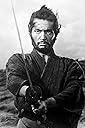
Following the collapse of his clan, an unemployed samurai (Ran's Tatsuya Nakadai) arrives at the manor of Lord Iyi, begging to commit ritual suicide on his property. Iyi's clansmen, believing the desperate ronin is merely angling for a new position, try to force him to eviscerate himself— but they have underestimated his beliefs and his personal brand of honor. Winner of the 1963 Cannes Film Festival's Special Jury Prize, Harakiri, directed by Masaki Kobayashi (The Human Condition) is a fierce evocation of individual agency in the face of a corrupt and hypocritical system. Review: Magnificent splendor of infinite sadness - This could be an alternative title for this masterpiece. Few films ever had on me such an effect as "Harakiri" and made me so much think about human life and how fragile it is as well as about happiness and how precious - and always too short - are the moments we enjoy it. I will not reveal anything about the story, but I think it is worthy to describe the first 30 seconds, which immediately nailed me to the seat by making me realise that I was watching a unique master piece. So here they are: it begins with an old book in Japanese being opened somewhere in the middle and a calm voice reading: "This day of year 1630, in the morning, men came from the village to present gifts of fish to the castle. No other official business occurred. However, later that day, a well spoken and polite although malnurished and poorly clothed ronin presented himself at the gate with a most unusual request..." What follows is the story of a tragedy so heartbreaking that even Victor Hugo in "Les Miserables" didn't manage to equal it. It is also the story of an unjustice so disgusting that it would probably make Dickens and Zola weep like teenage girlies... And finally it is the story of a vengeance so mean and terrible that it makes "Death Wish" series look as a Disney movie in comparison -and even more remarkable is the fact that this revenge doesn't include ANY deaths and, still better, not even one drop of blood is spilled... Curious, isn't it? Well, the only way to find the solution of this riddle, is to watch the movie. What was written above doesn't mean that this film is easy to watch - the title is not metaphoric, so be prepared to at least one scene that is purely horrible! Some swordfighting is also involved, but if this is what you are looking for in samurai movies, don't bother even beginning watching this one - the sword fighting is so much NOT the point here! Masaki Kobayashi is one of the major Japanese movie makers and "Harakiri" is his masterpiece. It easily matches every Kurosawa movie, and - I hardly can believe that I am writing it - it can be even better than "Seven Samurai"! Both movies are of course very different, but if I had to choose only one to preserve for posterity from certain destruction, I would face a really tough choice. And all my life I considered "Seven Samurai" as THE perfect movie - until I finally saw this one... All actors are doing great in "Harakiri" but it is of course Tatsuya Nakadai who has the greatest responsability and plays the hardest part as (yes, you guessed right) this mysterious "well spoken and polite although malnurished and poorly clothed ronin". This kind of acting is clearly inspired somewhere very high (or somewhere very low) but clearly it is not permitted to regular earthlings to reach such level of perfection... At every minute of the movie Tatsuya Nakadai could spoil it by any kind of little mistake - but he never made one. I really do not see what else could I tell, so just one little warning. This is not a movie for a Friday evening with your girlfriend. First, she will probably run away after first 30 minutes to cry in her room. If she doesn't, dump her - she is certainly not a human female at all and probably devours males after mating. And if by any miracle you manage to watch this movie together until the end, you can certainly expect that she will need lot of cuddling later, but that will be it. I can not imagine any romance developping in the 24-48 hours following the watching of this movie... "Harakiri" will give you a great satisfaction (pun very much intentional), but not one of Friday evening variety. This is an important and unique movie. At least once in a lifetime everybody should watch it. Review: Best movie ever. - I saw this movie when I was a teenager in Romania. I could not snap out of it for 2 weeks. Masaki Kobayashi showed me with this movie what was important in life, the values one human should have in life. Later, in Great Britain, I learned about the creator of the movie, what kind of man he was. I realised that he transmitted me in this movie what kind of man Masaki Kobayashi was. I bow myself to this movie, its message and to Masaki Kobayashi. Thank you, Masaki Kobayashi: you have been one of the greatest humanitarians.
| ASIN | B005D0RDCU |
| Best Sellers Rank | 36,641 in DVD & Blu-ray ( See Top 100 in DVD & Blu-ray ) 13,147 in Blu-ray |
| Customer reviews | 4.8 4.8 out of 5 stars (557) |
| Is discontinued by manufacturer | No |
| Item model number | 21169882 |
| Language | English |
| Media Format | Blu-ray |
| Number of discs | 1 |
| Product Dimensions | 1.78 x 19.05 x 13.72 cm; 113.4 g |
| Studio | CRITERION COLLECTION: HARAKIRI |
| Subtitles: | English |
D**K
Magnificent splendor of infinite sadness
This could be an alternative title for this masterpiece. Few films ever had on me such an effect as "Harakiri" and made me so much think about human life and how fragile it is as well as about happiness and how precious - and always too short - are the moments we enjoy it. I will not reveal anything about the story, but I think it is worthy to describe the first 30 seconds, which immediately nailed me to the seat by making me realise that I was watching a unique master piece. So here they are: it begins with an old book in Japanese being opened somewhere in the middle and a calm voice reading: "This day of year 1630, in the morning, men came from the village to present gifts of fish to the castle. No other official business occurred. However, later that day, a well spoken and polite although malnurished and poorly clothed ronin presented himself at the gate with a most unusual request..." What follows is the story of a tragedy so heartbreaking that even Victor Hugo in "Les Miserables" didn't manage to equal it. It is also the story of an unjustice so disgusting that it would probably make Dickens and Zola weep like teenage girlies... And finally it is the story of a vengeance so mean and terrible that it makes "Death Wish" series look as a Disney movie in comparison -and even more remarkable is the fact that this revenge doesn't include ANY deaths and, still better, not even one drop of blood is spilled... Curious, isn't it? Well, the only way to find the solution of this riddle, is to watch the movie. What was written above doesn't mean that this film is easy to watch - the title is not metaphoric, so be prepared to at least one scene that is purely horrible! Some swordfighting is also involved, but if this is what you are looking for in samurai movies, don't bother even beginning watching this one - the sword fighting is so much NOT the point here! Masaki Kobayashi is one of the major Japanese movie makers and "Harakiri" is his masterpiece. It easily matches every Kurosawa movie, and - I hardly can believe that I am writing it - it can be even better than "Seven Samurai"! Both movies are of course very different, but if I had to choose only one to preserve for posterity from certain destruction, I would face a really tough choice. And all my life I considered "Seven Samurai" as THE perfect movie - until I finally saw this one... All actors are doing great in "Harakiri" but it is of course Tatsuya Nakadai who has the greatest responsability and plays the hardest part as (yes, you guessed right) this mysterious "well spoken and polite although malnurished and poorly clothed ronin". This kind of acting is clearly inspired somewhere very high (or somewhere very low) but clearly it is not permitted to regular earthlings to reach such level of perfection... At every minute of the movie Tatsuya Nakadai could spoil it by any kind of little mistake - but he never made one. I really do not see what else could I tell, so just one little warning. This is not a movie for a Friday evening with your girlfriend. First, she will probably run away after first 30 minutes to cry in her room. If she doesn't, dump her - she is certainly not a human female at all and probably devours males after mating. And if by any miracle you manage to watch this movie together until the end, you can certainly expect that she will need lot of cuddling later, but that will be it. I can not imagine any romance developping in the 24-48 hours following the watching of this movie... "Harakiri" will give you a great satisfaction (pun very much intentional), but not one of Friday evening variety. This is an important and unique movie. At least once in a lifetime everybody should watch it.
I**A
Best movie ever.
I saw this movie when I was a teenager in Romania. I could not snap out of it for 2 weeks. Masaki Kobayashi showed me with this movie what was important in life, the values one human should have in life. Later, in Great Britain, I learned about the creator of the movie, what kind of man he was. I realised that he transmitted me in this movie what kind of man Masaki Kobayashi was. I bow myself to this movie, its message and to Masaki Kobayashi. Thank you, Masaki Kobayashi: you have been one of the greatest humanitarians.
M**N
Masterpiece! heart shreddingly wonderful!
I wasn't really prepared for the emotional impact of this magnnificent film, I was completely blown away. The narrative is expertly crafted to keep the viewer watching and the cinematography is wonderul. The fighting is kept to a minimum as this film is really a examination of codes of honour and loyalty. I have to admit i had tears rolling down my face by the end, wonderful, just wonderful. The best samurai film of I have seen and a wonderful introduction to the work of Kobayashi
D**N
Fantastic!
One of the most restraint pictures I've ever seen. Like a theatrical drama. It takes 1 hour 45 minutes before any visual action takes place, but that's not the point here. We deal whit a director who has developed beyond that kind of "up front" storytelling. Instead this story slowly creeps upon you from a marvellous script and super duper acting. The picture quality is beyond belief! Why fuzz about bluray when you actually can have this quality on DVD? It all comes down to the quality of the negative print used AND the process of transfering (the quality of the equipment). If every DVD-company put their every effort into this process we would'nt need blueray at all... A must for every serious filmfan! Daniel
M**S
Respect
This is a work a great importance; It is one of the most profound films ever. Both in its narrative and in style. "Harakiri" is a timeless masterpiece. As well as Masaki Kobayashi's "Kwaidan", "The Human Condition", this is a vision of great depth and texture. Harakiri is a serious film.
D**S
Bushido, the way of the samurai, in theory, provides a noble idea, but like all ideas, some change to fit personal goals and agendas. Derived from four major philosophical and spiritual sources (Buddhism, Confucianism, Shintoism, and Zen) the samurai generated the Bushido, as the samurai had to be fearless, enlightened, and reflective while displaying both compassion and self-control. The samurai sought the true way to become the ultimate warrior where he displayed respect and reverence for both friend and foe. For centuries, the samurai had sought an inner path to enlightenment, righteousness, and dexterity while serving a clan with their skills in swordsmanship. Here Masaki Kobayashi, a proponent against authoritarian power, directs a samurai tale that illustrates how the concept of the Bushido transforms into a self-serving design. In the year 1630, the island that now goes under its native name, Nippon, also known as Japan to westerners, was only in its beginning of the Tokugawa shogunate, which lasted for some 250 years. The major difference with the Tokugawa compared to previous military leaders was that they unified their powers while exterminating smaller and less prosperous clans. It left numerous samurai without masters, as they had to drift into an unemployed existence also known as ronin. In Harakiri, known as Seppuku, in Japan, the audience learns about the socioeconomic and political changes that a ronin faced after the loss of a position while suffering from poverty and hunger. This story is set within the walls of the Iyi clan's stronghold. The audience should also know that the Iyi clan was a supporter of the Tokugawa shogunate. Images of the Iyi clan's traditional armor open the film with a hauntingly stark presence, as the dark background contrasts the armor while fog drifts aimlessly around the armor. Analogously, the opening imagery presents a notion of a dark, resistive, and hollow presence, as no human fills the armor. It also provides the impression of lacking compassion while this clan's symbol represents the clan's merciless power and might. Eventually, the imagery forcefully fades into reality where it sits on the clan's high seat overlooking the clan and its fiefdom. Out of the Iyi clan's log, a narration informs the viewer about a samurai and former retainer of the Fukashima Clan that arrives to the Iyi clan's grounds, which brings the audience back in time through a flashback. This man is Hanshiro Tsugumo (Tatsuya Nakadai). Hanshiro requests to use the Iyi clan's forecourt of the Iyi's stronghold for a ritual suicide (harakiri) where the samurai cuts open his own abdomen in order to uphold his honor. Before the clan approves of his request, the senior counselor of the house of Iyi, Kageyu Saito (Rentaro Mikuni) meets with him. In his meeting, Kageyu informs Hanshiro about a recent incident where another man arrived who made a similar request. Together with Hanshiro the audience learns that other ronin have made the same request in the hope of obtaining a position, or getting a little money. However, the Iyi clan does not deviate, as they will make sure that the ronin executes harakiri by following the rules of Bushido. The story does not deter Hanshiro who remains steadfast in his decision of performing harakiri. Well spread hearsay has reached Hanshiro's ears that the Iyi clan possesses a number of terrific swordsmen, as he requests one to be his assistant. The assistant's sword skills will serve the purpose of decapitated the Hanshiro's head when the pain of gutting himself becomes too painful, which in a way helps save face, no pun intended. However, none of the men that he requests are present, as they all are absent for the day due to illness. Yet, Hanshiro requests one of these men, as he wants the job done properly. Consequently, Kageyu sends for them, and while they wait Hanshiro begins to share his life story for Kageyu and the present samurai. Hanshiro's story is a perplexing and mesmerizing tale that will pull the audience in several unexpected directions, as director Kobayashi portrays a strong criticism of authoritarian rule of Iyi clan and their abuse of the Bushido. Kobayashi's vision does not only reflect of historical incidents several centuries ago, but also, he freely criticizes the abusiveness of despotic power which shows complete disregard for the individual. This is something he personally experienced as a private, even though he was offered an officer position, in World War II, a war he referred to as, "the culmination of human evil." Now less than two decades after the war, Kobayashi ironically sets the tale during the Tokugawa shogunate, which we now know exists no more. This knowledge serves an intentional reminder that despotic rule never lasts, as people eventually will always overcome the oppressiveness, as they did after World War II. In regards to the aftermath of both World War II and the Tokugawa shogunate, Kobayashi points out that the individuals of the lower socioeconomic levels suffer far worse than those in power, as those in power always find away to bend the rules to their favor. Harakiri offers much more than mere sword fight, as Kobayashi allows the audience to reflect over the social application of the Bushido and the abuse of the samurai code. In addition, Kobayashi playfully applies masterful symbolism that intentionally criticizes the political perspective of totalitarian rule in a jidaigeki (also known as chambara, or sword fight in a period film that takes place between 1600 and 1868.) This is why Harakiri emerges as one of the bewildering cinematic masterpieces that compares with Rashômon (1950), with its mysterious element, and Seven Samurai (1954) by Kurosawa and Miyamoto Musashi's samurai trilogy with its social impact in the shadow of Bushido. Lastly, through the combination of brilliant camerawork, a clever script, and terrific performances by the cast all are come together under Kobayashi's skillful direction that leaves the viewers with a lasting and truly amazing cinematic experience.
R**R
I had been wanting to see Seppuku (harakiri) for some time, and as my first rental with zip.ca I was quite exited. I turned it on, and was simply stunned by its sheer power, realism and quality. It featured little of what Kurosawa had brought to the genre, but rather offered a heartwrenching portrait of the futility of a lifestyle that preys upon the helpless. I sat there mesmerized by the brilliance of Kobayashi's direction and Nakadai's performance, together they provided a level of realism that I didn't think was possible with such a robust genre. I felt almost the same way I had after viewing The Wild Bunch. I mean this film totally changes the way I think of a samurai picture, but at the same time it does not detract from anything from the likes of The Seven Samurai or Sanjuro. To say the least I found Seppuku to be an impressive film. I don't give very many 10/10s, but it certainly does deserve that rating. What The Seven Samurai is to The Searchers, Seppuku is to The Wild Bunch. 10/10.
ぺ**け
この切腹は、つらい
P**I
This has got to be one of the greatest artistic illustrations of rebellion against an oppressive and cunning authority. A timeless ordeal that has marred humanity since our infancy is brought here (in HARA KIRI) to the most stunning, effective and thought-provoking representation I've ever witnessed on film. The premise and the narrative are simple enough for anyone to comprehend, yet wrought with limitless subtlety to keep the thinker thinking for a very long time. This film will infinitely test the Draconian thinker as it's difficult for the rationalist to bend under passionate distress. But when humanity presents itself naked and powerless, even Samurai code is put to the test. This film is a terrific representation of both sides of a uniquely human equation. On one hand, we are bound to the authorities which we invent. On the other, we are bound to the humanity with which we are born. As honorable as it is to remain tenacious for a belief, it's just as honorable to fight relentlessly for survival. It's just plain wrong, however, for authority to manipulate the very honor for which it is regarded in order to spite or punish those who struggle to live. I can understand and respect punishment, but I will never respect or agree with punishment that is handed out fraudulently. An early character is this film commits hara kiri, believing that given his present circumstances, hara kiri is the most honorable and respectable way die. Unbeknownst to him, however, his superiors are using hara kiri as a means of punishment, made all the more brutal and inhumane through the use of a bamboo blade. Had the character committing hara kiri disclosed his situation to his superiors, or had his superiors asked the character to disclose his situation, the hara kiri and ensuing revenge plot might have been avoided entirely. But unfortunately, our unwavering fortitude under invented systems of belief and authority can and will inevitably lead to tragic ends. As far as the picture is concerned, Criterion nails it. Unless you're a raging cinephile, ignore the cropping criticisms. The experts at Criterion wouldn't crop unless it were absolutely necessary to improve the overall aesthetic virtues of the transfer. Regardless, the cropping is insignificant; the cinematography remains among the best ever. I was floored by some of the close-ups; they're really shocking. It's obvious after seeing this film where modern Japanese filmmakers find their inspiration. This is about as beautiful as black and white gets, the most beautiful b&w film I've seen being THE WHITE RIBBON on BD. This transfer comes pretty darn close to that, and this film is how old again? Criterion are good at respectfully handling grain. So, no issues there. There are spots and scratches every now and then, but they're extremely few and insignificant. If it weren't for their occasional appearance, it would be difficult to discern the age of this movie. The audio is mono. What more can be said about it? Yes, it's as true to the source as you're going to get, and it's extremely clean, but it's still mono. I hope you enjoy this film as much as I did :)
T**S
Some good reviews and good attempts to summarize the plot. I urge that no one be put off by the anticipation that it will be confusing or overly complex. The story is told largely in flashback, and somewhat out of sequence, but it makes perfect sense to tell it that way, somehow. It is in no way hard to follow, and the exposition unfolds perfectly. This movie is very strongly made up of Japanese cultural influences and history, yet the themes and underlying conflicts are universal. This is a human drama, told through strong empathetic characters. Hanshiro is one of the most admirable characters I have ever seen depicted...from his (anecdotal) heroism at Sekigahara, his honorable action when the clan is disbanded, raising his son, to whom he exhibits great love and loyalty, to the fact that when reduced to making umbrellas, he seems to be a painstaking and diligent craftsman. AND he gets to be a doting grandpa, babytalking and mugging to his little grandson. Then when he has lost it all, he acts, again, with honor, in the only way left to him. Much is made of Kobayashi's undeniable attacks on authoritarianism, but it is also undeniable that to the end Hanshiro is the MOST honorable and the MOST true to the ideals bushido would have an individual uphold. The failure of bushido, as with any system of ideals, is in the imperfect humans who try (or do not) to uphold them, not necessarily in the ideals themselves. This is a wonderful film, beautifully composed and well-acted. The actor portraying the Chamberlain does a fine job, in particular. Hanshiro's rebellion is directed fully at him, and in the end, it is difficult to tell what effect the exposure of so many dishonorable actions has had on him. SPOILER!!! (as if you don't already know...) One thing that has been little mentioned is the bleakness of the ending...in the end, the scribe notes only that on that date, one samurai committed honorable bushido in the House of Iyi, and a large number of retainers died of illness. Indeed, the narrator records that publically, the Iyi clan got away with everything, covering up the truth. The last shot, of the armor restored, soulless and imposing, is chilling. The more so noting the date of the action was 1630, and the code and society that drove Hanshiro to his desparate action was to continue for over two centuries.
Trustpilot
1 week ago
1 month ago