Buy anything from 5,000+ international stores. One checkout price. No surprise fees. Join 2M+ shoppers on Desertcart.
Desertcart purchases this item on your behalf and handles shipping, customs, and support to Vanuatu.
☕ Elevate your espresso game with Italy’s iconic crema master!
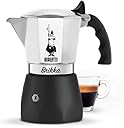
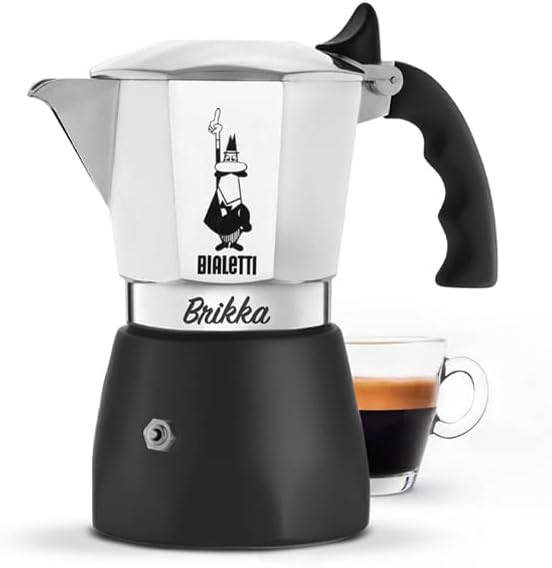
The Bialetti New Brikka is a 2-cup stovetop moka pot uniquely engineered to produce a rich, crema-topped espresso. Made in Europe by the original Moka pot inventor, it combines authentic Italian craftsmanship with user-friendly design. Compatible with gas, electric, and propane stoves, this compact aluminum pot delivers café-quality coffee at home or on the move, perfect for millennials seeking a premium, ritualistic coffee experience.


| ASIN | B08BR86LR3 |
| Best Sellers Rank | #888,777 in Home & Kitchen ( See Top 100 in Home & Kitchen ) #224 in Stovetop Espresso & Moka Pots |
| Brand Name | Bialetti |
| Capacity | 2 Cups |
| Coffee Input Type | Ground Coffee |
| Coffee Maker Type | Moka Pot |
| Color | Aluminum and Black |
| Customer Package Type | Standard Packaging |
| Customer Reviews | 4.1 4.1 out of 5 stars (3,995) |
| Exterior Finish | Silver |
| Filter Type | Reusable |
| Global Trade Identification Number | 08006363030038 |
| Human Interface Input | Buttons |
| Included Components | Stovetop |
| Is the item dishwasher safe? | No |
| Item Dimensions D x W x H | 3.94"D x 5.51"W x 6.69"H |
| Item Type Name | Stovetop Coffee Maker |
| Item Weight | 7.7 ounces |
| Manufacture Year | 2023 |
| Manufacturer | Bialetti |
| Material | Aluminum, Thermoplastic |
| Model Name | New Brikka |
| Model Number | 0007312 |
| Number of Items | 1 |
| Operation Mode | Manual |
| Other Special Features of the Product | Gas Stovetop Compatible |
| Part Number | 0007312 |
| Power Source | stovetop |
| Recommended Uses For Product | Traveling |
| Specific Uses For Product | Coffee maker |
| Style | Moka Pot |
| Unit Count | 1.0 Count |
| Warranty Description | 1 year manufacturer |
| Wattage | 230 watts |
J**.
"Crema the crop"
Underrated, coffee-making work horse. PROS: It makes very good espresso with decent amount of crema. Are you going to get something similar to a thousand-dollar espresso machine? No. Not at all. But for the price, it will get you pretty darn close without breaking the bank. CONS: The machine has a bit of a learning curve. You have to "season" it first by going through one or two wash cycles with water only and another one or two more cycles with coffee before you can actually drink what you make. Also, you can't just set it and forget it. You have to watch it carefully and be mindful of your stovetop temperature or else risk ending up with bitter coffee. Overall, if you are adventurous and don't mind taking the time to know this little pot, you will be very, very pleasantly surprised with the quality of espresso you can make. It's a solid little coffee maker.
T**E
Follow Brikka instructions to the letter for perfect crema ☕😋
I bought the 2 cup Brikka for myself and also sent one to my daughter and son-in-law, who are former Starbucks managers with advanced barista skills (They don't like Starbucks coffee 😂). I also sent them a bag of Bialetti Perfetto Moka Classico and a canister of illy Classico Espresso for Moka to try. I was hoping they'd help me nail my Brikka technique and they did! They love it! ☕😋 We knew from reading Amazon reviews that the Bialetti instructions for Brikka must be followed to the letter for best results, and they're different than the Bialetti instructions for the Moka Express. Water: The bad reviews that say hot coffee spurted out the hole or overflowed used too much water! You can't fill Brikka until the water touches the bottom of the valve, like you would with the regular Moka. Follow Bialetti instructions and use the enclosed measuring cup to fill the bottom with cold or room temperature filtered or bottled water: 120ml of water for the 2 cup Brikka, or 170ml for the 4 cup Brikka. Starting with cold or room temperature water, per Bialetti instructions, allows time for the coffee to bloom and for the gasses to create the right pressure. So ignore the current social media influencers' hack to fill Moka pots with boiled hot water; it doesn't improve the flavor and can damage the valve from heating the metal too suddenly, or burn your hand when you screw the pot together. It's a myth that starting with boiled hot water is the way to prevent scorched, bitter coffee - The way to prevent scorched, bitter coffee is to follow the Italian tradition of removing the pot from the stove early, at just the right time, so it finishes brewing off the stove from the heat inside the pot. So don't do the other social media influencers' hack of running the pot under cold water to cool it down when you remove it from the stove - It's not necessary and you need the pot to stay hot so it finishes brewing off the stove. Coffee: Bialetti replied to my email that "the official correct grind size for the Moka pot is medium-fine." Most pre-ground espressos are too fine for the regular Moka and the Brikka, but the pre-ground espressos sold in Italian grocery stores are ground medium-fine to work in the Moka and Brikka, since every Italian household uses a Moka pot. Look for the little Moka pot icon on the package. The most popular brands are illy, Lavazza, Kimbo, and Bialetti Perfetto Moka. (Sold on Amazon.) Overfill the coffee funnel loosely with medium-fine ground espresso, then use the straight edge of a knife or your finger to scrape off the extra so the coffee is level with the rim. Do not press it, tap it on the counter, pack it, or tamp it. Coffee grounds must be loose so the water can flow through it properly for a good extraction. Wipe the rim free of grounds so it will form a tight seal with the rubber gasket when you lock the pot. Screw the pot together tightly. Break In: Bialetti recommends brewing at least three pots of coffee and throwing them away before you can brew a drinkable batch with good flavor. You can use old coffee for this. I think it takes a few batches for the valve to start consistently producing a lot of crema. It's good to practice several times so you can see how long it takes for the crema to come in and start accelerating. Heat: For the regular Moka pot you would use a low gas flame or a preheated medium electric stove; and I think the Brikka is about the same, but if your heat isn't high enough it won't make good crema. So, depending on your stove, you might need to go up to a medium-low gas flame, or maybe go a click above medium on your electric stove. Even a tiny adjustment in the heat makes a big difference in the amount of crema! Timing: (Timing might take longer for the 4 cup Brikka.) With my 2 cup Brikka, on a preheated medium electric stove, the coffee starts quietly streaming into the upper chamber after aprox 4 minutes, then several seconds later the crema starts coming, and several seconds after that the crema is accelerating, so I take it off the stove before it gets loud, around 4-1/2 minutes; and I let it finish brewing on my countertop. It finishes brewing at around 5 minutes or a little before. See my attached video that shows when to remove it from the stove. My barista daughter recommends listening for the ripping/tearing sound and immediately taking it off the heat, so she sent me the attached video showing when she takes it off. (My first few tries my heat was too low, so it took a total of 6 or 7 minutes to finish brewing and it didn't make much, if any, crema.) Cleaning: When you unscrew your pot, there should be a some brown water left in the bottom because that leftover water would've diluted your brew too much if it had gone through, and it's got a lot of fines in it, so it's not the best-tasting. This I've learned from the Moka pot video on the "Il Barista Italiano" YouTube channel, among others. Per Bialetti instructions, never use soap on your Moka or Brikka, just wash them in hot water and wipe with a cloth after every use. A toothpick works well to pry out the rubber gasket and remove the metal filter so you can wash them because grounds get trapped inside. They do stay very clean this way! Once a month you can boil a batch of plain water in the pot to deep clean it. The Bialetti website also has some instructions about occasionally deep cleaning with vinegar or citric acid, if necessary. A paste of baking soda and water can be rubbed on stains to remove them. Italians keep their Moka pots for decades, they last a lifetime as long as the gasket is changed every few years; so you'll see some old pots with discolored aluminum inside that look dirty even though they're clean. This isn't a buildup of rancid coffee oils, it's discoloration that happens over the years, even with daily cleaning. Conclusion: I have two Bialetti Venus stainless steel Moka pots and I love them! They're beautiful industrial art and can be used on induction, electric, or gas stoves because they're stainless steel. But Brikka is now my favorite and I use it daily for delicious espresso! (Italians always call Moka pot coffee "espresso.") Tips: I drink Latte/Cafe con Leche made with 5 oz of hot whole milk to 1 shot of Moka or Brikka coffee. I stir sweetener into my hot milk before I pour in the coffee so I won't kill the crema by stirring in sweetener later. If you're new to Bialetti or you aren't satisfied with your Moka pot coffee, I recommend searching YouTube for "Annalisa J Moka pot" video. She explains the correct traditional Italian way to make Moka pot "espresso" in depth, the way they've done it since 1933. Just remember the Brikka instructions are a little bit different from the Moka instructions. There's another good Moka video by "Italian with Bri." Also the Moka video by "Il Barista Italiano." Very few YouTube videos teach the authentic Italian Moka technique, and in my experience the Specialty Coffee influencers' hacks are unnecessarily complicated and don't produce the best flavor. Tradition and Bialetti instructions, plus a little practice for the perfect amount of heat and timing, will give you the best results so you can enjoy delicious espresso drinks at home! 😋 ☕
A**R
Real Italian Moka with a hint of crema
I’ve seen a lot of negative reviews for what seems to be a lack of understanding of the product. You need to fill it up using the measuring cup, and not to just below the valve like you would a Moka pot. I learned this the hard way the first time I used the Brikka. After filling it up to the right level, you will get a nice layer of foam. Once it starts to get a steady stream of coffee/steam, take it off the burner and the heat within the pot will finish the rest. I’ve found that the flavor profile of the Brikka is better than the Moka pot. Is it a cafe-style, hand pulled espresso? No, and it’s not supposed to be. It’s an affordable and easy way to make a tasty shot of coffee at home. I love the act of preparing a Bialetti every morning, instead of just pressing a button. Bialetti is a staple of every Italian household because of the quality coffee their products produce and the durability of their product.
C**U
Cheap, effective, lots of cleanup and experimentation
Let me start with saying this is not a great appliance for expresso made-easy. If you want easy then do yourself a favor and go for a nespresso pod machine. The Bialetti Brikka is the complete opposite of easy. It requires precise timing, patience, and a lot of experimentation to get the flavor you want out of an inexpensive, solid, yet sometimes flawed piece of equipment. It's built like a brick (pun intended). The Brikka is solidly built with a cheap plastic handle that begs for something better quality. Not sure how this will hold up over time, especially under heat. Now, you might be wondering why the Brikka over a standard moka pot? One word: crema. To get good crema you need a combination of good, balanced extraction with fine grains (but not expresso fine) and the right coffee beans. Dark roast is preferred or you'll more likely get the sour, bitter taste of over-extracted coffee. An aeropress round filter applied wet under the top pour piece filter helps with filtering bitterness and bean oils. Exact water measurement is a must, and thankfully the Brikka does come with a small measuring cup. So why the hate for this little tool? It's the prep and kitchen cleanup. Grinds are small and get everywhere, not to mention you need to top-off the grinds to get the exact amount you want. It's not simple, and requires a lot of patience and stubborn persistence to get it right. It took more over 20 tries to get the large amount of crema I wanted (see photos). Also, the odd angular shape makes wiping dried coffee difficult and takes a good, thorough wash under water. In short, this is a cute, wonderful piece of equipment that sits in my cupboard and gets frequent use on the stove. If you want ease-of-use, get an expresso pod machine, but I can guarantee you it won't taste the same. Expresso is a way of living and an experience so if you want your coffee like an Italian this definitely something worth considering.
N**O
It is very good I am happy with the product
F**K
Une petite cafetière que j'aime beaucoup utiliser quand je suis tout seul: c'est assez rapide, pas trop compliqué (même s'il faut quand même surveiller) et le café est très bon. Spécificité de ce modèle, la crème. J'arrive à en avoir, même si elle est fine et qu'elle disparait rapidement. je ne trouve pas que ça change grand chose au final par rapport à une moka classique, mais bon la différence avec le modèle de base n'est que de 6 euros. Et puis c'est quand même plus joli avec un peu de mousse. La quantité de mousse varie en fonction du café utilisé, j'ai de meilleurs résultats avec une mouture très fine (mais pas besoin que le café soit fraichement moulu, j'ai même de très bons résultats avec du lavazza de supermarché).
K**M
Love the crème. Great little stovetop coffee maker. Makes a good shot.
M**N
ممتازة
V**.
Yo compre la versión para 2 tazas, a la cual se le ponen 120 ml de agua (trae un recipiente de plastico para poder medir el agua) y produce aprox hasta 100 ml de cafe. Así que cuando dice 2 tazas, se refiere a dos tazas pequeñas como las de espresso. Le toma aproximadamente 4 minutos en preparar el café y los primeros 3 minutos no va a salir nada. Dediquen ese tiempo para estar supervisando la cafetera ya qué si se deja en el fuego, burbujea y se derrama el café. Les sugieron: 1- siempre llenar el recipiente de cafe al ras, esto sin comprimirlo. Pueden pasar un cuchillo para quitar el exceso y deja perfectamente al raz el deposito de cafe. 2- Siempre usen la cantidad de agua qué recomienda el manual. Para la Brikka de 2 tazas son 120 ml 3- El tiempo que tarda en hacerse el café, aprovecharlo para calentar agua o leche, según lo que vayan a ponerle a su café. Tener la taza lista un lado de la estufa. 4- mantener la cafetera con la tapadera superior abierta. Cuando el café se haya vertido más o menos a la mitad o 3/4 del total, retirar la Brikka de la estufa. Inmediatamente verter el café en la manteniendo la tapadera abierta para que esta no detenga la espuma y pueda caer libre a la taza. 5- agregar el agua o leche que calentaron mientras se preparaba el café. Para limpiarla se usa solamente agua tibia y sun jabón. Recuerden retirar el empaque y el filtro superior, siempre queda una capa de café qué si no se limpia, va a dar un sabor raro en la siguiente preparación. No la dejen escurriendo. Sequen su cafetera con una toalla para que no se manche con las gotas de agua.
Trustpilot
2 weeks ago
2 weeks ago