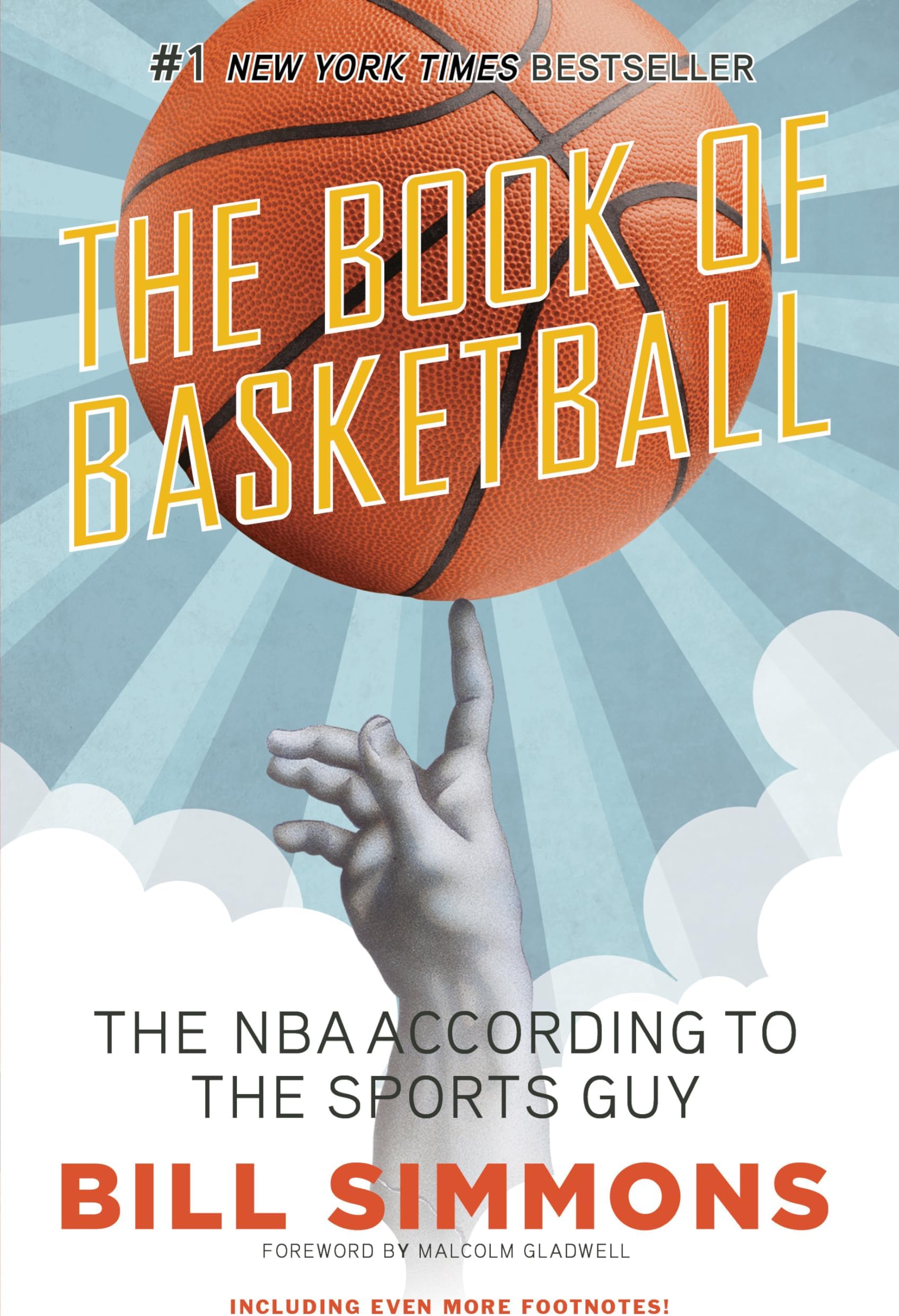
The Book of Basketball: The NBA According to The Sports Guy
Product ID: 246272
🏀Comprehensive NBA history & analysis
📚700+ pages of deep NBA insight
😂Humor-packed with pop-culture references
Buy anything from 5,000+ international stores. One checkout price. No surprise fees. Join 2M+ shoppers on Desertcart.
Desertcart purchases this item on your behalf and handles shipping, customs, and support to Vanuatu.
🏀 Unlock the ultimate NBA playbook — where stats meet stories and legends come alive!
The Book of Basketball by Bill Simmons is a 700+ page masterclass blending humor, history, and deep NBA analysis. It challenges traditional stats-based rankings by exploring players’ true impact, cultural context, and the intangible qualities that define greatness. With candid commentary, pop-culture wit, and standalone chapters, it’s a must-read for serious adult NBA fans and Simmons enthusiasts eager to join the ultimate basketball conversation.
| Best Sellers Rank | #33,608 in Books ( See Top 100 in Books ) #12 in Sports Essays (Books) #13 in Basketball (Books) #29 in Sports History (Books) |
| Customer Reviews | 4.7 out of 5 stars 2,062 Reviews |
D**E
The Best book over 700 pages I've ever read.
Before I begin the review, I'd like to point out the valid and invalid criticisms of the book with my responses to them: Valid criticisms: 1) "It's a little too long" (arguably yes, I myself probably could have enjoyed the book just as much if it were 50-100 pages less. I do question though if having less pages would've left out an important area of debate and even after I read this book, I felt there were more topics and issues that could've been presented.) 2) "It is vulgar at times and has too much profanity" (Very valid, this is NOT a book for little kids, this is definitely a book for ADULTS. If anything, adults should read it and boil off the profanity and just give the main points of the book to the kids that want to learn about the NBA. SPOILER: It is important for kids to know why Dennis Johnson was one of the most important players in NBA history; it is perhaps not important for kids to know how large his "equipment" was). 3) "It is borderline racist" (this one is rather suspect because Simmons, to the best of my knowledge, is not a racist and is actually quite brave to tackle race in his basketball book. No serious book about the history of professional basketball can avoid racial questions and when Simmons is being serious, he does a superb job of tackling race and racism in professional basketball. That being stated, it is not out of the question that some readers with antennae turned to high would be offended, especially when Simmons is trying to be funny. However, I suggest you read what he writes about Oscar Robertson and Elgin Baylor before judging him.) SPOILER: Bill is quite "racist" against one race, the Martians. He just assumes that the Earthlings would roll over a Martian Dream Team. 4) "It is too much in the Simmons wheelhouse" (Valid too, I have been a fan of the Simmons columns and podcasts and therefore I get a lot of the humor and his style. However, perhaps someone born after 1992 or before 1958 won't get a lot of the humor and therefore feel lost as Simmons rattles off pop-culture references and jokes that resonate with people that grew up around his time. Also, people not familiar with his columns may also feel lost. Some might consider this book, because of Simmons' comedic perspective, a book with a specific audience. However, if you can get past the pop-culture references, you may still find that this basketball book is one that you can appreciate even if you don't get all the jokes.). 5) "I don't like the NBA and/or I know nothing about the NBA" (Sorry to hear that. This is not an NBA book for novices in terms of the debates it wants to start and in terms of the questions it asks. Simmons' passion for the sport might alienate the person that is new to the NBA or just hates it. I've been a NBA fan for over 25 years and even I got an education from reading Simmons so imagine what the newbie/hater would have to face.) Invalid criticisms: 1) "It is way too long!" (What are you 8? In this case, read response to valid criticism #2. Simmons is attempting to discuss the entire history of the NBA and quite frankly, with all the issues involved over the past 60+ years I'm surprised that the book isn't longer. Also, it is not a united 700 pages, rather one could easily read any of the book's 13 chapters as standalone ones. BTW, if you can't read more than 100 pages, then you might want to give up on reading altogether, unless you are the aforementioned 8 year old or lower in which case this book is not for you anyway). 2) "It has a lot of footnotes" (Normally I would respond, but I think giving you a pacifier would be better. If you like, don't read the footnotes. You'll get a different interpretation of the book from the rest of us and you may complain about that too but then again, you're the baby whining about the footnotes in the first place). 3) "I hate Bill Simmons" (You most likely won't like the book then. But I have to question the sanity of someone who hates Bill Simmons, then reads a 700+ page book by the same Bill Simmons, then comes on to Amazon to badmouth Simmons and the book [oh wait, this person did not read the book?]) 4) "Bill Simmons is a Boston-homer so most, if not all, of his conclusions are slanted that way" (You can't be more wrong about the book, yes Simmons is a Boston-homer but the majority of his analyses are reasonable given the thesis of the book. Fans of other teams, knowing Simmons' Boston-homer demeanor, should be pleasantly surprised by many of the analyses and conclusions he makes) 5) "Bill Simmons pathologically hates Kobe/Kareem/Vince Carter therefore a lot of this book will be anti-those guys" (see response to invalid criticism #4). Now my review: "The Book of Basketball" by Bill Simmons is to me the right combination of comedy book, sports chronicle and master's thesis (if they have those for NBA analyses). It is because of this that even though the book is over 700 pages long, it is not boring because while reading it, it at times can make you laugh, make you think, make you feel, or some combination of the three. The basic premise of "The Book of Basketball" is that one should not judge players solely on the stats. One needs to go beyond the stats into who these players actually are/were and what their peers thought of them in order to determine their overall value to the history of the sport. It is quite an ambitious undertaking and one that requires a thorough examination of the sport and all its leagues and eras. Simmons utilizes all of his firsthand knowledge of watching games, tapes of old games, interviews he did himself, and a collection of great basketball books and condenses them into a book that explores every era, every league and every relevant player and issue. Simmons brilliantly opens the book with a chronicle of a conversation he had with Isiah Thomas (a guy Simmons attacked in many-a-column) and closes it with a chronicle of a conversation he had with Bill Walton. These two bookending chronicles set up the rest of the book and how one should value players and teams. What Isiah calls "The Secret" and what Walton calls "The Choice" is that intangible quality that makes an NBA player and a team successful. Armed with the concept of "The Secret" (or "The Choice"), Simmons examines and sometimes reexamines those players and teams that grasped this concept and those that didn't and used this as a variable to determine the greatness of that player or that team. Simmons reexamines the "Russell versus Wilt" debate and creates the "Hall of Fame Pyramid" where players are placed on different tiers depending on where their play ranks in the overall importance of the history of the league. In addition, Simmons poses the great "What Ifs?" of NBA history (which, as a fan of Cowley's "What If?" books for history was a welcome surprise for yours truly), looks at the greatest single-season teams from a different viewpoint and looks at specific individual player seasons that you would want in the NBA "Wine Cellar". Without creating separate chapters, Simmons also examines the spread of cocaine in the NBA during the late 70s to late 80s, the personality traits/flaws of certain players and the role that race and racism played in the history of the NBA. The best thing about this book is that it is as Malcolm Gladwell wrote in the foreward: "This book is supposed to start arguments" and after reading it, this book can and should generate a few healthy NBA debates. In addition, he gets guest input from "luminaries" like William Goldman (a 40+ yr Knicks season ticket holder/very successful screenwriter) and Chuck Klosterman (a confirmed sports atheist/writer). Simmons also injects a lot of comedy (I mean a lot). For those unfamiliar with Simmons' columns and podcasts, Simmons combines analyses and personal stories in this book with many humorous pop-culture references to Hoosiers, Teen Wolf (in a very surprising way), Scarface, the Wire, Mad Men, Shawshank Redemption, the Godfather and many well known and lesser known ones (the references to porn are why this book is not for kids). So who is this book for primarily? 1) any serious (adult) fan of the NBA and/or 2) any fan of Simmons' columns/podcasts. If you don't like this book, it is probably because you don't fit in either camp. All I can state after that is thank you Bill Simmons for writing this book. It is well overdue.
R**Y
Maybe the greatest book on the NBA...EVER!
Last year I purchased Bill Simmons' The Book of Basketball for my birthday. Wow I didn't know what I was getting into. The book was released in 2009. I picked up the soft cover of the book which is the one I suggest everyone pick up. He has updated the book over the years only adding to how good it is. This book is 700 pages long so be ready for a long read. While it is an easy read for big fans of the NBA it may not be for the casual fan. If you aren't a fan who loves reading about the past in great detail this book may not be for you. Me? I am a big NBA fan and do love its past. I will preface everything by saying Bill Simmons isn't perfect but he is a fan, a passionate fan, who has used this medium to put down his thoughts on the sport he loves. And he did a great job in doing so. Simmons is a Celtic homer. No doubts there. And while it may make you wrinkle your nose at some of his thoughts he is still pretty centered and doesn't go too far left. Since he grew up going to Celtics games in his youth there is plenty of Celtic love in this book and some Laker hating as well. Do not let this cloud your thoughts about reading this book. Simmons did tons of research including reading a library of books on the NBA as well as tons of video research to ensure his writing was as accurate as his memory. I want to say it took him three years to write the book. I can't say enough about how much I enjoyed it. His perspective is a great easy read and he loves having fun with his words. Simmons also has a love for the footnote. Almost every page has at least one. His humor can also be on the adult side at times. Not that an eleven year-old is going to pick up this book but I just wanted to mention it. I didn't start following the NBA until around the time I was eight or nine. My brother-in-law Curtis got me into playing an NBA board game (Statis Pro Basketball) in the 70's and I was hooked. Weird how a board game can get someone hooked on sport such as basketball. Go figure. It was perfect timing for me as the Larry Bird - Magic Johnson era kicked in at the same time and I've never looked back. I love history and learning more about things I enjoy. This book was perfect me. I wish there had been a little more love for my favorite Dominique Wilkins and the Atlanta Hawks but I was still very happy with his thoughts on both. We all look at sports in our own unique way. I am 43 now and how I viewed and learned the sport of basketball 30 plus years ago is much different in how I learn and view it now. To that end I loved Bill Simmons' insight into the game. To quote Paul Harvey this book gave me "the rest of the story". While I could always see the play on the court I didn't have the basketball/NBA smarts to dissect some of the details. There was little NBA coverage at that time in small town America and until the NBA hit cable it was just as hard to see games consistently. This book provides tons of insight I never had. Nowadays every move is over analyzed instantly on TV and on the web allowing us to make a better informed analysis of what we are seeing in a game and around the league. It just wasn't that way back in the day. So as Bill Simmons looks at the NBA from every possible angle I was able to live those early days of watching the NBA all over again. This time with a new appreciation. This is a must read for any NBA fan. Again it may be a bit much for the casual fan but if you think there is any possibility you might like this book I suggest you spend the $11.11 on Amazon or at some other retailer and I don't think you'll be disappointed.
A**E
The NBA is Faaaannnntastic!
Bill Simmons takes an NBA fan on a journey through decades and decades of information, analysis, stories and relevance of all that has transpired in our beloved NBA. All intertwined with pop culture references, great humor and excellent factual information. His Bill Walton- Tupac story is one of the best at blending two people who seem as different as you can get, yet the comparisons totally make sense. Also hands down the best breakdown in a Russell-Chamberlain argument. The books theme is to explain to us why certain teams, players and moments mattered for the NBA to arrive at it's current point. It's a mix of Bill's ESPN column with a little Malcolm Gladwell's "The Tipping Point" (he writes the forward to the book) mixed in with some really great old school pop culture references that are genius. Bill covers all of this in his own way and it is one of the many reasons it's really a brilliant book. Ever wonder why Dr.J went to the Nets and not the Knicks after the merger, covered. As a Knicks fan, yeah I know, as a Knicks fan I was surprised that was something I had not known about. His take on a new Basketball Hall of Fame is hysterical and really bright and interesting at the same time. I hope David Stern reads and considers "The Pyramid". Bill's player ratings and overviews are really the heart of the book and it's why the book is a 5 star read. Excellent analysis here. As a rabid NBA fan myself he really nailed this part of the book. We may not all agree with his rankings but he makes a good case for it with information and numbers to back up his claim. The historical information in The Book of Basketball is remarkable. Bill Simmons can save you hundreds of dollars alone here. He pretty much gives you information that a shelf of books doesn't hold. Having read most of the books he used as reference I can tell you that Bill was on cue in his take on the league and it's stars. The size of the book is a plus once you get it into it, so don't let that discourage you. Buy this book, it really is the definitive NBA book. Hey Bill if you ever read this, I just want to say thanks for writing The Book of Basketball. It reminds us that the NBA is Faaaaantastic!
M**D
Vintage Simmons, for better or for worse
I'll preface this review by saying that I have been a big Bill Simmons fan for years, and that I enjoy his prose: an irreverent, from-the-hip, funny yet knowledgeable take on sports, more often than not infused with a healthy dose of pop culture. If you've never read Simmons before, this book may come as a bit of a shock- it doesn't have the same sententious, pretentious and solemn tone that most sports works have. Simmons' style is more colloquial, subjective and unapologetic. Bill Simmons is a life-long Celtics fan, as his readers know, and yes, this book is at times guilty of favoritism towards the Celts. In his defense, however, Simmons goes out of his way to look at both sides in most cases, and his treatment of Russell vs. Chamberlain is probably the most level-headed, smartest part this book. This volume is long, yes, and it is also chock-full of footnotes. The notes are almost always amusing or interesting, though their constant use (they are on every page, or so it seems) does give the book an at-times manic, full-of-caffeine feel. I didn't mind them at all, but that's just me. So what are the pros and cons? Pros: this is a book written by a fan, for fans. Don't get me wrong- it is clear that Simmons worked his butt off to research and write this volume, and he gets his facts straight. What makes it different is that it doesn't pretend to be a "definitive" account of anything - just his own obsessive, entertaining take on the game he loves. Who hasn't spent hours comparing or arguing about the greatest teams and players of all time? Reading Simmons feels like have a heated but friendly argument with a buddy over beers. It's fun, it's memorable, and of course sometimes you will disagree. One reviewer took Simmons to task for not having any credentials to write this, since he doesnt/hasn't played in the NBA. That's the point of this book! It's not another inane, mumbled biography by a washed-up athlete, but a coherent, fervent essay on basketball by a fan - blogger - journalist. The cons of this work? It lacks a bit of coherence. The first part chronicles the origins of his love for the game, then he narrates the history of the league (informative and very candid), the "secret" of basketball (teamwork, duh), then most of the book is devoted to ranking the best players and teams of all time. There is no real narrative, thesis statement, argument, etc. I feel like Bill's rankings could have been a companion book in themselves, since the type of narrative is very different from the rest of the book. My other pet peeve with this book is that in his arguments, sometimes Simmons will validate his point with a gross (mis)generalization about an era's style of play. Such as when he describes Stockton and says that his assist numbers are inflated, because Stockton played in an age "when it was easier to get assists." That's it, no explanation or statistical back-up. Simmons does this a number of times, often generalizing about his opinion about the ease with which rebounds, assists, etc were obtained. It feels like a cheap bar argument, especially considering how much of a stat nut he is in other parts. Overall, I really enjoyed this book. Simmons fans will love it, and open-minded sports fans will discover a fun, engaging author. Recommended.
A**N
Simmons at his natural best.
Buy this book if you like Simmons (he's uncensored! and he curses!). And even if you don't, buy this book if you love sports, basketball, and compelling stories. I had no idea what to expect from The Book of Basketball, except that it was long, and that Simmons has a penchant for long titles (compare "The Book of Basketball: The NBA According to The Sports Guy" with "Now I Can Die in Peace: How the Sports Guy Found Salvation Thanks to the World Champion Red Sox"). On second thought, I suppose those two points are one and the same. Bill Simmons likes words. I'm a Bill Simmons fan and basketball happens to be my favorite sport, so this book was perfectly tailored for me (thanks Bill!). I gotta admit I was a little put off by the length (like Gladwell mentions, I don't think I've read a book this long since... Tolkein), but I guess I'm used to reading his long two-part, thousands-word columns and listening to his two-part, hours-long podcasts. I have no idea how long an Olympic sports argument with Chuck Klosterman would look like in print, but that's exactly how The Book of Basketball reads--conversational, insightful, and funny. The extended length fits in really well for its added humor and context. Unlike Simmons's previous work, "Now I Can Die in Peace: HtSGFSTttWCRS", The Book of Basketball isn't very homer at all, with only occasional (okay, frequent) digs at Kareem, and praises of Larry Bird. Now I Can Die in Peace suffered from an interrupted flow from essay to essay (and my hatred of the Red Sox--go Angels!), but The Book of Basketball flows very well throughout, with its foreword leading up to the prologue and intro chapter to start off Simmons's journey into discovering and breaking down the philosophies and secrets behind basketball. And that's what I was really pleased about. I'm not sure if I agree with Bill's quote about being able to finish The Book of Basketball in 15-minute chunks on the toilet--the sections are pretty heavily broken down (I realized this after the initial shock of seeing 700 pages structured into 15 sections), but I find myself plodding on to find out where Kobe stands in the Pyramid, what really happened in Vegas between Bill and Isiah, and Magic's seven incarnations. It's hard to put this book down when you've just finished an essay detailing the introduction of the three point line, and the next essay's title is so enticing (1980-81: Nose Candy). If you're one of the millions of [...] readers that enjoy Simmons's work, I have no doubt that you'll love The Book of Basketball. If you're a fan of the NBA, and have no idea who Bill Simmons is (do you guys exist?), I'd still give it a wholehearted recommendation. The Book of Basketball is enjoyably comprehensive, funny, and interesting, and one of Simmons's best works (along with his Spelling Bee diary and Leitch roast).
B**N
Ramblings That Lead Toward A Succinct Conclusion: Superb Work
Here are my general views on Bill Simmons' second book (and 1st one to consist largely of material that wasn't plucked from his ESPN (or even pre-Page 2 AOL Boston days): *The hardcover version does have a lot of factual errors and some grammatical/spelling ones as well, and Simmons actually outlined much of this at [...]. The errors don't really hurt this book at all, and in fact serious basketball fans could have a lot of fun spotting them (my favorite oops: the what-if section says that Rick Barry played college ball at the University of San Francisco, and I chortled because everyone who grew up in South Florida knew that Barry was a star at THE U!), but it's worth noting that the paperback edition is much neater and sharper on the data. *I loved the Russell-Wilt chapter and agree with the verdict of Russell being better than Wilt (11 titles to 2 more or less settled it for me), but it was still weird to see Wilt more or less trashed at length and later have Simmons A) list all four of Wilt's MVP awards as rightful choices that can't be argued against, compared to MANY he argues were either sketchy or horrible MVP calls and B) place Wilt as the 6TH best player of all time! And quoting repeat loser Coach Butch van Breda Kolff in the anti-Wilt section raised my eyebrows when Simmons talks about van Breda Kolff's role in a horrendous set of trades by the New Orleans Jazz that cost them Moses Malone and gift-wrapped Magic Johnson for the Lakers. *I doubt he will ever read this, but: thank you Mr. Simmons, for admitting (in a backhand footnote way, but still) that the Miami Heat didn't suck in 2006 and you were so pissed they beat Dallas for the title in large part because you bet on the Mavericks. Good to hear that. *What-ifs are always awesome if the writer has a sense of history and can make a great argument for how the counter-history almost really came to pass. The collapse of the post-1986 Houston Rockets made me say "The Magic-Kareem Era was historic, but they also had the luck of the devil himself". The combination of the Oden-Durant W-I in the paperback and the 1984 draft recap made me sigh and say "Oh, PORTLAND, what the hell man?". And the Len Bias W-I just made me sad. *The pop culture references were a mixed bag. I think Bill's more or less maxed out the utility of references to Boogie Nights or Miami Vice. But the Kobe-Teen Wolf analogy was freaking brilliant, and let's just say the, um, longtime performer used in the analogy for Shaq's is totally not for broadcast but works perfectly here. *The Bill Walton material throughout, from his Pyramid position to the book's epilogue, could have been terrible. Yet it makes both emotional and intellectual sense, and should be used by SG defenders anyone tries to argue that he's not a great writer to shut them down. *The book is long, but not in a disconnected way most of the time (a harsher editor might have tried to nix the "Playing the Martians" chapter, as it's clever but the biggest stretch and the least funny/insightful mix in the book), and the material can work even if you don't read it in sequence or look for the links between, say, some of the more controversial placements in the Pyramid and the (superbly framed) 1946-1984 history bridge to today's NBA. *Three more paperback notes: the LeBron James section is the most well-reasoned post-Decision view on the King I've read (and resonates even more today, after all of the events of 2010-11 through the Heat's Finals loss to Dallas); Dolph Schayes should be Father of the Year for the next few centures; and poor, poor Corey Haim. *Bottom line: if you love basketball, or even like and respect the sport, please get ahold of this book in some form. You will probably laugh, most likely learn things, and occasionally get mad. One thing you won't do is regret spending the money. Have a good day, everyone.
S**E
Unique and comprehensive
The writing style will certainly be familiar to regular readers of Simmons' articles. Some may find the cultural references too cutesy or forced ( or inappropriate for some), but the vast majority of the time I find them quite funny. I am the same age as Simmons so perhaps they resonate more with me than some others. Regardless, the quality of the basketball analysis is outstanding and is worth a read even if you skip past all the references. I found the "How the Hell Did We Get Here" chapter especially elucidating, a fantastic description of the various eras. He writes explicitly of the important but usually avoided topics such as race and drug use and how they affected certain eras. He is willing to tell insider's stories even though his basic premise has always been writing from the fan's perspective. I have never liked the Celtics but am entertained and amused by his Celtic stories and unlike other readers do not feel like his rankings are overly biased. I am a lifelong Pacers (and therefore Reggie Miller) fan, and believe his evaluation of Reggie's strengths and weaknesses are spot-on and fair , despite his labeling of Reg as the most overrated "superstar" in the last 30 years. A potential complaint might be that although he emphasizes that the Secret of Basketball is achieved when players willingly ignore statistical goals for the betterment of the team, the book at times gives overwhelming statistical analysis. The beauty, however, is that the book is divided into many short segments which can be read at different times and order, if one gets exhausted. I bought this book for my 15 year old basketball player/fan (knowing that I also wanted to read it) so that he could get a better grasp of names and teams from the past. I believe Simmons did a fantastic job of creating an extremely lively and fair appraisal of the important players and teams in the modern times of pro basketball. I highly recommend it to anyone who enjoys pro basketball. By the way , I am one of the seemingly few fans who prefers the pro game to college, especially playoff basketball. Perhaps this book will encourage some people who dismiss the NBA to see what they are missing.
L**A
Entertaining read.
I liked to read about the many basketball players I grew up watching and idolized. Even though it was a long book, it was entertaining all the way through. The only thing I didn't like about it was his description of some great basketball players who were hired as commentators. He guessed that Bill Russel must have been heavily medicated during one particular year. I thought that was uncalled for and gossipy and not funny. Russel may have had a tough time expressing his thoughts during a fast game sometimes, but I remember, as a teen, hanging on every word he said--Same with others he criticized, like Havlicek and Malone and Dr. J and Isaiah Thomas and even Peter Vecsey, a great basketball writer who knows the game well. These guys had a short time on the air to say what they thought. They weren't pro announcers, but they knew the game well. I didn't care if they froze or stuttered or didn't completely express what they wanted to say during a fast game. Overall, though, the book was an absolutely great read. The best part is the author's take on the greatest players ever, with stats to back it up. I disagreed with several choices, despite the statistics, but I thought Mr. Simmons was right most of the time. I was also completely sold on the book when the author referenced the great movie Midnight Run. I originally rated the book a 4, but now that I'm very well into it, it's a no-brainer 5. Any basketball fan would love this book! It gets better and better, and I know it will be one of those books that I will read more than once.
M**Z
El mejor repaso a la historia de la NBA
Un libro inmenso, por tamaño y calidad, que recomiendo a todo aficionado al baloncesto. Para releer y consultar muchas veces (no está traducido al español). Simmons es un apasionado del baloncesto y además ha visto multitud de partidos en la cancha de los Boston Celtics desde finales de la década de 1970. Simmons explica y da un listado de los 96 mejores jugadores de la historia de la NBA (hasta 2010), clasificándolos por niveles, como si fuera una pirámide (que se puede consultar en la estupenda web Basketball reference); pero ofrece mucho más: el secreto de los buenos equipos, un análisis de la rivalidad entre Russell y Chamberlain, un repaso de la historia de la NBA, un capítulo dedicado a los "what if" (¿qué hubiera pasado si?), el análisis de los mejores jugadores por temporada y los mejores equipos de la historia de la NBA, y la elección del que sería el mejor equipo de la historia. Todo lo anterior regado con anécdotas e historias del juego y de lo que le rodea. El racismo es un tema fundamental para entender el desarrollo de la liga y al que Simmons le da la importancia que merece. Finaliza el libro con una estupenda bibliografía en la que el autor no se limita a dar un listado de libros, sino los clasifica según su gusto, desde los que son imprescindibles de leer hasta los que no son de ayuda. A continuación voy a repasar los capítulos del libro: En el primer capítulo analiza el secreto del éxito en el baloncesto: que los jugadores dejen de pensar en sí mismos y pongan al servicio del equipo todas sus habilidades. Parece sencillo pero no lo es. Recordemos la cantidad enorme de dinero y egos en juego, lo que provoca que muchos jugadores antepongan sus intereses a los del equipo. Entre los mejores jugadores los hay que mejoran y a su vez hacen mejorar a sus compañeros, y los hay que sólo miran por ellos; otros oscilan entre ambas situaciones. Están los jugadores secundarios que saben adaptarse a su equipo y ofrecen un rendimiento por encima de lo esperado. Los jugadores que conocen el secreto y lo ponen en funcionamiento son los que forman equipos campeones. Otro tema distinto es que un jugador que conoce el secreto sea capaz de trasmitirlo como entrenador. El autor explica que muchos equipos después de ser campeones, o exitosos sin ser campeones, tuvieron un año malo por el egoísmo de muchos de sus jugadores. La razón expuesta en el libro puede ser válida, pero habría que analizar si los equipos que repitieron éxito no afrontaron ese mismo problema y, a pesar de ello, consiguieron ganar de nuevo. Por ejemplo, Los Angeles Lakers que perdieron el título en 2004 contra los Detroit Pistons eran una jaula de grillos, con el equipo partido en dos debido al enfrentamiento entre Kobe Bryant y Shaquille O'Neal, y a pesar de eso, si no se hubiera lesionado Karl Malone, podrían haber ganado el anillo. De lo que no hay duda es de que los jugadores que abrazan el secreto tienen más posibilidades de ayudar a sus equipos a ganar. El segundo capítulo está dedicado a la rivalidad entre Bill Russell y Wilt Chamberlain. Simmons se decanta por Russell, de hecho en su pirámide Russell es el segundo mejor jugador y Chamberlain el sexto. La justificación no está sólo en que Russell ganara 11 campeonatos de la NBA y 2 de la liga universitaria, mientras que Chamberlain ganó 2 campeonatos de la NBA. Wilt tenía más talento, pero Russell les dio a sus equipos mejores oportunidades de ganar; Wilt tuvo un mayor impacto estadístico y Russell lo tuvo en sus compañeros; Wilt tuvo sus mejores momentos en temporada regular y Russell en los playoffs; Wilt se encogía en los momentos finales de los partidos y Russell se crecía en esos momentos; Wilt promedió 50 puntos por partido en la temporada 1961-62 y los jugadores eligieron a Russell el mejor jugador de esa temporada; a Wilt lo traspasaron de equipo dos veces y Russell no fue traspasado nunca; Wilt estaba obsesionado con las estadísticas y Russell estaba obsesionado con ganar; a Wilt le preocupaba lo que pensaban los aficionados, los periodistas y los críticos, y a Russell lo que pensaban sus compañeros; Wilt ignoraba el secreto mientras que Russell lo abrazaba. El análisis de ambos jugadores es exhaustivo y se centra en los siguientes aspectos: 1. Russell no tuvo mejores compañeros que Wilt a lo largo de su carrera. Si bien es cierto que al inicio pudo ser así, no hay que olvidar que Russell se enfrentó a equipazos como los Saint Louis Hawks (con Hagan, Pettit y Macauley entre otros) a los que ganaron tres de las cuatro finales disputadas. Dos datos: Russell jugó con cuatro jugadores incluidos entre los 50 mejores de la historia de la NBA (Havlicek, Cousy, Sharman y Sam Jones), Wilt jugó con seis (Baylor, West, Greer, Cunningham, Arizin y Thurmond); los compañeros de Russell fueron seleccionados en 26 ocasiones para el Partido de las Estrellas y los de Wilt en 24 ocasiones. También es cierto que Russell tuvo la suerte de tener como entrenador a Red Auerbach, y viceversa, pero ¿cómo hubiera funcionado la relación entre Auerbach y Wilt? Parece que a Auerbach no le gustaba la idea de entrenar a un jugador como Wilt. 2. Muchos acusan a Russell de no destacar en ataque, pero era el distribuidor de juego y el que lanzaba el contraataque de los Celtics con sus rebotes, y sus pases rápidos y precisos; además corría la pista como pocos hombres grandes. De hecho, su mítico compañero Havlicek dijo que mejoraba a todos sus compañeros con su capacidad de pasar el balón, sobre todo sabiendo que muchos de ellos no eran buenos en el uno contra uno. 3. Está extendido el mito de que a nivel estadístico Wilt es muy superior a Russell. No cabe duda de que en temporada regular Wilt no tiene rival: - Wilt: 1045 partidos, 30.1 puntos (54% TC y 51% TL), 22.9 rebotes, 4.4 asistencias y 45.8 minutos - Russell: 963 partidos: 15.1 puntos (44% TC y 56% TL), 22.5 rebotes, 4.3 asistencias y 42.3 minutos Wilt sale también favorecido si comparamos sus estadísticas en los 142 partidos (incluidos playoffs) disputados entre ambos (incluso si admitimos que Russell le dejaba hacer a Wilt en los minutos finales para dejarle contento, los números individuales son muy favorables para Wilt): - Wilt: 28.7 puntos y 28.7 rebotes - Russel: 14.5 puntos y 23.7 rebotes Ahora bien, el balance en esos enfrentamientos directos es de 84 victorias para Russell y 54 para Wilt. Por otra parte, si vemos las estadísticas de ambos en los playoffs ya no parece que la superioridad sea tanta: - Wilt: 160 partidos, 22.5 puntos (52% TC y 47% TL), 24.5 rebotes, 4.2 asistencias y 47.2 minutos - Russell: 165 partidos, 16.2 puntos (43% TC y 60% TL), 24.9 rebotes, 4.7 asistencias y 45.4 minutos Russell mejora en casi todo (sólo baja ligeramente en porcentaje de tiros de campo), mientras que Wilt baja en casi todo (sólo mejora en rebotes). Lo anterior es necesario relacionarlo con los resultados de sus equipos, que es lo importante en un deporte de equipo: - El balance de victorias y derrotas en partidos de Finales de conferencia y Finales de NBA es de 48-44 para Wilt y de 90-53 para Russell - En séptimos partidos de playoffs (último y decisivo siempre): Wilt 4-5 y Russell 10-0. - En partidos en los que sus equipos se enfrentaban a la eliminación: Wilt 10-11 y Russell 16-2 Por todo lo anterior Wilt ganó dos anillos y Russell once (los dos últimos títulos de los Celtics fueron con Russell como jugador-entrenador). Se pueden revisar las estadísticas de ambos en Basketball reference. A estas estadísticas hay que añadir los intangibles, es decir, esos elementos del juego que son difíciles o imposible de medir (aunque con las estadísticas avanzadas que hay hoy en día se ha conseguido ir muy lejos); por ejemplo, esos tapones que Russell conseguía dirigir a sus compañeros en lugar de enviar el balón a la grada, esa confianza que Russell despertaba en sus compañeros a la hora de defender, esa manía de Wilt de no ser nunca eliminado por faltas personales que le hacía no defender cuando estaba cerca de la eliminación, y el no involucrar a sus compañeros en el juego porque Wilt asumía mucho protagonismo en el juego. Está claro que si Russell fue el único que ganó 11 anillos con ese equipo de los Celtics no fue por casualidad; sin duda hubo suerte en algunos de los partidos, pero tener una tan larga cantidad de victorias implica que estamos antes un gigante de la historia del deporte. 4. Wilt era un gran tipo para todo el mundo menos para sus compañeros. El egoísmo de sus primeros años por anotar le hacía no ser deseado. Tuvo nueve entrenadores en 14 temporadas y a varios se los cargó. La siguiente anécdota dice mucho de la valoración de Wilt en la liga: en 1965 el propietario de Los Angeles Lakers pidió a sus jugadores si querían que adquirieran a Wilt Chamberlain, que jugaba en los San Francisco Warriors; el resultado fue dos jugadores a favor y 9 en contra. ¿Algún jugador habría votado en contra de adquirir a Russell? 5. Se puede argumentar que hubo muchos momentos en los que la suerte sonrió a Russell y no a Chamberlain. Pero Simmons defiende que Chamberlain no respondía en los minutos finales de los partidos decisivos, por ejemplo, evitando defender duro para no ser eliminado por faltas personales o no queriendo el balón en esos momentos decisivos (según palabras de Rick Barry). Momentos decisivos para Wilt: - En el séptimo partido de las Finales de la Conferencia Este en 1968 Chamberlain tiró a canasta dos veces en la segunda mitad (nueve en todo el partido cuando promedió casi 18 tiros por partido durante esos playoffs). - En el séptimo partido de las Finales de la NBA en 1969 se retiró lesionado de la rodilla a cinco minutos del final (no parecía tan grave). - En el séptimo partido de las Finales de la NBA en 1970 se enfrentó a un Willis Reed cojo y no fue capaz de destrozar a los Knicks; en el sexto (ganado por los Lakers) había anotado 45 puntos (20/27 en TC) y 27 rebotes, mientras que el séptimo se quedó en 21 puntos (10/16 en TC y 1/11 en TL [¡uno de once!]) y 24 rebotes. - En el séptimo partido de las Finales de la Conferencia Este en 1965 consiguió 30 puntos, 12/15 TC, 32 rebotes y 2 asistencias, frente a Russell (15 puntos, 7/16 TC, 29 rebotes, 8 asistencias); ganaron los Celtics de Russell 110 a 109 a los 76ers de Wilt. - En el quinto y decisivo partido de las Finales de la Conferencia Este en 1967, Wilt consiguió 29 puntos, 10/16 TC, 36 rebotes, 13 asistencias, frente a Russell (5 puntos, 2/5 TC, 21 rebotes y 7 asistencias) que ganaron los 76ers 140 a 116 a los Celtics. - En el quinto y decisivo partido de las Finales de la NBA en 1972, Wilt consiguió 24 puntos, 10/14 TC, 29 rebotes, 4 asistencias, 8 tapones; ganaron los Lakers de Wilt. Por su parte, Russell: - En el séptimo partido de las Finales de la NBA en 1957, su primer año en la liga, hizo 19 puntos y 32 rebotes, ganando el título a los Hawks. - En el séptimo de las Finales en 1960 hizo 22 puntos y 35 rebotes, ganando el título a los Hawks. - En el séptimo de las Finales del Este en 1962 dejó a Wilt en 22 puntos (esa temporada había promediado 50.4 y 35.0 puntos en temporada regular y playoffs, respectivamente) y anotó 19 puntos para ganar el título. - En el séptimo partido de las Finales de la NBA de 1962 hizo 30 puntos y 40 rebotes para ganar el título. - En el séptimo partido de las Finales del Este hizo 15 puntos, 29 rebotes y 9 asistencias, para ganar el título [los tapones no se contabilizaban en esa época, pero Russell ponía muchos]. - En el séptimo partido de las Finales de la NBA en 1966 gana el título venciendo a los Lakers con 25 puntos y 32 rebotes. - En el séptimo partido de las Finales del Este en 1968 derrotan a los 76ers (campeones la temporada anterior) con 12 puntos de Russell que limitó a Wilt a 14 puntos, esa eliminatoria fue remontada por los Celtics (de 1-3 para 76ers a 4-3 para Celtics). Wilt tuvo cinco oportunidades de eliminar a los Celtics de Russell en los años 1968 (tres veces) y 1969 (dos veces); en ambos años contaba con un equipo superior y no fue capaz de vencer. 6. Sus contemporáneos apreciaban más a Russell que a Wilt. Podemos resumir el sentimiento general en lo que expresaba Butch van Breda Kolff (entrenador de Wilt en los Lakers de 1967 a 1969, entre otros equipos); mientras que Russell preguntaría: ¿Qué necesito hacer para mejorar a mis compañeros?, Wilt pensaría cuál es la mejor situación para él para que su equipo ganara. Jerry West confirmaba que Wilt esperaba que los demás se ajustaran a él. Jerry Lucas decía que Wilt estaba obsesionado con los récords individuales, mientras que Russell hacía todo por ganar. De hecho Russell se acercó a Wilt para ser una especie de mentor; Wilt no jugaba con la misma ferocidad contra un jugador que apreciaba que contra uno que no le gustaba. Russell no dijo una mala palabra sobre Wilt hasta el día en que se retiró, para después no dejar de criticarlo. Russell también opinaba que Wilt tenía otras prioridades por encima de la victoria: dinero, récords, fama, y otros; por su parte Wilt sabía que Russell estaba obsesionado con ganar (vomitaba antes de muchos partidos), pero comentaba que él disfrutaba otras cosas de la vida más allá del baloncesto y los récords. El tercer capítulo está dedicado a la historia de la NBA, desde su creación en 1946 hasta 1984. Simmons fija el inicio de la actual era de la NBA en 1984, que fue el año en el que la liga se convirtió en lo que es actualmente, a nivel estético, creativo y de talento. Desde 1984 a 2010 (fecha de publicación del libro) los buenos jugadores y equipos son comparables, hacerlo antes es complicado sin explicar el contexto de cada época. Es decir, sí hay debate en si Bird y Magic en 1984 eran mejores que Lebron y Wade en 2010; pero es complicado determinar si West y Robertson en 1962 eran mejores que Jordan y Magic en 1989. Desde 1946 a 1954 se vivieron tiempos tiempos agitados en los que se pensaba que la NBA no dudaría debido al juego muy duro (no había faltas intencionadas) y aburrido por momentos ya que no había límite de posesión de balón (cuando un equipo ganaba tenía la posibilidad de retener el balón por mucho tiempo hasta que recibía una falta o se lo robaban). Los marcadores podían ser tan ridículos como el 19-18 entre los Fort Wayne Pistons y los Minneapolis Lakers, el 22 de noviembre de 1950. La liga estaba concentrada en el noreste del país, ya que el transporte se realizaba en bus y tren; en 1954 había equipos en los tres grandes mercados televisivos (Boston, Nueva York y Filadelfia) y otros más pequeños como Mineápolis, Siracusa, Baltimore, Rochester, Fort Wayne y Milwaukee. Además hacía falta incorporar más jugadores negros para mejorar el juego. En la temporada 1954-55 se introdujo el límite de posesión de 24 segundos (48 minutos entre 120 posesiones da como resultado 24 segundos), decisión que salvó la liga (acabó con el dominio de George Mikan y los Minneapolis Lakers). Esto elevo el ritmo de juego y la puntuación media por partido en 13.6 puntos por equipo. El responsable fue el propietario de los Syracuse Nationals (que en 1963 pasaron a ser los Philadelphia 76ers). Otras tres reglas ayudaron a mejorar el juego: 1. Tras la sexta falta de equipo en un cuarto se lanzarían dos tiros libres. 2. Las faltas ofensivas no implicaban el lanzamiento de tiros libres. 3. Las faltas antes de pasar medio campo contaban como faltas de equipo. Russell revolucionó la liga con su llegada en la temporada 1956-57; Auerbach consiguió sus derechos del draft a cambio de dos futuras estrellas como Ed Macauley y Cliff Hagan. Sabía que conseguía un pívot que podía dominar los tableros, proteger el aro y lanzar rápido el contraataque; con Russell se hicieron comunes aspectos del juego como el salto, el mate y el tapón; el juego cambió con los jugadores de raza negra y Russell lo inició todo. Entre 1958 y 1960 fueron ingresando a la liga más jugadores negros, incluidos los excepcionales Elgin Baylor y Wilt Chamberlain. Este último, debido a sus capacidades físicas, obligó a cambiar algunas reglas; por ejemplo, se prohibió tocar el balón cuando estaba encima del aro. En esa época el calendario era muy duro, unos 25-30 partidos de pretemporada más 72 partidos de temporada regular, y los playoffs para los mejores equipos (recordemos que el transporte no era ni tan rápido ni tan cómodo como hoy). Lo anterior unido a los bajos salarios y el desgaste físico enfadó a los jugadores, en especial a las estrellas. En la temporada 1960-61 los Celtics promediaron 124.5 puntos por partido, con una media de 119.5 tiros de campo intentados y 33.5 tiros libres intentados. En esta última temporada (2016-17) el equipo que más tiros de campo ha intentado ha sido el de los Pistons (88.8) y los Warriors los más anotadores (115.9), pero los Warriors anotaron 12.0 triples por partido (el triple no llegó a la liga hasta la temporada 1979-80). En la temporada siguiente (1961-62) hubo estadísticas espectaculares: Wilt promediando promediando 50.4 puntos y 39.5 tiros de campo, Oscar Robertson promediando un triple doble (Russell Westbrook lo ha hecho esta temporada 2016-17), Russell promediando 23.6 rebotes y Wilt 25.7. La defensa se dejó de lado y las posesiones se incrementaron de manera espectacular. Hubo más datos espectaculares que obligan a tener cuidado con las estadísticas del periodo 1958-1962. Los intentos de tiros de campo y el número de rebotes han ido disminuyendo a lo largo del tiempo hasta estabilizarse en valores alejados del periodo 1958-62; además se han mejorado los porcentajes de tiros de campo (recordando que ahora hay tiros más alejados debido al lanzamiento de triples). En la temporada 1963-64 se produce un hecho significativo, los jugadores se negaban a jugar el All-Star Game a dos horas del inicio del mismo si no había un acuerdo sobre las pensiones; aunque la votación entre los jugadores fue ajustada (11-9), con Russell, Wilkens y Heinsohn liderando la rebelión y Chamberlain queriendo jugar y negociar después. La cadena ABC iba a retransmitir el partido en directo y si había huelga peligraba el contrato televisivo. El comisionado de la NBA, Walter Kennedy, acordó facilitar un acuerdo con los propietarios respecto a las pensiones. Mientras tanto la televisión explotaba el mejor juego de la liga, debido a los jugadores negros y las grandes rivalidades (Boston-Philadelphia y New York-Baltimore, por ejemplo); para ello fue fundamental Roone Arledge de la ABC. En la temporada 1964-65 Wilt Chamberlain cambió los San Francisco Warriors por los Philadephia 76ers, un traspaso que fue todo un acontecimiento más allá del baloncesto. En el final de la siguiente (1965-66), Red Auerbach dejó el banquillo de los Celtics, tras ganar nueve títulos (1957 y de 1959 a 1966), para dejar en su puesto a Bill Russell, quien sería el primer entrenador negro en la historia del deporte profesional (fue jugador entrenador tres años). Auerbach era un entrenador de la vieja escuela: sin asistentes, acosando a los árbitros, pegándose con espectadores agresivos y dueños de otras franquicias, y sin usar pizarras para indicar jugadas. Wilt, al ingresar en la liga, le quitó el título de más odiado de la liga a Auerbach. Además el ascenso en los salarios de los jugadores hizo más difícil la tarea para entrenadores chapados a la antigua que trataban a los jugadores con dureza. En 1967 empezaba su andadura la American Basketball Association (ABA), que sería competencia de la NBA hasta 1976. Esta liga nunca firmó un contrato televisivo a nivel nacional. La NBA reaccionó expandiéndose hasta 1970 a otras ciudades (Chicago, San Diego, Seattle, Milwaukee, Phoenix, Portland, Cleveland y Buffalo). Durante el periodo 1967-71 los salarios crecieron muy rápido en la NBA. Se inauguró en 1967 el primer gran pabellón de la NBA en Los Ángeles (el Forum para 17 000 espectadores), se alcanzaron los 4.4 millones de espectadores en los pabellones, y el rating televisivo subió hasta 8.9 en 1969. Spencer Haywood se convirtió en el primer jugador profesional en no haber completado el ciclo universitario; algo que posteriormente, en la década de 1990, fue muy común y que perjudicó mucho a la NBA. El caso de Haywood fue paradigmático en la década de 1970; una época con demasiadas cosas demasiado deprisa; muchos jóvenes jugadores no fueron capaces de asimilar ser una estrella y tener mucho dinero tan pronto, eso llevó a problemas deportivos y extradeportivos (drogas). En 1971 hubo un acuerdo para fusionar la NBA y la ABA, 10 equipos de la ABA se unirían a la NBA; pero el acuerdo fue denunciado por el sindicato de jugadores por crear un monopolio y pasaron otros cinco años con las dos ligas en funcionamiento. Si se hubiera llevado a cabo, 28 equipos hubieran disputado la NBA; difícil de manejar si se quería mantener la calidad. En la temporada 1971-72 los Lakers consiguieron su primer anillo jugando en Los Angeles (su último título lo consiguieron en 1954 jugando en Mineápolis); además ganaron 69 partidos en temporada regular con una racha de 33 victorias consecutivas. Habían perdido 8 finales desde 1959, 7 de ellas contra los Celtics, y en todas presentes Jerry West y Elgin Baylor (quien se retiró después de dos semanas de competición debido a problemas físicos). Como curiosidad indicar que de las primeras celebridades en acudir a los partidos de los Lakers estaba Doris Day. La gesta de los Lakers se debió en parte al nuevo entrenador, Bill Sharman (exjugador de los Celtics con los que ganó 4 títulos como jugador); Sharman fue innovador (sesiones de tiro antes de los partidos y visionado partidos de otros equipos) y permitió que un buen equipo fuera excelente. Convenció a Chamberlain para ser más jugador de equipo (pasó de tirar 15.0 a 9.3 veces por partido, pasando del 54.5 al 64.9 % TC). En la temporada 1972-73 la NBA finalizó el contrato con la ABC y se firmó con la CBS; tal y como escribí cuando comenté el libro "The breaks of the game", de David Halberstam (libro en el que Simmons basa algunas de sus historias): "El principal responsable de que el baloncesto y la televisión tuvieran una relación viable fue Roone Arledge de la ABC, y también fue el que perjudicó posteriormente esa relación. La NBA decidió prescindir de los servicios de la ABC y contar con la CBS. El gran Red Auerbach, mítico entrenador y gerente general de los Boston Celtics, advirtió que no era buena idea porque la ABC lo estaba haciendo bien y se estaban creando un enemigo peligroso en la persona de Arledge; nadie le hizo caso y esto les hizo mucho daño. Arledge, por ejemplo, programó partidos de baloncesto universitario y otros exitosos programas a la misma hora que los partidos de la NBA." Para comprobar el daño baste decir que incluso los partidos decisivos de las Finales no se veían en directo, incluido el mítico sexto partido de las Finales de 1980 entre 76ers y Lakers. Para la temporada 1973-74 la competencia entre la NBA y la ABA había causado daño a ambas ligas. La competencia por conseguir los mejores jugadores había inflado los contratos y eso perjudicó el rendimiento de muchos jugadores al acomodarse. La ABA consiguió atraer a muchos de los mejores árbitros de la NBA; los mejores novatos fueron a la ABA en el periodo 1971-1975 (entre otros, Julius Erving, George Gervin, Moses Malone, David Thompson, y Maurice Lucas). La comparación que hace Simmons para determinar la calidad de la NBA y ABA de esos años es pensar en la NBA actual (2009 en el libro) quitándole todos los jugadores europeos e impidiendo que las conferencias jueguen entre sí, además de mandar durante cinco temporadas seguidas los mejores novatos a una de ellas. Por lo tanto, las estadísticas y los títulos del periodo 1972-76 deben ser considerados con cuidado. Julius Erving era el jugador más apasionante del momento, él era el icono de la ABA. En las Finales de la temporada 1974-75 dos entrenadores negros dirigieron por primera vez a los dos equipos finalistas (Warriors y Bullets). Fueron Al Attles y K.C. Jones. En la siguiente temporada se celebró en la ABA el primer concurso de mates que dejó el mítico mate de Julius Erwing desde la línea de personal. En el año 1976 se produjo la fusión, desapareció la ABA y la NBA incoporó cuatro franquicias (Denver, New York, San Antonio e Indiana); éstas debieron pagar $3.2 millones, no recibieron dinero de las televisiones por tres años ni pudieron elegir jugadores en el draft de 1976, pero les dejaron a sus jugadores. Además los New York Nets tuvieron que pagar $4.8 millones a los Knicks a lo largo de 10 años por derechos territoriales. El dueño de los Spirits of St. Louis consiguió un trato increíble por cerrar la franquicia: $2.2 millones y la séptima parte (1/7) de los ingresos televisivos anuales de las cuatro franquicias que ingresaron a la NBA, ¡a perpetuidad! Eso fueron $150 millones en 2009. Por otra parte se creó la figura del agente libre, es decir, los jugadores eran libres de ir al equipo que quisieran una vez que sus contratos finalizaban; esta decisión cambió la liga tanto como lo hizo el reloj de posesión de 24 segundos. Los tres años posteriores a la fusión fueron intensos y con muchos cambios, por ejemplo, Chicago y Houston consiguieron dos pívots que les hicieron muy diferentes a lo que eran (Gilmore y Malone, respectivamente); los Nets traspasaron a Julius Erving a los 76ers por $3 millones, los 76ers también tenían a McGinnis (incorporado la temporada anterior y MVP de la ABA en 1975 junto al propio Erving, que lo había ganado también en 1974 y 1976). En la temporada 1976-77 se comprobó lo buena que había sido la fusión. Se pasó de 18 a 22 equipos y se incorporaron a la NBA muchos jugadores de calidad. Entre ellos cuatro jugadores franquicia (Erving, Gervin, Gilmore y Thompson), además de Moses Malone que lo era en potencia. La calidad de los jugadores provenientes de la ABA quedó demostrada cuando 9 de los 24 jugadores del All-Star Game fueron exjugadores de esa liga, además 5 exjugadores de la ABA tuvieron un papel destacado en las Finales de esa temporada. El juego se hizo más rápido y mucho más atlético. Los traspasos se hicieron frecuentes, por ejemplo, en el draft de 1977 se traspasaron jugadores de 11 de las 18 primeras elecciones. Las Finales fueron un éxito, con el nivel más alto de audiencia de la historia, y con un duelo entre el baloncesto más purista (Trail Blazers de Portland) y un juego más libre y, supuestamente, desorganizado (76ers). La temporada 1977-78 trajo consigo muchos problemas. El primero fue la lesión de Walton cuando los Blazers estaban dominando la liga (50-10); Walton jugó un total de 14 partidos en las siguientes 4 temporadas. Tal y como explica Simmons, imaginemos que Michael Jordan se hubiera lesionado durante la temporada 1995-96 (la de las 72 victorias de los Bulls) y nunca se hubiera recuperado, ¿hubiera tenido el mismo éxito la NBA con dos finales consecutivas entre Pacers y Jazz y sin su mejor y mayor figura? Eso fue lo que pasó con Walton. El segundo problema fue la cocaína (David Thompson, Walter Davis, John Lucas, Bernard King, y Spencer Haywood, entre otros). El tercero dos finales consecutivas (1978 y 1979) entre los mismos equipos (SuperSonics y Bullets) que no contaban con una superestrella ni eran parte de una ciudad con un gran mercado. El cuarto los problemas televisivos con CBS, que amenazaba con romper el contrato; esto permitió que CBS manejara a su antojo horarios y horas de emisión (incluidos partidos en diferido). El quinto fueron las peleas durante los partidos (incluido el brutal puñetazo de Kermit Washington que casi mata a Rudy Tomjanovich). Evidentemente los problemas de las drogas y las peleas venían del pasado, y siguieron algún tiempo en la liga. La percepción general era que la liga estaba mal. En la temporada 1979-80 llegó por fin a la NBA el triple (que en la ABA siempre existió); pero pasaron varias temporadas hasta que fue importante en la liga. Durante varias temporadas tanto los intentos como los porcentajes de acierto eran bajos; muy pocos jugadores intentaban más de 100 triples por temporada y sus porcentajes de acierto rara vez superaran el 30 %. En 1986 se celebró el primer concurso de triples en el All-Star ganado por Bird (el primer gran jugador en sacar partido al triple). Para tener perspectiva de la evolución, en la temporada 1992-93 se llegó a que aproximadamente uno de cada diez tiros de campo fuera triple (33.6 % de acierto), mientras que en la temporada 2016-17 algo más de tres de cada diez tiros eran tripes (35.8 % de acierto). Además de esta innovación reglamentaria, Simmons afirma que los equipos empezaron a jugar con verdaderos directores de juego, lo que provocó una mejora en el juego y mejores porcentajes en tiros de campo. En la 1981-82 se entraba en la era del dominio de los entrenadores. Los asistentes se hicieron cada vez más numerosos, muchos entrenadores universitarios llegaron a la liga, y las defensas se hicieron cada vez más sofisticadas; esto último provocó que la NBA creara en 1981 la regla de defensa ilegal para abrir espacios en la pintura. Según Simmons sólo Pat Riley, Gregg Popovich, Phil Jackson, Chuck Daly, Larry Brown y Jerry Sloan han marcado la diferencia como entrenadores debido a su liderazgo, y Mike D'Antoni, Don Nelson y Jack Ramsey debido a sus innovaciones. Los entrenadores no son más importantes que tener buenos jugadores y un mal entrenador se puede cargar un buen equipo. En la 1982-83 se realizaron acciones para acercar la NBA a los aficionados. LA CBS, después de firmar un acuerdo con la NBA valorado en $93 millones por cuatro años, empezó a usar gráficos computerizados, narraciones vibrantes, resúmenes de partidos previos e inclusión de música movida. Además crearon videoclips con las mejores jugadas de los mejores jugadores; esto encantaba a niños y adultos y creaba la sensación de que algo iba a pasar con la liga. Finalmente, en la 1983-84 se sentaron las bases...
A**R
Great book for the true basketball fan
This book is long, thorough and pretty damn funny at times. It covers the complete history of the NBA, and as such, some may not like the content about the early years (50’s and 60’s). Perhaps not for the casual dunk-highlight-reel-only type of fan, but a great read for anyone who has a genuine interest in the game. Be prepared for a bit of rudeness. (This is a plus)
F**E
Prenant et foisonnant, mais un peu verbeux
Ce livre veut analyser la NBA par ses plus grands joueurs, et leurs relations avec leurs équipes successives. Farci d'anecdotes croustillante, il se lit d'abord avec facilité et gourmandise, avant de tomber dans l'écueil des classements et des justifications de ceux-ci, et là le rythme souffre, et on se prend à souhaiter que ça s'arrête malgré la connaissance de son sujet de l'auteur. Quant aux notes omniprésentes, on aime ou n'aime pas ; certaines tombent à pic, d'autres à plat. Un très bon livre pour les mordus de la NBA et de son histoire, les autres feraient mieux de passer leur chemin car ils risquent de s'ennuyer sec assez rapidement.
M**.
Irrinunciabile
Opera sul basket americano irrinunciabile per ogni appassionato degno di tal nome. Diviso principalmente in 4 parti: 1) per ogni stagione dell'NBA dai suoi esordi un riepilogo, con i protagonisti dell'epoca e i fallimenti/successi della stessa come lega professionistica; utile per una panoramica storica. 2) what if (cosa sarebbe successo se...?): dei paragrafi dedicati ai maggior quesiti sulla storia della NBA che ogni fan si è sempre posto; cosa sarebbe successo se Jordan fosse stato scelto dai Blazers e non dai Bulls? cosa sarebbe successo se Len Bias non fosse morto di overdose dopo essere stato scelto dai Celtics? E se Lebron fosse stato scelto da Memphis e non da Cleveland? Più tanti altri riferimenti a situazioni passate e probabilmente sconosciute al tifoso medio europeo. 3) rivisitazione del premio MVP stagionale; in base a criteri studiati dall'autore Bill Simmons, chi avrebbe dovuto realmente vincere l'MVP per ogni stagione. 4) la parte più interessante del libro, di cui ne occupa circa la metà: la Piramide! i 96 migliori giocatori NBA di ogni epoca raccolti in una classifica, ognuno con spiegazione e motivi del perchè della scelta. Il libro è incredibilmente interessante, spazia per decenni di storia NBA senza essere noioso o pedante; scritto in inglese ma non complicato (una conoscenza media dovrebbe essere sufficiente). Il punto forte resta senz'altro la Piramide, di cui i lettori richiedono insistentemente un'aggiornamento che, mi auguro, in futuro verrà concesso: il libro infatti è stato scritto nel 2009 e quindi la carriera di superstar moderne quali Lebron, Durant, Curry, Paul e via discorrendo dovrà essere sicuramente aggiornato in base alle stagioni attuali. Unici 2 minuscoli lati negativi che posso trovare (con molta pazienza!) sono i numerosi riferimenti culturali americani che a volte sono impossibili da decifrare da un europeo (ma le note a piè pagina aiutano a comprenderne il senso nel contesto) e un 'leggero' tifo a favore dei giocatori Celtic a scapito degli altri (l'autore è di Boston)...ma niente che ne pregiudichi la lettura. L'autore è competente e soprattutto molto appassionato, e la passione traspare chiaramente dalle righe. A mio parere se volete iniziare a farvi una cultura sul basket americano e dei suoi protagonisti, QUESTO è il libro da comprare!
O**N
great read for NBA fans, must have for Celtics fans
700 pages, kept me going for 3 weeks. It takes a while to get going in the how did we get here section. Slightly too much 50s and 60s Mikan stuff for me, but educational. When we start getting to the 70s & 80s sections, it comes alive. The pyramid is well thought out, I get the impression Bill spent years figuring out something so many of us would love to have. Footnotes really help get through the book, some hilarious anecdotes in there. Read!
Trustpilot
1 month ago
1 week ago