![2001 A Space Odyssey [1968] [Blu-ray] [Region Free]](https://m.media-amazon.com/images/I/8118Q76FLDL._AC_SL3840_.jpg)


2001 A Space Odyssey [1968] [Blu-ray] [Region Free]
Product ID: 271769589
Details
- Format4K
- Genre
- LanguageEnglish
- Runtime2 hours and 29
Buy anything from 5,000+ international stores. One checkout price. No surprise fees. Join 2M+ shoppers on Desertcart.
Desertcart purchases this item on your behalf and handles shipping, customs, and support to Vanuatu.
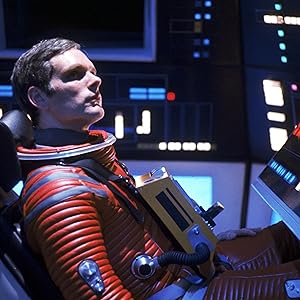
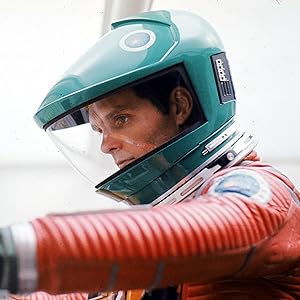
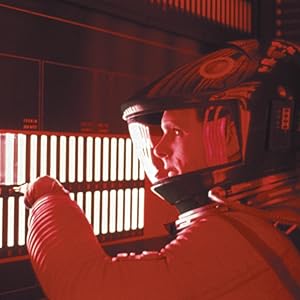
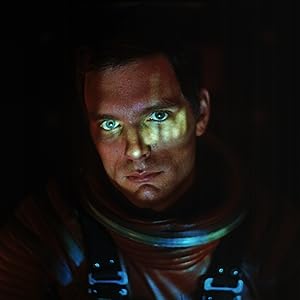
Stanley Kubrick's dazzling, Academy Award winning achievement is a compelling drama of man vs. machine, a sunning meld of music and motion. Kubrick (who co-wrote the screenplay with Arthur C. Clarke) first visits our prehistoric ape-ancestry past, then leaps millennia (via one of the most mind-blowing jump cuts ever) into colonised space, and ultimately whisks astronaut Bowman (Kier Dullea) into uncharted space, perhaps even immortality. "Open the pod doors, HAL." Let an awesome journey unlike any other begin. Commentary by Kier Dullea and Gary Lockwood. Channel Four Documentary 2001: The Making of a Myth. 4 Insightful Featurettes: Standing on the Shoulders of Kubrick: The legacy of 2001. Vision of a future passed: The Prophecy of 2001. 2001: A Space Odyssey- A look behind the future. What is out There? 2001: FX and Early Conceptual Artwork. Look: Stanley Kubrick! Audio-Only Bonus: 1966 Kubrick Interview Conducted by Jeremy Bernstein. Theatrical Trailer. Review: A classic from a different time - * Introduction The film took 4 years to create, produce and release. The initial audience misunderstood it. It eventually became a hit movie in 1968. The film, I believe, was John Lennon's favourite at the time. This film is open to many interpretations, and here is mine for what it's worth. The film '2001: a Space Odyssey' I. m. h. o runs on these two ideas. The physical distances in the story, Africa, Moon, Jupiter, and galactic travel are increasingly distant, and thus, how small humankind is in the scheme of things. The second idea is the film is the portrait of an old man dreaming from the start to the end of this movie. Another handle on this movie is the growth of technology. It's initial stages. Then, the flow and its failure. Then maybe as a species and given time, we will eventually get it correct in the future. * Initial story The initial shots of the movie, 'Dawn of Man', were taken in the Spitzkoppe mountains, in what was then South West Africa. For lesser cost, and simply being physically easier to do, they were not captured with a bulky movie camera, but with a top-notch Hasselblad stills camera. The grain on this still camera film is comparable to movie footage quality. The structure of this film is that when the monolith on the African plain is placed with the apes, its physical symbol of the first logical thought by the apes. These are the size ratios of the squares of the first three integers, 1:2:3, (1:4:9). This is symbolic of the logical change from eating plants to eating meat. These changes increase our brain structure and our likelihood of surviving more than other animals. The film has the biggest jump-cut in movie history. With hundreds of thousands of years. (Until superseded by Luc Besson's 'Lucy' with Scarlett Johansson in the lead.) And when the same monolith on the moon is uncovered, this time, an alarm is to be sent to the sentient beings that humankind has reached the technological milestone of interplanetary flight. * The technology piece The first 65 or so minutes of this movie are a guided exploration of the growth of technology. Kubrick was very interested in the new technologies. It gives this movie its technology backbone. And including the use of the animal bone to kill the Tapir. Such as on the space station, a video telephone, bank cards, Security methods with voice print verification, the space shuttle, velcro shoes to enable walking in zero G, and the space wheel simulating gravity. An astounding and subtle scene within the space shuttle is when a Dr. Floyds pen floats in the cabin and is retrieved by a stewardess. There are three charming vignettes of people having birthdays and interacting with technologies. The young daughter, 'Squirt', ( she, Vivian, being the real daughter of Kubrick) of Dr Heywood Floyd, Chairman of the United States National Council of Astronautics. And the astronaut, Dr Frank Poole, is playing chess with HAL. The technology of the single-occupancy E.V.A. vehicle is realistic and impressive. Another forecast is the massive video screens. The two moon-shuttle stewardesses watch Judo on what we would say now is a wide-screen television, showing its multi-cultural backgrounds to these technologies. Also, there is an explosion in the number of digital channels. When a recording of an interview of these two astronauts on the Discovery ship is played, they both see it on a tablet-like device. And on channel BBC12. There is a scene of the crew being cryogenically suspended until the craft is in Jupiter's space. Stanley Kubrick liked filming 'impossible' shots, such as astronauts standing in differing orientations to each other in the same scene. Kubrick had a 30-short-ton (27 t) rotating "Ferris wheel" built by Vickers-Armstrong Engineering Group at a cost of $750,000 (equivalent to $6,600,000 in 2023). And the difficulties of landing the space shuttle into the rotating space wheel station. The design of the space transport of passengers system, the space shuttle up to the space station. The craft from the space station to the moon is a more economical and viable method, even if never built in reality. It's an elegant design and is Soviet. When compared with the real Saturn V rocket, Americans built in reality one - way with only three passengers. This isn't economic. Also, the electrical circuit testing system, when the crew is testing the faulty AE35 unit, is similar to the present electronic simulator 'Spice'. * Music score Most of the music in this film is also its academic backbone. It's avant-garde at times and beautiful. In another differingly world - way. The opening of the spacecraft accompanied by the 'Blue Danube' is just exquisite, delightful and of true art in cinema. Gayane Ballet Suite -- Gayane's Adagio Music by Aram Khachaturyan, Atmospheres Music by György Ligeti, Lux Aeterna, Music by György Ligeti, Requiem "Requiem for Soprano, Mezzo-Soprano, Two Mixed Choirs, and Orchestra"), Music by György Ligeti, The Blue Danube, ("An der schönen, blauen Donau, op. 314 (The Blue Danube)"), Music by Johann Strauss, Music by Richard Strauss, Adventures, Music by György Ligeti. * The section with HAL, the sentient computer. And of course, the sentient A.I. computer 'Hal'. If you are interested in the philosophical possibility of science and technology as described in the film, I can recommend the following book, 'Hal's Legacy: 2001's Computer as Dream and Reality' by Stork. To find it on desertcart, I needed to copy this text into Google, then desertcart could locate this book in its databases. The technological breakdown of H.A.L is discussed in the movie '2010: The Year We Made Contact' and it covers this well. About 50% of the predictions seem to have held true. It's more interesting when you consider that even low-tech items at the time of the movie were sci-fi, such as cellophane for sandwiches and bank cards! The absence of PCs in this mainframe world is an oversight. I have seen quite a few movies, but I have never seen a murder described only in the graphical display of the crew's vital functions. It's suitable for a cold machine killing other crew. * The ending Its ending is uniquely beautiful and beyond words; it's a visual experience. This connection, when Discovery reaches Jupiter, those living are sent through interstellar flight via a cosmic 'motorway' to be examined. Other crafts, in the shape of octahedra, are using this transport system too. This can be seen with many cryptic communication indication signs during its journey. It’s a portrait of the infinite size of the universe through sheer travelling over the time used to show these shots. And how strange to our eyes the universe is. The ending is not obvious. The long dream that has been the film's flowing structure has finally caught up with the present. The interstellar trip Bowman has undertaken is a parallel with the long journey all of us take in life and living. This last night alive of an astronaut, in an elegant room, dying in his bed. He thought, if all of this I have recalled is outstanding, then, with the Starchild appearing - think what our offspring may be capable of? It's a positive hope for the future of mankind and interplanetary travel. I prefer this explanation to the higher dimensional plane of humanity angle, as it is not substantial enough for me. * BONUS MATERIAL!! I, accidentally discovered, that the Blu-ray edition of this movie has several related topics for 2001 anoraks. Press the TOP MENU button on your Blu-ray player handset to access these hidden video files. They are as follows: Commentary by Actors, 2001:Making of the Myth, Standing on the Shoulders of Kubric, Vision of the Future Passed, 2001: A Look Behind the Future, What is Out There? 2001; FX and Early Concepts, Look at Stanley Kubrick, Interview with Stanley Kubrick, Original 2001: A Space Odyssey Trailer, online sites. * Background Kubrick picked the best of other ideas and compiled them into his movies, such as the strange music from 'Forbidden Planet', and the lack of editing in many scenes that go on for several minutes. At the time, Bell Labs and IBM, amongst others in the technology fields, would create film shorts for cinema and for training internal staff with the same playful pitch. This is the source of the three vignettes mentioned earlier. And the long silences in 2001 are inspired by the movie, 'The Heroes of Telemark'.And the space wheel by the V2 rocket designer, Von Braun. The scene of the Stargate using multicoloured shots of sea and land was shot from a helicopter in the Isle of Harris, Western Isles, Scotland. The film stock was developed using costly chemical methods to give false colours. This is Kubrick's way of suggesting to the audience that the planet is different. Not even the light from this star is the same as our Sun lighting our planet Earth. And our eyes are shown this difference. In the film itself, Kubrick and his staff used over 200 optical effects new to film. My older brother said some at the time went into the cinema with smoked weed when this film section was reached for its enhanced hallucinatory session, and this is one small reason why it became popular. * Why does the film have this ending? Three and a half years into this movie, the executives supporting the Shepperton Studios and at MGM Borehamwood in Elstree, noticed that the film had no ending in sight. Kubrick wanted another 18 months on top of the three and a half years. They were worried. They forecast a potential black hole of endlessly increasing costs and diminishing potential financial returns. They thought few people would pay to see a planned four-hour, slow-paced movie with an unconventional story structure, a poverty of speech, and a bizarre and unfashionable music score. The executives were pressuring Kubrick to produce many dailies, or film excerpts. However, the older senior staff, schooled in an older comprehension of what makes movies sell to the public, basically 'bums on seats', had some appreciation of the technical aspects of what they were being shown. The 'Stargate' sequence was a platform for a much more explanatory and majestic story to follow. Kubrick and the actors devised a cheaper, shorter, and more philosophical ending that would try not to discredit the shots already taken and carry the story ending. So this 'room's' ending results from strong financial pressure from the senior staff and a flexible artistic response to bring the story to its conclusion. * What if the senior staff had gone ahead and backed Kubrick? What could the movie ending have become? If the senior staff had held their nerve, trusted Kubrick, and gone with his planned ending. Would it have become a bigger financial and artistic success? The film, before the 'Rooms' is spectacular, and grows, but the ending is somewhat abrupt and welded on. So the story up to this 'rooms' part is promising. My best guess is that the plot could have moved into exploring the idea that this race of beings behind the monolith also helps create new life on suitable planets. This was hinted at in the ending chapters of the paperback book of 2001. But, eventually, after 4 hours, even Kubrick's creative talents could plateau under the cumulative weight of the story. Perhaps unable to pull any more 'rabbits - out - of - the - hat', that would delight and wonder the viewers? Review: Stunning 4K transfer in a beautiful package! - This is without a doubt the best 2001 has looked for home viewing! The transfer is one word WOW! I went to see the Christopher Nolan 'unrestored' 70mm print at The Prince Charles Cinema in London and despite being a fan of Kubrick and the film this was my first time seeing it on The Big Screen. Well I was amazed more then ever as Kubrick's genius took over the full booked auditorium and my senses were addicted to the experience. Well needless to say was excited for this package and using both Nolan's new negative which was scanned in 8K and under the supervision of Leon Vitali's colour grading for home viewing this is the closest the film looks to an actual 70mm version. The transfer is deep and rich with strong black levels and highlights, colours pop off the screen, skin tones are natural/close to their original print colour and there are no scratches or dirt anywhere or appearance of artificial sharpening with a fine film grain texture. Once again with the colour as many pop off the screen but the Crimson Red which Kubrick used in most of his colour films just sparkles and shines on screen. This is the best 2001 has looked in it's digital form and all the team involved should be applauded especially Vitali who literally supervises the transfers of all of Kubrick's films for free overseeing every single frame from start to finish. Him and the team have done a fabulous job. Not only is the picture amazing but so is the soundtrack. The film originally had a 6 channel stereo track that has been mixed into DTS HD 5.1 format that will please many but to my happy surprise the disc also comes with the original stereo 6 track itself which I personally prefer on a purist level. Fans will love this option and just listening to the dark atmospheric moods of Ligetti or the sweet sounds of The Blue Danube on any sound system (even televisions) is well worth it. Lastly we have all the great features from the original blu ray and the lobby cards and booklet are nicely package in the box. Speaking of the box I am not a fan of most modern designs but this looks beautiful with the Red and Black. This one gorgeous set and one thing I forgot to say is that the included blu ray has the 4K transfer as well so if you not upgraded yet you can still enjoy the film with it's beautiful new picture. A Must for all Fans!

| Contributor | Daniel Richter, Douglas Rain, Frank W. Miller, Gary Lockwood, Keir Dullea, Leonard Rossiter, Margaret Tyzack, Robert Beatty, Sean Sullivan, Stanley Kubrick, William Sylvester Contributor Daniel Richter, Douglas Rain, Frank W. Miller, Gary Lockwood, Keir Dullea, Leonard Rossiter, Margaret Tyzack, Robert Beatty, Sean Sullivan, Stanley Kubrick, William Sylvester See more |
| Customer Reviews | 4.7 out of 5 stars 2,428 Reviews |
| Format | 4K |
| Genre | science_fiction |
| Language | English |
| Manufacturer | Warner Bros |
| Number of discs | 3 |
| Runtime | 2 hours and 29 minutes |
A**C
A classic from a different time
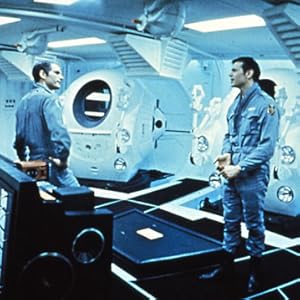
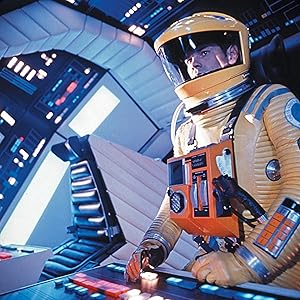
* Introduction The film took 4 years to create, produce and release. The initial audience misunderstood it. It eventually became a hit movie in 1968. The film, I believe, was John Lennon's favourite at the time. This film is open to many interpretations, and here is mine for what it's worth. The film '2001: a Space Odyssey' I. m. h. o runs on these two ideas. The physical distances in the story, Africa, Moon, Jupiter, and galactic travel are increasingly distant, and thus, how small humankind is in the scheme of things. The second idea is the film is the portrait of an old man dreaming from the start to the end of this movie. Another handle on this movie is the growth of technology. It's initial stages. Then, the flow and its failure. Then maybe as a species and given time, we will eventually get it correct in the future. * Initial story The initial shots of the movie, 'Dawn of Man', were taken in the Spitzkoppe mountains, in what was then South West Africa. For lesser cost, and simply being physically easier to do, they were not captured with a bulky movie camera, but with a top-notch Hasselblad stills camera. The grain on this still camera film is comparable to movie footage quality. The structure of this film is that when the monolith on the African plain is placed with the apes, its physical symbol of the first logical thought by the apes. These are the size ratios of the squares of the first three integers, 1:2:3, (1:4:9). This is symbolic of the logical change from eating plants to eating meat. These changes increase our brain structure and our likelihood of surviving more than other animals. The film has the biggest jump-cut in movie history. With hundreds of thousands of years. (Until superseded by Luc Besson's 'Lucy' with Scarlett Johansson in the lead.) And when the same monolith on the moon is uncovered, this time, an alarm is to be sent to the sentient beings that humankind has reached the technological milestone of interplanetary flight. * The technology piece The first 65 or so minutes of this movie are a guided exploration of the growth of technology. Kubrick was very interested in the new technologies. It gives this movie its technology backbone. And including the use of the animal bone to kill the Tapir. Such as on the space station, a video telephone, bank cards, Security methods with voice print verification, the space shuttle, velcro shoes to enable walking in zero G, and the space wheel simulating gravity. An astounding and subtle scene within the space shuttle is when a Dr. Floyds pen floats in the cabin and is retrieved by a stewardess. There are three charming vignettes of people having birthdays and interacting with technologies. The young daughter, 'Squirt', ( she, Vivian, being the real daughter of Kubrick) of Dr Heywood Floyd, Chairman of the United States National Council of Astronautics. And the astronaut, Dr Frank Poole, is playing chess with HAL. The technology of the single-occupancy E.V.A. vehicle is realistic and impressive. Another forecast is the massive video screens. The two moon-shuttle stewardesses watch Judo on what we would say now is a wide-screen television, showing its multi-cultural backgrounds to these technologies. Also, there is an explosion in the number of digital channels. When a recording of an interview of these two astronauts on the Discovery ship is played, they both see it on a tablet-like device. And on channel BBC12. There is a scene of the crew being cryogenically suspended until the craft is in Jupiter's space. Stanley Kubrick liked filming 'impossible' shots, such as astronauts standing in differing orientations to each other in the same scene. Kubrick had a 30-short-ton (27 t) rotating "Ferris wheel" built by Vickers-Armstrong Engineering Group at a cost of $750,000 (equivalent to $6,600,000 in 2023). And the difficulties of landing the space shuttle into the rotating space wheel station. The design of the space transport of passengers system, the space shuttle up to the space station. The craft from the space station to the moon is a more economical and viable method, even if never built in reality. It's an elegant design and is Soviet. When compared with the real Saturn V rocket, Americans built in reality one - way with only three passengers. This isn't economic. Also, the electrical circuit testing system, when the crew is testing the faulty AE35 unit, is similar to the present electronic simulator 'Spice'. * Music score Most of the music in this film is also its academic backbone. It's avant-garde at times and beautiful. In another differingly world - way. The opening of the spacecraft accompanied by the 'Blue Danube' is just exquisite, delightful and of true art in cinema. Gayane Ballet Suite -- Gayane's Adagio Music by Aram Khachaturyan, Atmospheres Music by György Ligeti, Lux Aeterna, Music by György Ligeti, Requiem "Requiem for Soprano, Mezzo-Soprano, Two Mixed Choirs, and Orchestra"), Music by György Ligeti, The Blue Danube, ("An der schönen, blauen Donau, op. 314 (The Blue Danube)"), Music by Johann Strauss, Music by Richard Strauss, Adventures, Music by György Ligeti. * The section with HAL, the sentient computer. And of course, the sentient A.I. computer 'Hal'. If you are interested in the philosophical possibility of science and technology as described in the film, I can recommend the following book, 'Hal's Legacy: 2001's Computer as Dream and Reality' by Stork. To find it on Amazon, I needed to copy this text into Google, then Amazon could locate this book in its databases. The technological breakdown of H.A.L is discussed in the movie '2010: The Year We Made Contact' and it covers this well. About 50% of the predictions seem to have held true. It's more interesting when you consider that even low-tech items at the time of the movie were sci-fi, such as cellophane for sandwiches and bank cards! The absence of PCs in this mainframe world is an oversight. I have seen quite a few movies, but I have never seen a murder described only in the graphical display of the crew's vital functions. It's suitable for a cold machine killing other crew. * The ending Its ending is uniquely beautiful and beyond words; it's a visual experience. This connection, when Discovery reaches Jupiter, those living are sent through interstellar flight via a cosmic 'motorway' to be examined. Other crafts, in the shape of octahedra, are using this transport system too. This can be seen with many cryptic communication indication signs during its journey. It’s a portrait of the infinite size of the universe through sheer travelling over the time used to show these shots. And how strange to our eyes the universe is. The ending is not obvious. The long dream that has been the film's flowing structure has finally caught up with the present. The interstellar trip Bowman has undertaken is a parallel with the long journey all of us take in life and living. This last night alive of an astronaut, in an elegant room, dying in his bed. He thought, if all of this I have recalled is outstanding, then, with the Starchild appearing - think what our offspring may be capable of? It's a positive hope for the future of mankind and interplanetary travel. I prefer this explanation to the higher dimensional plane of humanity angle, as it is not substantial enough for me. * BONUS MATERIAL!! I, accidentally discovered, that the Blu-ray edition of this movie has several related topics for 2001 anoraks. Press the TOP MENU button on your Blu-ray player handset to access these hidden video files. They are as follows: Commentary by Actors, 2001:Making of the Myth, Standing on the Shoulders of Kubric, Vision of the Future Passed, 2001: A Look Behind the Future, What is Out There? 2001; FX and Early Concepts, Look at Stanley Kubrick, Interview with Stanley Kubrick, Original 2001: A Space Odyssey Trailer, online sites. * Background Kubrick picked the best of other ideas and compiled them into his movies, such as the strange music from 'Forbidden Planet', and the lack of editing in many scenes that go on for several minutes. At the time, Bell Labs and IBM, amongst others in the technology fields, would create film shorts for cinema and for training internal staff with the same playful pitch. This is the source of the three vignettes mentioned earlier. And the long silences in 2001 are inspired by the movie, 'The Heroes of Telemark'.And the space wheel by the V2 rocket designer, Von Braun. The scene of the Stargate using multicoloured shots of sea and land was shot from a helicopter in the Isle of Harris, Western Isles, Scotland. The film stock was developed using costly chemical methods to give false colours. This is Kubrick's way of suggesting to the audience that the planet is different. Not even the light from this star is the same as our Sun lighting our planet Earth. And our eyes are shown this difference. In the film itself, Kubrick and his staff used over 200 optical effects new to film. My older brother said some at the time went into the cinema with smoked weed when this film section was reached for its enhanced hallucinatory session, and this is one small reason why it became popular. * Why does the film have this ending? Three and a half years into this movie, the executives supporting the Shepperton Studios and at MGM Borehamwood in Elstree, noticed that the film had no ending in sight. Kubrick wanted another 18 months on top of the three and a half years. They were worried. They forecast a potential black hole of endlessly increasing costs and diminishing potential financial returns. They thought few people would pay to see a planned four-hour, slow-paced movie with an unconventional story structure, a poverty of speech, and a bizarre and unfashionable music score. The executives were pressuring Kubrick to produce many dailies, or film excerpts. However, the older senior staff, schooled in an older comprehension of what makes movies sell to the public, basically 'bums on seats', had some appreciation of the technical aspects of what they were being shown. The 'Stargate' sequence was a platform for a much more explanatory and majestic story to follow. Kubrick and the actors devised a cheaper, shorter, and more philosophical ending that would try not to discredit the shots already taken and carry the story ending. So this 'room's' ending results from strong financial pressure from the senior staff and a flexible artistic response to bring the story to its conclusion. * What if the senior staff had gone ahead and backed Kubrick? What could the movie ending have become? If the senior staff had held their nerve, trusted Kubrick, and gone with his planned ending. Would it have become a bigger financial and artistic success? The film, before the 'Rooms' is spectacular, and grows, but the ending is somewhat abrupt and welded on. So the story up to this 'rooms' part is promising. My best guess is that the plot could have moved into exploring the idea that this race of beings behind the monolith also helps create new life on suitable planets. This was hinted at in the ending chapters of the paperback book of 2001. But, eventually, after 4 hours, even Kubrick's creative talents could plateau under the cumulative weight of the story. Perhaps unable to pull any more 'rabbits - out - of - the - hat', that would delight and wonder the viewers?
R**N
Stunning 4K transfer in a beautiful package!
This is without a doubt the best 2001 has looked for home viewing! The transfer is one word WOW! I went to see the Christopher Nolan 'unrestored' 70mm print at The Prince Charles Cinema in London and despite being a fan of Kubrick and the film this was my first time seeing it on The Big Screen. Well I was amazed more then ever as Kubrick's genius took over the full booked auditorium and my senses were addicted to the experience. Well needless to say was excited for this package and using both Nolan's new negative which was scanned in 8K and under the supervision of Leon Vitali's colour grading for home viewing this is the closest the film looks to an actual 70mm version. The transfer is deep and rich with strong black levels and highlights, colours pop off the screen, skin tones are natural/close to their original print colour and there are no scratches or dirt anywhere or appearance of artificial sharpening with a fine film grain texture. Once again with the colour as many pop off the screen but the Crimson Red which Kubrick used in most of his colour films just sparkles and shines on screen. This is the best 2001 has looked in it's digital form and all the team involved should be applauded especially Vitali who literally supervises the transfers of all of Kubrick's films for free overseeing every single frame from start to finish. Him and the team have done a fabulous job. Not only is the picture amazing but so is the soundtrack. The film originally had a 6 channel stereo track that has been mixed into DTS HD 5.1 format that will please many but to my happy surprise the disc also comes with the original stereo 6 track itself which I personally prefer on a purist level. Fans will love this option and just listening to the dark atmospheric moods of Ligetti or the sweet sounds of The Blue Danube on any sound system (even televisions) is well worth it. Lastly we have all the great features from the original blu ray and the lobby cards and booklet are nicely package in the box. Speaking of the box I am not a fan of most modern designs but this looks beautiful with the Red and Black. This one gorgeous set and one thing I forgot to say is that the included blu ray has the 4K transfer as well so if you not upgraded yet you can still enjoy the film with it's beautiful new picture. A Must for all Fans!
J**E
All time Favourite
It's curious how all my favourite things - books, music, films, were discovered when I was age 15 or 16. I guess this is the age when such discoveries make the most significant shifts in the foundations of one's outlook? I was 11 when this came out, and space mad. I had huge scrapbooks of all the space race news, both Russia and America. And of course, the Apollo project was heading towards it's climax the following year, and the first manned round trip to the moon and back, Apollo 8, made it a particularly special Christmas that year. I had no adult willing to take me to see the movie, but all the same there was a huge flurry of media interest, with lots of newspaper and magazine articles, and making-of documentaries. I cannot believe there was ever a better time to be an 11 year old boy, obsessed with science. 2001 seemed so far away. I would be old by then, and after a lifetime of developments in space exploration, it seemed a near certainty that I too would have gone into space, and maybe to the moon or beyond by that time. People not born into that era cannot imagine how limitless the horizon seemed. I got to see the film eventually when I was 15 and of course, it blew my mind. I didn't really know how to describe the experience, but I knew that I had seen something that was more then just a film, more than just telling a story in pictures. As my mind was opening to the world of classical music I sensed that the way the film made use of music, in particular the awesomely, eerie, Ligeti vocal works, was something more than just incidental. It was as though the film itself was music, or meta-music, but I didn't have such concepts then, just spooky, ineffable feelings. The feelings the film puts you through: the dawn of mankind and the dawn of human thought. Yes, we could probably CGI the hominids better now, but they are pretty darned good for people in monkey suits. The bone is thrown up and turns into a spaceship - just like that! What a moment in cinema? What a way to make a statement that captures the entire history of our species? Space ships dance with balletic grace and zero gravity is portrayed more convincingly than in anything I have seen since. And space is huge and dangerous. The moon is bleak and cold but full of mystery. And then we move to the Discovery, Jupiter mission. We experience the ennui of deep space flight, with a minimal waking crew of two, filling in time with routine tasks, in the company of an eerily human-like Artificial Intelligence HAL. The remaining crew is in suspended animation in the iconically spooky sarcophagi, around the wall. As a programmer there are still days when I walk into work and switch on my machine and mutter "Good morning Hal - Good morning Dave". The introduction to HAL was to be the beginning of my life-long fascination with AI and with the mind-body problem in philosophy. That we do not have HAL-like intelligent machines is if anything, even more surprising than the way the promise of space-travel fizzled out. The battle of wits between HAL and Bowman is very cleverly conceived, still riviting, and introduced a new kind of villain into the movie landscape. In the final part of the film we have the prolonged psychedelic journey through some unspecified, trans-dimensional void, again accompanied by the amazing music of Mr Ligeti. At 15 I knew not what to make of this aspect of the film beyond finding it compellingly beautiful. With subsequent viewings and exposure to the more demanding but wonderful Russian movie, Solaris, I came to realise that the significance of this section was a depiction of an encounter between humanity and something way beyond it's comprehension, and that such an encounter might not be describable in terms of any conventional narrative. I'm guessing that the more disappointed reviews are coming from people who grew up with Star Trek, and Son of Star Trek, and are just wondering where the plot and explosions got lost. I just ask them to imagine growing up in a time when this movie seemed to be as much predictive documentary as a work of science fiction.
P**D
2001 Still a Wonder, and Looking Wonderfully Clear
Watching this film on Blu-Ray has made me realise just how ahead of it's time it was. I mean, 1968?... Stanley Kubricks masterpiece questions the human response to change, uncertainty, but above all our inept desire to persue answers to questions that are completely beyond us. As the protagonist for this iconography, a large, dark rectangular 'object' (that is completely without identity) becomes the subject of interest to space travelers in the year 2000, when the mysterious monument is discovered on a planet far away. After the mysterious disappearances of various space-men whom come to contact with this site, no-one is quite sure what power it holds. Fast forward to 2001, when a new space cruiser is planning to investigate the site. Featuring the latest "HAL 9000" computer; a system so sophisticated that it can 'think' for itself, our new crew members have no reason to fear as the planet approaches. But as they soon learn, self-awareness comes at a price, and the events ahead lead to an ending where only the individual whom is watching can decide what to make of the final outcome. It's so unique that few documents i've read (regarding the end) have dared summarize what the writer believes the hypothesis to be. As Kubrick said himself, however, "It is what you make it". '2001' features so many iconic scenes and variously adapted characters that it's hard to escape it's impact on the film industry. It broke away from the standard conventions of film-making to present an experience that has never been matched in the field of Sci-Fiction. The atmosphere (or lack of it, in fact) of space is captured flawlessly through things as simple as someone breathing in their space-helmet with no other sound, or the clinical silence of space, which catalyses even the most dramatic scenes of solitude and eeriness. It was also the film that Kubrick made a particular piece of classic music famous once more, possibly in the same vein as Disney's 'Fantasia' did. The special effects are also extremely impressive given their age, but are only complimented by the beautiful directing; something which Kubrick was a perfectionist at with his work. Their is only one section of that film that exposes a few flaws, and that is the "ape" scene in the beginning, where the back-drop for projection is clearly visible. This purely down to the high quality of the film though, and I do find it quite amusing when other individuals have a spat over how it looks... This was 1968, who cares if you can see a bit of material in the background? The otherwise beautiful exposure of this Blu-Ray technology leaves every detail highlighted in the film - every individual hair on a persons head, every mark... It's just incredible. Theirs also some documentaries and other features available on the disc, which is the least I would have expected given the discs capacity. All in all, this is an excellent value blu-ray title and, as a film, will indefinitely remain priceless.
T**E
Amazing visuals, but an acquired taste
I must admit it took me three times to attempt to watch this all the way through. It is incredibly slow and drawn out, working more as a piece of art; a collection of ideas than a coherent, enjoyable film. It some ways it feels like the sort of epic silent films of F. W. Murnau or Fritz Lang, rather than the Science Fiction adventure films like Star Wars or the Alien series. In fact, although it was hugely influential of George Lucas and co, Kubrick's style here could not be more different - relying on long, sweeping views of space stations, set to classical music - all of which are beautiful, but very ponderous and without the context to keep most people interested throughout. The more I'm watching it however, the more I'm slowly falling in love with this film, and it very much rewards repeat viewings. The cinematography and effects still look absolutely beautiful, and its difficult to imagine this came out in the '60's, as it is way before its time. The segment of the film with the rogue computer 'Hal,' is very effecting and suspenseful, calling to mind the work of Hitchcock before and Ridley Scott afterwards - great scenes in which the simmering, mono-toned computer threatens the crew 'all so politely' still feel great. Overall, I would say this is an acquired taste and takes a great deal of effort to get into, but it is well worth it, and is one of the most interesting films I've seen from that era; a real milestone in film history.
S**!
I can feel it, Dave............
I think before tackling this film you really need to put out of your mind that this is a Sci Fi movie. If you are expecting something like Star Wars for example you will be dissapointed for this movie is about Kubrick's theolgocial ponderings but happens to be set in Space. The HAL computer (IBM misplaced by 1 letter) represents the pinnacle of human creation and as man chases after a potential Alien life, events take a turn for the worst. Kubrick is asking the deepest (and essentialy unanswerable questions) where does man come from? Where is he going? There are entire essays written on the meanings and interpretations of this film and i am not going to provide much of answer here. Reviewers and cinema goers for over 30 years have been divided in opinion by this film. Some find it boring. Too long and confusing. Others find it a deep and moving film. Both are true. If you do not appreciate Kubricks movie it will bore you. If you do appreciate it the film you don't want it to end. I doubt many will challenge that the film is confusing (or should i say thought provoking?) Indeed Kubrick himself has refused to explain it and famously encouraged speculation as to the meanings. The Blu Ray version make the film look fresh and crisp, it is hard to believe that this film is from the 60's. To try to explain what the movie is about is beyond this brief article. But in an attempt i will cover a few basics. If you have not seen the film i don't really think there is anything here to spoil it for you. In fact it may help. In essence the film begins with primative man picking up a bone and using it as a weapon against another tribe of primates. (The monolith appears moments before this happens but i personally believe that the monolith is viewing mans development rather than influencing it - a view not commonly accepted i hasten to add) The ape throws the bone into the air and the most famous cut scene in the history of films follows. The satellite orbiting the earth. The meaning is clear. Look how far we have come. Look what we can now do. We have progressed from apes to space travel. But one of the satellites we see is part of the (uninvented at the time of filming) Star Wars defence program. Armed with nuclear weapons. So ask the questions again. How far have we come? With all our progress we have simply made a bigger weapon. How far have we come? Man however cannot function well in space. We need instructions on how to use the toliet, on how to walk, we eat baby food. Are we regressing? At the centre of this is HAL (Terminater / Skynet #1 ???) HAL misfunctions and kills all of the crew. Leaving Dave alone in Space. He travels through dimensions / space / time by going into the monolith. Arriving in a room where at first we think Dave is viewing an older version of himself. But he is not, it is very clever editing and represents Daves life spent in the room. We do not know how long Dave is there. If his life is accelerated or we are just seeing the small clips of it that Kubrick chooses. Either way i believe that Kubrick is trying to tell us something about the speed with which our own life passes us by. Dave finally dies and the final scene shows an infant in a bubble in space looking down on earth. The end. Kubrick is asking the deepest of questions - if there is life after death and if so what would it be like. Of course to try to answer this and commit it to film would be much less impactive than leaving the viewer to make up his own mind. (Is the earth the same earth that Dave inhabited in his previous human form?) These are only my own opinions and much is open to interpretation. I personally believe that this is the greatest film ever made. If you have never seen it i encourage you to try it. You may hate it (plenty have done, including well respected film critics) but you may watch the greatest film of your life. Isn't that worth a go?
L**N
Superb film, good transfer, poor extras ...
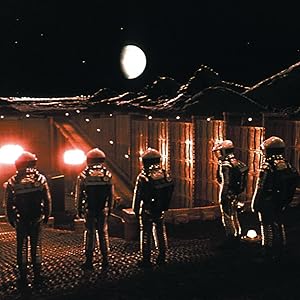
As has been reported this disc does have an FBI warning at the beginning but is otherwise a UK release. The packaging is for the UK. I love this film, have done for 35 years so I won't comment on the movie itself except to say that 95% of the visuals could have been made yesterday and that the story is fiercely intelligent. And so to the Blu-Ray disc: The transfer is good. There are very few anomalies (and I don't mean Tycho Magnetic Anomalies), most of the anomalies that are present were built in, eg dirt on the rear projection screen in the Dawn of Man sequence. That brings me to my only real irritation with the film. If Stanley Kubrick was such a perfectionist (and he was) then why oh why did he allow the set designers to use a godawful backcloth screen to simulate the African terrain and sky? It's SO blaringly obvious that it's artificial because the viewer can see creases and imperfection in the fabric. It ruins the whole sequence. It was bad enough on DVD but with the extra resolution of Blu-ray it's just annoying. It's the one things that I wish someone would digitally correct. After that all is well. Yes they got the Earth from space wrong (too washed out) but the SFX are stunningly good and look marvellous in HD. It amused me to read IBM-Tele-Pad on the Discovery crew's flat screen TV pads (whilst they're eating). There's a multitude of fine detail revealed: the ancillary rooms inside the lunar shuttle docking area reveal figures and screens that I'd not noticed before. The Star-Gate sequence looks a LOT better now. The finer detail and improved colour range of HD really adds some wow factor to it. I'm still not convinced by the colour filtered landscapes though: they could have tried harder there. The audio is good. The soundtrack is good as it can be for a 40 year old film and despite being a little 'thin' is well within modern standards. Frame judder is a slight problem as reported by another reviewer but I'm wondering whether that was a limitation of the original effects rather than the transfer to Blu-Ray because the same scenes in SD in the extras reveal the same judder. The extras are many but none good. There's a very iffy Channel-4 documentary with some annoying talking heads discussing the film and various other small documentaries. None make the heart race. The best is a promotional film made for 'Look' Magazine in 1966 that was designed to interest potential advertisers in buying into a 'special' Space related supplement due to be published first quarter 68 on the back of the 2001 release. It shows some really interesting scenes of production, Kubrick on set etc and Clarke in the Grumman factory inspecting Lunar Modules. There's something weird about this release. Amazon had a release date that has been a gone with no stock. The other Kubrick related releases appeared on time but not this one leading me to think there's been a production problem. It is possible to obtain a copy elsewhere and if you like 2001 it's worth doing so.
D**S
My god...it's full of stars. (Well at least 5)
Normally I wouldn’t review a film of this age as I think most people who want to see it will have already done so. Doubly so with a classic like 2001. In this case though the disc has recently come down in price and a lot of review websites call the 4K version of this film "reference quality" and I don't think it is. I think some people will buy it off the back of that alone and it’s a bit misleading and they may be disappointed. Firstly there is nothing wrong with sci-fi that has big spaceships going "pew…pew…pewpewpew" at each other. If that is the sort of sci-fi you like then 2001 is absolutely not for you. Even if you like the more thoughtful type of sci-fi, 2001 isn’t an easy watch. That nine and a half minutes of psychedelia towards the end of the film is still just as odd as it has ever been. Is it a brilliant film…yes it is…but it’s not for everyone. So who is this film for? Well if someone had never seen this film and was curious about it, this is the one I would get them to watch. If someone was already a fan and had only seen a DVD or a TV version of the film then again, this is the one for them to watch. If someone wanted to see whether 4K is worth the cost of upgrading this is not the film I would show them. I’ve other discs that show off the capability of 4K much, much better than this. The film itself does look amazing. It’s never looked better and it’s hard to imagine it could ever look better than this. If you’re the kind of person that sits down and looks for things in a film (the more technical elements of film and the film making process) as opposed to just watching a film for the overall experience, you will see clearly why this disc is referred to as reference quality. The image is pin sharp, the colours vibrant, it’s free from defects…it really is as good as people say. And for fans of 2001 you will not be disappointed. However, if you aren’t already a fan and familiar with the film and are expecting your jaw to drop when you see this…I don’t think you will get that from this film (at least not because of the image). This is a great sci-fi film. Undoubtedly a classic. It’s the best it’s ever gonna look. The packaging is excellent. It does everything right. I just don't think it’s the 4K showcase that some reviews may lead you to expect.
A**R
Boring
Weirdest movie ever made.
D**L
Happy purchase
Good deal
K**S
Zeitloser Klassiker
Ein Film aus dem Jahre 1968 war als Sci-Fi Abenteuer ein Hit. Heute wirkt er wie eine Doku des echten Lebens. Erstaunlich wie Kubricks Idee zur Realität wurde.
C**B
Very Deceiving as a DVD
Blu-Ray, DVD or 4K? I would have gotten the Blu-Ray Disc if I had known. It says DVD, but will only play on certain players that are not made in the USA, Canada, etc... Why claim it is a DVD? Then where they place the statement about this "Special DVD" is not where it should be, it should be in the main description of the product, I didn't know or had time to view it. I went to open it to view and noticed the player restriction statement on the wrapping around the case which is inside a cardboard sleeve. The window to return this item has expired, that's my fault, but I am trying to save others the heartache of purchasing this item without knowing.
K**E
It's the best classic sci-fi film, brilliant.
I like the film music title opining and closing. Thank you.
Trustpilot
1 week ago
3 weeks ago