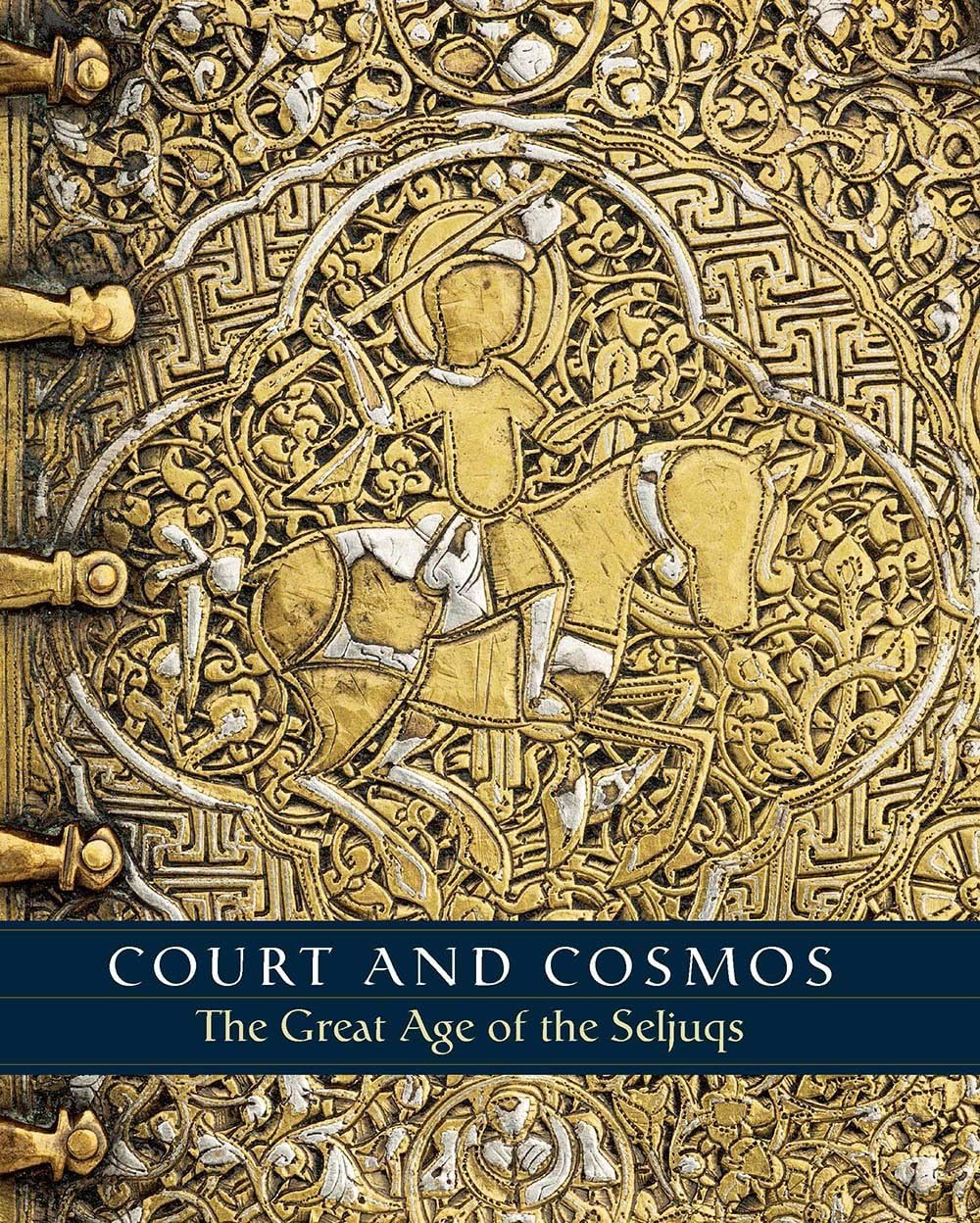
Court and Cosmos: The Great Age of the Seljuqs
Product ID: 29019407
Buy anything from 5,000+ international stores. One checkout price. No surprise fees. Join 2M+ shoppers on Desertcart.
Desertcart purchases this item on your behalf and handles shipping, customs, and support to Vanuatu.
A sweeping survey—the first of its kind—of the artistic, cultural, and technological achievements of the vast Seljuq empire Rising from humble origins as Turkic tribesman, the powerful and culturally prolific Seljuqs—a dynastic tribe whose reach extended from Central Asia to the eastern Mediterranean—dominated the Islamic world from the 11th to the 14th century. This groundbreaking book examines the roots and impact of this formidable empire, featuring 300 objects as evidence of the artistic and cultural flowering that occurred under Seljuq rule. Beginning with a historical overview of the dynasty, Court and Cosmos covers such topics as the rise of the Seljuq sultanate, the development of astrology and magic, the visual expression of discoveries in science, medicine, and technology, and the courtly, funerary, and literary arts. Glazed ceramics, incised glass, inlaid metalwork, handwoven textiles, illuminated manuscripts, and more are captured in new photographs. Court and Cosmos is a comprehensive study of the breadth of Seljuq achievement, illuminating the splendor of one of Islam’s most magnificent dynasties and providing insights into a rich cultural tradition that has shaped the legacy of Islamic culture to this day. Published by The Metropolitan Museum of Art/Distributed by Yale University Press Exhibition Schedule: The Metropolitan Museum of Art (04/27/16–07/24/16) Review: Amazing - Well written and great book to have in my bookshelf. Review: Sweeping Seljuks - Excellent book. A large and exquisite book published in 2016. I think it is the first of it’s kind in English on great Muslim Empire - the greatest- of 13th Century. Many magnificent masjids snd medrassahs from their period survive and I am very fortunate to have visited many of them in Central Türkiye including in Sivas and Divigri town. The mesjid in Kayseri is outstanding so is the one found in Divigri. A must have book for anyone interested in Seljuks and Islamic civilisation.
| Best Sellers Rank | #1,935,005 in Books ( See Top 100 in Books ) #2,892 in Collections, Catalogs & Exhibitions #5,812 in Arts & Photography Criticism #13,979 in Historical Study (Books) |
| Customer Reviews | 4.9 out of 5 stars 28 Reviews |
A**L
Amazing
Well written and great book to have in my bookshelf.
A**A
Sweeping Seljuks
Excellent book. A large and exquisite book published in 2016. I think it is the first of it’s kind in English on great Muslim Empire - the greatest- of 13th Century. Many magnificent masjids snd medrassahs from their period survive and I am very fortunate to have visited many of them in Central Türkiye including in Sivas and Divigri town. The mesjid in Kayseri is outstanding so is the one found in Divigri. A must have book for anyone interested in Seljuks and Islamic civilisation.
D**O
Great Book, Definitely Buy
This is a great book on a MET exhibition I somehow missed. The book starts off with some historical background on the Seljuk Empire, and then focuses on the beautiful and rich artistic traditions they had. It is definitely worth buying especially if you are interested in Near Eastern cultures. Great content and beautifully detailed photography.
L**H
and this book provides a good look at this culture which lasted from about 1035 ...
This is a fabulous book on the culture of the Seljuk Turks, who for a time had an empire even larger than the later Ottoman Turks, who developed out of the remnants of the Seljuks. There are gorgeous full-color pictures of the 250 objects in the exhibition, along with close-up shots of parts of the items, and a detailed text providing information and insight into them. This is a culture well worth knowing more about, and this book provides a good look at this culture which lasted from about 1035 to 1300.
A**R
Great Book
Indeed it is ine of the finest books ever printed on Seljuk art.
H**R
Bazm wa razm
When hordes of Seljuq Turkmen invaded the high plateau in the early decades of the 11th century Iran experienced an unexpected blossoming of art and science. An exhibition at the Metropolitan Museum of Art in New York with just 250 objects (for instance gold and silver-inlaid brass ewers, basins or candle stands, glazed fritware, gold coins and jewellery, illuminated Qur’ans) on display until 24 July paints a picture of the rather pleasant and luxurious life of noblemen and members of the middle class alike who engaged in hunting, fighting and feasting (bazm wa razm). One may in fact ask (as the New York Times does), What is actually genuinely nomad Seljuqian? “While all of this testifies to an aesthetically and technologically sophisticated culture, a nonspecialist might wonder what is distinctively Seljuqian about it — what distinguishes it from, say, medieval Islamic arts and crafts in general. Nomadic invaders from Central Asia, the Seljuqs did not impose on their subjects a traditional aesthetic or religion of their own. Rather, they commissioned artistic and decorative works from artisans of various subject peoples. They built palaces, mosques, madrasas and hospitals in Islamic architectural styles. But what the Seljuqs created most consequentially was a relatively peaceful, prosperous and unified world wherein indigenous literature, arts and sciences were able to flourish in urban centers throughout the region.” The beautifully written and carefully edited catalog of the exhibition provides invaluable further information about this rather short-lived dynasty of sultans who had conquered much of the then known world.
S**O
commento
puntuale, copia esente da ogni difetto che risponde puntualmente alla descrizione rinvenuta in sito. Ben imballata. libro fondamentale per i cultori di arte islamica
N**E
excellent catalogue pour une exposition grandiose
les notices sont très bien documentées; les essais remarquables et les photographies d'excellente qualité. Cette exposition et ce catalogue s'inscrivent dans la lignée des grands moments du Metropolitan comme "the legacy of Gengis Khan" vivement recommandé
M**.
Schönes Buch
War ein Geschenk für mein Papa, aber es besteht die Gefahr das ich mir auch ein Exemplar besorge. Tolles Buch
H**R
Bazm wa razm
When hordes of Seljuq Turkmen invaded the high plateau in the early decades of the 11th century Iran experienced an unexpected blossoming of art and science. An exhibition at the Metropolitan Museum of Art in New York with just 250 objects (for instance gold and silver-inlaid brass ewers, basins or candle stands, glazed fritware, gold coins and jewellery, illuminated Qur’ans) on display until 24 July paints a picture of the rather pleasant and luxurious life of noblemen and members of the middle class alike who engaged in hunting, fighting and feasting (bazm wa razm). One may in fact ask (as the New York Times does), What is actually genuinely nomad Seljuqian? “While all of this testifies to an aesthetically and technologically sophisticated culture, a nonspecialist might wonder what is distinctively Seljuqian about it — what distinguishes it from, say, medieval Islamic arts and crafts in general. Nomadic invaders from Central Asia, the Seljuqs did not impose on their subjects a traditional aesthetic or religion of their own. Rather, they commissioned artistic and decorative works from artisans of various subject peoples. They built palaces, mosques, madrasas and hospitals in Islamic architectural styles. But what the Seljuqs created most consequentially was a relatively peaceful, prosperous and unified world wherein indigenous literature, arts and sciences were able to flourish in urban centers throughout the region.” The beautifully written and carefully edited catalog of the exhibition provides invaluable further information about this rather short-lived dynasty of sultans who had conquered much of the then known world.
Trustpilot
1 day ago
1 month ago