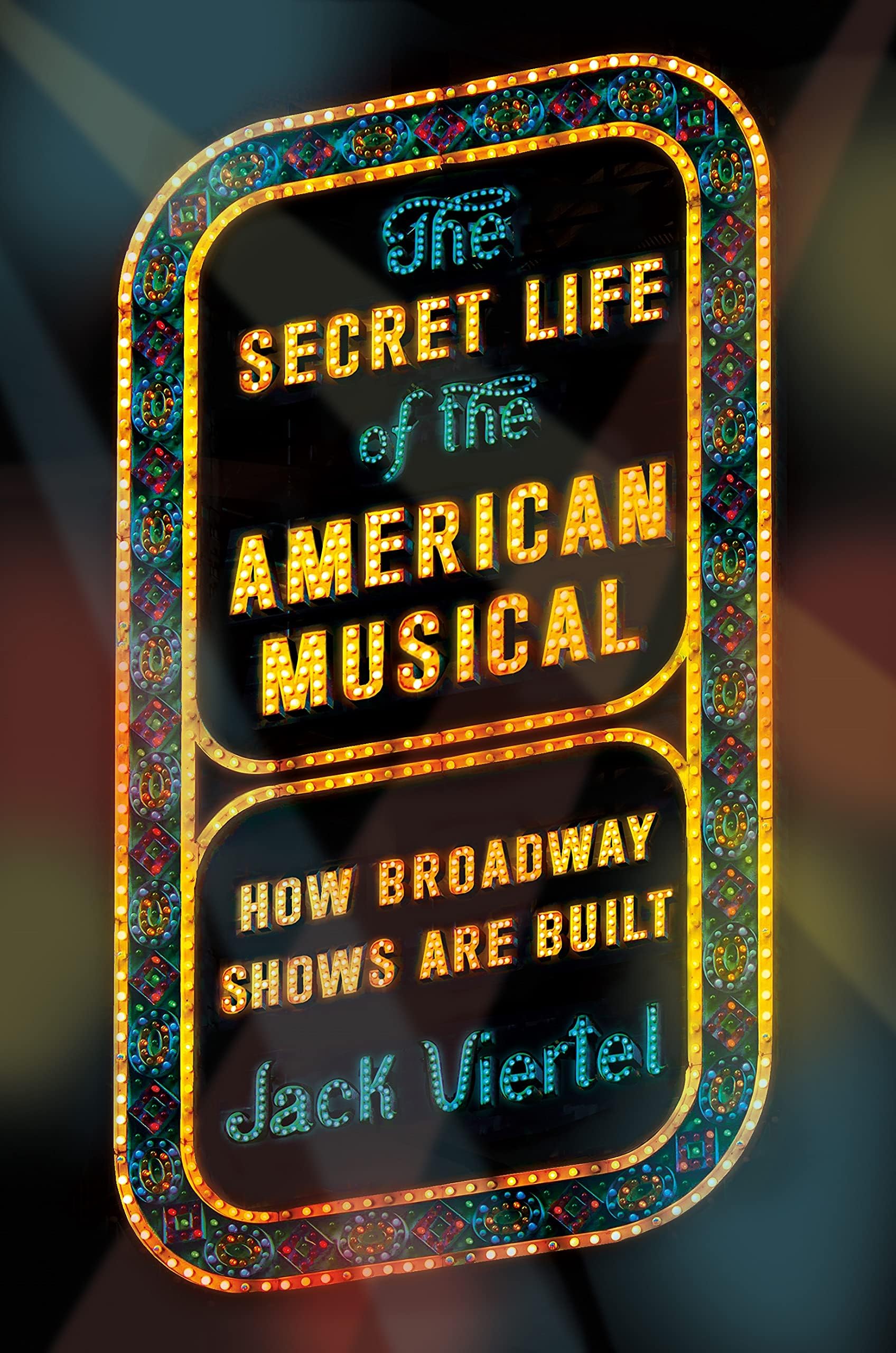
The Secret Life of the American Musical: How Broadway Shows Are Built
Product ID: 303614527
Buy anything from 5,000+ international stores. One checkout price. No surprise fees. Join 2M+ shoppers on Desertcart.
Desertcart purchases this item on your behalf and handles shipping, customs, and support to Vanuatu.
Buy The Secret Life of the American Musical: How Broadway Shows Are Built by Viertel, Jack online on desertcart.ae at best prices. ✓ Fast and free shipping ✓ free returns ✓ cash on delivery available on eligible purchase. Review: Author Jack Viertel made a wise choice when he cast himself as the person to write this book on "How Broadway Shows Are Built." He has served as a Broadway producer, an executive with the Jujamcyn Theaters in NYC, and has taught at the Tisch School of the Arts at NYU. The format for this book, "The Secret Life of the American Musical" comes from the curriculum he developed for one of the courses he taught at Tisch. Appropriately enough, the author has ordered the chapters of the book to mirror the way in which a Broadway musical is built, from Overture to Curtain Call. Within each chapter, he discusses the choices that the creative team must make at each stage of the show in engaging the audience and telling the story. In each case, he cites the American musicals he feels have done the best job of writing songs or dialogue that address the issue at hand. Curtain Up discusses opening numbers. Here is an excellent example of the format the author uses with great effect throughout the book: "Opening numbers can make or break a show. They have turned flops into hits (A Funny Thing Happened on The Way to the Forum), and their conception can be a cause for completely rethinking and reworking everything that comes after them (Fiddler on the Roof). They can be fabulously elaborate (A Chorus Line, Ragtime) or breathtakingly simple (Oklahoma), but whatever they are, they launch the enterprise. If they do what they're supposed to do, they hand . . . any capable director the tools to do the job." (p. 19) Along the way, Mr. Viertel offers anecdotes from an insider's perspective that add fascinating texture to this behind the scenes look at the artistic process. Among those stories is the recounting of the night when veteran Broadway actor, John Raitt, star of "Oklahoma," walked on stage before a performance of "The Who's Tommy." He was well known to the Broadway patrons of a certain age, but not to most of the members of this young audience. "This promised a dangerous disconnect. 'Hello, everybody. . . I'm Bonnie Raitt's dad!'" (p. 150) What a wonderful example of the passing of the Broadway torch from generation to generation. The author discusses his personal definition of the Golden Age of Broadway: "The architecture of musicals dates back to Broadway's Golden Age., the dates of which can be agreed upon by no one. My opinion is that it begins on the opening night of "Oklahoma"(March 31, 1943) and ends on the opening night of "A Chorus Line" (July 25, 1975. During those decades, musicals found a form that was so rock solid and so satisfying to audiences that the components of that form served as a road map for creators who revised and refined but never abandoned it.." (p, 4) In virtually every chapter, these questions are addressed: "At this point in the show, what does the audience need in order to understand what is happening, in order to care about the characters, and in order to have the energy and the desire to keep paying attention?" I am more than just a casual fan of Broadway. Like many others, my love for musicals began with listening to cheap cast albums that my parents had bought as premiums for shopping at the First National supermarket in our home town. This book not only reminded me of things I had seen and heard and loved over the decades, but offered insights into processes and dynamics I had only been vaguely familiar with. The book is a generous gift to lovers of musical theater. Review: Most informative book on how an American musical is built
| Best Sellers Rank | #112,897 in Books ( See Top 100 in Books ) #13 in Broadway & Musicals #34 in Musicals #99 in History & Criticism of Drama & Plays |
| Customer reviews | 4.7 4.7 out of 5 stars (273) |
| Dimensions | 13.72 x 2.54 x 20.83 cm |
| Edition | Reprint |
| ISBN-10 | 0374536899 |
| ISBN-13 | 978-0374536893 |
| Item weight | 1.05 Kilograms |
| Language | English |
| Print length | 336 pages |
| Publication date | 14 March 2017 |
| Publisher | Sarah Crichton |
A**E
Author Jack Viertel made a wise choice when he cast himself as the person to write this book on "How Broadway Shows Are Built." He has served as a Broadway producer, an executive with the Jujamcyn Theaters in NYC, and has taught at the Tisch School of the Arts at NYU. The format for this book, "The Secret Life of the American Musical" comes from the curriculum he developed for one of the courses he taught at Tisch. Appropriately enough, the author has ordered the chapters of the book to mirror the way in which a Broadway musical is built, from Overture to Curtain Call. Within each chapter, he discusses the choices that the creative team must make at each stage of the show in engaging the audience and telling the story. In each case, he cites the American musicals he feels have done the best job of writing songs or dialogue that address the issue at hand. Curtain Up discusses opening numbers. Here is an excellent example of the format the author uses with great effect throughout the book: "Opening numbers can make or break a show. They have turned flops into hits (A Funny Thing Happened on The Way to the Forum), and their conception can be a cause for completely rethinking and reworking everything that comes after them (Fiddler on the Roof). They can be fabulously elaborate (A Chorus Line, Ragtime) or breathtakingly simple (Oklahoma), but whatever they are, they launch the enterprise. If they do what they're supposed to do, they hand . . . any capable director the tools to do the job." (p. 19) Along the way, Mr. Viertel offers anecdotes from an insider's perspective that add fascinating texture to this behind the scenes look at the artistic process. Among those stories is the recounting of the night when veteran Broadway actor, John Raitt, star of "Oklahoma," walked on stage before a performance of "The Who's Tommy." He was well known to the Broadway patrons of a certain age, but not to most of the members of this young audience. "This promised a dangerous disconnect. 'Hello, everybody. . . I'm Bonnie Raitt's dad!'" (p. 150) What a wonderful example of the passing of the Broadway torch from generation to generation. The author discusses his personal definition of the Golden Age of Broadway: "The architecture of musicals dates back to Broadway's Golden Age., the dates of which can be agreed upon by no one. My opinion is that it begins on the opening night of "Oklahoma"(March 31, 1943) and ends on the opening night of "A Chorus Line" (July 25, 1975. During those decades, musicals found a form that was so rock solid and so satisfying to audiences that the components of that form served as a road map for creators who revised and refined but never abandoned it.." (p, 4) In virtually every chapter, these questions are addressed: "At this point in the show, what does the audience need in order to understand what is happening, in order to care about the characters, and in order to have the energy and the desire to keep paying attention?" I am more than just a casual fan of Broadway. Like many others, my love for musicals began with listening to cheap cast albums that my parents had bought as premiums for shopping at the First National supermarket in our home town. This book not only reminded me of things I had seen and heard and loved over the decades, but offered insights into processes and dynamics I had only been vaguely familiar with. The book is a generous gift to lovers of musical theater.
I**S
Most informative book on how an American musical is built
I**S
Beautifully written insights into how the best Broadway shows are constructed.
M**N
Jack Viertel knows his sh...stuff. As a teacher of musical theatre technique and musical theatre history for more than 30 years, I can see through the charlatans who write books like this. And there are a good number of them. Therefore, it was a total joy to read the real goods from someone who has been a part of that very history for decades. Without being overly anecdotal and chatty, as some of these books tend to be, Mr. Viertel shares insights into the construction of musicals with an academic wisdom and a warm sense of humor. The thing you never doubt - and what really makes the book endearing - is his total and unmitigated passion for his subject matter. And when he does present an idea that is biased or slanted, he tells you so. In advance. For example, I don't know that I would lavish HAIRSPRAY with the amount of attention that Mr. Viertel does, but he reminds us early on that he had a very large hand in the creation of that show, and I think his pride in his own work (it IS an awfully good show) is commendable. I just don't know that it belongs in the same breath as GUYS AND DOLLS and GYPSY. But that's the fun part of being a musical theatre nut - getting to disagree with other musical theatre nuts about favorites! Anyway, if this is your world, this is a MUST, MUST, MUST READ. As a regular audience member at the invited dress rehearsals of the Encores series at City Center in New York, I have grown to look forward to Jack Viertel's introductions of the shows (he is the Artistic Director of Encores) as much as the shows themselves. He is witty and smart, a great teacher and an unabashed theatre-lover. All of that good stuff jumps out of every page of this book. Kudos.
J**E
Great, book.Bought for my wife who loves it!
Trustpilot
3 weeks ago
3 weeks ago