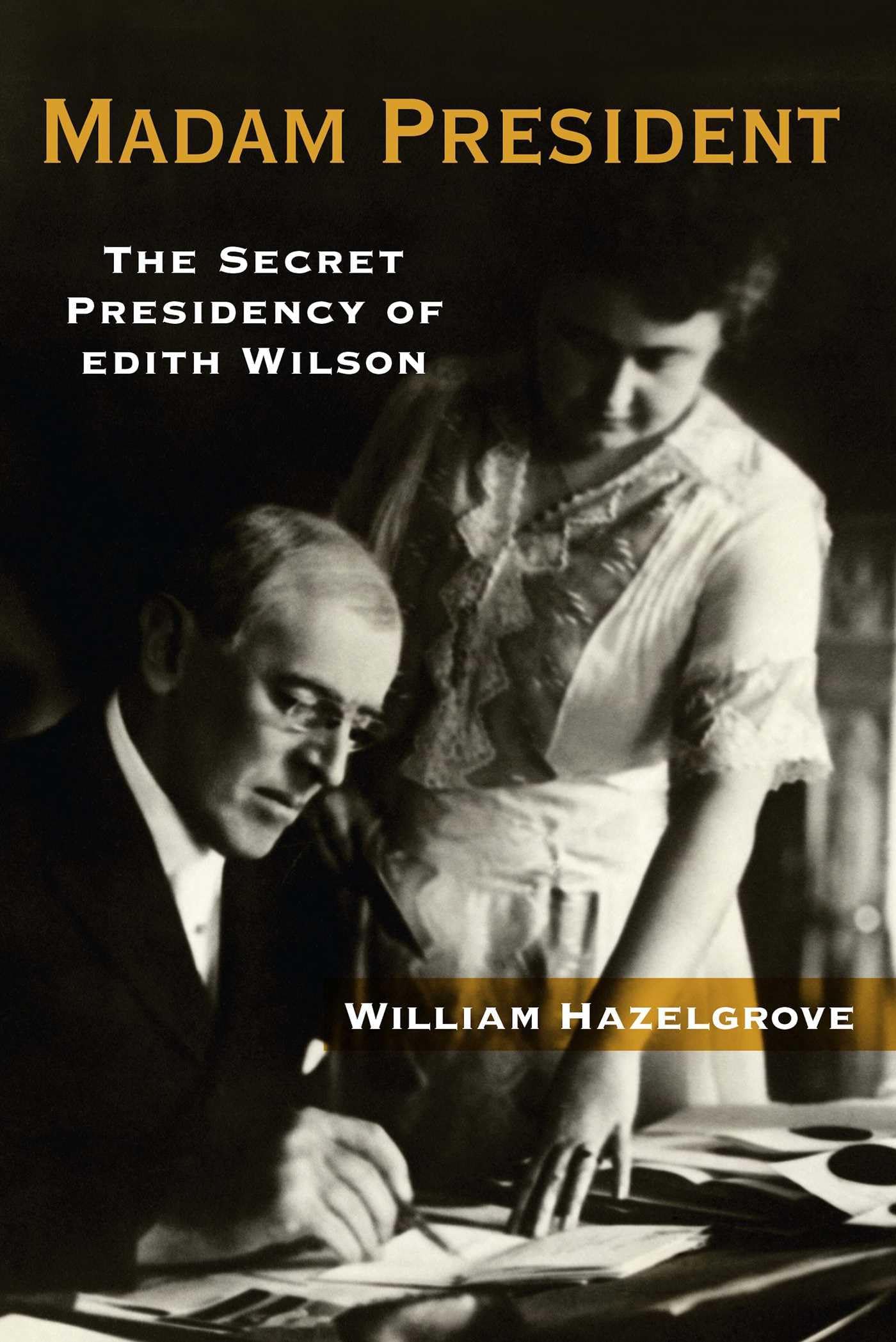
Madam President: The Secret Presidency of Edith Wilson
Product ID: 36838546
Buy anything from 5,000+ international stores. One checkout price. No surprise fees. Join 2M+ shoppers on Desertcart.
Desertcart purchases this item on your behalf and handles shipping, customs, and support to Vanuatu.
Madam President: The Secret Presidency of Edith Wilson [Hazelgrove, William] on desertcart.com. *FREE* shipping on qualifying offers. Madam President: The Secret Presidency of Edith Wilson Review: An intelligent discussion of our first "woman" President. - In "Madam President: The Secret Presidency of Edith Wilson," penned by the adept author William Hazelgrove, an intricate exploration of the enigmatic figure of Edith Wilson, who assumed a quasi-presidential role, unfolds. Amidst an era marked by the scrutiny of established verities, Hazelgrove astutely delves into this contentious topic. Demonstrating intellectual acumen and a mastery of narrative flow, the author not only renders this work engaging for leisurely perusal but also endows it with the value of illuminating historical insights. This publication effectively amalgamates the allure of a captivating 'beach book' with the gravitas of an instrument for fostering historical clarity. Review: It should be flatly stated that nothing like that should ever be allowed to happen again - Hazelgrove successfully argues that Edith Wilson was president in all but name from the time of Woodrow Wilson’s stroke until his term ended. The problem is with his interpretation of this event. It should be flatly stated that nothing like that should ever be allowed to happen again. Vice President Marshall should have been installed as acting President. It was and is unacceptable for the spouse of a president and his doctors to cover up a serious presidential disability and then attempt to run the executive branch with no legal authority to do so. Edith Wilson was not elected president or vice-president. She abused her authority. The issue here is not that we had the first woman president, though that is true. It’s the first time a spouse has taken over from a president. It is as if Denis Thatcher had taken over the reins government from Margaret Thatcher. Hazelgrove seems to mildly condone the course events that occurred during this period of time, with the exception of the Wilsons’ handling of the League of Nations, which incidentally, is one of the few times President Wilson asserted himself during his disability. In this case, Wilson’s obstruction cost him a League that may have been better than nothing. The principal reason Wilson’s wife and doctors protected him was that they hated Vice President Thomas Marshall. They didn’t want him to become president, even though he was quite capable of taking on the job. Furthermore, had Marshall stepped in, he would have accepted amendments to the League of Nations that would have allowed it to pass Congress. Indeed, one wrinkle in the history of this period is that many Republicans implicitly conspired with Edith and the administration of keep the president in power, so the League would be defeated. While they were on record as supporting the League with reservations, they actually wanted it killed outright. Keeping Marshall from the presidency would allow them to do this. Hazelgrove never discusses this side of the story. While Marshall didn’t want the presidency in the technical sense, he probably would have been glad to have the job. He just didn’t want to seize power without the proper constitutional support. He wanted to do everything the right way, and he felt that course wasn’t available at the time. In addition to these concerns, there are few jarring typos and factual mistakes. On pages 88-89, there is a discussion of Prince Albert, later King George VI, who visited Wilson earlier in his presidency. Prince Albert was never “prince of Wales.” That title belonged to his elder brother, Prince Edward who reigned briefly as Edward VIII. After Edward abdicated, Albert became king as George VI in 1936, not in 1939 as Hazelgrove incorrectly states on page 89. A strange mix-up of dates occurs in at least two other places in the book. On page 175, the date should be November 25, 1916 (not 1917). On page 178, January 31, 1916 is mentioned and then a few sentences February 1, 1917 is mentioned as occurring a few days later. Obviously the first 1916 should be 1917. Finally, there is the jump between different time periods in the book. I would have rather read a linear narrative of the events, although it was not a major fault of the book. This was an easy book to read. It was enjoyable and interesting. But in my opinion it was marred by the faults discussed above.
| Best Sellers Rank | #783,622 in Books ( See Top 100 in Books ) #1,932 in Women in History #2,735 in Political Leader Biographies #4,564 in United States Biographies |
| Customer Reviews | 4.2 4.2 out of 5 stars (186) |
| Dimensions | 6 x 1.1 x 9 inches |
| Edition | Illustrated |
| ISBN-10 | 162157475X |
| ISBN-13 | 978-1621574750 |
| Item Weight | 1.24 pounds |
| Language | English |
| Print length | 352 pages |
| Publication date | October 17, 2016 |
| Publisher | Regnery History |
B**T
An intelligent discussion of our first "woman" President.
In "Madam President: The Secret Presidency of Edith Wilson," penned by the adept author William Hazelgrove, an intricate exploration of the enigmatic figure of Edith Wilson, who assumed a quasi-presidential role, unfolds. Amidst an era marked by the scrutiny of established verities, Hazelgrove astutely delves into this contentious topic. Demonstrating intellectual acumen and a mastery of narrative flow, the author not only renders this work engaging for leisurely perusal but also endows it with the value of illuminating historical insights. This publication effectively amalgamates the allure of a captivating 'beach book' with the gravitas of an instrument for fostering historical clarity.
B**N
It should be flatly stated that nothing like that should ever be allowed to happen again
Hazelgrove successfully argues that Edith Wilson was president in all but name from the time of Woodrow Wilson’s stroke until his term ended. The problem is with his interpretation of this event. It should be flatly stated that nothing like that should ever be allowed to happen again. Vice President Marshall should have been installed as acting President. It was and is unacceptable for the spouse of a president and his doctors to cover up a serious presidential disability and then attempt to run the executive branch with no legal authority to do so. Edith Wilson was not elected president or vice-president. She abused her authority. The issue here is not that we had the first woman president, though that is true. It’s the first time a spouse has taken over from a president. It is as if Denis Thatcher had taken over the reins government from Margaret Thatcher. Hazelgrove seems to mildly condone the course events that occurred during this period of time, with the exception of the Wilsons’ handling of the League of Nations, which incidentally, is one of the few times President Wilson asserted himself during his disability. In this case, Wilson’s obstruction cost him a League that may have been better than nothing. The principal reason Wilson’s wife and doctors protected him was that they hated Vice President Thomas Marshall. They didn’t want him to become president, even though he was quite capable of taking on the job. Furthermore, had Marshall stepped in, he would have accepted amendments to the League of Nations that would have allowed it to pass Congress. Indeed, one wrinkle in the history of this period is that many Republicans implicitly conspired with Edith and the administration of keep the president in power, so the League would be defeated. While they were on record as supporting the League with reservations, they actually wanted it killed outright. Keeping Marshall from the presidency would allow them to do this. Hazelgrove never discusses this side of the story. While Marshall didn’t want the presidency in the technical sense, he probably would have been glad to have the job. He just didn’t want to seize power without the proper constitutional support. He wanted to do everything the right way, and he felt that course wasn’t available at the time. In addition to these concerns, there are few jarring typos and factual mistakes. On pages 88-89, there is a discussion of Prince Albert, later King George VI, who visited Wilson earlier in his presidency. Prince Albert was never “prince of Wales.” That title belonged to his elder brother, Prince Edward who reigned briefly as Edward VIII. After Edward abdicated, Albert became king as George VI in 1936, not in 1939 as Hazelgrove incorrectly states on page 89. A strange mix-up of dates occurs in at least two other places in the book. On page 175, the date should be November 25, 1916 (not 1917). On page 178, January 31, 1916 is mentioned and then a few sentences February 1, 1917 is mentioned as occurring a few days later. Obviously the first 1916 should be 1917. Finally, there is the jump between different time periods in the book. I would have rather read a linear narrative of the events, although it was not a major fault of the book. This was an easy book to read. It was enjoyable and interesting. But in my opinion it was marred by the faults discussed above.
F**Y
You Probably Did Not Study This In History
Very well researched and written story of one of the biggest cover ups and organized deceptions in the history of the U.S. For over a year Edith Wilson was able to hide her husband, the President of the United States, from his cabinet members and the public while his personal physician was complicit in the scheme. Interesting story and an unusual woman for her time.
S**B
Wonder about research
There is a huge mistake in chapter 14. He says that the Prince of Wales. became king when his brother abdicated. This all refers to a visit to Wilson by the Prince of Wales. Hazelgrove continues calling his visitor the stuttering Prince of Wales. It is true that the Prince of Wales did visit Wilson. However it was the Prince of Wales who abdicated. The stuttering prince was the Duke of York who became king in 1937 and first visited the states in 1939. So far an enjoyable book. I hope his further research is correct.
C**N
History that reads like a novel
A great story, little known, about his wife acting as President following the health crisis of President Wilson after an exhaustive attempt to secure the League of Nations. Edith did what any First Lady would have done, try to protect her husband, and ended up serving as President or co-President throughout Wilson's last two years. This is how history should be told, fast paced and interesting, it reads like a novel.
D**W
Interesting bit of history but could have used a better editor
The history was fascinating, but the author chose to jump back and forth in time. This made it somewhat confusing to follow. The technique is fine for a novel, but has no place in a history.
A**R
William Hazelgrove shares a story that happened behind the curtain ...
William Hazelgrove shares a story that happened behind the curtain and will radically overturn what you think you know about this time and what you may have learned in school. In this #METOO moment, this story is as relevant and timely as ever. Thank you William for setting the record straight and for illuminating the story of one of the most inspiring women of that time. Whether you know her or not she had left her mark and I am inspired by her story.
V**R
All history buffs need to read this book. It ...
All history buffs need to read this book. It makes one wonder about the things that might have, or have not, been in this country, as she was forced to take the helm of the country's highest office. She was a very strong woman, and a model for many young women who have come behind her, especially considering that her educational background would not have prepared her for her life as an adult.
J**E
Pedestrian writing without a cohesive narrative. Includes many historical errors that should have been checked through the writing and editing process. I'm bewildered by the claim of America entering the war in 1918, when this occurred in 1917.
J**Y
Recommended
Trustpilot
2 months ago
4 days ago