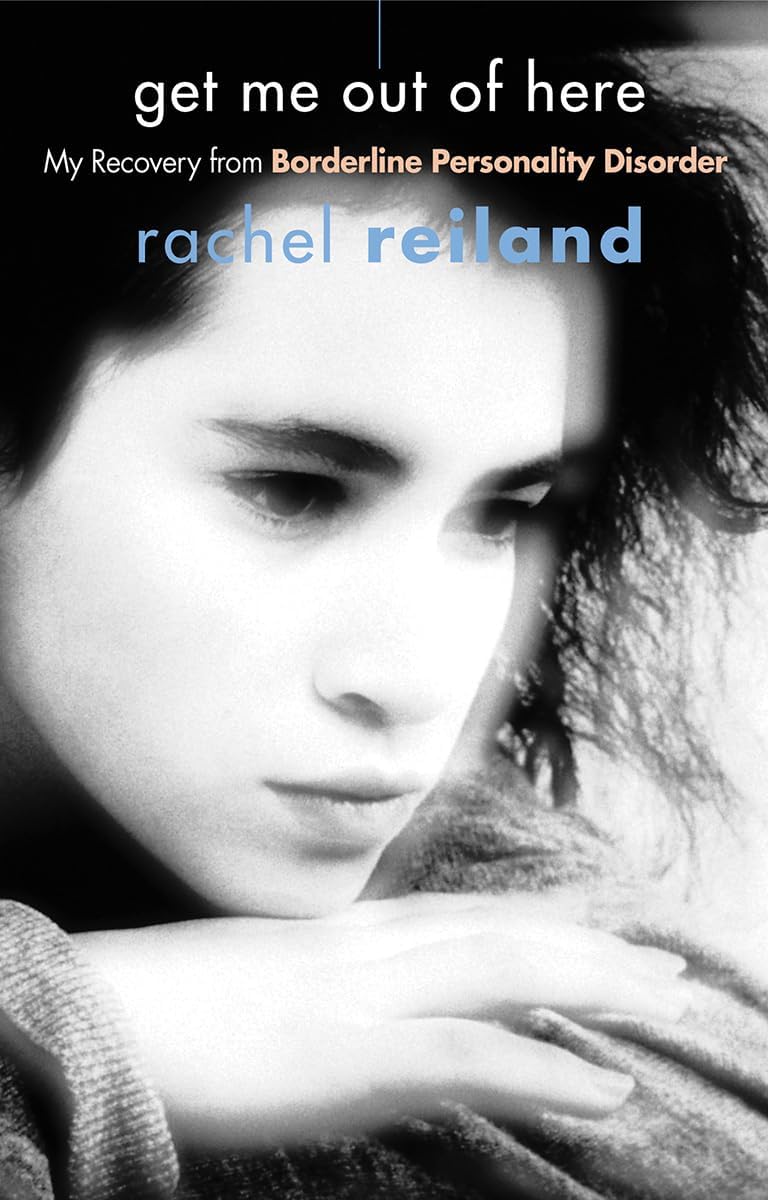
Get Me Out of Here: My Recovery from Borderline Personality Disorder
Product ID: 3720160
Buy anything from 5,000+ international stores. One checkout price. No surprise fees. Join 2M+ shoppers on Desertcart.
Desertcart purchases this item on your behalf and handles shipping, customs, and support to Vanuatu.
Get Me Out of Here: My Recovery from Borderline Personality Disorder [Reiland, Rachel] on desertcart.com. *FREE* shipping on qualifying offers. Get Me Out of Here: My Recovery from Borderline Personality Disorder Review: Truly the perfect book for someone with borderline that is out of answers. - I had been looking for the perfect book to read to help me with my ever increasing struggles with borderline personality. I had read the "self help" books and the books that tell the symptoms accurately, and in depth, but what I wanted this time was a book written by someone like me, in hopes of feeling less alone. When I was reading the reviews for this book, I found many of them that said the book was "inspirational" and everything like that, and then I read reviews that said it was "simplistic" and "reiterated points over and over", and I wasn't sure if I should even bother. After getting the book for free, I decided there was no reason not to at least read it. The book starts off as described by negative reviews: simplistic. Symptoms of borderline that everyone with borderline sees in themselves were laid out in plain language and not presented in any way that can't be found in the vast "self help" books. At this point, I started to become disappointed and afraid that the book was going to be a waste of time. As the book progresses, Rachel becomes worse, she finds herself, although in recovery, lashing out in ways she never imagined and hurting everyone around her. There were times that I read the book and I found myself hating her, and worse, I hated myself. And then, as Rachel finds herself becoming sucked in to the depths of her disorder, and getting out of control, layers and layers of broken coping mechanisms that had appeared nothing more than abusive, manipulative and selfish reveal the true nature of the borderline personality: never ending fear of being forever alone and unlovable. It was at this point that the mere presentation of common symptoms became much more: as Rachel begins to understand herself, the symptoms are shown to the reader as more than dysfunctional coping mechanisms: they are given a sense of humanity and drive and begin to show the motives of nothing more than a terrified, humiliated child, reaching out to be unconditionally loved. This was when I realized that the progression of the book was perfect: the book begins, as described, very simplistic, as Rachel doesn't understand herself and only sees destructive behaviors that she can't make sense of. And then eventually the complexity of the book becomes overwhelming, as Rachel sees her inner most feelings and tries to cope. This book, to be blatant, could not be fully appreciated by someone who has not personally felt what it is like to live with borderline personality disorder. To someone on the outside: it is just a case of a psychotic woman who finds treatment and recovers. To someone with borderline: it is a chilling account of their very own life, innermost fears worked through by complete strangers. There are so many things in this book that are revolutionary for me, that trying to sit here and convey them feels almost impossible. Although I read reviews of the book that complain that it is reiterative, and the basis of therapy is nothing more than constantly repeating the same explanation... that is the core of the borderline personality. A persistent need by that person to find love and hold on to it as tightly as possible, and no matter how many broken coping mechanisms they force themselves to work away from, they find themselves with more, different broken coping mechanisms in hopes of achieving the same task. Dr. Padgett presents a therapy technique for Rachel that is so much more than I could have ever imagined experiencing in therapy. He presents the one thing that people with borderline truly need: unconditional love, a feeling of safety, while still experiencing limits and boundaries in the face of their destructive behaviors. Although Rachel becomes painfully aware of how dysfunctional she has become, she is never led to feel by Dr. Padgett as though she is bad or wrong, or that she doesn't deserve to be happy. Without this, I don't believe that her feelings could have been dealt with. The explanation of the book is correct in saying that it is in no way a self help book, and will never lead anyone to recovery. What it offers, instead, is something much more realistic: measurable, achievable results for someone suffering from severe borderline, in turn giving the reader an intense sense of hope. The book shows the many many layers of borderline defenses come crashing down, and never for once is there an unrealistic overnight "Aha!" where Rachel suddenly feels better, because this is not how it works. As someone who has suffered from borderline for what feels like every waking hour of my entire life, and struggled with therapy and medications to find no answers, this book gives me something to hold on to and helps me believe that I can one day be like Rachel. I hope that many other people with borderline, out of answers, pick up this book and find the strength to continue on. Review: It helped me to understand my life with my mother - It's been three years since I started researching BPD, after a friend of mine, who had previously studied social work mentioned "your mom is a classic borderline" after I had shared yet another crazy anecdote from my childhood. I had never heard of BPD before, and I had to do a lot of reading to finally be able to put a label on the crazy that I experienced growing up. It was crazy, and I felt crazy for having lived it. My mother was a walking case of contradictions, erratic outbursts and violence, mixed with the occasional moments of what seemed like love, at least for her. Reading this book somehow validated my experiences, and it also helped me to sympathize with this woman, with whom I can never have a relationship. Although some of these negative reviews on here lambasted Rachel Reiland for writing an "unhelpful" or "narrowly focused" book, I felt confused by these reviews and wondered what they were really angry with, and if we'd even read the same book. This book, obviously, is written from the author's personal experiences, not from psychological or academic research or literature. That's exactly why I bought it. One negative reviewer was incensed that Rachel did not give more "hope" to the reader. That's bizarre to me. BPD is inherently one of the toughest psychological disorders to treat, (as far as I understand) as it requires the willingness and tenacity of the patient to do the hard work of introspection and change. As far as I can tell, there is immense hope in Rachel's writing, but it's not hope to be easily meted out to all who read it. For me, I was left not with "hope" for an improved relationship with my mother, but rather a better understanding of why I knew in my gut we never could. It was validating and an important read for me personally in my journey of healing from child abuse. I agree with the vast majority of reviewers that this was a very well written book that obviously took a lot of courage to write and could not have been written by anyone who didn't have a lot of strength and intelligence to pursue it to this degree. I am personally extremely grateful that she took the time to write it.



| Best Sellers Rank | #53,104 in Books ( See Top 100 in Books ) #28 in Mood Disorders (Books) #60 in Personality Disorders (Books) #1,564 in Memoirs (Books) |
| Customer Reviews | 4.6 4.6 out of 5 stars (1,180) |
| Dimensions | 5.1 x 1.4 x 7.75 inches |
| Edition | 32371st |
| ISBN-10 | 1592850995 |
| ISBN-13 | 978-1592850990 |
| Item Weight | 2.31 pounds |
| Language | English |
| Print length | 464 pages |
| Publication date | August 4, 2004 |
| Publisher | Hazelden Publishing |
C**G
Truly the perfect book for someone with borderline that is out of answers.
I had been looking for the perfect book to read to help me with my ever increasing struggles with borderline personality. I had read the "self help" books and the books that tell the symptoms accurately, and in depth, but what I wanted this time was a book written by someone like me, in hopes of feeling less alone. When I was reading the reviews for this book, I found many of them that said the book was "inspirational" and everything like that, and then I read reviews that said it was "simplistic" and "reiterated points over and over", and I wasn't sure if I should even bother. After getting the book for free, I decided there was no reason not to at least read it. The book starts off as described by negative reviews: simplistic. Symptoms of borderline that everyone with borderline sees in themselves were laid out in plain language and not presented in any way that can't be found in the vast "self help" books. At this point, I started to become disappointed and afraid that the book was going to be a waste of time. As the book progresses, Rachel becomes worse, she finds herself, although in recovery, lashing out in ways she never imagined and hurting everyone around her. There were times that I read the book and I found myself hating her, and worse, I hated myself. And then, as Rachel finds herself becoming sucked in to the depths of her disorder, and getting out of control, layers and layers of broken coping mechanisms that had appeared nothing more than abusive, manipulative and selfish reveal the true nature of the borderline personality: never ending fear of being forever alone and unlovable. It was at this point that the mere presentation of common symptoms became much more: as Rachel begins to understand herself, the symptoms are shown to the reader as more than dysfunctional coping mechanisms: they are given a sense of humanity and drive and begin to show the motives of nothing more than a terrified, humiliated child, reaching out to be unconditionally loved. This was when I realized that the progression of the book was perfect: the book begins, as described, very simplistic, as Rachel doesn't understand herself and only sees destructive behaviors that she can't make sense of. And then eventually the complexity of the book becomes overwhelming, as Rachel sees her inner most feelings and tries to cope. This book, to be blatant, could not be fully appreciated by someone who has not personally felt what it is like to live with borderline personality disorder. To someone on the outside: it is just a case of a psychotic woman who finds treatment and recovers. To someone with borderline: it is a chilling account of their very own life, innermost fears worked through by complete strangers. There are so many things in this book that are revolutionary for me, that trying to sit here and convey them feels almost impossible. Although I read reviews of the book that complain that it is reiterative, and the basis of therapy is nothing more than constantly repeating the same explanation... that is the core of the borderline personality. A persistent need by that person to find love and hold on to it as tightly as possible, and no matter how many broken coping mechanisms they force themselves to work away from, they find themselves with more, different broken coping mechanisms in hopes of achieving the same task. Dr. Padgett presents a therapy technique for Rachel that is so much more than I could have ever imagined experiencing in therapy. He presents the one thing that people with borderline truly need: unconditional love, a feeling of safety, while still experiencing limits and boundaries in the face of their destructive behaviors. Although Rachel becomes painfully aware of how dysfunctional she has become, she is never led to feel by Dr. Padgett as though she is bad or wrong, or that she doesn't deserve to be happy. Without this, I don't believe that her feelings could have been dealt with. The explanation of the book is correct in saying that it is in no way a self help book, and will never lead anyone to recovery. What it offers, instead, is something much more realistic: measurable, achievable results for someone suffering from severe borderline, in turn giving the reader an intense sense of hope. The book shows the many many layers of borderline defenses come crashing down, and never for once is there an unrealistic overnight "Aha!" where Rachel suddenly feels better, because this is not how it works. As someone who has suffered from borderline for what feels like every waking hour of my entire life, and struggled with therapy and medications to find no answers, this book gives me something to hold on to and helps me believe that I can one day be like Rachel. I hope that many other people with borderline, out of answers, pick up this book and find the strength to continue on.
D**S
It helped me to understand my life with my mother
It's been three years since I started researching BPD, after a friend of mine, who had previously studied social work mentioned "your mom is a classic borderline" after I had shared yet another crazy anecdote from my childhood. I had never heard of BPD before, and I had to do a lot of reading to finally be able to put a label on the crazy that I experienced growing up. It was crazy, and I felt crazy for having lived it. My mother was a walking case of contradictions, erratic outbursts and violence, mixed with the occasional moments of what seemed like love, at least for her. Reading this book somehow validated my experiences, and it also helped me to sympathize with this woman, with whom I can never have a relationship. Although some of these negative reviews on here lambasted Rachel Reiland for writing an "unhelpful" or "narrowly focused" book, I felt confused by these reviews and wondered what they were really angry with, and if we'd even read the same book. This book, obviously, is written from the author's personal experiences, not from psychological or academic research or literature. That's exactly why I bought it. One negative reviewer was incensed that Rachel did not give more "hope" to the reader. That's bizarre to me. BPD is inherently one of the toughest psychological disorders to treat, (as far as I understand) as it requires the willingness and tenacity of the patient to do the hard work of introspection and change. As far as I can tell, there is immense hope in Rachel's writing, but it's not hope to be easily meted out to all who read it. For me, I was left not with "hope" for an improved relationship with my mother, but rather a better understanding of why I knew in my gut we never could. It was validating and an important read for me personally in my journey of healing from child abuse. I agree with the vast majority of reviewers that this was a very well written book that obviously took a lot of courage to write and could not have been written by anyone who didn't have a lot of strength and intelligence to pursue it to this degree. I am personally extremely grateful that she took the time to write it.
K**N
A must read for everyone with bpd and their loved ones.
A**R
As someone who has been diagnosed with BPD, I am reading everything I can get my hands on as I battle to recover from this very intense illness. This book has been helpful, but it’s also been eye opening and insightful in a way I didn’t expect. Whether you suffer from BPD or know someone who has, this is a must read.
T**S
Thank you so much Rachel for writing this incredible and accurate account of what it is like to live with Bpd. I'm also diagnosed with Bpd. i can relate to so much of the events you describe in this book. I found the first few chapters difficult to read as i thought it was going to be about a whinging, swearing looser. What transpires is a book that skillfully shows how Rachel worked why she reacts the way she did. The accounts of Rachels discussions with the psychiatrist are deep!y thought provoking, and helped me immensely, in thinking about events from my own past. The memoire is skillfully written, a page turner. Rachel is shown to develop and change into a new healed person. I cried and smiled at many points in the book because i could relate to it. The examination of Rachels recurring dreams about her home collapsing is one i suffered myself, except in my dream, the house and my family and son were swollen up by the earth. it's incredible to realise that dreams like these relate fears of abandonment, something which haunts me. it is fascinating how Dr Pagent helps Rachel understand she has two inner childs, a boy and a girl representing strength or vulnerability. ive long felt i have a inner girl, but thanks to this book, I'm now identifying my inner boy and my tough image i have worn for too long. Thank you. Reading this book has been a life changer.
L**À
La verdad es que cuando lo elegí esperaba que se tratara más a fondo el TLP y me ha parecido más un diario que una obra que pueda ayudar a alguien con este transtorno
A**N
Good but triggers me from the first page!
Trustpilot
2 months ago
1 week ago