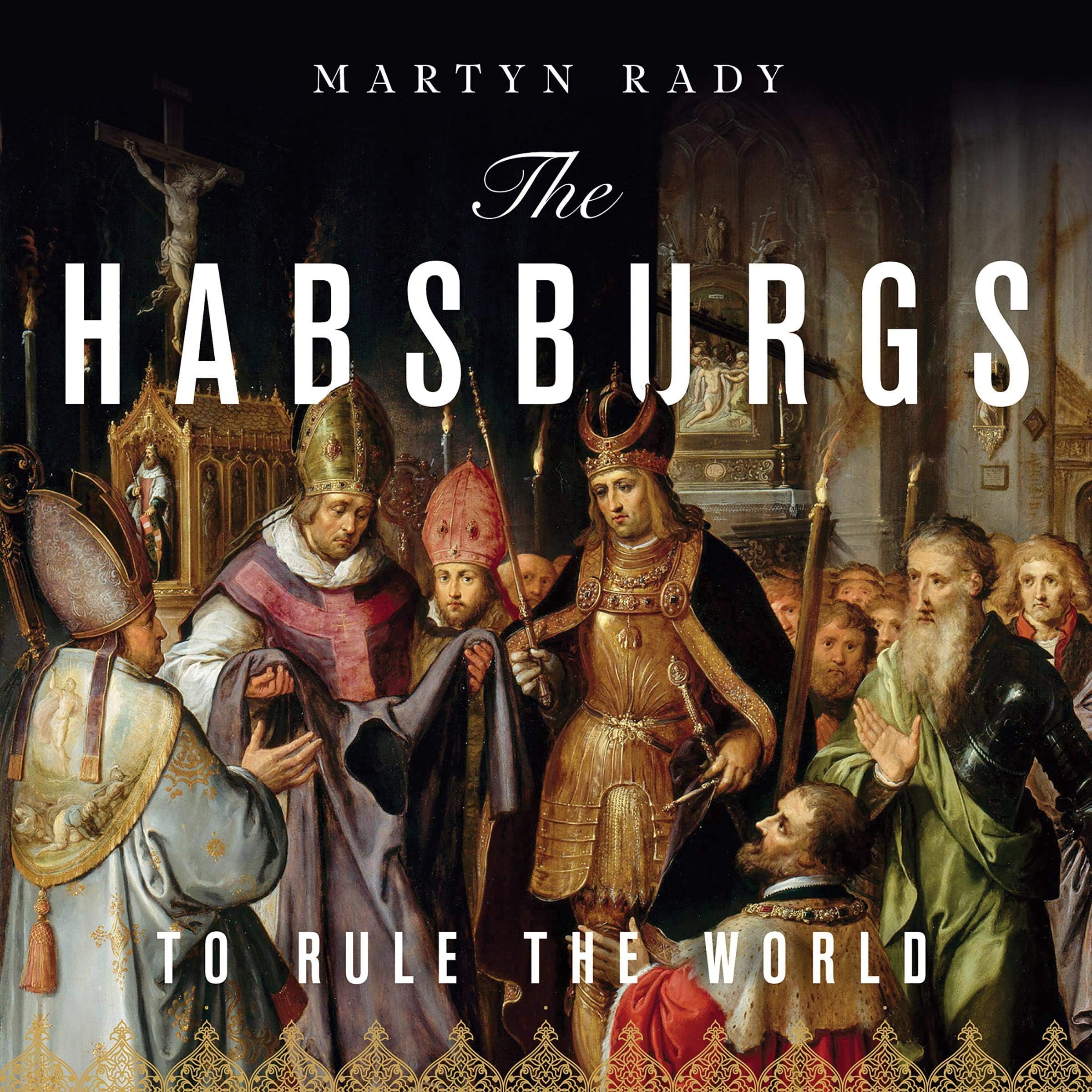
The Habsburgs: To Rule the World
Product ID: 405047464
Buy anything from 5,000+ international stores. One checkout price. No surprise fees. Join 2M+ shoppers on Desertcart.
Desertcart purchases this item on your behalf and handles shipping, customs, and support to Vanuatu.
The Habsburgs: To Rule the World
D**C
Vastly overrated.
Honestly, I cannot fathom why the professional critics have raved about this book. My graduate degree is in Modern European History, so I looked forward to this ”new, concise, and highly readable history of the Habsburgs” (NY Times). What I found instead was a tedious plodding through names (Rudolf, Rudolf II, and that other Rudolf) and obscure geographic regions and even more obscure internecine conflicts—all of it punctuated by snarky comments that say more about the author’s issues than his subjects’ (“Ten years later, with his career enhanced by murder, Dimitrijević was grooming young men of a type all too familiar today—puny, sexually frustrated, and yearning for a cause that would bring meaning to their lives.”) One wonders where the author encountered so many puny, sexually frustrated young men—I can’t say that I’ve encountered an over abundance of the type, or that I would recognize them if I did. But, perhaps he taught high school history in an undesirable school district? In fact, this book reads just like one of those high school history textbooks that get crammed down students’ throats until they loathe history.This book convinced me that, except for a narrow band of specialized historians, the entire history of the Hapsburgs is not very compelling to a modern reader. In fact, most of their history is irrelevant to the modern reader except in obscure ways that are just too tedious to explain. Their most dramatic influence on modern history came in 1914. If you want something readable, stick to that period and read The Proud Tower (Tuchman) or Thunder at Twilight (Morton).
B**R
Brilliant Book
This is a wonderful book of the Nancy Mitford school of history, short with funny, telling details on every page. A few examples, picked at random:Maria Theresa needed money: "When the diets complained, the empress was tough... 'the Crown expressly commands you to grant these sums voluntarily.' Sounds completely voluntary.The emperor was big on science and collected specimens from all over the world: "The [imperial] zoo was opened to the public in 1778, although it was a requirement that visitors came properly dressed. Thankfully, it never functioned in the manner of Louis XIV's collection at Versailles, where tigers fought elephants for the king's amusement."The Revolution of 1848: "By nightfall, Vienna was in chaos. Mobs looted shops and workplaces in the suburbs, assaulting the well-to-do and breaking into bakeries and tobacconists. In the centre, rioters pulled up street lights to use them as battering rams and lit the escaping gas at pavement level to send sheets of flame into the darkness." Sounds like Portland.Identity politics: "In Hungary, the taverns were differentiated by the alcohol they served-- beer for Germans, wine for Hungarians, and cheap brandy for the rest. Even in their cups, the different national groups were reported to be different, the Hungarians becoming melancholy, the German talkative, the Romanian violent, and the Ruthenian incoherent....One soldier wrote his diary in four different languages-- German for regimental matters, Slovene when thinking about his girlfriend, Serbian for songs he recalled, and Hungarian for his sexual fantasies."I would guess the author is of Hungarian (or Austro/Hungarian) background. The chapters on Austria and Hungary are much the best, those on Charles V and Philip II and the Spanish empire less than perfunctory, but for what he knows and writes best about, this is an exemplary book.
S**N
Entertaining read
Pretty good outline of the Habsburgs from their beginning to end. But the author did more than just cite facts and dates he wrote a lively and entertaining book. Even if the reader has read many books on the Habsburgs (I have) I think you will learn some things you did not know about the family and empire.
B**M
Great history book for the Hapsburg Dynasty to Assassination of Archduke of Franz Ferdinand
I am reading this on Kindle. It is a 600-page book and can get tedious at times. I am more inclined toward17th to 20th-century history. I enjoyed European history as I studied the French and German languages for many years, primarily WWI and WWII.The assassination of the Hapsburg Archduke Franz Ferdinand was the catalyst for WWI. I wanted to understand how this happened. The Hapsburg Dynasty lasted for centuries and was dominant across the Continent and abroad. I am up to the 16th century in the book, so I struggle to get to the century I want most to read. I have learned much, but you have to want this knowledge to get through it.
A**R
The tiniest print you'll ever (not) see
This book is a decent historical read but the print is ridiculously tiny. You don't know that when purchasing. You need a magnifying glass to read this one!
C**N
Astonishingly good
Of the many excellent books on Central European history I have read this year, this one stands at the apex. Witty, erudite, and just plain fun, it tells all about the Hapsburg Empire that any casual reader - and perhaps many generalist historians - could wish to know.A lot is covered here. It is a social and economic history as much as a political one, and there are many personal vignettes. It is also - I felt - very even-handed in its treatment of its subjects: the good is presented along with the (undeniable) bad.While it is perhaps true that the space allocated to the Spanish branch of the family is less than to their Austrian cousins, this balance seems appropriate. Aside from a relatively brief period in the 16th century, the Hapsburg Empire has always been a continental power, whose primary concerns lie in Mitteleuropa.Hats off to Professor Rady for producing what must now be regarded as the premier work on this subject.
R**.
Uma Monarquia verdadeiramente Universal
Comprei este livro, em primeira instância, devido à sua acessibilidade na questão de custo, pois já estava buscando um livro sobre a dinastia Habsburgo, e em segunda instância pela aparente qualidade, após ler análises e investigar a procedência do autor, algo assaz importante para livros de história, onde autores enviesados podem facilmente deturpar o ponto dos livros.Em primeiro lugar, como o livro é em inglês, é importante notar o nível elevado de fluência necessário para compreendê-lo adequadamente, embora seja, ainda nesse quesito, relativamente acessível, especialmente ao buscar algumas palavras raras no dicionário. Ainda nesse quesito de linguagem, a escrita do autor é bastante elegante, trazendo um sentido de esplendor e glória às conquistas da dinastia, mas de forma imparcial.Em segundo, já na questão de conteúdo propriamente dito, o autor discorre a respeito dos Habsburgos desde a fundação da Dinastia na Idade Média até a dissolução da Monarquia Dual da Áustria-Hungria, com um último capítulo também falando a respeito sobre Beato Carlos da Áustria e seu filho Otto após o fim. O autor traz seu relato de forma imparcial, utilizando fontes primárias sempre que possível e levando em conta os padrões de cada época para julgar as qualidades individuais de cada membro da dinastia, sem ser demasiadamente crítico e, muito menos, sem passar pano para qualquer um que seja.A única ressalva é de que, como a linha de tempo é vasta, o autor não possui espaço para descrever extensamente e, em especial, descreve pouco as questões militares, o que, contudo, não é demérito, pois o livro almeja contar uma história sobretudo dinástica, não sendo um livro de história militar. Neste sentido, cumpre-o muito bem, e as personalidades dos monarcas e membros da dinastia se tornam bastante evidentes, assim como suas motivações e objetivos. É, especificamente, bastante esclarecedor a respeito dos monarcas da época da Guerra dos 30 Anos, de Carlos I&V do Sacro Império Romano e de Franz Joseph da Áustria-Hungria, penúltimo Habsburgo reinante.
V**D
A turbulent millennium of central European history
I have always enjoyed books that cover huge swathes of history, especially if the author ably achieves a balance between the bigger picture and the detail, the overarching analytical eye and the penchant for the well placed anecdote. Martyn Rady does just that as he covers a millennium of European history through the telling of the Habsburg dynasty. We follow the family members throughout the turbulence of an ever changing central Europe, an empire once described as neither holy, Roman, nor imperial, the Spanish grandeur and decline, the revolutionary nineteenth century, and the trigger of World War I, among many other historical events, while learning about them as human beings with all their idiosyncrasies, ranging from astuteness to idiocy. Many chapters of the book would be very readable as standalone essays, and incidentally, are very cleverly titled.
P**S
Tu felix Austria nube
This is an excellent introduction to the near-millennium of Habsburg history. There are, as in any conspectus, gaps and areas that might be quibbled over. But, as an octogenarian born in Vienna, I found this an outstanding volume. I recommend it most highly.
J**N
Researched
Was disappointed with the research and had expected a better non Hungarian biased version of the austro Hungarian empire
A**R
Well written & easy to read
Pretty standard stuff. Good to read if one does not know much about the Habsburgs.
Trustpilot
1 month ago
1 month ago