
Buy anything from 5,000+ international stores. One checkout price. No surprise fees. Join 2M+ shoppers on Desertcart.
Desertcart purchases this item on your behalf and handles shipping, customs, and support to Vanuatu.
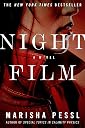
NEW YORK TIMES BESTSELLER โข โA hair-raising mystery thatโs equal parts family drama, horror movie, and jigsaw puzzle. . . . Itโs impossible to look away.โโ People (four stars) โManiacally clever . . . like an M.C. Escher nightmare about Edgar Allan Poe . . . Youโll miss your subway stop, let dinner burn, and start sleeping with the lights on.โโ The Washington Post A BEST BOOK OF THE YEAR: NPR, Cosmopolitan, Kirkus Reviews, BookPage On a damp October night, beautiful young Ashley Cordova is found dead in an abandoned warehouse in lower Manhattan. Though her death is ruled a suicide, veteran investigative journalist Scott McGrath suspects otherwise. As he probes the strange circumstances surrounding Ashleyโs life and death, McGrath comes face-to-face with the legacy of her father: the legendary, reclusive cult-horror-film director Stanislas Cordovaโa man who hasnโt been seen in public for more than thirty years. For McGrath, another death connected to this seemingly cursed family dynasty seems more than just a coincidence. Though much has been written about Cordovaโs dark and unsettling films, very little is known about the man himself. Driven by revenge, curiosity, and a need for the truth, McGrath, with the aid of two strangers, is drawn deeper and deeper into Cordovaโs eerie, hypnotic world. The last time he got close to exposing the director, McGrath lost his marriage and his career. This time, he might lose even more. Review: excellent, complex thriller, "larger than life" - I was attracted to this book because I like stories about mysterious โdark filmsโ that have fearful effects on both their participants and their viewers. (If you share this interest, I recommend Experimental Film by Gemma Files and Hard Light by Elizabeth Hand.) I held off buying it, however, because it was quite long (more than 600 pages) and yet didnโt seem suitable for Kindle (the usual answer to not wanting to carry around a thick book) because it was supposed to include photographs, screen shots and the like, and that sort of thing often doesnโt reproduce very clearly on Kindle. I can reassure readers that neither of these things proved to be a real problem: the pages turned quickly, and the non-text items were clear enough and added to the bookโs feeling of realism, like the old photos in Miss Peregrineโs Home for Peculiar Children. (They used up a number of those pages, too.) The story is a complex thriller, with layer after layer unraveling as middle-aged reporter Scott McGrath and two young sidekicks he acquires, Hopper and Nora, try to find out the truth about reclusive Stanislas Cordova, the maker of several films said to be so horrific that they have become almost impossible to find (and at the same time have acquired a fanatic cult following), and his daughter, beautiful young Ashley, who commits suicide (or does she?) early in the book. The films donโt play quite as great a role in the proceedings as I had expected, existing mostly as dark hints, though they move to center stage in a long section late in the book when McGrath finds himself inside the original film sets, which have been carefully preserved. In addition to these mysteries, the book has some interesting things to say about the human urge to create, or at least witness, personas that are โlarger than lifeโโindividuals who are not bound by the humdrum annoyances and limitations that hobble most of us, perhaps even partaking of the supernatural. Cordova and Ashley raise this creation to an art form, but essentially every character in the book is involved in it, either through inventing their own personas or through being attracted to those invented by others in the conscious or unconscious hope that a little of their โmagicโ will rub off. The writing is excellent, the pace fast, the suspense high, and the characters fascinating. The author does a fine job of balancing on the knife edge between reality and fantasy. The book is very good as entertainment, but it is also a powerful testimony to the human craving for more, even when that โmoreโ takes forms that are terrifying. Review: Dark and gritty - Scott McGrath can't let it go. When news breaks that Cordova's daughter Ashley has committed suicide, Scott must find out why. It may be the answer to his fall from grace all those years ago, when he first started investigating Cordova, the recluse film director. It may be his answer back to the top. It may be darker than he ever imagined. Throw in a pair of amateur detective side kicks and Scott is doing more than investigating the "suicide". He's babysitting two kids who have more to do with Ashley Cordova than he first thought. But as they dive deeper and deeper into the director's legacy, what is real blurs into Cordova's films. Fiction is too close to reality and who says it can't be replicated in real life? I loved Pessl's Special Topics in Calamity Physics. It still is one of my favorite books. So I had high expectations for Night Film. The dark, eerie tone of the book starts off from page one, thrown into this seemingly real world where Cordova's name is feared and revered in the same sentence. The name is bigger than the man, his power unlimited as he explores evil of the human condition in his films and directing. There is tons of Cordova world building, which I love. There's a biography of Cordova, interactive media, "research" pages, synopses of films and actors. The book fully submersed me into the world of Cordova, his films, his mysteries and most of all, his crazy fans. His fans are crazy. They are crazy pants. Have you seen any crazy pills? No? It's because Cordova's fans have eaten them all! The general malicious and dangerous feeling of the book wrapped around my heart, allowing me to only digest the book in small segments. (It took me quite a long time to read it because I was hanging on every word.) And that is something amazing. Cordova, who is merely a ghost through the book, is one of the biggest characters through the story, silently lurking in the shadows. His fans and his films are equally large characters, making the evils of the world faceless strangers weaving in and out of Scott's investigation. These were my favorite parts of the book- Cordova's life, the speculation, the world. I fully believed in this place, this alternate world. Scott, our investigator, is not a favorite. He's selfish, stubborn and only set on one thing- investigating Cordova to find out the truth. He blames his failings on the director and if he could just find out about Ashley and in turn, Cordova's secrets... The characters in Cordova's world are super creepy and interesting. I really loved how the plot twists again and again going from reality to fiction, never knowing what should be believed. There's black magic, death, illness, mysterious items and sacrifices. There's everything and maybe all of it is true and maybe none of it is true. That's part of the beauty of the book- how Pessl rolls them together until no one knows what is possible. The writing is stellar and awesome. There were only a couple of things that bothered me. First off- everyone is eager to talk to Scott. In fact, as far as investigative detectives go, he's pretty lucky. Even when they are told NOT to talk to them, characters can't seem to come out of the woods and secretly hold meetings for him with hidden information, baring their soul and how they knew Ashley Cordova. I found this to be a little bit unbelievable because Cordova's entire world is about secrecy and yet, every place they went, they found someone who was willing to talk to them. Mental hospital security tight? Don't worry- a red headed nurse will run after your car and give you a lead. Security Guard can't talk? Not to fret! He will meet you in the woods outside his house later on. And so forth. Also, I was a bit disappointed in the characters at the end. There wasn't a lot of self reflection, learning, redemption. I liked the plot ending, and the closing scene. That made my day, but Scott's journey was shallow and I still didn't like him by the time I closed the book. I usually need to like the main characters in order to love the book, but Night Film is filled with so much more, it didn't hinder my reading experience at all. Overall, a wonderful book to be read as the weather gets cold and the days get dark


| Best Sellers Rank | #90,795 in Books ( See Top 100 in Books ) #2,107 in Psychological Thrillers (Books) #2,980 in Literary Fiction (Books) #3,785 in Suspense Thrillers |
| Customer Reviews | 4.0 out of 5 stars 4,241 Reviews |
L**)
excellent, complex thriller, "larger than life"
I was attracted to this book because I like stories about mysterious โdark filmsโ that have fearful effects on both their participants and their viewers. (If you share this interest, I recommend Experimental Film by Gemma Files and Hard Light by Elizabeth Hand.) I held off buying it, however, because it was quite long (more than 600 pages) and yet didnโt seem suitable for Kindle (the usual answer to not wanting to carry around a thick book) because it was supposed to include photographs, screen shots and the like, and that sort of thing often doesnโt reproduce very clearly on Kindle. I can reassure readers that neither of these things proved to be a real problem: the pages turned quickly, and the non-text items were clear enough and added to the bookโs feeling of realism, like the old photos in Miss Peregrineโs Home for Peculiar Children. (They used up a number of those pages, too.) The story is a complex thriller, with layer after layer unraveling as middle-aged reporter Scott McGrath and two young sidekicks he acquires, Hopper and Nora, try to find out the truth about reclusive Stanislas Cordova, the maker of several films said to be so horrific that they have become almost impossible to find (and at the same time have acquired a fanatic cult following), and his daughter, beautiful young Ashley, who commits suicide (or does she?) early in the book. The films donโt play quite as great a role in the proceedings as I had expected, existing mostly as dark hints, though they move to center stage in a long section late in the book when McGrath finds himself inside the original film sets, which have been carefully preserved. In addition to these mysteries, the book has some interesting things to say about the human urge to create, or at least witness, personas that are โlarger than lifeโโindividuals who are not bound by the humdrum annoyances and limitations that hobble most of us, perhaps even partaking of the supernatural. Cordova and Ashley raise this creation to an art form, but essentially every character in the book is involved in it, either through inventing their own personas or through being attracted to those invented by others in the conscious or unconscious hope that a little of their โmagicโ will rub off. The writing is excellent, the pace fast, the suspense high, and the characters fascinating. The author does a fine job of balancing on the knife edge between reality and fantasy. The book is very good as entertainment, but it is also a powerful testimony to the human craving for more, even when that โmoreโ takes forms that are terrifying.
K**C
Dark and gritty
Scott McGrath can't let it go. When news breaks that Cordova's daughter Ashley has committed suicide, Scott must find out why. It may be the answer to his fall from grace all those years ago, when he first started investigating Cordova, the recluse film director. It may be his answer back to the top. It may be darker than he ever imagined. Throw in a pair of amateur detective side kicks and Scott is doing more than investigating the "suicide". He's babysitting two kids who have more to do with Ashley Cordova than he first thought. But as they dive deeper and deeper into the director's legacy, what is real blurs into Cordova's films. Fiction is too close to reality and who says it can't be replicated in real life? I loved Pessl's Special Topics in Calamity Physics. It still is one of my favorite books. So I had high expectations for Night Film. The dark, eerie tone of the book starts off from page one, thrown into this seemingly real world where Cordova's name is feared and revered in the same sentence. The name is bigger than the man, his power unlimited as he explores evil of the human condition in his films and directing. There is tons of Cordova world building, which I love. There's a biography of Cordova, interactive media, "research" pages, synopses of films and actors. The book fully submersed me into the world of Cordova, his films, his mysteries and most of all, his crazy fans. His fans are crazy. They are crazy pants. Have you seen any crazy pills? No? It's because Cordova's fans have eaten them all! The general malicious and dangerous feeling of the book wrapped around my heart, allowing me to only digest the book in small segments. (It took me quite a long time to read it because I was hanging on every word.) And that is something amazing. Cordova, who is merely a ghost through the book, is one of the biggest characters through the story, silently lurking in the shadows. His fans and his films are equally large characters, making the evils of the world faceless strangers weaving in and out of Scott's investigation. These were my favorite parts of the book- Cordova's life, the speculation, the world. I fully believed in this place, this alternate world. Scott, our investigator, is not a favorite. He's selfish, stubborn and only set on one thing- investigating Cordova to find out the truth. He blames his failings on the director and if he could just find out about Ashley and in turn, Cordova's secrets... The characters in Cordova's world are super creepy and interesting. I really loved how the plot twists again and again going from reality to fiction, never knowing what should be believed. There's black magic, death, illness, mysterious items and sacrifices. There's everything and maybe all of it is true and maybe none of it is true. That's part of the beauty of the book- how Pessl rolls them together until no one knows what is possible. The writing is stellar and awesome. There were only a couple of things that bothered me. First off- everyone is eager to talk to Scott. In fact, as far as investigative detectives go, he's pretty lucky. Even when they are told NOT to talk to them, characters can't seem to come out of the woods and secretly hold meetings for him with hidden information, baring their soul and how they knew Ashley Cordova. I found this to be a little bit unbelievable because Cordova's entire world is about secrecy and yet, every place they went, they found someone who was willing to talk to them. Mental hospital security tight? Don't worry- a red headed nurse will run after your car and give you a lead. Security Guard can't talk? Not to fret! He will meet you in the woods outside his house later on. And so forth. Also, I was a bit disappointed in the characters at the end. There wasn't a lot of self reflection, learning, redemption. I liked the plot ending, and the closing scene. That made my day, but Scott's journey was shallow and I still didn't like him by the time I closed the book. I usually need to like the main characters in order to love the book, but Night Film is filled with so much more, it didn't hinder my reading experience at all. Overall, a wonderful book to be read as the weather gets cold and the days get dark
G**R
Great buildup but finishes with a whimper
Others have summarized the plot in great detail, so I won't add much about that here. Instead, I'll focus on my reaction. First, I have to say that I was a great fan of Pessl's debut novel "Special Topics in Calamity Physics" so I was really looking forward to her second effort. "Night Film" shares many similarities to "Calamity Physics" in that Pessl spins a mystery absolutely littered with small details, clues, and dangling threads. In fact, there are so many that characters are made to verbally reiterate details again and again because it's likely that the reader, overwhelmed with the sheer numbers of details they've been exposed to, has to be reminded of them in order for the newest revelations to make sense. When an author has to constantly resort to having characters prompt the reader to connect the dots from 250 pages ago, that might be an indication that the web of mystery is a little too dense. In "Calamity Physics," the reader was also asked to absorb a lot of details, but when the events of the first 250 pages began to be uncorked in the last 200, I felt like I was on a fast-paced thrill ride; the revelation of how seemingly innocuous details were turned into critical plot points was terrific and truly surprising. I felt really rewarded for having the patience to get through the book's first half. "Night Film" presents itself with the same sort of promise, but unfortunately fails to deliver. Now for some SPOLIERS. Pessl spends hundreds of pages building the atmosphere of mystery and darkness surrounding Cordova and his daughter Ashley...only to completely dismiss them in the last 50 pages. We are told again and again how depraved Cordova is, how enveloped in darkness his life is and how those around him fall into madness having been exposed to realms of the human psyche which most ordinary people cannot withstand! I mean, she really, really lays it on thick. And then, at the end...poof, she wipes it all away with a few simple explanations that make the mystery surrounding Cordova and Ashley seem laughable. Not only was I disappointed, I felt cheated. Another gripe: many of the characters in the book served no purpose other than to be "Basil Exposition." Too many times, characters who had almost no motivation to share intimate details of their knowledge of Cordova would ramble on for pages at a time, providing dense background information that allowed the protagonists to advance their investigative efforts. Too easy. I found myself wondering out loud "why would this person give a complete run down of the private details of their lives with complete strangers, one of whom is an investigative journalist!?" I like Pessl's work and there's much to admire in "Night Film" (I liked the inclusion of faux web pages and newspaper clippings that some others found annoying), but it was simply too long for the amount of payoff that it delivered. As others have suggested, this novel could have benefitted from an editor who wasn't afraid to occasionally say 'no' their star author.
L**R
Holy wow. Marisha Pessl's latest will leave you breathless, shaking your head, and wanting more...
In 2006, Marisha Pessl's fantastic debut novel, Special Topics in Calamity Physics, was released, and it hooked me completely. For years I eagerly anticipated her follow-up novel, and finally, seven years later, Night Film was released, to great fanfare in the literary world. Was it worth the wait? Hell, yes. I finished the book last night and I still cannot get it out of my mind. Stanislas Cordova is a famous avant-garde movie director. Known for exposing the horror that lies beneath everyday situations, for manipulating emotions and inflicting psychological terror on his audiences, his films are beloved, reviled, and studied by film scholars worldwide. When the plot of one of Cordova's films is mirrored by an actual murderer, the public tide starts to turn against him, so his films become underground events, "night films," only shown in secret locations known to rabid fans. Cordova's genius is celebrated yet the director, a notorious control freak and recluse, holes himself up in a heavily protected compound in upstate New York, where all of his films are made. Those actors and technicians that have worked with him refuse to talk about their experiences, or have disappeared for new lives in places unknown. There are rumors of the occult, of unspeakable acts being committed against children on Cordova's compound. Is he a twisted mastermind or a malevolent villain? Celebrated investigative journalist Scott McGrath once tangled with Cordova, calling him out on a late night talk show. It destroyed McGrath's career, left him with much less money, and ended his marriage and many professional relationships. So when Cordova's daughter, Ashley, a gifted musician who apparently had more than her own share of demons, is found dead after an alleged suicide attempt, the logical thing for McGrath to do is to let it go, right? But McGrath believes there is a story behind Ashley's death, and her troubled life, and he is determined to uncover it, in the hopes that the trail may lead him back to Cordova himself. Along with Hopper and Nora, two young people with their own connections to Ashley, McGrath begins digging deeper and deeper into what happened to Ashley. What they discover is that there are no easy answers to these questions, and everything they find out moves them closer to and further away from the truth, while placing their lives in danger. And the quest for answers takes McGrath into the horrors of his own mind. This is an ambitious book, more than 600 pages in length, with fake newspaper and magazine articles, webpages, and photos sprinkled throughout to bolster the story. It is truly a thrill ride that leaves you breathless; I found myself wanting to see some of Cordova's movies after hearing them and his craft described so reverently. And while the book spent more time delving into the paranormal than I would have liked, the way that thread was tied up made the time worthwhile. You find yourself wondering just exactly what happened to those who worked with Cordova, or whether McGrath was telling the story the way he heard it, manipulating the facts to fit his own purposes. Pessl did a fantastic job unraveling the plot piece by piece, and while I found myself needing to reread the last 50 or so pages to be sure I understood how things concluded, I felt tremendously satisfied although slightly out of breath, as if I had raced to the story's end. This isn't a book for everyone but it is so well-written, so well-told, that I hope it finds an audience willing to be teased, willing to think, and willing to get utterly hooked. Wow.
S**S
The devil is in the details.
I heard about this book at a conference I was on and I faced a long return flight so I figured, yeah, load something substantial onto the olde kindle and let's see how it is! The things that drove me *nuts*: * Dialogue. I like Scott's voice, and he seems like a likable enough guy with a small sense of humor. But that should be *his* voice and it's not. Literally every character in this story, even if they're stoned or drunk or high, sounds like a slightly pretentious MFA student who hasn't learned not to infodump yet. * The infodumps. Not just the fact that just about everyone just can't seem to wait to spill their guts, but that they will stop in very unnatural ways and explain things in these big, massive, dense paragraphs. There's no fear that you'll not catch onto an important clue, because it's pretty much given flashing neon lights when introduced, and the next time it comes up, Scott or someone will stop the forward movement of the story and literally repeat eeeeeverydangthing about that from when it first came up. Like one (nonspoilery) example. Hey, did you know that Larkin was Cordova's exclusive costume designer? Don't fear that you're going to forget it, because every time it comes up, the story will stop and remind us. Uh, as a seasoned reader of mysteries, I kind of resent this lack of trust in the reader. Yes, I can put pieces together. That's part of the fun of a mystery. This is like you getting a nice delicious plate of food and then having someone lean over and cut your meat for you like you're four years old. UGH. * The fakeouts. I won't spoiler the movie but, yeah. Fakeouts. And I won't spoiler the end because I don't need to. You'll know how it ends if you've ever read a mystery before. * For a female author I guess I expected more out of the female characters than the Bitchy Goddess Ex Wife, the Manic Pixie Dream Girl and the Stand By Your Man. The stuff I liked: * There really are some lovely, lyrical passages in here. When she puts her mind to it, she comes up with some heartwringing phrasing. * The 'wait what the heck is reality' parts. * It really is a fun read, even though you know where it's going. There are a few surprises but it never really deviates from the road its on, just takes a few scenic detours. * It does say some really interesting things about living life, horror, artistry, and age and all. Though my negatives seem bigger, I actually really enjoyed the book. It was a really compelling read; I liked the interactive stuff, though in my day job I look at primary texts to suss out deeper meanings so my idea of 'fun' may not be yours; there's action and adventure and romance and a really lovely balance between 'is it evil incarnate or is it totally mundane', which is my favorite flavor of horror.
B**F
Don't read this review, read the book. Highly recommended.
** spoiler alert ** I am stumped for a way to write this review spoiler-free while describing whatโs so amazing about this book, so I wonโt. Be forewarned there are a few vague details best left uncovered while reading. I finished NIGHT FILM late last week and have been trying to decide how exactly I feel about this book as a wholeโthe prose, the length, the addition of multi-mediaโsince. On the one hand, Iโm thinking this is a solid four-and-a-half star read. Not quite paced to perfection. A couple of times (particularly during Scottโs exploration of Cordovaโs Adirondack estate) I felt the prose was too slow, a tad overwritten, but THEN (and this happens several times during this book) the plot twists and Iโm drawn right back in to what feels maybe like the best thing Iโve ever read. Ten stars! I will be thinking on this one for some time to come. Why? For one, I love the characters. Disgraced journalist and quasi-failure dad Scott McGrath is a man who has lost everything after taking a public jab at Cordova. He is kind of a wreck, and had he not gotten a hand from Nora and Hopper Iโm not sure heโd have ended up so far down the rabbit hole. Still, motives of self-preservation aside, his dedication to finding out what exactly happened to Ashley Cordova is admirable. Nora is nuanced and just this side of crazy in her transvestiteโs wardrobe with her archaic bird, but she is so compellingly sweet that I rooted for her and Scott to make a go of things the entire time. Septimus added color to her (and what she did to get that bird back from a birdnapper was both terrible and proof of how far Nora would go to protect what she loves). Hopper turned out to be a loveable not-so-screw-up, and his and Ashleyโs background is nothing short of star crossed. In a story about heartbreak, theirs might be the saddest plotline of all. Cordova is pure legend. This reclusive horror film makerโs story is as compelling as it is dark, disturbing, and beautiful. The head of a family who lives life on its own terms, consistently on the edge, I want to be Cordova. The love he had for his daughter, and the mystery about โwhat exactly he does to the children,โ is shattering. Had he really believed he could trade one soul for another? The black magic component of NIGHT FILM had me utterly spellbound. In a book with so large a cast, never once was I confused about who was whom. Each player, large and small, has a past and present of their own with the victimโthe brilliant, engaging, talented, and mysterious Ashley. Like father like daughter. I wanted so badly to believe in the supernatural story she spun versus what may (or may not have been) the truth about what happened to her. The Devilโs Bridge? Brilliant. In the end, much comes together but so much is left to interpretation. Thereโs a clear sense that the logical one isnโt the only answer. One of the best books Iโve read, I canโt, in good conscience, rate NIGHT FILM four stars for a couple plot drags in so long a book. Five stars. Highly recommended for folks who want to read something that makes them feel part of the investigation.
Z**U
Not So Fast
Let's stipulate up front that Marisha Pessl is a talented writer, has a propitious future and has produced a book that in parts is clever, insightful and well written. Having said that, we can also stipulate that despite the many five stars and the generally favorable professional reviews (de gustibus non disputandum est), in its 600-page entirety it is a bloated, shambling mess. The book begins as a detective story that seems to be a pastiche of Raymond Chandler, notably in its frequent use of the smart-aleck simile. Some of these are as good as the master's, but many are labored, belabored and, after much overuse, not just tiresome but annoying. As the story progresses and morphs into a gothic tale, they gradually peter out, providing a measure of relief for the reader but leaving the first-person narrator bereft the one characteristic that defined his voice. The problem with a detective story morphing into a gothic tale is that each genre in its purest form has its own rules. Combine the two genres in the same book and the rules of one run into conflict with the rules of the other. The detective story takes place in the real world and is essentially an intellectual puzzle requiring a solution in its finale; the gothic tale takes place in world that includes an alternate reality and an ending that merely closes out a series of increasingly scary encounters between the characters and whatever beings inhabit that alternate reality. Putting the two together means there are only three possible endings: conventional reality is shown to be operating all along, the alternate reality is confirmed, or the question is left in a state of ambiguity. The last option is generally regarded as unsatisfying except among devotees of the literary novel where the ambiguity is judged to be a deep statement about the nature of reality, truth, certainty or whatever it is that causes the rise and fall of pork belly futures. The trick is not impossible, but very difficult to pull off without causing the reader to suspect that the author, having initially decided that she was just going to pound out a potboiler, couldn't in the end resist the temptation to produce a great work of art instead. There's no question that the beginning of the book sets very high expectations. It gives promise that it's going somewhere. But soon the somewhere seems very far away as the narrative bogs down with a seemingly endless series of one character telling another character a piece vital of information (or sometimes misinformation)--at which point, the grinding and squealing of the cogs driving the plot become deafening. Some of these lengthy dialogues are interrupted with "action" scenes in which the protagonist is chased or threatened. These work well in films, less so in a page of text. Somewhere in the middle of "Night Film" a weary reader comes to suspect that the book has devolved into what Truman Capote called "typing." As the book trundles toward an ending, one wonders why none of the many people thanked by the author was an editor with the perspicacity to cut out all the fat and reduce the text by a third. What writers like Chandler and Elmore Leonard figured out was that it takes more than plot and literary tricks to make a book enjoyable. Both writers excelled in creating hugely compelling characters whose intersecting personalities are the secret machinery of the plot. They also understood the importance of place, not just as a stage set for the action but as a universe with its own rules, a kind of sociological grid underpinning and influencing the action. All that is missing from "Night Film." Characters are personality types without personalities, places are minutely described without what Joyce called quiddity. In the end what we have is an intricate contrivance--a Rube Goldberg contraption--making lots of noise but in the end not accomplishing much of consequence. In fact, instead of a climax, there is a fatal deflation when a key character, a kind of human McGuffin whom the narrator has been pursuing from the opening pages, remains an enigma all the way to the last disappointing period. No doubt more than one one-star reviewer has at that point flung the book across the room. Sad to say that once again professional and canny marketing have come to the rescue of a deeply flawed novel. Thoreau's beautifully stated insight into the power of marketing is even more relevant today: "The head monkey at Paris puts on a traveler's cap, and all the monkeys in America do the same." A final word on the inclusion of so-called "realia" in the book--fictional facsimiles of web pages, official documents, photos, video (via web links), etc. Let's state the blindingly obvious: their function is to provide exposition. Is anyone really fooled? All but small children understand that these are nothing more than elaborate contrivances. Very quickly, the facsimile "package" becomes superfluous and all the reader is interested in is extracting the relevant expository information. So, let's call these what they are--not some innovative advance in the development of the novel in the age of the computer game--but gimmicks. Novels in their essence are reductive narratives. They render down reality to a coherent text as produced by a narrative voice. Hard to do well! One can argue that a series of disparate documents is a novel, and the result may indeed be novel, but it also may be nothing more than the literary equivalent of a collage. There is much more to say about this book, and the interested reader might want to check out the review by Steven Pool of The Guardian--not only insightful but highly entertaining--available at your favorite search engine.
J**G
Death Makes Geniuses Into Idiots
I'll assume you already know the basics of the plot. The driving motivation is the suicide of a daughter, that of a genius film-maker so worshiped that he has a dedicated underground cult following. His films are beyond horrific, and so is his treatment of his actors, possibly including his own son. Cordova is quoted saying he will lead his actors, "sometimes against their will, to the edge of the end." But his daughter did not go "to the edge of the end". She went through it, and beyond it. Why? And what's out there, beyond that edge? Journalist Scott McGrath wants to find out. He's fearless himself, in a blunt-headed way. He makes mistakes. He doesn't pay attention to details. Which I think is the second major theme of the book. I won't tell you how each of these themes resolves itself -- that's what the book is for! -- but I think those grand ideas are the basic framework. Some reviewers say the book changes subject from time to time, but it doesn't. It just moves the lighting around. It changes the emphasis. It moves along like a long piece of music, with different moods and qualities as befits the storyline. And it works very nicely. The book explores its themes strongly, and moves along well. It's a good read and a novel of some depth to boot. I'd call it a superior mystery novel with literary depth. (As others above have done). I disagree with those who question the ending. I liked it a lot. Many have said it is tacked on, unnecessary, distracting, or worse. I side with those above who believe it was relevant and important. I admit I was taken by surprise. I didn't understand why it was there. I didn't know what was happening. I thought the book was "done". Where was Pessl going with this? But then I realized how much I enjoyed where she was going. How much I loved the fact that it was there. And I was even a little ashamed to realize I let my guard down, in thinking I was "done". Most novels end immediately after a climax. Things get wrapped up and everyone goes home. But Pessl takes the time to say, hey, hold on, wait a minute, let me show you something else over here. And I'm so glad she did. Pessl's ending is the perfect way to elucidate the two themes I mentioned above, and bring the grand ideas of the book into a sense of finality. You can decide for yourself whether the ending provides "closure" -- I'm not sure either way myself -- but it was a great way to end the story. I might even say the ending made the difference between four stars and five. P.S. I didn't engage in the multimedia. The modeled images and faux news pages in the book were brilliant. I really loved those. But I didn't go to youtube or click on anything in the book. I don't feel I missed anything. I'm not going to take anything away from those who enjoyed those elements. I'm just saying I don't think I needed them, simply to reassure anyone who might be suspicious of a book which uses them.
M**L
Night film: waking you up night
I had heard so much about this book that I knew I had to read it and have a personal copy to treasure and that is the reason why I waited for its paperback to be available at its right price like a devoted Christian waiting for the return of Christ and the wait turned out to be well paid and that too in double fold for not only the story was gripping from the first page but the whole layout of the book is spectacular .For me personally, the book is a piece of artwork. I love how the story is narrated through visuals and in a very intriguing fashion, making it so exciting and spicy. In my opinion if you wish to read the book then do so in paperback so that you can experience the whole collaboration of graphics and text giving you a hair raiser narration. What I felt unique about the whole book and concept is that how it helps us to be part of investigation. With all the documents and papers given in its graphical forms the author actually gives us the feel that it is us, the readers who are actually investigating the whole story which according to me is brilliant and clever way to indulge the readers The book is a gradual growth yet very powerful to stir your brain matters. At the same time it is also a long one and tests your patience and concentration but to be frank the nature and treatment of the book is completely new and in fact in simple terms is "weirdly good" and it kept sending me into state of awe and creepiness simultaneously Do you know how long is this book ? 700 pages.... !!!! Did you hear? 700 looooong pages and I m not even sure that bible runs this long ..... But am I complaining ? Of course I m ? I would not read my school texts because they had 100 Pages to it. But given a second chance would I do this again? HELL YA!!! Because it is haunting... Intriguing ... Intelligent .....crazy and a whole lot of other adjectives all basically saying that it was awesome The book was like a roller coaster ride that gave you all the thrills and chills in the initial phase but after sometimes, also started giving you headache and left your head spinning so bad that all you wanted was to get out of the ride. As after the initial excitement and flow the things were getting so twisted and creepy that I was gasping for air and not necessarily in the best of way and there was a point where everything stopped making sense and started messing with my brain matter and I m pretty sure I have none left now.
P**L
Highly suspenseful, satisfying, exciting journey -- MUST READ
When I read a book, and I'm completely engrossed in it, and am satisfied with the way it ends, I rate it on enjoyment. The experience I had while reading it. I gave it five stars, not because it's FLAWLESS, because it's not, but because I enjoyed ripping through this. I think that the book ended perfectly, with just enough detail, just enough story, character development, everything. It was perfect to me. Listening to some interviews with Marisha, you can tell she loved writing it. I did find it got a bit dull a bit after half way, but it picked up again, confused me, spun me around, and played on my expectations quite wonderfully. Marisha said that book could have two possible endings, and it's true. There is evidence for both of the endings throughout the book, so you choose what you want to believe. Which, in fact, is a theme of the book; Believe what you want, because everything is shrouded in mystery. Great read, read it in under 4 days -- while working every one of those days. Fantastic! HIGHLY RECOMMENDED
A**W
5 stars
A very addictive story. Loved it.
D**0
une merveille
Ca valait le coup d'attendre; et j'aurai relu quelques fois le premier livre de Marisha Pessl en attendant! Un vrai chef d'oeuvre, trรจs prenant, vraiment ร lire de toute urgence!
D**.
Marisha turns detective and into black magic and movie making, surprisingly good.
Marisha Pessl has written a totally different novel this time. When you hold the book, it is heavy and the paper body is lanced with black lines - actually pages that are printed white on black. It intrigues you immediately and reminded me on negatives of pictures of the milky way where stars are not visible as little white pin heads against a black background but just the opposite, black points on a white universe. To me it looked like a set of orbits of planets and asteroids crossing the book. Without giving too much away the story goes like this at the beginning: Scott McGrath an investigative journalist and book author is informed by his layer of the suicide of Ashley Cordova, daughter of the famous but secretive film maker Stanislas Cordova. He is told to stay away from the case, because McGrath some years back, while collecting background information on Stan Cordova was supposedly trapped with incorrect information and had to pay 250 grand in a libel suit. In the wake of this carrier ruining affair his marriage broke up and McGrath does not have much of a life now. But as every true investigative journalist he cannot leave this opportunity go by. He starts investigating the suicide and teams up with two more or less unwanted assistants, Hopper and Nora, who are both loosely connected to Ashley. Hopper it seems a bit more than Nora, who just met her once. Step by step they try to piece together the last days and weeks of Ashley Cordova's life. This proves difficult as the Cordova family is powerful enough to effectively guard their interests and secrets. And theres seem to be a lot of secrets. Building up the characters abd setting the scene takes some time but after Chapter 50 the pace shifts and the book develops into a real page turner. So, good writing and fun to read. So much, that at the end, I was actually surprised that is was over and the only thing left were acknowledgements and image credits and some interesting instructions. Definitely 5 stars this time.
Trustpilot
2 weeks ago
2 days ago