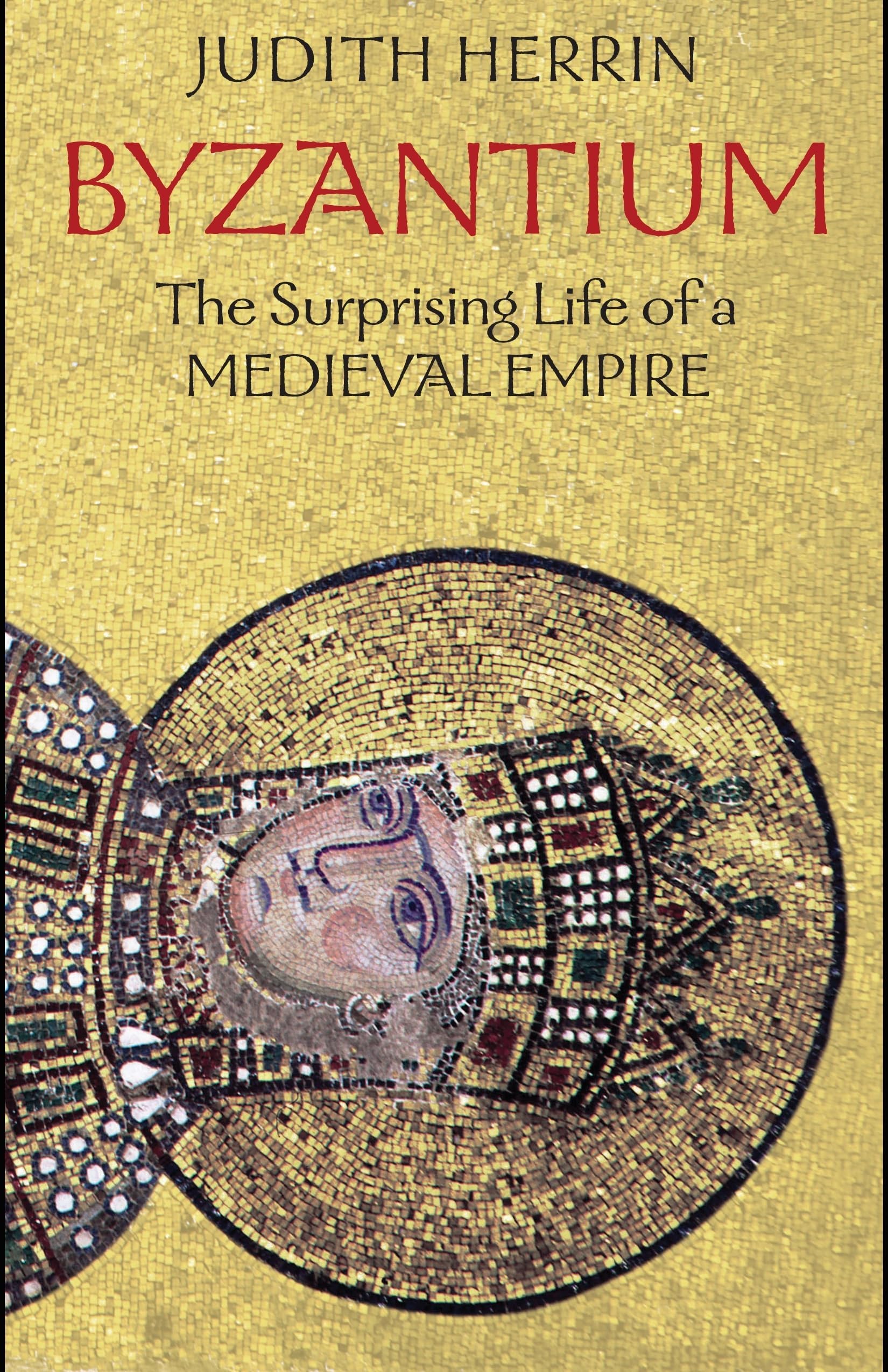
Byzantium: The Surprising Life of a Medieval Empire
Product ID: 427169677
Buy anything from 5,000+ international stores. One checkout price. No surprise fees. Join 2M+ shoppers on Desertcart.
Desertcart purchases this item on your behalf and handles shipping, customs, and support to Vanuatu.
Byzantium: The Surprising Life of a Medieval Empire : Herrin, Judith: desertcart.ae: Books Review: This book very much lives up to the promise of its subtitle: "The Surprising Life of a Medieval Empire". It is a book with a point of view: Herrin believes that Western historians have too often had a dismissive attitude toward the accomplishments of the Byzantines or filed too many things under "Byzantine," meaning endless plotting and counter-plotting to gain power. (Yes, the Byzantines did repeatedly have succession problems, but many of their accomplishments stand well apart from political struggles.) The approach of this study is generally historical, ranging from the successes of Constantine in 324 to the "fall" of Constantinople to the Ottoman Turks in 1453, though it is not a systematic and chronologically organized formal history. Rather, Herrin organizes her material topically (Byzantine theology, education, architecture, iconography, military matters, and so on). This approach works well, allowing her to show that the Byzantine Empire was a coherent, substantial, and long-running civilization; of course, there were ups and downs over 1100 years, but core values remained surprisingly stable. (A little too often Herrin points to the relative instabilities of Western Europe by way of contrast.) For the non-specialist reader (me) there are here a lot of new names--generals, churchmen, leaders and reformers-- and new places (a very ample empire), but I wasn't reading for such details and could understand the general picture emerging without them. Herrin closes with a suggestion that is genuinely thought-provoking: One of the less noticed accomplishments of the Byzantine Empire was to hold off Islamic invaders from further East and South while the princelings and warlords of Western Europe slowly consolidated their various nation-states -- so, in a sense, Byzantium might deserve some credit for the rise of Europe after 1453 when Constantinople fell to the Ottoman Turks. Review: My Byzantium readings began with the John Julius Norwich series which was actually very interesting and exciting, every chapter being like reading a good adventure story. It was mostly about the individual emperors, their impacts on the empire, and their battles. Ms. Herrin's book was a very good supplement to my readings on Byzantium. It did its express purpose of filling in those gaps that are typical of Byzantium histories. One really does get a good idea of life through the different eras of the empire from this book. I can highly recommend it.

| Best Sellers Rank | #134,352 in Books ( See Top 100 in Books ) #121 in History of Ancient Greece #206 in Historical Study & Educational Resources #513 in History of the Middle East |
| Customer reviews | 4.6 4.6 out of 5 stars (125) |
| Dimensions | 14.48 x 2.54 x 21.84 cm |
| Edition | Illustrated |
| ISBN-10 | 9780691143699 |
| ISBN-13 | 978-0691143699 |
| Item weight | 658 g |
| Language | English |
| Print length | 416 pages |
| Publication date | 28 September 2009 |
| Publisher | Princeton University Press |
P**E
This book very much lives up to the promise of its subtitle: "The Surprising Life of a Medieval Empire". It is a book with a point of view: Herrin believes that Western historians have too often had a dismissive attitude toward the accomplishments of the Byzantines or filed too many things under "Byzantine," meaning endless plotting and counter-plotting to gain power. (Yes, the Byzantines did repeatedly have succession problems, but many of their accomplishments stand well apart from political struggles.) The approach of this study is generally historical, ranging from the successes of Constantine in 324 to the "fall" of Constantinople to the Ottoman Turks in 1453, though it is not a systematic and chronologically organized formal history. Rather, Herrin organizes her material topically (Byzantine theology, education, architecture, iconography, military matters, and so on). This approach works well, allowing her to show that the Byzantine Empire was a coherent, substantial, and long-running civilization; of course, there were ups and downs over 1100 years, but core values remained surprisingly stable. (A little too often Herrin points to the relative instabilities of Western Europe by way of contrast.) For the non-specialist reader (me) there are here a lot of new names--generals, churchmen, leaders and reformers-- and new places (a very ample empire), but I wasn't reading for such details and could understand the general picture emerging without them. Herrin closes with a suggestion that is genuinely thought-provoking: One of the less noticed accomplishments of the Byzantine Empire was to hold off Islamic invaders from further East and South while the princelings and warlords of Western Europe slowly consolidated their various nation-states -- so, in a sense, Byzantium might deserve some credit for the rise of Europe after 1453 when Constantinople fell to the Ottoman Turks.
K**I
My Byzantium readings began with the John Julius Norwich series which was actually very interesting and exciting, every chapter being like reading a good adventure story. It was mostly about the individual emperors, their impacts on the empire, and their battles. Ms. Herrin's book was a very good supplement to my readings on Byzantium. It did its express purpose of filling in those gaps that are typical of Byzantium histories. One really does get a good idea of life through the different eras of the empire from this book. I can highly recommend it.
D**I
Because the Byzantine Empire lasted 1,129 years (from Constantine's founding of Constantinople in 324 AD to Sultan Mehmet II's capture of the city in 1453), the historian writing about the empire faces a daunting task. Write about it in the traditional chronological manner, and space limitations will force a laundry list approach with little meaningful content. What Judith Herrin (a professor of Late Antique and Byzantine Studies at King's College, London) has elected to do instead is to break the subject down into 28 topics under 4 general subject headings and then deal with each topic chronologically: I. FOUNDATIONS OF BYZANTIUM 1. The City of Constantine 2. Constantinople, the Largest City in Christendom 3. The East Roman Empire 4. Greek Orthodoxy 5. The Church of Hagia Sophia 6. The Ravenna Mosaics 7. Roman Law II. THE TRANSITION FROM ANCIENT TO MEDIEVAL 8. The Bulwark Against Islam 9. Icons, a New Christian Art Form 10. Iconclasm and Icon Veneration 11. A Literate and Articulate Society 12. Saints Cyril and Methodios, `Apostles to the Slavs' III BYZANTIUM BECOMES A MEDIEVAL STATE 13. Greek Fire 14. The Byzantine Economy 15. Eunuchs 16. The Imperial Court 17. Imperial Children, `Born in the Purple' 18. Mount Athos 19. Venice and the Fork 20. Basil II, `The Bulgar-Slayer' 21. Eleventh Century Crisis 22. Anna Komene 23. A Cosmopolitan Society IV VARIETIES OF BYZANTIUM 24. The Fulcrum of the Crusades 25. The Towers of Trebizond, Arta, Nicaea and Thessalonike 26. Rebels and Patrons 27. `Better the Turkish Turban than the Papal Tiara' 28. The Siege of 1453 Conclusion: The Greatness and Legacy of Byzantium The core of the book consists of 333 pages, which means that each topic is limited to an average of 12 pages. As a result, the writing is information-dense, slowing the reader's progress. Additionally, the author's writing style is academic (i.e., somewhat tedious), although the shortness of the chapters makes reading the book manageable. There are 41 photographs of varying quality, many in black and white. They appear to have been chosen haphazardly. NOTE: A good source of high quality reproductions of Eastern Orthodox religious icons is Holy Image, Hallowed Ground (Getty Trust Publications: J. Paul Getty Museum) . As the above discussion suggests, this is a book that will primarily interest an academic reader. Those interested in a more comfortable approach may wish to consider Kenneth Harl's excellent course for the Teaching Company Great Courses World of Byzantium Parts 1 and 2 (365 and 366) (Teaching Company) UPDATE [04-06-2011]: Ms. Herrin wrote an essay, "The Glories of Byzantium," which appeared in the Saturday/Sunday March 12-13, 2011 edition of the Wall Street Journal, in which she recommended some recent books on Byzantium: 1. Re the military reasons for Byzantium's long survival, Warfare, State And Society In The Byzantine World 565-1204 (Warfare and History) 2. Same, The Grand Strategy of the Byzantine Empire 3. Re Byzantium's historical significance, Empires and Barbarians and After Tamerlane: The Global History of Empire Since 1405 4. Re the end of the Empire: The End of Byzantium She pays the traditional academic obeisance to Sir Steven Runciman's books, describing them as "well-researched and elegantly phrased books." Well researched, definitely. But elegantly phrased? I think not; they suffer from the same stylistic problems that plague the work of Ms. Herrin and other academics. Somewhat surprisingly, or perhaps not so since he is a competitor, she fails to mention John Julius Norwich's eminently readable three volume history Byzantium: The Early Centuries , Byzantium (II): The Apogee , and Byzantium: The Decline and Fall . For those not up to that amount of reading, there is a shorter version "A Short History of Byzantium." Both the research and the writing are superb. An upscale cruise line, Voyages to Antiquity, retained Norwich to provide historical background for its catalogs and to lead a trip or two a year. The catalogs are masterpieces in and of themselves.
D**D
Covers a lot
V**A
Excellent book.
Trustpilot
1 week ago
1 month ago