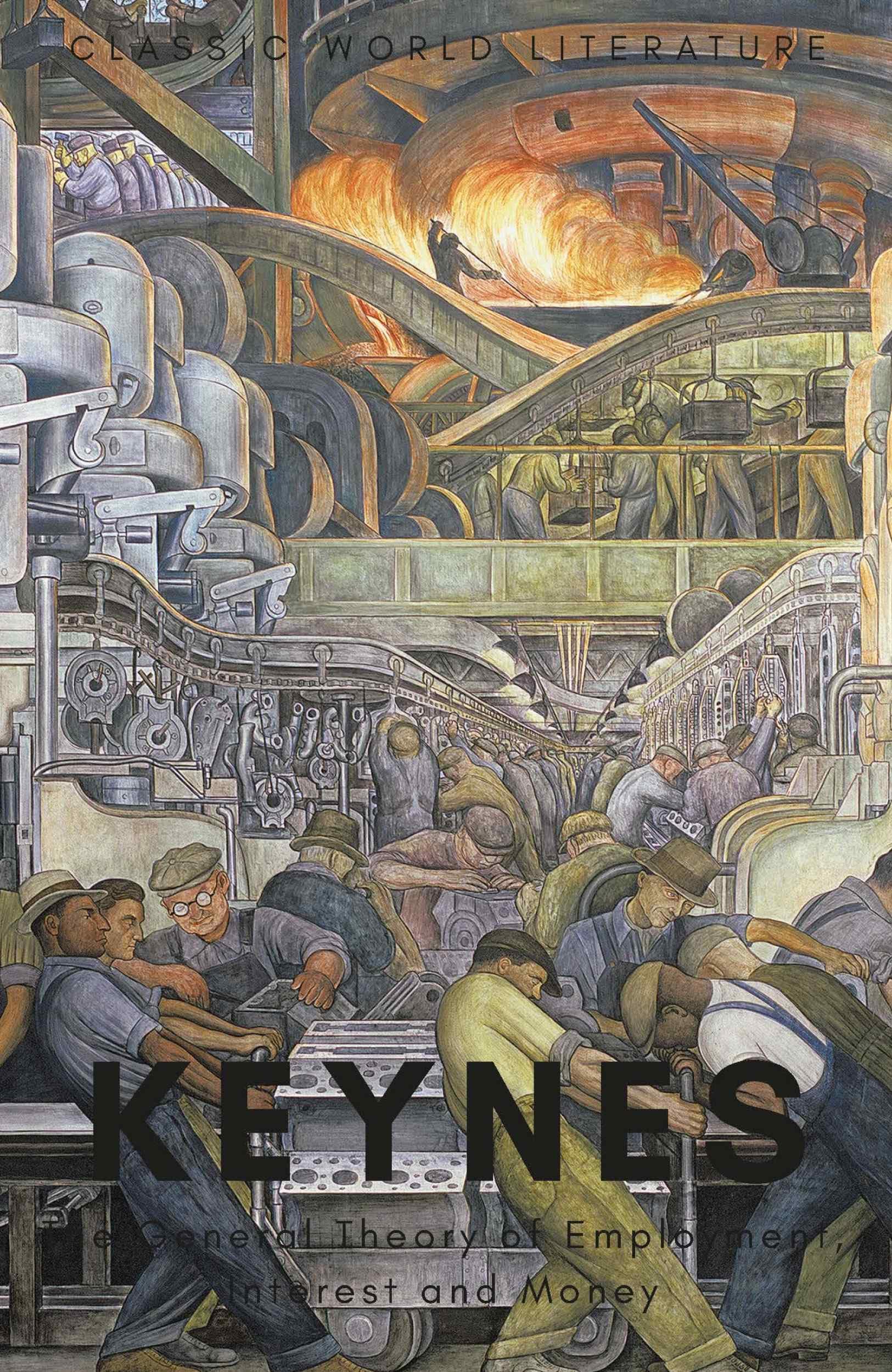
The General Theory of Employment, Interest and Money: with The Economic Consequences of the Peace (Classics of World Literature)
Product ID: 48983068
Buy anything from 5,000+ international stores. One checkout price. No surprise fees. Join 2M+ shoppers on Desertcart.
Desertcart purchases this item on your behalf and handles shipping, customs, and support to Vanuatu.
John Maynard Keynes (1883-1946) is perhaps the foremost economic thinker of the twentieth century. On economic theory, he ranks with Adam Smith and Karl Marx; and his impact on how economics was practiced, from the Great Depression to the 1970s, was unmatched. The General Theory of Employment, Interest and Money was first published in 1936. But its ideas had been forming for decades ? as a student at Cambridge, Keynes had written to a friend of his love for 'Free Trade and free thought'. Keynes's limpid style, concise prose, and vivid descriptions have helped to keep his ideas alive - as have the novelty and clarity, at times even the ambiguity, of his macroeconomic vision. He was troubled, above all, by high unemployment rates and large disparities in wealth and income. Only by curbing both, he thought, could individualism, ‘the most powerful instrument to better the future', be safeguarded. The twenty-first century may yet prove him right. In The Economic Consequences of the Peace (1919), Keynes elegantly and acutely exposes the folly of imposing austerity on a defeated and struggling nation. Review: The layman’s view. - Bought this as we are in a keynesian moment with the economy. Have always taken an interest in business and economics so thought would have a read . Basically it is very interesting but can be hard work so have skipped some parts but feel I have got the overall feel for the arguments made. To me the end book Consequences of the Peace is the most interesting as also took an interest in the origins of WW1 and WW2 and found this an excellent read let’s you know on so many levels how we got here politically etc. Review: Includes 'The Economic Consequences ....' - Truly excellent value for two of Keynes' most seminal books. The General Theory is mandated reading for any economics student, but anyone who can follow Skidelsky's monumental and brilliant three-volume biography will also find this intelligible, not least because of Keynes' enviable command of English. The appended Economic Consequences is a devastating criticism of the ludicrously excessive post-WW1 reparations demands on the Germans - and Keynes with his pointed and elegant way with words was a widely-feared past master of excoriating castigation. I rarely give 5-star ratings, but this is one.


| Best Sellers Rank | 26,845 in Books ( See Top 100 in Books ) 197 in Business & Economic History 7,921 in Society, Politics & Philosophy |
| Customer Reviews | 4.6 out of 5 stars 637 Reviews |
P**C
The layman’s view.
Bought this as we are in a keynesian moment with the economy. Have always taken an interest in business and economics so thought would have a read . Basically it is very interesting but can be hard work so have skipped some parts but feel I have got the overall feel for the arguments made. To me the end book Consequences of the Peace is the most interesting as also took an interest in the origins of WW1 and WW2 and found this an excellent read let’s you know on so many levels how we got here politically etc.
D**Y
Includes 'The Economic Consequences ....'
Truly excellent value for two of Keynes' most seminal books. The General Theory is mandated reading for any economics student, but anyone who can follow Skidelsky's monumental and brilliant three-volume biography will also find this intelligible, not least because of Keynes' enviable command of English. The appended Economic Consequences is a devastating criticism of the ludicrously excessive post-WW1 reparations demands on the Germans - and Keynes with his pointed and elegant way with words was a widely-feared past master of excoriating castigation. I rarely give 5-star ratings, but this is one.
G**E
An important and influential book
I have not finished the book yet. The problem I ran into is that the analysis is rather mechanistic. I can cope with the maths, as I am an engineer, but am not sure that treating an economy as a mechanism is the right way to go about the job. Obviously, the sums have to add up, in the sense of balancing accounts, and there are statistics which can be helpful in describing what is going in the economy. Keynes was quite an expert on statistics, I understand.
L**K
Great to see this in print again in a "popular" edition
I doubt that Keynes' writings will ever be as popular as other economists or their interpreters and popularisers, like for instance Adam Smith is, he is also a more modern writer than Smith so the writing is less literary or eloquent perhaps but I tend to think that Keynes was much more in possession of economic and political facts than Smith was (or some of his more orthodox supporters should be, in fairness Smith's writing is between description and prescription/advocacy for something not yet entirely realised in fact). The book has no index, which is a shame, there is a great introduction, the book itself I would not fault in terms of pace, style and content. I think that Keynes wrote good factual economics which should make sense both to the academic or scholarly reader and also the average, tuned in reading member of the public too. It is good to see a cheaper "popular" edition of the book available as it is a book which is often cited or quoted and presented in part rather than in full.
J**O
Not an easy read but worthwhile
Excellent book which is applicable today in the present crisis
V**A
GOOD VALUE FOR MONEY THANKS !
THIS BOOKS COLLECTION SI ONE OF THE BEST VALUE FOR MONEY THAT I EVER PURCHASED, THANKS !
T**M
Helpful but complex at times
Difficult to read at places but generally enlightening. Can definitely say reading this has put macroeconomics (and even micro) into a better perspective than done so by the A Level textbook. Would recommend skipping Chapter 2 as that's mostly technical.
W**R
Perfect!
Absolutely perfect product and astonishing price - £3.59 and super-fast delivery. The full original work as a classic with a pretty cover.
Y**O
⭐️⭐️⭐️⭐️⭐️ fundamentales Werk der Ökonomie und ein Zeitdokument mit ungebrochener Aktualität.
⭐️⭐️⭐️⭐️⭐️ (5/5) „The General Theory“ – das Fundament der modernen Makroökonomie 📌 Kurzfazit Keynes’ General Theory revolutionierte das ökonomische Denken: Statt davon auszugehen, dass Märkte sich immer selbst regulieren (klassische/neoklassische Schule), zeigte Keynes, dass Wirtschaften in Unterbeschäftigungsgleichgewichten steckenbleiben können. Damit legte er die Grundlage für aktive Konjunkturpolitik, staatliche Investitionen und Deficit Spending. Zusammen mit The Economic Consequences of the Peace ergibt sich ein Bild von Keynes als Ökonom und politischem Intellektuellen. 📚 Inhalt in Kürze Kritik an der „klassischen“ Annahme, dass Vollbeschäftigung der Normalzustand ist. Zentrale Konzepte: Nachfrageorientierung, Liquiditätspräferenz, Investitionsmultiplikator. Staatliche Ausgaben sind notwendig, um Nachfrage in Krisen zu stützen. In Economic Consequences: Prognose, dass der Versailler Vertrag Deutschland destabilisieren würde – was sich tragisch bestätigte. 🔬 Wissenschaftliche Relevanz Stärken: Eckpfeiler der modernen Makroökonomie, Grundlage für die „Keynesianische Revolution“. Deckt sich mit empirischen Beobachtungen der 1930er Jahre und späteren Krisen. Wirkt bis heute in Debatten über Fiskalpolitik, Eurokrise, Pandemieprogramme nach. Schwächen: Sprachlich anspruchsvoll, teilweise schwer zugänglich. Manche Modelle (z. B. fixe Löhne) wurden später von der Neoklassischen Synthese angepasst. 👉 Fazit Wissenschaft: Ein Meilenstein der Wirtschaftswissenschaft, trotz Weiterentwicklungen unverzichtbar. 🌍 Kulturelle Relevanz Extrem prägend: Keynes’ Ideen formten die Wirtschaftspolitik nach 1945 (Bretton Woods, Wohlfahrtsstaat, Nachkriegsboom). Seine Kritik am Versailler Vertrag machte ihn zu einem frühen Warner vor den Folgen ökonomischer Fehlentscheidungen für Politik und Frieden. Kulturell relevant, weil Keynes über die Ökonomie hinaus ein Symbol für eine pragmatische, menschliche Wirtschaftspolitik wurde. 💭 Meine persönliche Meinung 👍 Positiv: Intellektuell brillant, von enormer Tragweite. 👎 Negativ: Kein leichtes Lesebuch – verlangt Geduld und ökonomisches Vorwissen. Für mich: ein Pflichttext für jede ernsthafte Auseinandersetzung mit Wirtschaft, Politik und Gesellschaft. 🎯 Fazit The General Theory (mit Economic Consequences of the Peace) ist ein Doppelklassiker, der ökonomische Theorie und politische Weitsicht verbindet. Wissenschaftlich revolutionär, historisch bedeutend, kulturell hoch relevant. ⭐️⭐️⭐️⭐️⭐️ – 5 von 5 Sternen Weil: ein fundamentales Werk der Ökonomie und ein Zeitdokument mit ungebrochener Aktualität.
Y**M
Boek in slechte staat ontvangen
Boek is kapot.
P**A
studente di economía
studiando economia trovo il libro interessantissimo e per il prezzo ha veramente meritato! leggeterlo in lingua originale è sempre meglio
D**G
A book on economics.
A good book.
A**R
I love this man!
The economic consequences of the peace is one of the most beautiful things I have ever read…. almost like sacred scriptures……
Trustpilot
1 day ago
2 weeks ago