Buy anything from 5,000+ international stores. One checkout price. No surprise fees. Join 2M+ shoppers on Desertcart.
Desertcart purchases this item on your behalf and handles shipping, customs, and support to Vanuatu.
๐ฆถ Seal the deal โ repair like a pro, step out with confidence!
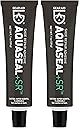
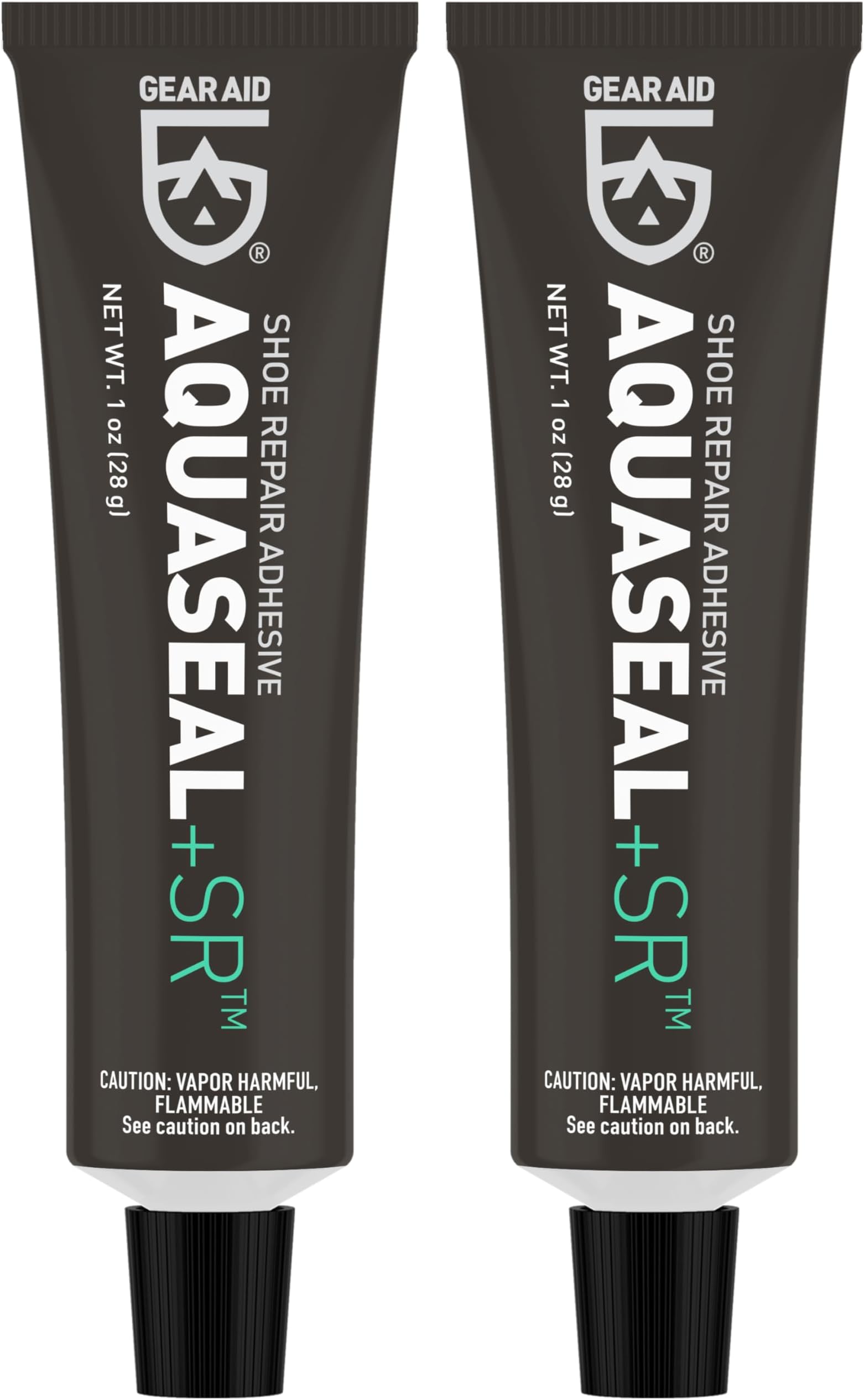
GEAR AID Aquaseal SR is a professional-grade urethane adhesive designed for permanent shoe and boot repairs. It dries clear and flexible, creating a waterproof, abrasion-resistant bond that withstands extreme conditions. Ideal for hiking boots, work shoes, rainboots, and more, it works on a wide range of materials including leather, rubber, and GORE-TEX. Sold in a convenient 2-pack, Aquaseal SR ensures your footwear stays adventure-ready and durable for years.


| ASIN | B000PBTV0O |
| Best Sellers Rank | #49,403 in Clothing, Shoes & Jewelry ( See Top 100 in Clothing, Shoes & Jewelry ) #43 in Shoe Protective Treatments |
| Brand | GEAR AID |
| Brand Name | GEAR AID |
| Color | 1 oz - 2 Pack |
| Compatible Material | Fabric, Leather, Rubber |
| Container Type | Tube |
| Customer Reviews | 4.5 out of 5 stars 3,827 Reviews |
| Full Cure Time | 12 Hours |
| Global Trade Identification Number | 00021563104158 |
| Included Components | Aquaseal SR Shoe Repair Adhesive, Clear, 1 oz, 2 pack |
| Item Form | Liquid |
| Item Package Quantity | 1 |
| Item Type Name | Repair Adhesive |
| Item Weight | 0.1 Pounds |
| Manufacturer | GEAR AID |
| Material | Blend |
| Material Type | Blend |
| Model | 10420 |
| Number of Pieces | 1 |
| Other Special Features of the Product | Strong,Waterproof |
| Part Number | 10420 |
| Special Feature | Strong,Waterproof |
| UPC | 021563104158 021563104202 |
| Unit Count | 2.0 Fluid Ounces |
| Volume | 1 Fluid Ounces |
| Warranty Description | 2 Year Warranty |
| Water Resistance Level | Waterproof |
C**S
An Amazon Review: The Novel
I must preface this by saying that I'm not a shoe repair professional, but I have done extensive repair and reconstruction on every pair of boots I've owned in the last 20 years. Most of my focus in this text will be the gross reattachment of outsoles. I will be using the example of my own boots, which specifically are of a cemented construction with a fiberboard insole, but no proper midsole. Construction types vary, so some interpretation may be required. In this text, "insole" is a permanent part of the shoe. Removable padded or contoured parts are referred to as "inserts". Regarding outsole reattachment, I have used various products available through retail (contact cements, E6000, etc), as well as some urethane sealants I've mixed and thinned for the task. Contact cements work great on boots with proper midsoles, but trying to glue stiff cup soles back on a cemented construction just seems easier with something that can fill the tucks in the leather. Neither Shoe Goo or E6000 were as tenacious or stiff as this product. Time will tell if Aquaseal SR endures, but I'm impressed so far. I find it hard to believe that an observant user can experience immediate failures with this product without questioning how or why the problem may have occurred; surely nobody expects effortless miracles. I feel that simplified instructions such as "clean and dry all surfaces" doesn't explain the actual scope of how clean or dry things need to be. Following is my outline for the process as I performed for a pair of boots that have been worn every day for about six years. Let this be both a guide for action and attention. โ Prepare: Remove any shoe inserts. Inserts retain moisture and prevent the shoes from being cleaned & dried in a timely fashion. Remove the laces if they're going to get in the way. โ Scarify: The goal here is to remove debris and old adhesive residue. If the old adhesive is brittle enough to fail, gluing to it will result in another failure. Don't just wipe it with a bit of sandpaper and call it done. I used a sanding drum on a die grinder to grind the old cement off the uppers and insole, and to grind the outsole down to virgin rubber. โ Clean: The goal here is to remove the debris from scarification and to ensure that the materials to be bonded are free of absorbed contaminants. I began with a solvent wipe using lacquer thinner, and finished by thoroughly scrubbing with water and a degreasing detergent (Formula 409, Simple Green, Krud Kutter). These steps are important if the uppers have been oiled or if they've been worn extensively. Permeable materials (fabric, leather, fiberboard, molded foam outsoles) will have absorbed sweat and will be saturated with these residues. Swabbing with alcohol or water alone will be insufficient to remove this residue; it should be washed thoroughly. You can always re-oil the leather after the repair is complete. โ Dry: This is the slowest part of the process. The surfaces to be bonded must be dry. With most adhesives of this type, absorbed moisture will reduce the reliability or strength of the bond. If you cleaned the shoe properly, it will be wet. Furthermore, most soft outsoles on shoes are made from a molded urethane foam. These types of soles will have been exposed while being washed, but they will often bear deeper absorbed moisture if they've been worn regularly (from sweat, environmental exposure). Resist trying to force-dry the shoes/boots with heat. At elevated temperatures, leather will shrink worse, and some contact adhesives used elsewhere on the shoe may reactivate (become fluid). I just threw my freshly washed boots on the roof of my car on a sunny day (~120F for 6h), and then they sat on a shelf for a few days. My boots were relatively quick to dry, since the outsoles are solid and they have no padding which might retain moisture. Drying out a thick foam outsole takes longer. โ Apply: Mask off any areas on the upper that you want to keep clean. Apply the adhesive to one surface and spread with a brush. Press the two surfaces together and pull them back apart. Observe where the adhesive has been transferred and use a brush and extra adhesive to make sure it gets everywhere it needs to be. โ Clamp: String, rubber bands, or stretchable tape such as electrical tape or tile tape works excellent for this, especially on well-worn (i.e. curved) boots or designs with molded rands. Importantly, this allows for pressure to be applied to the welt/rand area at the edge of the sole (see photo). It may be helpful to stuff the shoe with something (foam, rags, socks). This helps the upper retain its shape while under the clamping force. Filling the shoe also helps transfer pressure to the central area of the sole. Leave the assembly to dry for longer than the package recommends. This is especially important if you have applied the adhesive in thick sections, since these take longer to dry. This is also important if you have stiff soles that needed a lot of clamping pressure to take shape; these cases need the adhesive to be relatively strong before unclamping. I waited for 48h. โ Cleanup: I simply used lacquer thinner for general cleanup and to clean the application brush. I did not test it, but xylene or toluene likely work as well. These only work while the adhesive is uncured. You shouldn't have to clean your hands because you wore disposable gloves ... right? โ Finish work: Peel off the tape. Tape residues can usually be removed with mineral spirits or naphtha. You'll probably want to take this time to re-oil or refinish leather uppers. Consider taking this time to address recurring sole detachment problems that occur as a consequence of usage patterns (kicking/prying with toe or heel welt, kneeling causing delamination on instep, or use on hot surfaces). Even cheap glued-on soles can be reinforced by sewing, clinch nailing, or riveting. Exactly how this is done depends on the construction of the shoe; you'll have to figure that out. Sewing through the sole is easier than it sounds, but heavy thread (TEX135/FF/0.4mm to TEX410/#6/0.7mm) is often difficult to find retail. Most sporting goods stores sell braided nylon casting line; depending on material and construction, a 25-90lb line may be in the same ballpark size. These can be waxed, oiled, or simply used dry and then impregnated in-situ for strength and weatherproofness. Stitching through the welt on the outside of the shoe can be done with either a needle and pliers, a hook awl, or a eyelet/tubular awl. For Blake stitching through the insole, use a hook awl and perform lock-stitches with the free (shuttle) thread on the outside. I find that it's easiest if you periodically dip the awl in some linseed oil to act as both a lubricant and thread preservative. If your shoes have hard outsoles or fiberboard insoles/midsoles, a small drill can be used for punching the holes; otherwise, a straight awl might be used. Cut a relief groove if necessary to protect the thread from abrasion. โ Adhesive storage: There are lots of complaints that the product dries in the tube or clogs. I have not yet had a tube of this product which I didn't use completely in one job, but I have had the same problem on many other products. The reason varies, but the problem is always the cap. Sometimes the cap fits poorly and does not even mechanically seal. Sometimes the cap shrinks and cracks on exposure to the adhesive (Permatex RTV silicones). Usually it's simply the fact that plastic is vapor-permeable, allowing either solvent egress or moisture/oxygen ingress. There's a reason why these products are shipped in foil tubes instead of plastic tubes. Even a perfectly-fitting plastic cap is a slow death for such products. A plastic bottle with a cardboard seal, a plastic bag, polyethylene wrap are all hopelessly permeable and will offer no protection. Wrapping the entire thing in foil may possibly help, and putting it in the fridge or freezer slows the process (though not all things should be frozen). A simple solution is to make disposable tube seals (see photo). Apply aluminum foil tape to a sheet of thin rubber, felt, or craft foam; punch or cut into circles that fit tightly into the cap. Place the seal in the cap so that the foil will be pressed against the tube mouth when the cap is tightened. It's this metal-metal seal that makes the foil effective. The rubber or felt makes the seal compliant enough to make full contact on the irregular tube mouth. The seal usually gets mangled during removal, so make extras. You can always wrap the tube in foil and throw it in the freezer just for good measure. An industrious person can always make a metal cap for products they use regularly (see example in photo). These Aquaseal SR tubes have 7/16"-20 straight threads, though don't count on impact-extruded tubes to have perfect thread geometry, and don't expect the tube mouth to be square to the threads. It's worth mention as an extension of the low-permeability seal concept, but I don't expect anyone to actually consider doing this. That said, if you can't bother cleaning the threads, don't expect inanimate reality to protect you from your own mistake. โ Conclusion As the photos show, the boots are now reassembled, sewn and oiled. I did not have any trouble with excess squeeze-out. I regret not having taken pictures of the disassembled and scarified soles/uppers. In my case, the soles were completely detached except for the heels (which are nailed). I said "gross reattachment", didn't I? If I can make it work on that scale, surely it'll work to glue sneaker rands.
R**N
worked great but slick when wet
I used this on an older pair of shoes that were in perfect condition except that the soles had started to crack. It worked great to add a new layer to the sole and extend the life of the shoes. It was fairly easy to spread and work into the cracks and grooves and did a good job of self leveling. I used it on the whole sole of both shoes so most of the original tread was filled in and is now flat. Because of this it is very slick when walking on snow/slush and I have noticed that when my shoes are wet my foot slides off of the gas and brake pedal very easily when driving which is a little scary especially when braking. Just something to be aware of if you cover the whole bottom of your shoes like I did. This is NOT a problem with the product, it is my fault for creating a flat surface on the bottom of my shoes. It has excellent traction on dry surfaces. Overall I think this is a great product and I would use it again.
ร**โข
Worked on my Asolo TPS 520 GV Hiking Boots
The Freesole worked great in conjunction with the Cotol cure accelerator to repair the sole on my boots. Despite the negative experience another reviewer had with his Vibram soled Asolo boots, the Freesole/Cotol combo I used to reattach my Vibram sole did the trick. First I brushed all the dirt out of the sole and cleaned it with rubbing alcohol. Next, using a wooden tongue depressor, I mixed the two products per the instructions. It really begins to thicken quickly, so work fast. I used the depressor to liberally "gob" the mixture into the space between the sole and the leather of the boot, making sure to fill the void. I then used a small piece of 2x4 inside my boot and a couple of clamps to hold it all together. Amazingly, it was all dry to the touch in less than two hours. I let the boot sit for another 24 hours or so, then...... I had to use them. A few days after the repair, our area received almost a foot of snow over a two day period. I wore the boots constantly for the next week. I tromped through snow, ice, water, mud, sand and even salt. The repair looks as good as it did initially, which was almost as good as new anyway. It's a little "shiny" and somewhat opaque when cured, but I'm impressed. If you work fast with the Freesole/Cotol mixture, and wipe up overspill, the repair should barely be noticeable like mine. I stored the Cotol in a kitchen cabinet. To store the Freesole, it is recommended to squeeze it to the tip, replace cap tightly, and store in the freezer. It turns almost rock-hard in the freezer but like everything else in there... it thaws out. The four stars in because the Freesole really is most effective when used in conjunction with a second product, which is the McNett Cotol-240 Cleaner and Cure Accelerator (.5-Ounce) . Thanks for reading. If you have any questions, feel free to ask and I will answer as best I can. SPO
H**B
Great for water aerobics shoes
The soles were peeling off my water aerobics shoes. I had them reglued once by the local cobbler and it cost me $15. I thought, this time I'll look for some glue and do it myself. I did a little online research and this product sounded promising. Indeed, it works great. Even if the soles start peeling again, there is still plenty in the tube for more repairs, so this product really will extend the wear of my shoes for a long time. Very happy with this glue!
S**Y
Works great
Excellent product
R**M
Worked well to repair Keen sandal sole blowout
Had a pair of Keen sandals that were maybe 10 years old but had not been worn muchโso they were like new. Started wearing them to work in the yard and the soles quickly started to separate from the footbed due to failure of the factory sealant. Since these were approximately $100.00 shoes with no real wear on them, I was not willing to give up easily, so I began the quest to find a product to repair them. The contenders were: ShoeGoo I first took the Keens to my trusty shoe repair professional. He advised that it basically was impossible for him to duplicate the factory sealant used to join the sole and footbed. This did not surprise me too much, as I expected there was some sort of magic process they use at the factory and this was not my first experience with sole failure over an extended time. Anyway, he suggested I try the ShoeGoo product. Epic failureโI used it and allowed plenty of time for it to cure, but I didnโt even make it out of the garage before the soles were a floppin. While it might be fine for small repairs under less stress, it just was nowhere near up to this task. 3M Marine 5200 I have used this stuff for many things over the years and know it has prodigious holding power, so I thoughtโWhy not? Again, gave it plenty of time to cure and tried it out. A good sign was that it made it out of the garage. And, it did last for a good while. But, it started to fail too, which kind of surprised me given my prior experience with this product. I probably stretched it out to about 4 months of use before I had to give up on using the Keens. Back to the lab. Gear Aid Freesole (reviewed product) I had heard of this product, but never used it. After using one of their other products, I decided to give Freesole a try. It has been in place for about 2 months and is showing no signs of failure thus far. Unless it gives up the ghost soon, it looks to be the leading contender for long term repair. Conclusion To be fair, I did decide to also use Gear Aidโs Cotol product as a cleaner (but not to speed Freesole cure time) in my use of Freesole. First I cleaned soles generally with water and allowed to air dry. Then I cleaned with rubbing alcohol. Next I cleaned with Cotol per product directions. Then I applied Freesole and allowed to cure under clamping pressure (all products were clamped for repair). I donโt think the Cotol would have made any difference with ShoeGoo. Maybe it would have extended the use a bit with the 5200, but I donโt think it would have made a huge difference on longevity there either. For at home use, Freesole appears to be the repair winner. Iโm sure it too will give out at some point, and I will try to remember to come back and update the longevity of the repair when it does give out. If I wanted a repair product for use on the trail, I might consider the 5200 in the fast cure variety. I think it may be a bit easier to get a satisfactory sole repair under less than ideal conditions with the 5200 that should get you out of most any short term jam. Then, when you get home, you can tear it out and use Freesole if you wish (you may have to put some wear on the repair thoughโ5200 is tenacious). My reasoning here is that it appeared to me that you could get away with less clamping force with the 5200 than with the Freesole. Might not be a big deal if working on a small area, but it would be if you had to deal with an entire sole. By the way, if you use 5200 at home, immediately put the open tube in the freezer to store it. That will allow you to preserve it for some time. Otherwise, it will continue to cure in the tube and it will be useless the next time you need it. I have my last bit of Freesole in the freezer too, but I have not had to use it again yet, so I donโt know if that will work on it too.
J**0
Disappointed For My Intended Purpose
I had high hopes for this product. Unfortunately, I was disappointed in its' performance. Let me explain. My wife's expensive and well known brand name low profile hiking shoe's achilles heel cushioning (the upper back portion behind the achilles tendon) had begun to deteriorate/fraying (a common problem). After reading this products description about its' superior adhesion, and drying to a "flexible" rubber-like finish, I thought it just might fix the problem with my wife's shoes. So . . . Using a small flexible oil painting spatual, I applied a thin coat of glue to the shoe material itself, allowing it to first set up a little until it became very "tacky". I then placed a piece of material from a new black sock which I cut to size, onto the tacky surface, working it firmly onto the glued area. I then carefully spread a thin amount of this glue around the edges of the sock material to ensure no fraying or "roll-up/down" would occur once it dried. Unfortunately, this glue would not even adhere the cloth sock to the (glued) cloth heel support. This, despite my constant efforts to press the two materials together. Very disappointing. On her second shoe, which had also frayed a little, I tried the same method as above, however this time I placed a thin coat of the glue onto the heel area AND the sock material, and did not wait for the glue to set up and become tacky before sticking them together. I did my best to thoroughly work the two materials together using the painting spatual, and it appeared as though this might work. Unfortunately, it did not, and the same disappointing results as with the first shoe occurred. After having failed to fix my wife's shoes using the above methods, I ended up having to discard them, which was unfortunate because they were very expensive shoes and still "could" have been worn even with the fraying heel pad. I blame myself for thinking this glue would be able to adhere/bond two pieces of cotton material together, dry, and remain minimally flexible. I know there are countless individuals out there wishing there was a fix for the very common problem with the achilles heel pad fraying prematurely. Unfortunately, in my case, this particular glue did not work, despite my best efforts. Now, having said all this, I must admit that nowhere does the manufacturer say anything about this glue being able to bond two pieces of cloth material (regardless of the type) together. So this is my fault. I just thought it was important that if you thought this glue might work for fixing the same type of problem I had with my wife's shoes, you will probably be disappointed. I have to assume this glue works very well for its' advertised purposes.
N**U
Worked great to build up worn spot on NB walking shoes
I purchased this to try to patch a hole that wore too quickly near the ball of both feet because the walking shoes that I bought are obviously not intended for walking on pavement. One shoe had worn through and the other was close. The rest of the shoe and sole look practically new so I decide to try this to extend the life of the shoe with the this product. I simply applied a small amount to the worn spot and use a stick to smooth it out. Between both shoes, I probably use a little over a 10th of the tube. I probably used a little too much as it spread out and ran a little more than I would have liked. You have to make sure you prop the shoe up to make it level to reduce how much it will run while it cures (I waited 24 hours). If it is near the edge of the shoe, the instructions recommends that you use tape to make a dam on the edge to prevent the glue from running down the side. Mine wasn't. I did put some rice on the cement as advised by one of the reviewers to give the patch some texture but I probably wouldn't do that again. I did it immediately after applying the glue and the rice basically just sunk all the way in which gives you an idea how thick I applied the cement. I suppose you should wait until it starts to set before doing that or perhaps put on 2 thinner layers and only put the rice in the second layer. It seems to me that the rice will only weaken the repair and frankly the cured urethane is not that slick anyway. Its only been a few days but while the repair show some wear, it looks like the glue is adhering well to to bottom of the shoe and is not peeling off at the edges of the repair. Based upon the wear so far, I would guess that I'll have to reapply every 3 or 4 weeks which would mean that I should get 30 to 40 weeks added to the life for the price of a tube. A good value in my book. Based upon my experience so far, I would buy it again.
P**S
Works as promised
Works as claimed .. very expensive though.
A**.
Waste of money
Poor sticking
Trustpilot
3 weeks ago
2 months ago