

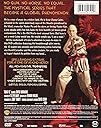
Kung Fu: The Complete First Season (DVD)
Product ID: 5066452
Details
- ContributorDavid Jerry
- FormatNTSC Subtitled
- GenreAction & Drama
- LanguageEnglish
- Number Of Discs3
Desertcart purchases this item on your behalf and handles shipping, customs, and support to Vanuatu.
Everybody was kung-fu fighting after the 1972 premiere of this mystic western starring David Carradine (snatching the role from Bruce Lee) in his signature, Emmy-nominated role as Caine, a stoic Shaolin monk forced to flee China after killing the royal family member who slew his Master. Our wandering hero roams the west in search of his long-lost brother, while eluding American and Imperial bounty hunters, and imparting his ancient wisdom on those he encounters and is compelled to aid. Kung-Fu was never a ratings force, but its cult status was assured long before Samuel L. Jackson referenced it in Pulp Fiction . Along with the inaugural 15 episodes, this three-disc set contains the feature-length pilot that establishes the series' iconography: the inscrutable aphorisms ("When you cease to strive to understand, then you will know without understanding"); the flashbacks to Caine's youth, where the orphaned half-American and half-Chinese boy served as disciple ("Grasshopper") to the Old Man; and, of course, the anticipated moments when the peaceful Caine, like Billy Jack , is reluctantly compelled by some frontier bigot to use his fighting skills. Look for appearances by father John Carradine and brothers Keith and Robert in the episode, "Dark Angel." That's 11-year-old future Oscar-winner Jodie Foster in "Althea." Other notable episodes include the Emmy-winning "An Eye for an Eye" and "Chains," featuring an Emmy-nominated turn by Michael Greene as a not-so-gentle giant to whom an imprisoned Caine is chained. "With each ending," Caine observes in the episode, "The Third Man," comes a new beginning." Kung Fu 's new beginning comes on DVD. Thanks to the timeless frontier setting and the uniqueness of its genre-bending concept, Kung Fu dates better than other '70s series. As these episodes demonstrate, the show still has plenty of kick. --Donald Liebenson Kung Fu: The Complete First Season (DVD) He is a man of peace in a violent land. David Carradine stars as Kwai Chang Caine, schooled in the spirit-mind-body ways of the Shaolin priesthood by the blind, avuncular Master Po and the stern yet loving Master Kan. Caine speaks softly, but hits hard. He lives humbly, yet knows great contentment. He is the Old West's most unusual hero. But hero is not a word Caine would use. He would simply say, "I am a man." He has no gun, no horse… and no equal. Many miles stretch before him. And many lives will be touched by him. Don’t miss all the excitement of Caine’s adventures in this Emmy®-winning mystical series that became a global phenomenon and brought martial arts to the masses, popularizing the genre that’s alive and kicking in today’s hit films and video games. Review: Pt. 1: Yes, It's a Great Show, But... - What good things can I say about the television series "Kung Fu" (1972-75) that haven't already been said? More than 30 years after the original TV show left the airwaves, it remains my favorite American network series. Not only were "Kung Fu's" writing and acting all superlative, but its highly unusual, Zen-like take on the all-American genre of the Western -- in case you don't know, the show is about a Buddhist monk roaming the Wild West -- still resonates. For my money, the first-season episode titled "An Eye for an Eye" remains the finest thing that American episodic TV has ever created. Here is the best way for me to sum up how much I love "Kung Fu": of all the decorations in my home, only one is a photo of a celebrity -- an autographed picture of David Carradine as Kwai-Chang Caine. Now that you know how highly I regard "Kung Fu," I would still like to make a few comments about it. As much as I respect the series for popularizing the Asian presence in U.S. history at a time when hardly anyone else was doing so, the series did cut a few corners, and this bugs me a bit. ACTING: "Kung Fu's" weakest link is Radames Pera as the young Kwai-Chang (a.k.a. "Grasshopper") in the famous flashbacks. While the performances by the cast and guest stars are usually excellent, Pera's recitation of his lines totally lacks any convincing emotional undercurrent. Also, he doesn't look very much like Carradine, who plays the character that he's supposed to grow up to be. I have a hard time believing that Pera was the best choice for this part. ETHNIC ISSUES: The country of China, the setting for the show's flashbacks, is a patchwork quilt of various ethnicities. However, the country's dominant ethnic group is the Han people, the first folks we Westerners tend to think of as "Chinese," while the others, such as the Uygurs and the Tibetans, are considered "minorities." In "Kung Fu's" pilot, when Master Kan (Philip Ahn) tells young half-white Caine that the Shaolin monastery has never accepted anyone other than of "full-Chinese birth," I take him to mean anything other than full-Han ancestry. My response to this is: "Why, then, does Master Kan have a Mongolian name?" It's a small point, to be sure, but one that could have been avoided. (For my thoughts on Carradine, a Caucasian actor, playing the half-Chinese Caine, see my desertcart review of "Kung Fu's" second season.) ACTION: The element of "Kung Fu" that dates the poorest is its fight scenes. Prior to the series, Western popular culture was not greatly exposed to Asian martial arts. One of the few exceptions was Bruce Lee's high-kicking acrobatics on another TV show, "The Green Hornet" (1966-67), but this did not have an immediate impact upon large American audiences. So, "Kung Fu's" slow-motion fight scenes were quite innovative for their time, and I remember being thrilled by them when the show first aired. To speculate, it may have been because of "Kung Fu's" popularity that American movie screens soon made room for martial-arts films from Asia, especially those from Hong Kong, such as "Five Fingers of Death" and Bruce Lee's starring vehicles. Once American audiences got a taste of them, however, their dynamism made "Kung Fu's" heavily stylized fighting less satisfying. In fact, compared to the unarmed-combat movies from Hong Kong, "Kung Fu's" slow-motion fights come off primarily as a means to cover up Carradine's lack of mastery in the martial arts. Still, this isn't enough to wreck the series for me. HAIR: This is the show's flaw that really bothers me the most: the hairstyles of the Chinese men. From 1644 to 1912 (which includes the years when "Kung Fu" is set), the Qing Dynasty required men (but not women) in China to wear their hair in queues. This meant not only wearing a ponytail, but shaving the area around the crown and temples of one's head as well. The Qing Dynasty, which had conquered China from Manchuria, compelled the Han men to adopt this Manchurian hairstyle as a symbol of native-Chinese subservience to their new rulers. Those men that refused to wear the queue were summarily executed, giving rise to the saying, "Lose your hair and keep your head; otherwise, keep your hair and lose your head." The only adult Chinese males who did not wear queues were Buddhist monks, who, as "Kung Fu" more accurately depicts, shaved their heads entirely. Chinese men in America were not exempt from this decree. Until 1952, racist laws in the U.S. prohibited Asian-born immigrants (most of whom were men) from becoming naturalized citizens. Therefore, even on American soil, 19th-century Chinese men, who theoretically could be deported back to their native country at any time, were obliged to follow this Qing Dynasty law. Unfortunately, "Kung Fu" does not deal accurately with Chinese men's tonsorial traditions in the 19th century: most of the series' Chinese men wear contemporary 20th-century hairstyles. If a queue is present at all, it's usually just a braided ponytail attached to a contemporary coif. The one time the subject of queues comes up on "Kung Fu" (the third season's "This Valley of Fear"), Caine says that wearing one is only "a personal choice." Regrettably, the moment is a missed opportunity to educate the audience about the significance of Qing-era hairstyles. So, every Chinese man in "Kung Fu" not wearing a queue, and who is not a Shaolin monk, does not have an authentic period hairstyle. However, I'm not saying that Carradine ought to have worn a queue. In fact, knowing about 19th-century Chinese hairstyles makes me appreciate his shoulder-length mane all the more: it instantly marks Caine as an outlaw. Still, the unusualness of his hairstyle on a Chinese man of the Qing era should have immediately signaled something amiss to the show's other characters. For example, the Chinese railroad crew in the pilot would have remarked about his grown-out shaved head before they noticed the Shaolin marks on his arms. The crew cut on the Chinese dissident Wong Ti Lu (Mako) in the first season's "The Tide" also makes sense as a political statement of someone opposed to the Qing emperor. Otherwise, the 20th-century hairstyles on the show's other Chinese men are a nagging reminder not only of a historical inaccuracy, but also of a thematically rich element ignored by the series. Would it have been so uneconomical for "Kung Fu" to have put its non-Shaolin Chinese male characters in bald wigs with queues attached to them? Still, I hope that none of my comments about "Kung Fu" discourages anyone interested in the show from checking out the DVD. After all, the reason I know as much about Chinese history as I do is because "Kung Fu" made such an enormous impact on me. I'm glad that the series continues to move audiences today. (Note: I have also written reviews for the second and third seasons of "Kung Fu.") Review: A Legitimate TV Classic Finally Comes to DVD - The TV series Kung Fu, starring David Carradine, Keye Luke and Philip Ahn, became an American popular cultural phenomenon in the 70s and richly deserves a full DVD release. It remains as unique today as it did three decades ago, and potentially as powerful. In the 70s, America was still embroiled in the Vietnam War when Carradine, who played Kwai Chang Caine, walked barefoot into the homes of viewers portraying a Chinese priest of the Shaolin Order who was also a Kung Fu martial arts expert. Through Caine, complex themes of religion, spirituality, philosophy, violence, peace, racism, morality, greed, human dignity and cruelty were examined each week in the guise of an off-beat Western set in the 1800s. Caine, who was part American, was forced to flee his homeland after his mentor, Master Po, portrayed brilliantly by Luke, was murdered by a royal guardman, who in turn was killed by Caine. The royal family issued an edict to capture Caine --- dead or alive. Caine came to America in search of his half-brother, walking from town to town following leads as to his sibling's whereabouts. While the story seems simple enough, it afforded the show's writers ample opportunities to explore the aforementioned themes by depicting Caine's interaction with those who lived in America's Old West, illustrating through the use of extensive flash-backs, the teachings of his Shaolin masters and his Chinese martial arts training. It also provided plenty of excitement and action through Carradine's use of Kung Fu in America, which he frequently employed to protect the less fortunate or otherwise vulnerable victim. Caine's cultural views and religious training that stressed peaceful coexistance with his fellow man, equality and non-materialism, put him at odds with most of those he encountered. Every episode presented moral choices for Caine to make between maintaining his lifestyle and philosophy, or conforming to the norms of American society. In presenting those choices, viewers also examined their own values as well as those of modern society at a time when it was imperitive to do so. Famed martial artist and actor Bruce Lee developed the show's concept with producers and had expected to be cast as Caine. But, when cameras finally rolled on the production, it was Carradine who became Caine, and who would be forever linked to the role. This DVD set was remastered to present the first season, including the show's pilot, in a widescreen format. I'm anxious to see what the show will look like thus depicted. However, this is one TV show that looked great in a full-screen format, so there was really no way to lose on its DVD release. I trust that the remaining seasons will also be released in very short order.
| Contributor | David Carradine, Jerry Thorpe, Keye Luke, Philip Ahn, Radames Pera |
| Customer Reviews | 4.6 out of 5 stars 1,275 Reviews |
| Format | NTSC, Subtitled |
| Genre | Action & Adventure, Drama, Westerns |
| Language | English |
| Number Of Discs | 3 |
R**E
Pt. 1: Yes, It's a Great Show, But...
What good things can I say about the television series "Kung Fu" (1972-75) that haven't already been said? More than 30 years after the original TV show left the airwaves, it remains my favorite American network series. Not only were "Kung Fu's" writing and acting all superlative, but its highly unusual, Zen-like take on the all-American genre of the Western -- in case you don't know, the show is about a Buddhist monk roaming the Wild West -- still resonates. For my money, the first-season episode titled "An Eye for an Eye" remains the finest thing that American episodic TV has ever created. Here is the best way for me to sum up how much I love "Kung Fu": of all the decorations in my home, only one is a photo of a celebrity -- an autographed picture of David Carradine as Kwai-Chang Caine. Now that you know how highly I regard "Kung Fu," I would still like to make a few comments about it. As much as I respect the series for popularizing the Asian presence in U.S. history at a time when hardly anyone else was doing so, the series did cut a few corners, and this bugs me a bit. ACTING: "Kung Fu's" weakest link is Radames Pera as the young Kwai-Chang (a.k.a. "Grasshopper") in the famous flashbacks. While the performances by the cast and guest stars are usually excellent, Pera's recitation of his lines totally lacks any convincing emotional undercurrent. Also, he doesn't look very much like Carradine, who plays the character that he's supposed to grow up to be. I have a hard time believing that Pera was the best choice for this part. ETHNIC ISSUES: The country of China, the setting for the show's flashbacks, is a patchwork quilt of various ethnicities. However, the country's dominant ethnic group is the Han people, the first folks we Westerners tend to think of as "Chinese," while the others, such as the Uygurs and the Tibetans, are considered "minorities." In "Kung Fu's" pilot, when Master Kan (Philip Ahn) tells young half-white Caine that the Shaolin monastery has never accepted anyone other than of "full-Chinese birth," I take him to mean anything other than full-Han ancestry. My response to this is: "Why, then, does Master Kan have a Mongolian name?" It's a small point, to be sure, but one that could have been avoided. (For my thoughts on Carradine, a Caucasian actor, playing the half-Chinese Caine, see my Amazon review of "Kung Fu's" second season.) ACTION: The element of "Kung Fu" that dates the poorest is its fight scenes. Prior to the series, Western popular culture was not greatly exposed to Asian martial arts. One of the few exceptions was Bruce Lee's high-kicking acrobatics on another TV show, "The Green Hornet" (1966-67), but this did not have an immediate impact upon large American audiences. So, "Kung Fu's" slow-motion fight scenes were quite innovative for their time, and I remember being thrilled by them when the show first aired. To speculate, it may have been because of "Kung Fu's" popularity that American movie screens soon made room for martial-arts films from Asia, especially those from Hong Kong, such as "Five Fingers of Death" and Bruce Lee's starring vehicles. Once American audiences got a taste of them, however, their dynamism made "Kung Fu's" heavily stylized fighting less satisfying. In fact, compared to the unarmed-combat movies from Hong Kong, "Kung Fu's" slow-motion fights come off primarily as a means to cover up Carradine's lack of mastery in the martial arts. Still, this isn't enough to wreck the series for me. HAIR: This is the show's flaw that really bothers me the most: the hairstyles of the Chinese men. From 1644 to 1912 (which includes the years when "Kung Fu" is set), the Qing Dynasty required men (but not women) in China to wear their hair in queues. This meant not only wearing a ponytail, but shaving the area around the crown and temples of one's head as well. The Qing Dynasty, which had conquered China from Manchuria, compelled the Han men to adopt this Manchurian hairstyle as a symbol of native-Chinese subservience to their new rulers. Those men that refused to wear the queue were summarily executed, giving rise to the saying, "Lose your hair and keep your head; otherwise, keep your hair and lose your head." The only adult Chinese males who did not wear queues were Buddhist monks, who, as "Kung Fu" more accurately depicts, shaved their heads entirely. Chinese men in America were not exempt from this decree. Until 1952, racist laws in the U.S. prohibited Asian-born immigrants (most of whom were men) from becoming naturalized citizens. Therefore, even on American soil, 19th-century Chinese men, who theoretically could be deported back to their native country at any time, were obliged to follow this Qing Dynasty law. Unfortunately, "Kung Fu" does not deal accurately with Chinese men's tonsorial traditions in the 19th century: most of the series' Chinese men wear contemporary 20th-century hairstyles. If a queue is present at all, it's usually just a braided ponytail attached to a contemporary coif. The one time the subject of queues comes up on "Kung Fu" (the third season's "This Valley of Fear"), Caine says that wearing one is only "a personal choice." Regrettably, the moment is a missed opportunity to educate the audience about the significance of Qing-era hairstyles. So, every Chinese man in "Kung Fu" not wearing a queue, and who is not a Shaolin monk, does not have an authentic period hairstyle. However, I'm not saying that Carradine ought to have worn a queue. In fact, knowing about 19th-century Chinese hairstyles makes me appreciate his shoulder-length mane all the more: it instantly marks Caine as an outlaw. Still, the unusualness of his hairstyle on a Chinese man of the Qing era should have immediately signaled something amiss to the show's other characters. For example, the Chinese railroad crew in the pilot would have remarked about his grown-out shaved head before they noticed the Shaolin marks on his arms. The crew cut on the Chinese dissident Wong Ti Lu (Mako) in the first season's "The Tide" also makes sense as a political statement of someone opposed to the Qing emperor. Otherwise, the 20th-century hairstyles on the show's other Chinese men are a nagging reminder not only of a historical inaccuracy, but also of a thematically rich element ignored by the series. Would it have been so uneconomical for "Kung Fu" to have put its non-Shaolin Chinese male characters in bald wigs with queues attached to them? Still, I hope that none of my comments about "Kung Fu" discourages anyone interested in the show from checking out the DVD. After all, the reason I know as much about Chinese history as I do is because "Kung Fu" made such an enormous impact on me. I'm glad that the series continues to move audiences today. (Note: I have also written reviews for the second and third seasons of "Kung Fu.")
E**Y
A Legitimate TV Classic Finally Comes to DVD
The TV series Kung Fu, starring David Carradine, Keye Luke and Philip Ahn, became an American popular cultural phenomenon in the 70s and richly deserves a full DVD release. It remains as unique today as it did three decades ago, and potentially as powerful. In the 70s, America was still embroiled in the Vietnam War when Carradine, who played Kwai Chang Caine, walked barefoot into the homes of viewers portraying a Chinese priest of the Shaolin Order who was also a Kung Fu martial arts expert. Through Caine, complex themes of religion, spirituality, philosophy, violence, peace, racism, morality, greed, human dignity and cruelty were examined each week in the guise of an off-beat Western set in the 1800s. Caine, who was part American, was forced to flee his homeland after his mentor, Master Po, portrayed brilliantly by Luke, was murdered by a royal guardman, who in turn was killed by Caine. The royal family issued an edict to capture Caine --- dead or alive. Caine came to America in search of his half-brother, walking from town to town following leads as to his sibling's whereabouts. While the story seems simple enough, it afforded the show's writers ample opportunities to explore the aforementioned themes by depicting Caine's interaction with those who lived in America's Old West, illustrating through the use of extensive flash-backs, the teachings of his Shaolin masters and his Chinese martial arts training. It also provided plenty of excitement and action through Carradine's use of Kung Fu in America, which he frequently employed to protect the less fortunate or otherwise vulnerable victim. Caine's cultural views and religious training that stressed peaceful coexistance with his fellow man, equality and non-materialism, put him at odds with most of those he encountered. Every episode presented moral choices for Caine to make between maintaining his lifestyle and philosophy, or conforming to the norms of American society. In presenting those choices, viewers also examined their own values as well as those of modern society at a time when it was imperitive to do so. Famed martial artist and actor Bruce Lee developed the show's concept with producers and had expected to be cast as Caine. But, when cameras finally rolled on the production, it was Carradine who became Caine, and who would be forever linked to the role. This DVD set was remastered to present the first season, including the show's pilot, in a widescreen format. I'm anxious to see what the show will look like thus depicted. However, this is one TV show that looked great in a full-screen format, so there was really no way to lose on its DVD release. I trust that the remaining seasons will also be released in very short order.
T**S
Forget the Aspect Ratio, Forget the 'Racism'
"Kung Fu" is one of the best television Westerns ever done. I was 22 when the series started in 1972, just at the best age to appreciate the amazing confluence of Eastern ideas placed into a wild Western setting. However, after viewing this series - the second season - on DVD, the force of it is even more obvious. Now, I am in agreement with those who condemn the aspect ratio editing; a TV show - unless filmed originally in widescreen should be shown in the stand TV 'full screen' format. However, the DVD sets are better than nothing at all. I also agree that Bruce Lee was ill treated by the producers of "Kung Fu." However, Bruce Lee died in the summer of 1973! And how did he die? A film star known the world over, whose films are still regarded as seminal within the genre. Besides, as one who has mingled in the Hollywood (of the late 70s, when things changed to an extent) milieu, writers, actors, directors, et al, get cheated and ignored all the time. Sure, race can be part of the theft or mistreatment, but "Hollywood" is a cut throat place all too often, where there is no 'rule book' on anything. So, would the critics of the alleged racism and mistreatment of Bruce Lee rather have had him do only the first season of "Kung Fu" before he died, or become the world renowned martial artist whose legend has endured for over three decades after his death? The answer is obvious! They didn't kill him, they made him a legend! There are just too many moral lepers with too much power in "Hollywood", and yet, there are also people like Spielberg, Paul Newman, the Reiners, Ron Howard, who are as close to solid gold as it gets in this life. "Hollywood" is just not the place to go expecting justice; the whole film and television industry is based on relatively temporary general popularity, not the ethical treatment of those involved in making the 'product.' A lot of the decisions that are made have strong social components - people who have worked together on other efforts - rather than just artistic perspectives in common. Anything from "Hollywood" is a collaborative effort of people whose careers live and die on the whims of the general public... and it makes everyone involved skittish or edgy and often cynical. Too much is out of control, so they tend to go with what seems safe (for them) or what the 'execs' or the bag men (follow the money trail) require. The people in "Hollywood" know how unstable their work is and they expect others to know that as well. It's quicksand. That "Hollywood" could have produced such a fine series as "Kung Fu" deserves praise, not condemnation over the fate of Bruce Lee in a TV series. Now, to anyone with martial arts training, the first season in particular was almost amusing because so much of the martial arts had to be supported by slowing down the camera speed and using unusual angles to hide the inabilities of David Carradine. Over the course of the three years, Carradine did improve greatly, though he was never going to be in the same class as Lee. Carradine was the perfect choice, martial arts skills aside, to convey the message of the creators of "Kung Fu." He made "Kung Fu" his series in a way that I doubt Bruce Lee could have. It is also interesting to note that David Carradine played the lead in an Oscar winning film biography of Woody Guthrie just after the "Kung Fu" series ended. Anyone watching that film could see the "Kwai Chang Cain school of acting" skills being applied to his presentation of Guthrie. Bruce Lee was amazing in "Green Hornet" and his films, but he was not right for the lead in "Kung Fu." Carradine was.
J**L
A dream come true
Like many of the reviewers, this is my favorite TV show of all time. I have practiced chinese martial arts for 16 years and my initial interest was, without a doubt, fueled by my memories of this show as a kid. The show itself is very well done -- both the philosophy and the technical aspects. Many of the techniques seen in today's action shows (both TV and movies) have been "borrowed" from the pioneering work done in this show. For example, in an era in which martial arts movies used artificially accelerated fight sequences, Kung Fu slowed things down (has anyone seen The Matrix?) -- they weren't afraid to display the techniques and they weren't out to impress anyone with how fast they could move. The stories/episodes are not cliche' and are well thought out. I guess some people may be put-off by that -- they want black-and-white, good-v.-evil situations with pre-canned dialog heavily interspersed with brutal fight scenes (ala Jet Li or Steven Segal) -- this show is not for them. Here is portrayed the softer side of the real kung fu. Also, the episodes get better as the show progresses. The original pilot and first episode are a little rough -- but remember they were innovating a whole new type of show, so it took a little practice before they got it right (just like real kung fu). The acting is some of the finest I have seen on the small screen. Say what you wish about David Carradine, but he is the consummate Kwai Chang Caine. The character actors are superb as is the regular cast. The picture quality of this DVD is phenomenal. I was expecting some poor quality, grainy picture -- thinking that this show was filmed 30+ years ago. It is simply amazing what they have done with digital remastering. Last but not least, the extra special features are very interesting and informative. Many of the original personnel -- those behind the camera, as well as in front of it -- give their own fascinating perspective on all the details involved in the show. All in all, many hours of great viewing! I cannot wait for the release of the next two seasons.
M**S
I'll keep it and look forward to the rest.
Should you buy the set?........ if you're really a fan of the series, or even if you're new to the series..... I say yes. I was 16 when the series first aired. And, in a few small ways, it helped change my view of life. It has and always will be one of my favorite TV series. But why would I give a 4 star rating if I'm that much of a fan?........ for the same complaint many others have voiced........ the letterboxing. It's the only thing that disappoints me. Because of the letterboxing I feel slightly cheated. I'm a big fan of letterboxing for movies......... but that's for movies, not a television series. This was a series filmed for television in the early 70's, so letterboxing is not only inappropriate, it's out right stupid. With all the planning that went into releasing the series on DVD, whoever made the decision to letterbox it was either indifferent to retaining the original viewing, or was so ignorant as to think it would be an improvement........ it isn't. If it had been filmed in the 1.85 ratio, then this would be a proper release, but since it wasn't, letterboxing crops off the upper and lower parts of the viewable area. There are too many scenes where the tops of heads and character's chins are slightly chopped off. But that's the only flaw with this set I have a problem with, so it's my only complaint. I watched the entire set on my day off....... episode after episode. Only a fan of this series could do that. I enjoyed every minute.... from the pilot episode to episode 15 "The Ancient Warrior" (with Chief Dan George). And with no commecials and none of the stinkin' station logos constantly in the lower right corner of the screen, it was even more enjoyable getting to watch these episodes again on DVD. And even if someone is new to the series (y'know...... some of you young'ns out there) the stories pull you in. It's more than a Kung Fu series, more than a western series, more than just simply a television series........ the stories actually can teach a bit of philosophy, and do it quite well. Considering how todays' shows seem to have drifted away from having the viewer do any actual thinking, it was great to get to watch this series again. So now I'm ready for season 2 and season 3. Then I'll be ready for the 1986 TV movie Kung Fu:The Movie, this co-starred Brandon Lee playing Caine's son. And I'll even consider the latter series Kung Fu : the legend continues. I just hope the dimwits producing these DVDs don't letterbox the rest. But I have the feeling they probably will. Maybe if enough people complain about it, they'll re-issue the first season in Full Frame............ if they do that, then I'll definately get it again because I like the series enough.
H**E
Enter the Fugitive Priest....
"Kung Fu", featuring David Carradine as the fugitive Shaolin priest Kwai Chang Caine, was a TV phenomenon of the early 1970's and its martial arts craze. If the fighting scenes look less dramatic to audiences used to the high skills and special effects of today's martial arts movies, the gentle message of stoic tolerance holds up extremely with time. This DVD set contains the pilot TV movie and the 15 episodes which comprised the first season, along with a few extra features on the production of the show. The format of the show will be familiar to its fans. Caine wanders the American West of roughly the 1870's, on the run from the killing of a member of the Chinese Royal Family. Caine, half American and half Chinese, will search for a long missing brother while dodging Chinese agents and US law. Each episode pits Caine against a situation in the present to which his past as a disciple and a priest in a Shaolin Temple in China provides guidance. The parallel story arcs allow the viewer to see how the young Caine learns the wisdom and discipline the mature Caine applies in the present. The stories were driven by subtle moral dilemmas and by a rotating cast of guest stars, of which this first season features Jody Foster and John Saxon, among others. The humble Caine does endlessly good in his own way but seems never able to stay. "Kung Fu: The Complete First Season" is very highly recommended to fans of the series and of recently deceased actor David Carradine in what became his signature role.
P**E
A 70's Classic of cult TV finally on DVD
KUng Fu was originally slated to be a vehicle for the late great master, Bruce Lee. However, the network people did not believ that America was ready for an action hero that was Asian so they went back and re-wrote the script and made the character half chinese,and enlisted David Carridine,or the famous acting family. the result was an existential post-modern western,filled with eatsern mystcim and kung fu kickass. the premise of the show: an orpahned half american/half Chinese boy goes to the famous Shoalin temple to become a monk, and is forced to endure rigors before he's allowed inside. After an accident and a moment of anger, the now grown monk is forced to emigrate to the other home of his ancestors, america, filled with contempt for Chinese immigrants.Along the way he encounters various nasty Railroad overseers[the infrastructure of this country was bulit on the backs of slaves and immigrants in large parts],sherrifs and assasins sent by the Chinese government. Carradine is perfect in his portrayal as the taciturn monk/warrior,silent almost letting the breaths speak[alot of silence for a television show] the great Key Luke was on hand to deal with the flashbacks as young Caines mentor in the Saolin temple[Carridines younger brother Keith pays him in the pilot as a younger man].In all, a throughly enjoyable nostalgic trip ,and a good addition to the televison library. BTW the first season and the pilot are by far the best, and this is NOT TO BE CONFUSED WITH THE LATER LEGEND CONTINUES SERIES>
T**S
tape to DVD - frame by frame comparison - choped
I own the tape version of the pilot movie, so I did a frame by frame comparison (first frame when scenes change was how I marked frames) Unquestionably, they choped the top and bottom (indiscriminately too), and NOTHING extra on the sides. 4 stars for the series: Despite the fact that the fighting looked like it was choreographed by 3rd graders. The wisdom, while clear, was subtle (unlike the 2nd series, where it was done to impress - look at me, I'm saying something you don't understand), the flashbacks were well intergrated, and the stories were just plain great. 2 stars for the DVD: OK, the color was much improved upon over the tape. Unfortuanately it goes downhill fast from there. Artifacts and scratches were not removed. And, after a frame by frame comparison (see above details), it was clearly choped. What's worse, is that there was no effort made to scan up or down when needed. There are many times when they could have made the cut completely off the bottom, without affecting the scene at all. Yet instead, they decided to just cut off the same distance from top and bottom, and cut off a piece of someone's head!? All that said, the series was good enough, and the price cheap enough, that I'll probably buy the next two seasons when they come out.
M**T
Série un peu décevante
Je ne conteste pas la qualité des dvd ni le travail pour avoir fait jouer un acteur natif américain qui d'origine ne connaissait rien aux arts martiaux, sur un rôle de chinois expert en arts martiaux, mais je suis perplexe car lors de la sélection des acteurs pour cette série, Bruce Lee aurait dû normalement obtenir ce rôle, mais les producteurs ont eu peur de faire jouer au premier rôle un acteur chinois dans une production cinématographique américaine. Je trouve cela vraiment dommage, car les scènes "de combats" sont catastrophiques, on ne peut pas vraiment y croire. Imaginer cette série avec un Bruce Lee au box office ça aurait été fantastique. Hormis ce mauvais choix, la musique est belle, l'esprit est calme et reposant, une lueur d'esprit zen, et beaucoup de paroles formidables attribuées aux moines shaolin, au moins cela sauvé cette production.
チ**爵
このドラマの感動が蘇りました。
このドラマは今から35年前位にテレビ東京でよく放送されていました。 こちらのドラマの舞台は19世紀後半のアメリカ西部で、主人公は少林寺の僧侶であり父の祖国のアメリカにやって来ます。 そこで起こるトラブルに立ち向かい旅を続けていきます。 製作年が1973年頃で映画の”燃えよドラゴン”と同時期ですが、”ドラゴン”が派手なカンフーアクションに対して 非常にストイックな表現(主人公は出来る限り争いを避けたい)であり、少林寺の教えを視聴者に伝えています。 アメリカでも人気があったとのことですが、1973年頃はほぼ米国のベトナム戦争の敗北が決定的になり、 ”争い”はもう嫌だとの思いも強かったのでしょう。 このDVDセットは3枚組ですが、両面にデータが入っています。(実質6枚組、15話収録) ですのでプレーヤーにセットする時に神経を使います。 画像はリマスターされており、年代から考慮すると鮮明な画像です。 リージョン1、NTSC, 英語字幕有り。 個人的な感想ですが、このドラマは日本語吹き替えの方が少林寺の教えなどはしっくり来ます。 最近は、めっきり”さすらい者”TVドラマがなくなりました。ちょっと寂しいですね。
C**2
Première Saison
o(≧▽≦)o "Bon item, bien emballé et expédié rapidement.
S**O
Buena compra
La serie se ve bien, son 15 capítulos en una sola caja. El problema es que solo viene el inglés o francés en audio y no hay subtítulos en español. Aunque para quien no sepa inglés le puede ir bien el portugués o el italiano.
J**P
ARNAQUE NE PAS ACHETER
ALERTE ARNAQUE IMPOSSIBLE DE LIRE LE DVD NE SURTOUT PAS ACHETER CHEZ CE VENDEUR J ATTEND LE REMBOURSEMENT
Trustpilot
5 days ago
3 weeks ago