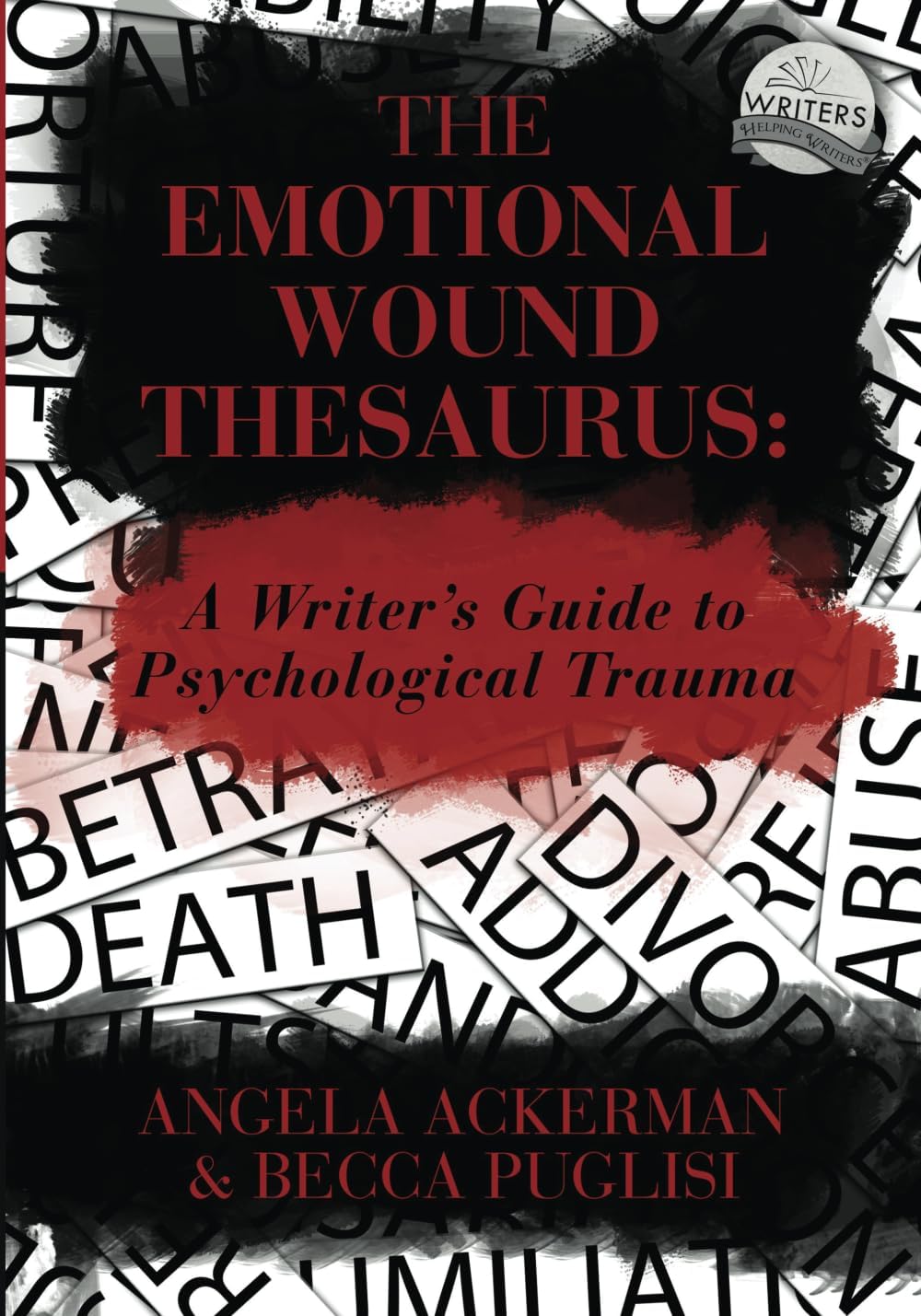
The Emotional Wound Thesaurus: A Writer's Guide to Psychological Trauma (Writers Helping Writers Series)
Product ID: 51255726
Buy anything from 5,000+ international stores. One checkout price. No surprise fees. Join 2M+ shoppers on Desertcart.
Desertcart purchases this item on your behalf and handles shipping, customs, and support to Vanuatu.
Readers connect to characters with depth, ones who have experienced life's ups and downs. To deliver key players that are both realistic and compelling, writers must know them intimately-not only who they are in the present story, but also what made them that way. Of all the formative experiences in a character's past, none are more destructive than emotional wounds. The aftershocks of trauma can change who they are, alter what they believe, and sabotage their ability to achieve meaningful goals, all of which will affect the trajectory of your story. Identifying the backstory wound is crucial to understanding how it will shape your character's behavior, and The Emotional Wound Thesaurus can help. Inside, you'll find: A database of traumatic situations common to the human experience An in-depth study on a wound's impact, including the fears, lies, personality shifts, and dysfunctional behaviors that can arise from different painful events An extensive analysis of character arc and how the wound and any resulting unmet needs fit into it Techniques on how to show the past experience to readers in a way that is both engaging and revelatory while avoiding the pitfalls of info dumps and telling A showcase of popular characters and how their traumatic experiences reshaped them, leading to very specific story goals A Backstory Wound Profile tool that will enable you to document your characters' negative past experiences and the aftereffects Root your characters in reality by giving them an authentic wound that causes difficulties and prompts them to strive for inner growth to overcome it. With its easy-to-read format and over 100 entries packed with information, The Emotional Wound Thesaurus is a crash course in psychology for creating characters that feel incredibly real to readers. Review: An Essential Resource for Creating Deep Characters - Because the fiction I write is based on my own past and overcoming emotional wounds, the discovery of The Emotional Wound Thesaurus was all the more important for me to learn to develop unique and layered female protagonists. Even though the conflict and themes of my current and future novels will somewhat reflect my own experiences, I also desire to write for and create relatable characters for women of all backgrounds. I've heard the notion that parts of who we are as people are reflected in the characters we write. Often, our first novel represents ourselves in part or in whole more than any other. I see it as a form of therapy as we work out our own personalities and struggles in the safe space of a fictional world. However, eventually, I'd like to write characters that are not like me at all! Perhaps an alter ego, or a story inspired by something I see on the news or hear about from friends. For my current fiction project, I’m writing from the POV of three sisters. Here are five ways I see The Emotional Wound Thesaurus can help writers create characters of depth – even when those characters are different from themselves or anyone else they know. 1. Forward and Intro Sections. Whether you think you know your characters or not, read the first 40 pages of this book! If you're not sure about your character's wounds yet, skim the table of contents and choose a few that seem to fit with your story concept. But then, go back and read the beginning chapters which offer exceptional insights on Self-Care for Writers (especially important if you'll be exploring wounds that are close to your own personal experiences), The Mirror of Fiction: a Reflection of Life and Our Deeper Selves, What is an Emotional Wound?, Character Arc: an Internal Shift to Embrace Change, and more. Even though I'd already used the online database of wounds to develop my characters, I still had several breakthroughs and "ah-ha" moments in understanding my fictional sisters and how to convey the various parts of their journey in my story. 2. Consider the PRIMARY Emotional Wound and choose two additional wounds. You may--as I did and especially if you're basing your main character after a part of your own life--begin to see overlapping characteristics related to multiple wounds. This will help you to discover the dominating negative and positive traits, triggers, fears and responses for your character. In turn, you'll be able to highlight these for fiction and the purpose of your story without overwhelming your reader with too many issues for your character to tackle. However, this process will help in knowing your character on a deeper level that should help in developing scenes, writing dialogue, or even choosing hobbies, family status, or a career path. 3. Multiple POVs. This is the first time I've attempted writing a novel with the point of view of three distinct women. Having access to The Emotional Wound Thesaurus has been a vital part in giving each woman a unique back story, personality, and voice despite the fact that they are sisters. 4. Add Your Own Elements. I'm certain this resource isn't intended to be an end-all-be-all, but more of a spring-board of potential. Though there are realistic and unrealistic manners in which someone will respond to an emotional wound, there are ways to modify these responses depending on your character. For example, say a character is still in the process of overcoming the wound of "Becoming a Caregiver at an Early Age". As a result, she's avoided becoming a parent herself. Instead, she has a dog to fulfill her need of caring for another being, but also sees it as "safer" than becoming a mom and she can practice being "overprotective" without rejection or push back. I came up with this detail on my own as it seemed to fit her personality. 5. Emotional Wounds are Directly Related to Positive and Negative Traits. Even if you don't analyze your characters or dive as deeply into their wounds as I have for mine, you'll find this resource helpful in creating rounded characters. This goes for your protagonist, supporting characters, and even the villain. On the most basic level, choose a wound and a few associated negative and positive traits and you've got yourself a unique character attempting to overcome the past while battling a conflict in the present. Review: Excellent Guide in Crafting Character Arcs - Extremely helpful in understanding how to create a character arc for my protagonist. This book helps writers in figuring out how their characters will respond based on their past experience(s).

| Best Sellers Rank | #43,700 in Books ( See Top 100 in Books ) #23 in Authorship Reference #37 in Fiction Writing Reference (Books) #52 in Writing Skill Reference (Books) |
| Customer Reviews | 4.8 out of 5 stars 2,309 Reviews |
M**O
An Essential Resource for Creating Deep Characters
Because the fiction I write is based on my own past and overcoming emotional wounds, the discovery of The Emotional Wound Thesaurus was all the more important for me to learn to develop unique and layered female protagonists. Even though the conflict and themes of my current and future novels will somewhat reflect my own experiences, I also desire to write for and create relatable characters for women of all backgrounds. I've heard the notion that parts of who we are as people are reflected in the characters we write. Often, our first novel represents ourselves in part or in whole more than any other. I see it as a form of therapy as we work out our own personalities and struggles in the safe space of a fictional world. However, eventually, I'd like to write characters that are not like me at all! Perhaps an alter ego, or a story inspired by something I see on the news or hear about from friends. For my current fiction project, I’m writing from the POV of three sisters. Here are five ways I see The Emotional Wound Thesaurus can help writers create characters of depth – even when those characters are different from themselves or anyone else they know. 1. Forward and Intro Sections. Whether you think you know your characters or not, read the first 40 pages of this book! If you're not sure about your character's wounds yet, skim the table of contents and choose a few that seem to fit with your story concept. But then, go back and read the beginning chapters which offer exceptional insights on Self-Care for Writers (especially important if you'll be exploring wounds that are close to your own personal experiences), The Mirror of Fiction: a Reflection of Life and Our Deeper Selves, What is an Emotional Wound?, Character Arc: an Internal Shift to Embrace Change, and more. Even though I'd already used the online database of wounds to develop my characters, I still had several breakthroughs and "ah-ha" moments in understanding my fictional sisters and how to convey the various parts of their journey in my story. 2. Consider the PRIMARY Emotional Wound and choose two additional wounds. You may--as I did and especially if you're basing your main character after a part of your own life--begin to see overlapping characteristics related to multiple wounds. This will help you to discover the dominating negative and positive traits, triggers, fears and responses for your character. In turn, you'll be able to highlight these for fiction and the purpose of your story without overwhelming your reader with too many issues for your character to tackle. However, this process will help in knowing your character on a deeper level that should help in developing scenes, writing dialogue, or even choosing hobbies, family status, or a career path. 3. Multiple POVs. This is the first time I've attempted writing a novel with the point of view of three distinct women. Having access to The Emotional Wound Thesaurus has been a vital part in giving each woman a unique back story, personality, and voice despite the fact that they are sisters. 4. Add Your Own Elements. I'm certain this resource isn't intended to be an end-all-be-all, but more of a spring-board of potential. Though there are realistic and unrealistic manners in which someone will respond to an emotional wound, there are ways to modify these responses depending on your character. For example, say a character is still in the process of overcoming the wound of "Becoming a Caregiver at an Early Age". As a result, she's avoided becoming a parent herself. Instead, she has a dog to fulfill her need of caring for another being, but also sees it as "safer" than becoming a mom and she can practice being "overprotective" without rejection or push back. I came up with this detail on my own as it seemed to fit her personality. 5. Emotional Wounds are Directly Related to Positive and Negative Traits. Even if you don't analyze your characters or dive as deeply into their wounds as I have for mine, you'll find this resource helpful in creating rounded characters. This goes for your protagonist, supporting characters, and even the villain. On the most basic level, choose a wound and a few associated negative and positive traits and you've got yourself a unique character attempting to overcome the past while battling a conflict in the present.
R**W
Excellent Guide in Crafting Character Arcs
Extremely helpful in understanding how to create a character arc for my protagonist. This book helps writers in figuring out how their characters will respond based on their past experience(s).
F**S
The #1 book every fiction writer should own.
I am a published writer and I can honestly say that this book has been a game-changer for me. It will give you more depth and insight into all your characters, and eliminate the problem of stereotypical or cardboard secondary characters. When you start to examine your each of your characters for their wound, you open a treasure chest of ideas to bring new life to your writing.
T**N
Another fantastic resource for writers
This team of authors keep knocking it out of the park. This book just adds to an amazing series of resources for writers, which dive into aspects of world building and character creation. In this book, the authors break down how various traumatic events can affect the development of personalities. The authors admit that they’re not trained psychologists, but the depth and breadth of their research definitely shows. What comes out as a result of that research is one of the best resource books in this ‘thesaurus’ series. I’ve made a point of picking up every book in this series because they have proved invaluable to me as a writer. While the books aren’t comprehensive (and they make no claims to be), they do provide more than enough samples, ideas, and concepts to trigger the creative process.
S**S
Incredible insights
Dear son, I was fishing around Amazon for something to read, and because I've read several books on writing, it suggested "The Emotional Wound Thesaurus." I've only recently studied anything about character arc, and how the protagonist must change over the course of the novel. I discovered that to create a compelling story, the main character must have some kind emotional wound they keep hidden, and that the story is a series of conflicts/obstacles that help him deal with that wound a little at a time and become a better person by the end. So, I grabbed the sample copy of Emotional Wound Thesaurus to check it out. It was eye-popping revealing. I saw myself in what they were describing. Believe me, I have a carefully curated inventory of wounds that I can retrieve at light speed. What I didn't realize is how these wounds manifest themselves in compensating behaviors, some good, some bad, some really bad. It's as if they read my life's wound inventory list, then said, "and this is what you did as a result, isn't it?" It was frigging uncanny. This book is trying to get authors to create more compelling, relatable, likeable characters through their quirky/mysterious behaviors, and eventually to grapple with the wound that drives their every action and strongest desires. Not only did it open my eyes to my own motivations and behaviors, but made me realize how everyone, everyone, everyone suffers the same kind of wound/reactive behaviors that guide their life's actions and choices. Many times I feel like the thousands of people I have met are cardboard cut-outs. They walk into my perception, say and do such and such, and I am left with a general impression. They're nice, obnoxious, a jerk, charming, what have you. After this life epiphany, I see other people as characteristics shaped by complicated positive and negative influences that make them behave the way they do. Even the unbelievably nice people are possibly significantly shaped by substantial wounds and the persona is a façade to mask they pain they feel deep down. And, really, this is the point the book is trying to get across. If you want interesting, compelling, or "three-dimensional" characters, rather than pop-in-and-out of your perception "two-dimensional card-board cutout" characters, imbue them with wounds that drive their personalities. Read this book! You don't have to buy it, even. At the very least, download the free sample. Your eyes will be opened and you will likely buy it because it's so good. I wish I had read something like this much earlier in life, like age 16. I always want to pass along golden nuggets that might help you succeed in life. Consider this nugget passed. Your fellow life-traveler, Daddio
M**A
A valued resource (a little limited)
I really enjoy and value this writing resource series, and I was particularly excited to get my hands on this volume. It has an excellent assortment of information and is a great resource, however, I felt the listings to be geared more towards certain genres rather than running a broader spectrum. By this, I mean that as a fantasy author, a genre where unspeakable tragedies often take place, there wasn’t much offered to pull from. Not even for a super specific sense, but when I think of the psychology of fantasy characters, I didn’t find much to pull from. I could say the same for science fiction, horror, etc.. This book is more tailored for general fiction, mostly contemporary though there is some to be pulled for other categories. If you want general info, this volume is great. If you’re looking for something with heavier trauma’s this might fall a little flat.
S**R
Great tool for character sketches
This is a great tool for character sketches. Characters need their flaws and emotional wounds are one way to build them in. While it would be wonderful that folks didn’t have emotional wounds, we (and our characters) do have them. The authors are clear that this book may affect some readers. They’ve included a section on self-care for writers. They include information how to use the book as well. The emotional wounds presented are grouped into similar wounds. For example, Failures ad Mistakes includes Accidentally killing someone, cracking under pressure, declaring bankruptcy, and more. There are several buckets wounds are grouped into. Each emotional wound has two pages in the book. Each includes: Examples of this wound Basic needs often compromised by this wound False beliefs that could be embraced The character may fear… Possible responses and results Personality traits that may form Triggers that might aggravate this wound Opportunities to face or overcome this wound Very handy tool for building characters. Emotional wounds are unfortunately part of our lives as humans. This guide can help a writer build richer characters. It can be a useful tool.
T**N
Great content.
This is a really useful tool and it is compiled in a useful way. Each emotional wound has two pages dedicated to it. Really useful things like triggers, physical ways that one suffering from this wound might act out, etc. I love it. I haven't come across any that I felt weren't sufficient by themselves. But if there were one that you wanted more information about, enough is given to be a great lead-in to additional research. And yes, I'm on my way to owning the whole set and hope they come out with more.
L**A
Don't let your cat pee on these!
This whole series is absolutely brilliant. My cat peed on the entire stack (yes, that actually happened), and I was so devastated. Actually I could use this book to come up with a better description of how I felt and reacted when my cat did that, but let's just leave it at devastated. I loved every book in this series so much that I ended up just biting the bullet and buying them all again. An expensive lesson in what not to leave on the floor next to your writing desk while you're in deep flow, when your cat has dementia.
A**N
Helpful resource
Helpful resource
B**R
Lots of information on different types of trauma.
This book is about emotional trauma and gives lots of insight into different types of trauma. Great for the would be writer and easy to follow. I highly recommend. It was a good read.
J**A
Perfecro
Perfección!!! Ayuda mucho a entender la psique de la mente humana de cara a desarrollar personajes. Es perfecto para personas que escriben. Viene en inglés pero se entiende muy fácil
M**S
Excellent Resourse for Writers & Those Wishing to Understand Effects of Real Life Trauma
In my opinion, this book doubles not only as a great resource for writers when researching & building your characters, but also provides insight into how real life humans who have experienced traumas respond, the ripple effects of specific traumas that appear later in life, and triggers for each traumatic condition. Highly recommend for both writers and for those seeking personal growth through understanding how trauma has affect their lives, or lives of their loved ones and friends.
Trustpilot
1 month ago
2 months ago