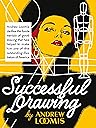

Successful Drawing [Loomis, Andrew] on desertcart.com. *FREE* shipping on qualifying offers. Successful Drawing Review: The best books on learning how to draw you can buy. Highly recommend. - The gold standard of drawing guides. For decades Andrew Loomis' books were highly sought after by both aspiring artists and professional artists/illustrators eager to learn from Loomis' methods. Thank god they're back in print. This book covers the key factors in learning to draw: Figure Drawing, Perspective, composition, and more. Loomis' books should be part of every artist's library. Review: A classic! - A classic!!! This is a beautiful book of old school drawing techniques.


| Best Sellers Rank | #78,621 in Books ( See Top 100 in Books ) #111 in Figure Drawing Guides #152 in Pen & Ink Drawing #3,127 in Crafts & Hobbies (Books) |
| Customer Reviews | 4.8 4.8 out of 5 stars (635) |
| Dimensions | 9 x 1 x 12.5 inches |
| Edition | First Edition |
| ISBN-10 | 0857687611 |
| ISBN-13 | 978-0857687616 |
| Item Weight | 2.31 pounds |
| Language | English |
| Print length | 160 pages |
| Publication date | May 8, 2012 |
| Publisher | Titan Books (UK) |
T**R
The best books on learning how to draw you can buy. Highly recommend.
The gold standard of drawing guides. For decades Andrew Loomis' books were highly sought after by both aspiring artists and professional artists/illustrators eager to learn from Loomis' methods. Thank god they're back in print. This book covers the key factors in learning to draw: Figure Drawing, Perspective, composition, and more. Loomis' books should be part of every artist's library.
R**A
A classic!
A classic!!! This is a beautiful book of old school drawing techniques.
A**T
Art Student review
If you're picking this book up chances are you're also interested in art either as a hobby or a profession so i would say this is a great read for anyone interested in art. unlike the other books by Loomis this one focuses mainly on developing an artist eye that is composition and design. He has a small section on perspective where he covers the main points so its not in depth as other books on the subject but its a good ground work. the next section of the book is regarding light and planes. while not filled with as much of the great figure work in his other books it does focus on the two of the most important things any artist can learn ie Perspective, Light and Shadow. While there are books that are more in depth on the subjects covered in this book any Loomis fan will want to see how he brings life to his artworks. all in all i would say this book is good for anyone with even a passing interest in art as the best sections are Andrews opening and closing chats that really help to inspire any artistic inclinations within the reader. Now go and draw already!
T**U
Don't pass this one up.
In fact, don't pass up any of the Loomis books. One word of caution though, he'll give you the information you need to start with in this book, but isn't totally complete so I suggest you supplement with other authors. Here are a few of my suggestions: Edwards, Dodson, Peck, Bridgman, Richer, Hale and of course any of Loomis' suggestions. I actually began re-learning how to draw after around 16 years and "Successful Drawing" has the basic all important "key fundamentals" on drawing. So it's, in my opinion, not a bad place to start. I suggest, however, to pick up both the Edwards and maybe even the Dodson book to help you understand in more complete detail, the components, elements, including technique on good drawing. Loomis, in this book and his figure drawing book, suggests that you learn from his drawings and also to draw from life. Again if you want to be able to copy clearly and accurately what you "see", start with the Edwards book, then for technique, such as restating lines, the "Key's to Drawing" book. I have some advice on the Edwards book. I think it talks way too much about psychological theory, but if you can get past all that, you'll find gems of artistic advice. So again, I wouldn't pass up any of the Loomis books. If nothing else, he has everything you need in art education and can guide you in the right direction for further study. Read carefully what he has to say, study his illustrations thoroughly, apply the knowledge, practice and draw all the time. As for my suggestions, for all other authors to study from, I found them by researching drawing forums. This is your best bet if you still have any kind of trouble. One of the best one's I've found, if not the best, is called CG Society, google it and find tons of information in their general techniques forum section. By the way, there is a certain order that you should keep in mind when studying the Loomis books. Things will make a lot more sense, with some minor overlap. Update: Here's my suggested order: Fun with a Pencil Figure Drawing For All It's Worth / Successful Drawing / Drawing the Heads and Hands Creative Illustration The Painter's Eye
P**A
Good but covers a few areas only
This book is more advanced than the two earlier books, Figure Drawing for All It's Worth and Drawing the Head and Hands . Compared to other books that try to cover everything, this book focuses on certain aspects of drawing. There's a great deal of emphasis on perspective and that section is 80 pages, which is half of this 160-page hardcover. At times, it can be quite difficult to follow because there's too many things explained at the same time. The part on drawing figures on different planes and elevation is quite useful. And also the part on common perspective mistakes. The second half of the book covers lighting. It's stuff like how light rolls of a sphere, cone and cube. The application is more on figures as with the accompanying illustrated examples. There are many useful drawing pointers to take note of. The book doesn't cover everything, or at least topics I would expect from a drawing book. What's missing are topics such as composition, contour drawings, colours, drawing portraits (dealt in his other books) and drawing techniques like hatching, layering tones, etc. It doesn't cover drawing by eye which deals with proportion, although it is mentioned briefly which can be overlooked easily. Ultimately, the book is on understanding the fundamentals behind drawings. There isn't any step-by-step instructions to follow along, you learn by copying what's shown. This is an intermediate book more suited for those with some knowledge of drawing, more specifically for those looking to learning perspective and lighting. If you have the two other Loomis books mentioned above, then you can easily apply what you've learned. If you're looking to draw something instantly, then I would recommend more elementary beginner books. For perspective, you can try Perspective Made Easy , and Keys to Drawing for drawing in general. I'll also recommend Lessons in Classical Drawing because that book is also about successful drawing.
J**A
El libro cumple con las espectativas físicas y el envío con la logística de Amazon.. Muy buen producto y envío ...
J**T
This is an excellent book that is very practical and well thought out. I am with the consensus here that Loomis is (was) a superior teacher. It is also worth noting that the Loomis re-issues under the Titan Books imprimateur are very well produced. Don't have any worries on that score. Happy drawing.
D**S
Bought as a gift, recipient was happy.
A**S
Loomis é um mestre. Didática fácil. Livro excelente pra iniciantes e intermediários q já tem um bom traço mas precisam ajustar suas criações.
A**N
Great Artist, a wonderful book. If you want to get good at drawing, this is for you.
A**A
Delighted to receive this book. Its a must for every aspiring artist to read if they wish to channalise their efforts in right direction. I had seen some page shots of the book on Pinterest and once I knew the book, I ordered immediately. Loomis has explained all the P's and C's of a successful drawing and how to master it.
Trustpilot
3 weeks ago
2 weeks ago