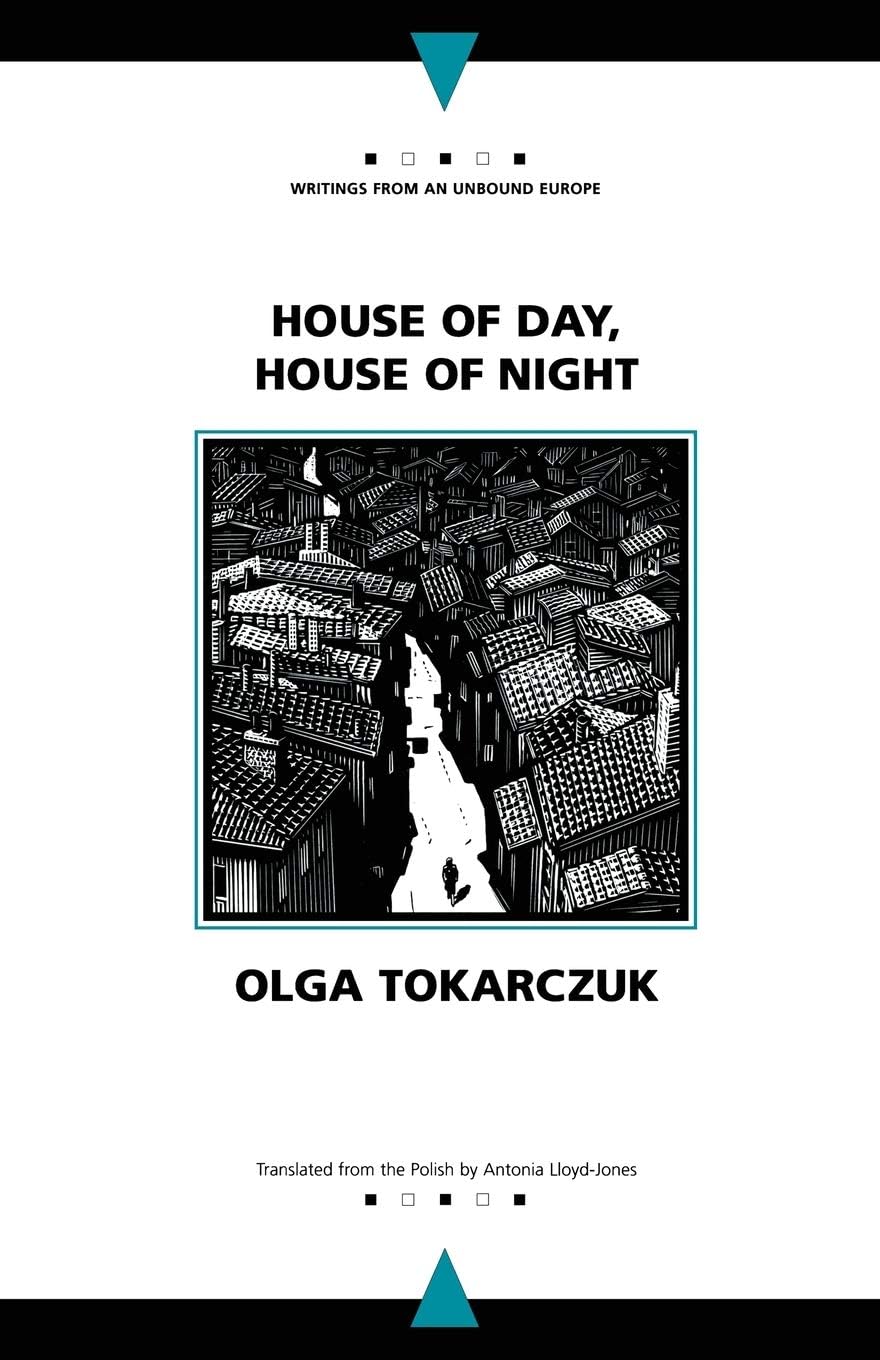
House of Day, House of Night (Writings From An Unbound Europe)
Product ID: 76088563
The English translation of the prize-winning international bestseller Winner of the Gunter Grass Prize Nowa Ruda is a small town in Silesia, an area that has been a part of Poland, Germany, and the former Czechoslovakia in the past. When the narrator moves into the area, she and discovers everyone-and everything-has its own story. With the help of Marta, her enigmatic neighbor, the narrator accumulates these stories, tracing the history of Nowa Ruda from the founding of the town to the lives of its saints, from the caller who wins the radio quiz every day to the tale of the man who causes international tension when he dies on the border, one leg on the Polish side, the other on the Czech side. Each of the stories represents a brick and they interlock to reveal the immense monument that is the town. What emerges is the message that the history of any place--no matter how humble--is limitless, that by describing or digging at the roots of a life, a house, or a neighborhood, one can see all the connections, not only with one's self and one's dreams but also with all of the universe. Richly imagined, weaving in anecdote with recipes and gossip, Tokarczuk's novel is an epic of a small place. Since its original publication in 1998 it has remained a bestseller in Poland. House of Day, House of Night is the English-language debut of one of Europe's best young writers. Review: Tokarczuk's magic realism at work - POSITIVE: It's nice to see (finally) a very proficient representative of magic realism or marvelous realism--a style or genre of fiction and art that presents a realistic view of the world while incorporating magical elements, often blurring the lines between speculation and reality. In this book, a bunch of seemingly unrelated stories are "magically" interwoven and come together while still maintain their individuality. NEUTRAL: Riverhead hardcover edition. 2002/2025. Nice imprint and OK binding. 319 pages without extras. Translator: Antonia Lloyd-Jones. NEGATIVE: None. (A few common words present in the various areas of Eastern and Central Europe that could be translated a bit differently, but it would carry the same meaning--just more commonly used. But otherwise, no complaints about the translation). OVERALL: 4.5/5. A nice and quality weekend reading for those who stay with these stories. It may not be for everybody, but most of us don't earn the Noble Prize either. Review: Life In The Polish Countryside - An unnamed woman and her partner, named only by R., move into a small Polish village far into the country and right on the border with Czechoslovakia. They know no one and the book tells their story through the stories of those they meet and get to know. One theme running through the entire book is that of a local saint, who was crucified by her own father for refusing to leave the nunnery and marry a man he wished to get in his debt. Before he killed her, the woman was given a long golden beard by God in order to make her look like Jesus and thus save her from the marriage. Much of what the couple learn about the villagers and their culture and history come from an old woman, Marta, who lives next door. She treats their illnesses, brings them mushrooms and other plants to cook, and tells them stories. The couple start to feel responsible for Marta's well-being. The reader also learns the stories of other characters. Paschalis is a monk who wishes he were a woman. He is beautiful and ends up living in a nunnery where he writes the story of the local saint, who is named Kummernis. There is the man who dies with one leg on the Polish side of the border and the other leg on the Czechoslovakian side and whose body border sentries move back and forth, hoping to get their own relaxation and put the work of reporting a death on the guards from the other country. There is an alcoholic who drinks himself to death, after a lifetime of believing that he shares his body with that of a bird. Olga Tokarczuk is a Polish author who has won both the Nobel Prize in Literature and the International Booker. Her books tend to focus on lives in the country and how the isolation molds their characters. Some are mysteries, some are biographical and some are shaped by classic books that were written in the past. Her writing is dense but well-researched and the reader is drawn along by the desire to learn more about the individuals she is portraying. I liked this book more than the other two I've read by her and was fascinated by the story of Saint Kummernis. This book is recommended for literary and multicultural readers.
| Best Sellers Rank | #3,114,051 in Books ( See Top 100 in Books ) #622 in Short Stories (Books) #2,409 in Literary Fiction (Books) #14,196 in Small Town & Rural Fiction (Books) |
| Customer Reviews | 4.2 out of 5 stars 186 Reviews |
Z**S
Tokarczuk's magic realism at work
POSITIVE: It's nice to see (finally) a very proficient representative of magic realism or marvelous realism--a style or genre of fiction and art that presents a realistic view of the world while incorporating magical elements, often blurring the lines between speculation and reality. In this book, a bunch of seemingly unrelated stories are "magically" interwoven and come together while still maintain their individuality. NEUTRAL: Riverhead hardcover edition. 2002/2025. Nice imprint and OK binding. 319 pages without extras. Translator: Antonia Lloyd-Jones. NEGATIVE: None. (A few common words present in the various areas of Eastern and Central Europe that could be translated a bit differently, but it would carry the same meaning--just more commonly used. But otherwise, no complaints about the translation). OVERALL: 4.5/5. A nice and quality weekend reading for those who stay with these stories. It may not be for everybody, but most of us don't earn the Noble Prize either.
S**D
Life In The Polish Countryside
An unnamed woman and her partner, named only by R., move into a small Polish village far into the country and right on the border with Czechoslovakia. They know no one and the book tells their story through the stories of those they meet and get to know. One theme running through the entire book is that of a local saint, who was crucified by her own father for refusing to leave the nunnery and marry a man he wished to get in his debt. Before he killed her, the woman was given a long golden beard by God in order to make her look like Jesus and thus save her from the marriage. Much of what the couple learn about the villagers and their culture and history come from an old woman, Marta, who lives next door. She treats their illnesses, brings them mushrooms and other plants to cook, and tells them stories. The couple start to feel responsible for Marta's well-being. The reader also learns the stories of other characters. Paschalis is a monk who wishes he were a woman. He is beautiful and ends up living in a nunnery where he writes the story of the local saint, who is named Kummernis. There is the man who dies with one leg on the Polish side of the border and the other leg on the Czechoslovakian side and whose body border sentries move back and forth, hoping to get their own relaxation and put the work of reporting a death on the guards from the other country. There is an alcoholic who drinks himself to death, after a lifetime of believing that he shares his body with that of a bird. Olga Tokarczuk is a Polish author who has won both the Nobel Prize in Literature and the International Booker. Her books tend to focus on lives in the country and how the isolation molds their characters. Some are mysteries, some are biographical and some are shaped by classic books that were written in the past. Her writing is dense but well-researched and the reader is drawn along by the desire to learn more about the individuals she is portraying. I liked this book more than the other two I've read by her and was fascinated by the story of Saint Kummernis. This book is recommended for literary and multicultural readers.
C**Y
Read it!!!
She's a wonderful thought provoking writer. I found the issues she covers surface repeatedly in my mind.
M**K
Incomplete portrait
I have noticed, over the years, that many Post-War Polish writers tend to write in short chapters, even short stories, that appear (often) unrelated yet acquire a relationship as the book progresses because of the interrelationships and accidental coincidences that occur. This appears to be largely true with "House of Day, House of Night". It becomes quite obvious, very quickly, that the book consists of a series of short stories (sometimes VERY short) that remind one of random(ish) notes one might make when researching a topic; recipes, descriptions of places and flora, conversations one has had. Dysfunctional characters appear; an alcoholic who watches his world disintegrate, a bank clerk who falls in love with the man in her dreams only to find reality harsh and disappointing, a survivor of the Gulags who finds himself condemned in a chance statement he reads in Plato. My early impression of the book was of a portrait being painted with dabs of colour and shade here and there. In fact it began to remind me very much of a Swiss cheese full of holes except that it is the holes that are solid and the cheese that is empty space. The solid holes, at times, exude a sort of energy, an electricity that charges the empty space between them and begins to create something shadowy but still unreal. There were times I found the book too disjointed. It is well-written and quite interesting at times but it didn't always grip my attention wholeheartedly. I would go off and do other things (draw, write, walk) so that my reading experience became even more disjointed. When I used to work I used to read a chapter of a book before I set off... this book would have been ideal for those days. Now, in my retirement, I don't enjoy "clever" books, I yearn for a gripping read, an interesting story. And yet I do not feel I am doing the book justice. It IS well-written, some of the stories ARE interesting, poignant, even tragic. Every now and then some fascinating thread is developed or some character pulls at you... I feel there was a really good book here but it was left among the notes and jottings and never got written.
M**S
If you liked Flights read this next!
Like Flights, this one is a "fragmentary" novel. I'm very partial to Olga Tokarczuk, she is one of my favorites, and this might be one of my favorites among her books.
F**.
Four Stars
Totally different approach to a novel and to the lives she explores.
S**D
A Special Day and Night.
The powerful style pulls you right into the narrative and you spend the rest of the book in this Author Land.
A**R
I'm still not sure which house was which...
This is a brilliant novel, but it is not for everyone. If you need a plot driven narrative, then this is not for you. However, if you crave intricate narratives that twist through time and space, that comment on history and philosophy, religion and myth, this is a treasure. House of Day, House of Night explores a space between Germany and Poland, where borders moved, where people were moved, and then looks at the consequences on both the people and the land. This was the first novel by Tokarczuk that I have read, but I now intend to read them all.
Z**A
This is the best book of Olga Tokarczuk, strongly recommended!
We even say that we are jealous that you didn't read the book yet, magic of the wonderful worlds is awaiting! Strange beliefs people have in the mountains, crazy legends and journeys. Everything on the land that was crossed by many borders (Polish, Czech and German). Enjoy!
A**R
A marvellous novel
One of the best contemporary Polish writers, Olga Tokarczuk, was originally published in 1998. It is a wonderful meditation on history and the paths of connectivity that join all forms of life. The book is moving, surprising and beautifully crafted. One of my favourites but this brilliant writer.
S**Y
An Olga gem
Love an Olga story. Not story telling by numbers but a true novelist
J**J
Another book by Nobel Prize-winning author
Another excellent book by Poland's most prominent contemporary novelist.
M**K
Incomplete portrait
I have noticed, over the years, that many Post-War Polish writers tend to write in short chapters, even short stories, that appear (often) unrelated yet acquire a relationship as the book progresses because of the interrelationships and accidental coincidences that occur. This appears to be largely true with "House of Day, House of Night". It becomes quite obvious, very quickly, that the book consists of a series of short stories (sometimes VERY short) that remind one of random(ish) notes one might make when researching a topic; recipes, descriptions of places and flora, conversations one has had. Dysfunctional characters appear; an alcoholic who watches his world disintegrate, a bank clerk who falls in love with the man in her dreams only to find reality harsh and disappointing, a survivor of the Gulags who finds himself condemned in a chance statement he reads in Plato. My early impression of the book was of a portrait being painted with dabs of colour and shade here and there. In fact it began to remind me very much of a Swiss cheese full of holes except that it is the holes that are solid and the cheese that is empty space. The solid holes, at times, exude a sort of energy, an electricity that charges the empty space between them and begins to create something shadowy but still unreal. There were times I found the book too disjointed. It is well-written and quite interesting at times but it didn't always grip my attention wholeheartedly. I would go off and do other things (draw, write, walk) so that my reading experience became even more disjointed. When I used to work I used to read a chapter of a book before I set off... this book would have been ideal for those days. Now, in my retirement, I don't enjoy "clever" books, I yearn for a gripping read, an interesting story. And yet I do not feel I am doing the book justice. It IS well-written, some of the stories ARE interesting, poignant, even tragic. Every now and then some fascinating thread is developed or some character pulls at you... I feel there was a really good book here but it was left among the notes and jottings and never got written.
Trustpilot
3 weeks ago
2 weeks ago