🌿 Unlock your lawn’s full potential with every step!
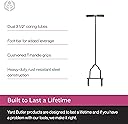
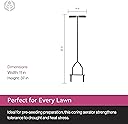
The Yard Butler Manual Lawn Coring Aerator is a robust, powder-coated steel garden tool designed for ergonomic, efficient lawn aeration. Featuring a 37-inch long handle and cushioned grips, it reduces back strain while removing 3-inch soil plugs via a dual plug coring system with a foot bar for leverage. Ideal for compacted or high-traffic lawns, it enhances water, nutrient, and oxygen flow to roots, promoting healthier, greener grass. Built for durability and eco-conscious DIYers, this tool offers a long-lasting, hands-on alternative to powered aerators.


| Best Sellers Rank | #47,228 in Patio, Lawn & Garden ( See Top 100 in Patio, Lawn & Garden ) #37 in Manual Lawn Aerators |
| Customer Reviews | 4.3 out of 5 stars 9,248 Reviews |
A**D
Solid Tool That Gets the Job Done
I purchased the Butler Manual Lawn Coring Aerator to help improve my lawn's health, and I’ve been very impressed with how well it works. The tool is sturdy, well-built, and surprisingly easy to use for a manual aerator. It pulls nice, clean plugs from the soil, which has helped loosen up compacted areas in my yard. After using it, I noticed better water absorption and healthier grass growth in just a few weeks. It’s also a great alternative to renting a powered aerator if you have a smaller yard or prefer a more hands-on approach. The dethatching effect is an added bonus too—makes it a great 2-in-1 tool. Definitely a worthwhile investment for any DIY lawn care enthusiast. Highly recommended if you’re looking to give your grass a boost without breaking the bank.
T**B
Very Impressed
I've used it several times in the past 6 weeks. I get my entire lawn core aerated annually by a gas powered machine, but I bought this for the following uses: * The soil gets compacted at the gate from the front yard to the back yard. It's a funnel so all of the traffic goes in a narrow area, and it especially gets compacted when I have a big garden project that requires wheel barrows. I used it here when it first arrived and it did great, and then used it again after a big gardening project. * I have St Augustine grass so in the fall there are a few areas that get brown patch. This year, on those 3 spots I used the aerator and then top dressed with leaf mold compost prior to brown patch season. Should prevent the brown patch and help get some organic matter into the soil. * The darn cinch bugs killed a couple spots in lawn along the sidewalk. After killing off the cinch bugs, I used the aerator in the dead grass and top dressed with leaf mold compost. The core aeration will help get some organic matter into the soil while the St. Augustine grass fills in the compost. Positives: * It produces nice sized cores both in terms of depth and diameter. * It's very simple to use. It's mindless work and one of the few times being overweight pays off. * It's very sturdy and well constructed. Feels like something that will last many, many years. Negatives: * It's a lot of work so best for small areas. Rent a gas powered core aerator to do entire lawn or hire a contractor. * The last core stays in the tool so you need to push it out with a screwdriver at the end of the project.
A**S
Still best results compared to most other step types.
Bought one a few years ago at a Lowe's or Osh that I thought was the Hound Dog branded "Turf Hound" but it looked almost identical to the "Yard Butler" instead, so I don't know if the companies are related or maybe I just had a brain fart and filed the memory incorrectly. It worked well enough that I wore that down to nubs (see photo comparing the old one to new) thanks to hard clay soil that had to be pretty moist to penetrate making the tips rust, chip,or bend into the tube, and then having to file or grind the ends back to a functional point. When this seasons plugs were all coming out stumpy, I figured I could use a replacement and wondered if there might be a tool that didn't clog as much as that had. I think that in certain clays, it's inevitable, though you can minimize it by working it only after it's been watered and oiling the tines before and after using the tool. I have tried ones with more tines, and they are much harder to push into the ground since I am only 5'2 and 130lbs, so the two tines works better for me. I also find the height of the handle appropriate on this one, and the T design is comfortable because I can switch feet easily, without knocking a knee into the sides of the handle. I'm not sure how this compares with using the Hound Dog model, except that the center handle might help with pivoting the thing from side to side more easily when necessary, or perhaps the stepping space might be easier to access on the Dog version because it's more open. But then again, I also find it helpful that the shape above the step on the Butler helps ensure I don't just step THROUGH it and miss planting it down firmly. I did try the red one with thicker tines and the step "lifting bar" (see pics for side by sides) in hopes that it would be less clog prone, but found that the shape made it noteably more difficult to push into the ground than the slightly thinner and longer tines of the Butler. It may be because they are thicker, even though they are tapered, or maybe because they are cut square instead of at an angle like the Butler, which slid much more deeply and smoothly into the ground. Though the other one DID seem to be less likely to pack up with soil IN the tines, it also was much more problematic in dirt clogging AROUND the them instead (see pics). Go figure... The step bar on the red one didn't really add anything useful to the process for me, as it wasn't really helpful to try and use my foot to pick up the tool. It actually seemed a bit more in the way when switching feet, which I did much more frequently than trying to lift it with the foot. Some may prefer the thicker grips on the red one, but my hands are pretty large and I had no issues with the thinner ones. The one clear advantage of the red one is really probably the color itself, as I did have trouble locating the green Yard Butler on the lawn if I stepped away from it. The red is totally obvious to spot immediately. Lastly, I also preferred the resulting plug length of the Butler. The thickness of the other was beaten by the depth of extracted material with Yard Butler. (Last picture shows all 3 YB cores on the left vs 3 shorter of the other tool on the right). Definitely get an extra inch or more with the YB tool. YB beats the spike sort and more complicated coring setups on manual tools. There might be some real advantage to a rolling disc type on ebay, but it costs much more. If you have a large enough yard, though, it might be worth the cost over renting something powered, especially if you don't have something that needs a riding mower in size. My mom's lawn is probably 2000 sq ft, and it can be a workout and a long day to step core the whole thing alone, but I do it a little at a time whenever I visit and it's fine because the tool is always available and quiet enough to use in the middle of the night so the summer heat isn't overwhelming. I dig it. And it really does improve the lawn significantly. If I see it's getting a bit tired looking, I know it's time to step some air into thr soil and it thickens up nicely. For the money, it's a win in my book. Id like to try the other design I saw on Amazon too, which ejects the cores on the SIDE of the tine instead of through the top, as that might be less likely to pack into a clog, but I would want to know it was really better before spending twice as much money on it. For now I am doing fine with this and maybe will try the other if it wears down so far in a few years as the last one did. ..
A**R
Well worth the price
Works great! I hadn’t paid to have my lawn aerated in years as I have backyard chickens, trees and other plants that I didn’t want damaged. So with this hand aerator, I was able to control where I aerated (avoiding tree roots, etc) and how much I wanted. It is not hard to do but it does take time and can be a little bit of a work out. I am only 5’1” and had no problems with it other than getting a blister so wear gloves! I aerated heavily and my yard is looking good so it needed it. This is well worth the $, is built well and not heavy to work with. I did have some soil stick to it a couple of times because it’s clay and it was just a little too wet (end of February and a few days after a snow fall) so I poked the soil out and cleaned with with a long cylindrical brush. So make sure that the soil is NOT too wet not too dry when doing this. I only wish I had bought this earlier.
J**E
Average Joe trying to aerate lawn
First off, bad packaging. Looked like someone just found an old box through in the yard butler and place a single piece of tape to close it. When i picked it up the box looked smashed and was partially open. Anyways, I got the yard butler out and it felt very solid (well made). As for the performance i would have to say that depends on your lawn. The type of soil and how dry it is limits the performance of this tool. I have clay soil and i watered my lawn a day before. Got the yard butler out to put it to the test. The first few feet it worked great, the tool was making holes and plugs were falling on the lawn. Then it got clogged with the clay soil. So i spend a few minutes unclogging it, which is hard to do. You have to drive a screw driver to clear it out and even then the soil stick to the sides. Tried spraying with water hose and even that didn't work. Did the best i could to clean it and continued making holes, but after a few succesfull holes with plugs coming out it got clogged again. Got tired of cleaning it so much so i decided to just make holes without plugs. I would have to say that given the type of soil i have, i would not buy or recommend this product to a friend. I would rather rent a gas powered aerator.
F**R
Darn Good Tool
I purchased this manual lawn aerator a couple of weeks ago after deciding (based on Amazon customer reviews) it would probably be the best choice for use in the clay soil my lawn grows in. When my soil is dry it is like concrete and when it's wet it is gooey and sticky. I waited for some rain to thoroughly moisten the soil into the root zone; knowing that there was no way I could effectively use the aerator when the soil was dry and hard. It is key to have the soil moist through the lawn's root zone, especially in clay soil. So far I have completed aerating the backyard portion of my lawn. Being a "dot-the-eyes-and-cross-the-tees" kind of guy, I tracked how much time it took me to do the backyard lawn, which was a total of 4 hours 25 minutes. Based on the square footage of my backyard, my production rate with the aerator was an average of approximately 325 square feet per hour (slower in the compacted areas, faster in the not-compacted areas). Even though I have clay soil, this tool worked very well to punch holes in the soil profile of my lawn. In those areas where the soil was most compacted it did require more serious downward pressure and effort with my foot (and some side-to-side wiggling) to get the 3-inch spikes all the way down into the soil. In the less compacted (or not compacted at all) areas the spikes went in to their full length with a minimum of downward foot pressure. I worked the entire backyard in parallel straight rows/columns, punching the row of 4 spikes at the recommended 6" to 8" apart (locating my parallel rows/columns about 3" to 4" apart). I found that is was easier to see where you'd punched your holes if the lawn was recently mowed. So far I have had no problems at all with this aerator after 4 hours 25 minutes of use. It is strongly constructed of steel with very sturdy, stout welds. The only thing I would change is to have it built maybe 3 or 4 inches longer (the total length of the tool is 36 inches). I am 6 feet tall and have to bend over a bit when using it, which causes me some back soreness after prolonged use (I'm 66 years old and my back isn't in tip-top shape any more). Using the aerator is a bit of a workout and can cause you to break into a sweat if it's warm outside. I'm very happy with this tool and will use it on my entire lawn, after which I will fertilize. Will its use improve the condition of my lawn? I think it will, but time will tell.
A**R
Absolutely superb, easy to use even in the desert
This is a great tool. I live in the desert. Our soil is rock hard, full of rocks, and very poor. It is also full of clay and highly compacted. I put a sprinkler head on the hose and let it go for ten minutes, then used the Yard Butler. After reading so many complaints, I was skeptical, but it pushed in with almost no effort. Yes, if I went outside the soaked area it was harder to use, but it should be obvious that when you want to push a steel object into your compacted lawn soil, you need to wet the ground first. If you don't, no hand tool is going to work well in hard dry soil. Just reset the sprinkler, take a break, and start again. When used properly (use your foot on the foot bar--that's what it's for) on a pre-soaked lawn, this tool is amazingly simple and easy to use. And it's fun too. Another note: I was fresh off a bad back injury (a bulged disk), but after a visit the chiropractor I decided to try the lawn butler for a couple of trial holes just to see if I could do it for a few minutes without too much pain. I proceeded to do my entire front yard in a series of 10-minute soaks, then ten minutes of aerating. Easy, simple, effective. Note too that the instructions are very clear: do not clear the holes until you are done. Just let the plugs push up through and fall out. This pulls up beneficial nutrients and microbes from root level to the surface and is like fertilizing. When you are all done, clean it thoroughly, dry, and store properly, like you should with any tool. Likewise, you do not want to torque or twist ANY tool, except maybe an Estwing. Push it straight down into your soaked lawn, using your foot, not your hands. Pull it straight back up. If you have to twist and torque, you did not wet the lawn enough, so set the sprinkler for another 5-10 minutes and repeat. Bottom line: if this can work in my hard, rocky, desert town, (and with a bad back to boot) it can work anywhere. Highly recommended! Fast shipping too.
R**E
Is a slow go, but works.
It works fine but takes a lot of time and energy, but if you break your yard up into smaller sections and do a little at a time spread out over a couple of weeks it does what ii is suppose to do. Works better with the ground slightly damp. I spread so pelletized gemstone down 1st then waited for a good rain, then the next day tackled a 22 ft. by 50 ft. area.
Trustpilot
1 week ago
2 weeks ago