📷 Elevate your storytelling — shoot like a pro, wherever life takes you!
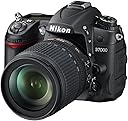
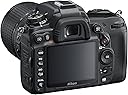
The Nikon D7000 is a versatile DSLR designed for serious enthusiasts and professionals, featuring a 16.2MP DX-format CMOS sensor, rapid 6 fps continuous shooting, and Full HD 1080p video with full-time autofocus. Its advanced 2,016-pixel RGB metering sensor and 39-point autofocus system deliver precise exposure and sharp focus in diverse conditions. Encased in a durable, weather-sealed magnesium alloy body, the D7000 supports dual SD cards for flexible storage and offers extensive customization options, making it a powerful tool for both photography and cinematography.
| Aspect Ratio | 1.83:1 |
| Best Sellers Rank | #198,429 in Electronics ( See Top 100 in Electronics ) #288 in DSLR Cameras |
| Compatible Mountings | Nikon F (DX), Nikon F (FX) |
| Customer Reviews | 4.6 out of 5 stars 380 Reviews |
| Image Stabilization | Digital |
| Maximum Focal Length | 105 Millimeters |
| Photo Sensor Technology | CMOS |
| Supported File Format | JPEG, RAW, WAV, MPEG-4 AVC&H.264 |
G**M
My best HD camera ever!
Well, I'm still discovering a lot of functions... but here 10 key points. 1) In terms of QUALITY is amazing for its price. Everything is very professional, good materials, looks pro, feels pro. 2) PHOTO, I always loved Nikon and I still prefer Nikon over other brands. They keep on improving. 3) VIDEO, the HD quality is amazing, my only complain is that it has no 30 FPS in 1080p, only in 720p. I use it often in 24 FPS so I don't mind, but it's a flaw if you want to shoot content for TV in the highest quality/size. I hope they can upgrade it some day through firmware. 4) It's a little HEAVY with the 18-200 lens, but it's ok for its size/functions. It's average. 5) It's one of the few cameras in the market with a built-in INTERVALOMETER. A few days ago I was shooting a time lapse and it came out perfect, very easy to set from the menu. 6) I love the TWO CARDS slot for back up. Very convenient. Or you can also use it for JPG + RAW. 7) The TWO WHEELS system is fantastic and very customizable. For example, you can define that in (A)perture mode, you will use one wheel to set aperture (shutter speed comes automatically), and the second wheel to set ISO, or something else. 8) It has many customizable functions in different buttons (virtual horizon, same use than the bubble in the tripods), a new button: preview the depth-of-field, etc. 9) They compare it with the Canon 60D but I'd say it's comparable with the 7D. In some things the 7D is a step above, but in others the Nikon is way better. 10) Lots of alternatives for metering and focus, combinations from a single spot to a 3D tracking, from one point of focus to 39 points. Depending on photo/video, what kind of scene, how many subjects and how fast they move, you have a bunch of combinations. Or just do it completely manual. It's a great alternative to Canon 60D/7D/5D for pro level HD movies. I compared it to the 7D for a long time, and I finally chose the D7000 for quality and similar functions, but much cheaper. The rest of the money just save it, buy audio stuff like the Zoom H4n @ $299, or put it in more lenses (like the new 50mm 1.8/G @ $219. I don't regret and I'm loving it!
G**Y
D7000! Wow! Nice camera but I can't get it away from my wife!
This is a preliminary review. I'm a pro photographer who has been faithfully served by Nikon D200 & D300's for event and nature photography. Just before a trip to the Everglades, my D300's lcd info panel light wouldn't turn off and it kept abnormally seeking the cf card resulting in quick battery drain. Of course the fix was having lots of batteries and turning it off when not shooting. But In panic assuming that the D300 was going to completely fail, I read Ken Rockwell's review and noticed the D7000's price. With time running out and not wanting to shell out $7K for the D3x (or D700 for other reasons) I somehow found one D7000 kit, but not body, offered by Amazon and could get it quickly. It was on b/o everywhere else I looked. I didn't want or need the lens, but what can you do sometimes? I haven't had time to evaluate image quality in detail, but it's impressive at least up to ISO 1600. Without the battery attachment it's small and light, but with good ergonomics. It's got most of the feature required for my shoots and tons of goodies if you're just a camera bug. Combined with the 18-200 VR it's a dynamite, relatively affordable package. It was easy to use without consulting the unusually well written manual. However, if you're used to the D300, etc., you won't be happy with the organization of the controls. The iso button's on the back left and the exposure options are set with a dial like on the D70, so you can't change the most important settings as easily. I don't like the new control for setting the focus options. But if you've never used a D200/D300 you probably won't care. The 6 fps is cool, but I'm used to 8 fps with the D300s battery pack. Those extra 2 fps sometimes mean getting the shot or not for sports/birds. Random remarks: So far, taking movies is easy and fun. Rockwell states that the quality isn't great, but they look excellent when shown on a large led hd tv. I have had no trouble focussing with my 200-400 or any other lens. I don't like it that you can't display both iso and frame count at the same time. The lcd info display on the top of the body seems fine, in contrast to criticisms by other. What I'm really upset about is that neither Nikon or Adobe have updated Camera Raw for phototshop CS4, so you can't use the D7000's NEF files with CS4. Maybe Nikon gets a cut from Adobe for CS4 - CS5 upgrades, which I purchased reluctantly. Nikon's ViewNX2 is good software and loads and displays raw files quickly, but I need to use psd files and, of course, photoshop's + plug-in's features to do real work. At this point, nothing much to contribute until I can get that camera back from my wife. (My D300 healed itself, I did lots of trouble shooting, but don't know why it started to work again.) My recommendation is that if you can afford to shell out about $1.5 - $2K for the body/kit (this price includes battery attachment, sd cards (too easy to lose!), decent case and camera strap [Nikon should get out of the strap business or contract with Tamrac.] buying the D7000's a no-brainer regardless of your expertise and experience. Update, 7/1/11: OK, upgrading to CS5 was worth it, sorry about the conspiracy theory. This is a great camera except that it's destroying my technique because it's so easy to use. With the 18-200 VR and the D7000's low noise at hi ISOs (but keep using Define2.0), I can shed 30 lbs of photo gear and my tripod. It's really fun taking videos and as stated above, the quality's great. And Scott Kelby, notwithstanding, the built-in flash ain't so bad either.
P**N
great upgrade from D70
Family man with kids, D70 was getting limited usage (portrait use only) while the point-n-shoot (with HD video, Pana LX3) was getting more usage. D7000 came in as a great upgrade (the cost part was the most painful one, $1500 with lens) option and I pulled the trigger wheh Amazon had it in stock momentarily last week. Have played with it for a brief 3 days and here are some additional info some of you might be interested in. I debated the kit lens (18-105) vs what I already had from D70 (18-70). The 18-70 is slightly faster, the 18-105 starts at 3.5 max open apperture, and quicks turns to 4.5 at 35mm equivalent. So that was a little bit of an issue I thought. But teh longer zoom range (105mm, which is more like 157mm with 1.5x DX factor) did provide an upgrade option without much weight (18-200 would have been better but is heavier, slightly more $$). But the super silent motor on the lens made it worth the upgrade - as for video taking, the slient motor does play a very useful role. It is just as sharp for a kit lens as you can get. My 18-70 didn't have VR. This one does and I think that is another positive if video shooting is important particularly if you are walking and recording video. So I justified myself with buying the kit lens. I already have the 50mm 1.8 (75mm with DX), for those portrait sessions. Might buy the 35mm 1.8 as my standard lens somepoint in the future. So my lens list would be: 1. 35mm/1.8 for most indoor people/kid photo/video. 2. 50mm/1.8 for portrait sessions. 3. 18-105 (or 18-200) would be for travel/outdoors. The video: With kids around, video shooting is very important. And D7000 delivered that with great results actually - to my surprise. Videos are bright, audio is clear even with the built-in microphone. The kit lens aperture (3.5 max) didn't impact the video quality to be any dark - with ambient light, the quality was great. Photos with kit lens (18-105): The indoor photos came our very very colorful and bright - despite what I had thought of. I realized that D7000 was moving to ISO3200 (my max level under Auto config in the menu) to compensate for the low light. I was worried that ISO3200 would render the picture quality low - grainy. But I must admit - my jaws dropped when I saw that even at ISO3200, the quality is GREAT (16MP do help here), for most print situations (letter size or slightly more). I think, this is really where the D7000 shines the most compared to other prosumre DSLRs of today. I went ahead and changed the AUTO ISO setting to max of 1600, and teh results are still great with the kit lens. With my 50mm or 35mm 1.8 lens, I will move ISO to at most 400, and I am sure I will be more than happy. I will add in more comments as I play with it more. Just one line on the memory cards I am using: I bought two 8GB transcend Class10 SD cards and configured 'duplication' of all photos. So the 2nd card is used by D7000 as a backup (automatic copy). This is a great feature. So far, no issues or delays recording video or photos to these cards. These Class10 cards are not as fast as the SanDisk 30MB/s cards, but I don't see issues in my situations. Combined, they were much cheaper than the SanDisk equivalents. with 8GB at full resolution and FINE JPEG setting, I think the total photos one can take are in the 700-800 range (sorry don't have details in front of me at this time). The default on D7000 was full resolution and 'NORMAL' JPEG, which was yielding higher total photo capacity (1,100 I think). cheers PN
N**E
Fantastic Camera and Great Deal at Amazon on pre- Black Friday!
Please read my review on the Sony HX-20V where I talk about the best point and shoot camera and also talk about saving money for the Nikon D7000 to get a little background. Well, finally bought the D7000 with the 18-105mm lens on Thanksgiving day. It was such a fantastic deal that I had to take the plunge. For a special at $997 including a 16GB Transcend SDHC class 10 and an Amazon Basic camera backpack... it was just too good a deal to pass-on. I've been using it for about a month now and can report that it is an excellant DSLR. I can even use all my old AI Nikkor lens (only in manual mode since they are all manual lenses) but now I have 28mm, 50mm, 105mm, 43-86mm, 80-200mm, 200mm and a few more. With the VR and Autofocus on the 18-105mm zoom, doubt if I will be using the old lenses. But the 50mm is a F1.4 lens..... for non-flash pictures. I've been using my Canon EOS Rebel DSLR for about 5 years and the lens gave out (internal ribbon cable in the lens failed) so I've been itching to replace it. Almost bought a Canon 60D last year but I hesitated, which was good because I ended up with usually a more expensive Nikon D7000 as compared to normally ~ $200 cheaper Canon. I've setup the D7000 with a 32 GB SD card in slot 1 and a 16GB SD card in slot 2 and setup the camera to take NEF(RAW) into Slot 1 and JPEG Fine in Slot 2 simultaneouly. This is great way to take a picture since if you just want to send or move pictures around, the JPEG is lot smaller file and don't need any processing since all the processing is already done when you take the picture in the camera. For the NEF (Raw) files, they are just very big data file that must be processed in your computer. (The Nikon software included includes the conversion software for NEF (Raw) into JPEG or other formats. The NEF (Raw) allows you to maximize your manipulation of the picture itself in photoshop and other image processing software. So straying away from Nikon and coming back to the fold.....just feels better using a Nikon body. Even though it is a DSLR, compared to my old SLR's, just feels like old times. Just a quick initial comments But one scary note: when the package arrived it was left at the front door without signature....was suppose to require a signature and when I opened the box it was loose in the amazon box with no air in the air filled packing bags. Must have punctured during transit. So the Nikon box was just loose in the box. So far no damage to the camera. Although on the third day, when I turned on the camera----nothing. Had to cycle the power several times before it turned on. Fortunately just this one incident. Keeping my fingers crossed.
T**N
Wonderful camera - this is not a review - just a few notes
There are several well done and detailed reviews here (B. Fuller +). Please just allow me to add a few considerations. I now have my second D7000. The first one was from the very first batch shipped and several in this batch had focusing problems (many comments on DPReview). With all lenses, and most noticeably at their maximum zoom setting, the focus was terrible. This second camera is perfect. I would guess Nikon fixed a bug in their setup routine (think Hubble :-) A second problem receiving numerous comments concerns "hot pixels" in live view / video mode at high ISO settings and dark surroundings. All sensors have a few pixels that are defective, are mapped, and are "fixed" to look like their neighboring pixels. This makes it a near zero problem. Unfortunately in live view / video mode the D7000 does not "hide" these pixels. My current D7000 has one annoying red pixel that is easily visible about 1/3 of the time on an HDTV monitor when shooting indoors. According to DPReview, Nikon has announced a new firmware release to solve this problem. It is no longer a concern of mine. I have also spent a fair bit of time comparing lenses (Koren 203 lens test chart - plus printed text and fabrics). The unexpected result is that the 18 to 105mm kit lens is nearly equal to my 60mm micro Nikkor D lens in the 18 to 35mm range (f-8). My 70 - 300mm lens (F/4.5-5.6 G IF-ED) was better than the 28 - 300mm (f 3.5 -5.6 G ED VR) in the 70 to 200 range but not quite as good at 300. The 70 - 300 produces equal centers and slightly sharper edges than the kit lens at 70mm and up. All my tests were done using jpg files with the camera setting bumped one notch for both sharpness and contrast. The differences are much less obvious and far less important in real world use. Photos of a large blooming orchid plant look almost equal on 13" x 19" prints when I was careful with the f-stop (if in doubt use f-8). Update: I have tested this camera in various light situations. The dynamic range system works quite well but there are occasions where you can not trust the camera's auto metering. DPReview noted: "Tendency to overexpose in bright sunshine/high contrast situations". A few of my daylight photos confirm that you need to be watchful in bright sun. I would suggest routinely setting the exposure compensation -2/3 rds stop (down) outdoors on a sunny day. There are other suggestions on the internet but this is by far the easiest to remember and undo for me. Nikon did not confirm or deny if they will include an adjustment for this in their firmware release. A video note: The focusing during video shooting tends to hunt and be noisy. The noise is more noticeable when reviewing in camera than on an HDTV system. One solution is to think "producer" and edit together a series of shots instead of continuous shooting. Update: The Sennheiser MKE 400 Shotgun Microphone was a nice addition for video. The focus noise becomes less noticeable and the quality is very good. The mic is quite compact and does not make the set up look too over the top. It seemed better to use a medium mic sensitivity (2) than AGC when shooting. Within the camera setup there are a number of focus options including changing the delay time before the camera tries to refocus (0 delay and 5 other options). There are many other options including subject tracking and facial recognition. The method I am currently using is to set it to center refocus when I half press the shutter release. I have made the mistake of fully depressing it though, and that terminates recording. If you are primarily interested in video the Panasonic GH1 / 2 is more designed for that. The D7000 is spectacular still camera first, and capable of beautiful video when carefully used second. A personal bias: I believe the D7000 is capable of more than many of the Nikon DX lenses are delivering. Great lenses are a strength of Nikon, let's keep the heat on them to design lenses that maximize the images from their DX cameras too.
C**R
Exactly what I was looking for
I am an intermediate user with a lot of film experience. I grew up on a fully manual Minolta (still love this camera) but I never purchased a DSLR. I made the jump to the D7000 and I am very happy. Learning to use the D7000 has improved my understanding of all of the extra features on my Canon Powershot S95 (another great camera.) Jumping to the bottom line, I love the features. I ultimately selected this model for the dual memory card slots. The programmable user settings give you what amounts to three different manual configurations. The VR lenses are very impressive (I am no longer a skeptic.) I got the camera about a week ago and already have my personal settings configured and one user setting programmed. This may not sound like a big deal but it is when you want to try out the differences and effect of some relatively minor adjustments. I agree with a lot of the other reviewers that the camera does seam to overexpose. I find myself going a little below the meter a lot and setting up the bracket for -1EV. I am still experimenting with the video but my first impression is that this camera will never replace my Sony HDR-SR11 but it is nice to be able to toggle back and forth. The auto-focus is clearly audible in playback. The focus tracking works but you will probably turn it off for sensitive recording. The pictures are great. I think before going up to 24mp I would look into better glass in front of the sensor. The camera is a little big for my 7 year old but she is still able to use it and make great photos. Exactly what I was looking for.
D**K
Nice camera and great value. Stop waiting and just get it!!
Upgraded from d40. I was originally hesitating and thinking of waiting for the next update. Also considered the d600 but dont have any fx glass yet anyway. Glad I pulled the trigger on this black Friday deal. Loving this camera and have no regrets. Didn't realize how much I really wanted an upgrade till I had this in my hands. Pics of Christmas came out better with less effort then the d40 could pull off. Love how easy it is to change settings on the fly. Love the additional WB adjustments i didnt even know about especially just choosing a kelvin temperature. Can't wait to learn about and play with the more advanced adjustments available and kinda feel like i did when i first got my d40 and knew absolute nothing about photography. :) While I wasnt previously interested in video, it is pretty fun to play with HD video with nice lenses. Autofocus is pretty much useless though with video, and u really are better off just doing it manually. Got the kit for under 1k and thought I might sell the kit lens before I got it. So far I like it and will probably keep it too for now. At only 100$ more then the body alone, why not? Bought some fx lenses too with the combo discounts offered at black Friday and my next body upgrade will probably be to FF although really speaking this camera is probably all I really need. We all know how that itch develops as we slowly outgrow our equipment though so who knows :) In the mean time, I'm really glad I got the d7000 an would recommend it to anyone trying to make the same decision as me. For the time being, I figure I will get better results with fx glass on a dx body then the other way around.
P**I
Excellent Camera
I have had a Nikon D-90 camera for a while and wanted to upgrade to the D-7000. I did and I have not regretted it. This camera is similar to the D-90 but has a lot of new and better features than the D-90. The most important features for me are: 16 Mega pixels I take quite a lot of photos and submit them to stock photo companies. The increased resolution allows me to crop pictures and still get a hi-res outcome. It has the second highest resolution (at the moment) of all Nikons except the D3X. 2 memory cards This is one of the best things about this camera and only seen in the most expensive Nikons at the moment. It is a priceless feature that allows me to record my pictures on a backup memory card in case one card goes bad. Have you ever had that happen to you? I have and it is frustrating loosing your work. This feature alone is worth getting this camera for. Super fast AF and overall performance The camera feels overall much faster than the D-90. I focuses faster, it works faster. And I love the shorter "click" from the shutter. Separate dial for shutter action Instead of the cumbersome selection of single shot, continuous shooting etc using combinations of buttons it is now a dial. Simple and much better! Very similar to the D-90 One great thing about this camera is that if you know the D-90 it will take you very little time to get acquainted with the new features and immediately enjoy the camera once you get it. I know there are other new features that I haven't mentions including 14 bit color and better live view but the above features are the ones I like the most.
Trustpilot
1 month ago
1 day ago