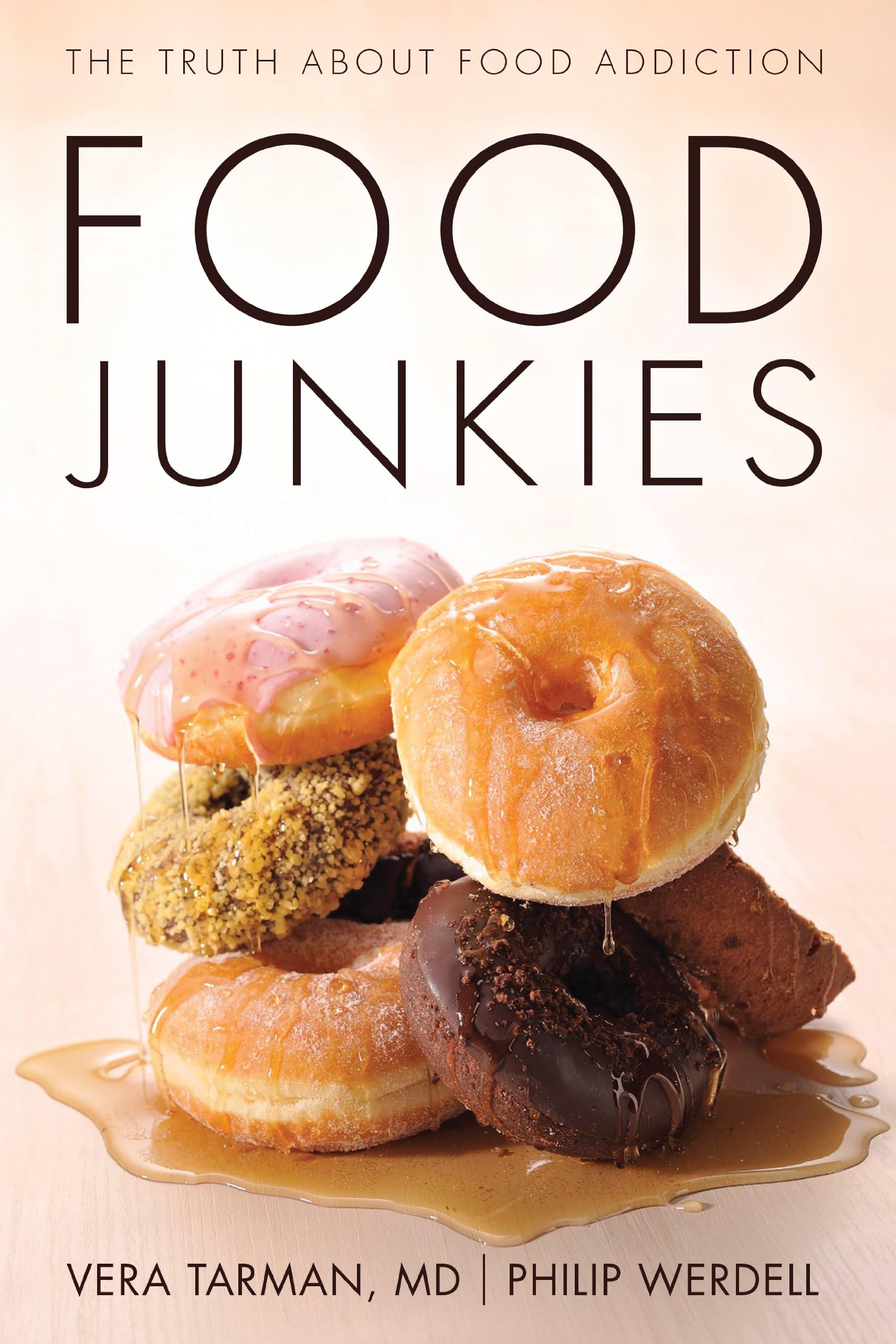
Food Junkies: The Truth About Food Addiction
Product ID: 22185150
Buy anything from 5,000+ international stores. One checkout price. No surprise fees. Join 2M+ shoppers on Desertcart.
Desertcart purchases this item on your behalf and handles shipping, customs, and support to Vanuatu.
Food Junkies: The Truth About Food Addiction [Tarman, Vera, Werdell, Philip] on desertcart.com. *FREE* shipping on qualifying offers. Food Junkies: The Truth About Food Addiction Review: Outstanding book on food addiction - a must read! - I love this book. It describes me in every aspect of the disease. The authors explain in excellent detail the various manifestations of food addiction. I am convinced that food addiction is real. I dieted my whole life - up and down and up and down - until I was ready to give up the battle and just let the out-of-control weight gain take my life. I was done with the fight. My last diet led to a 60-pound weight loss followed by the recurring thought that now I can have just one piece of pie to celebrate. That "celebration" started a binge which lasted 42 days during which time I ferociously ate sugar, flour and fat combinations almost nonstop. Imagine gaining 56 pounds in 42 days! Well, that's where my food addiction brought me. I am a "FOOD JUNKIE"!! Desperation and completely hopelessness somehow brought me to a treatment facility that really understood and treated food addiction. One of the counselors at the center, Phil Werdell, is also one of the authors of Food Junkies. His understanding, empathy and incredible insight into how to help food addicts was key to my initial recovery and his wisdom and knowledge continue to influence my recovery even today. I recommend this book 100 percent. I hope in its pages you will find the missing pieces if you are suffering from the disease of food addiction. Review: Food Addiction: Recognition and Recovery Found Here! - As a food addict/compulsive eater, this book goes a long way in helping the reader understand that addiction to food is a very real problem for many people. My 10-year-old daughter, who may also be a compulsive eater, was captivated by the cover. She asked, "Mom, can I read this book, too?" and immediately squirreled it away in her room. She related to the concept of it, even if she is too young to fully understand what addiction is. We talked about it a few weeks later. About the title, why the photo was chosen, how did it make her feel, etc. It was a good teaching tool and we didn't even get past the first page. For those who would say that it is a "trigger" then I would suggest that for most people who are food addicts/compulsive eaters, that in real life, we have to learn to live around foods that are not ours. For me, the solution is found in making the foods that I do eat so delicious and filling (and nutritious) that "cravings" come and go, but I do not have to give in to them. Food Junkies provides clear insight into the problem of society as a whole acknowledging food addiction as a real issue for many people. It also offers sound, clear guidance on long-term recovery and successful treatment for food addiction. Many thanks to the author for writing this book!
| Best Sellers Rank | #287,708 in Books ( See Top 100 in Books ) #686 in Other Diet Books |
| Customer Reviews | 4.3 4.3 out of 5 stars (453) |
| Dimensions | 6 x 0.61 x 9 inches |
| Edition | 1st |
| ISBN-10 | 1459728599 |
| ISBN-13 | 978-1459728592 |
| Item Weight | 14.4 ounces |
| Language | English |
| Print length | 256 pages |
| Publication date | December 23, 2014 |
| Publisher | Dundurn Press |
R**C
Outstanding book on food addiction - a must read!
I love this book. It describes me in every aspect of the disease. The authors explain in excellent detail the various manifestations of food addiction. I am convinced that food addiction is real. I dieted my whole life - up and down and up and down - until I was ready to give up the battle and just let the out-of-control weight gain take my life. I was done with the fight. My last diet led to a 60-pound weight loss followed by the recurring thought that now I can have just one piece of pie to celebrate. That "celebration" started a binge which lasted 42 days during which time I ferociously ate sugar, flour and fat combinations almost nonstop. Imagine gaining 56 pounds in 42 days! Well, that's where my food addiction brought me. I am a "FOOD JUNKIE"!! Desperation and completely hopelessness somehow brought me to a treatment facility that really understood and treated food addiction. One of the counselors at the center, Phil Werdell, is also one of the authors of Food Junkies. His understanding, empathy and incredible insight into how to help food addicts was key to my initial recovery and his wisdom and knowledge continue to influence my recovery even today. I recommend this book 100 percent. I hope in its pages you will find the missing pieces if you are suffering from the disease of food addiction.
~**A
Food Addiction: Recognition and Recovery Found Here!
As a food addict/compulsive eater, this book goes a long way in helping the reader understand that addiction to food is a very real problem for many people. My 10-year-old daughter, who may also be a compulsive eater, was captivated by the cover. She asked, "Mom, can I read this book, too?" and immediately squirreled it away in her room. She related to the concept of it, even if she is too young to fully understand what addiction is. We talked about it a few weeks later. About the title, why the photo was chosen, how did it make her feel, etc. It was a good teaching tool and we didn't even get past the first page. For those who would say that it is a "trigger" then I would suggest that for most people who are food addicts/compulsive eaters, that in real life, we have to learn to live around foods that are not ours. For me, the solution is found in making the foods that I do eat so delicious and filling (and nutritious) that "cravings" come and go, but I do not have to give in to them. Food Junkies provides clear insight into the problem of society as a whole acknowledging food addiction as a real issue for many people. It also offers sound, clear guidance on long-term recovery and successful treatment for food addiction. Many thanks to the author for writing this book!
K**P
Some useful parts, but had higher hopes
I found lots of useful tidbits in here so I’m giving it 4 stars instead of 3. I think the author should have talked more about recovery and given hope, it felt bleak finishing up reading that book.
C**S
Help with Food Addiction
As someone who has struggled to eat healthy, Food Junkies was an eye-opening read. Learning about a variety of addictions and also how our bodies interact with what we eat is certainly helpful. Even when you know the health concerns, it isn't always easy not to over-indulge. Imagine how much more difficult it must be to cope with a food addiction and the shame that can come with it. There are stories of addiction in this book that will be tough to read, but if they help someone it will be worth it. Audible doesn't always work well with my device, so I purchased the Kindle version. I did, however, download the audio version on my PC and thought Bunting's tone and inflection good for this topic. If you're dealing with food addiction or know someone who is, Food Junkies is definitely worth reading; though I think it's a fascinating read for anyone interested in food and your body. I received an audio version of this book from the authors. This review contains my honest opinions, which I have not been compensated for in any way.
C**T
Great info, but feels like an advert for 12-step programs
Obesity is on the rise, and with it are a million diets that claim to be the "right one". But is the problem food - or can people be addicted to food? These authors ascribe to the thought that yes, people can indeed be addicted to food. The first portion of the book focuses on the evidence supporting it (unfortunately, this is still a grey area, as many medical sciences still don't believe food addiction "is a thing", therefore, there aren't many studies to test it). Interspersed throughout are anecdotes about people and their lifelong relationship to food. At the end (the last chapter), the authors give helpful tips to combat food addiction - which include the ubiquitous 12-step program. I read this book thinking food addiction might be my problem, and while I do admit to overeating or eating badly, I've never stolen food from a store nor have I passed out after an all-night binging. And while sometimes I cannot stop thinking of food (and these times tend to be when I am traveling and obviously homesick), most of the time, I can eat my filling dinner and be done with food for the night. So although I found the book interesting and somewhat useful, I think others with a bigger problem with food may find it more helpful. I loved the large note section and bibliography (though it made reading the ebook weird, as the book proper ends at the 80% mark), so it would be easy enough to go through and check the research should I want to. But one thing that irked me, was the constant promotion of the 12-step program. I'm not saying people can't get success via the 12-steps; my concern is better elaborated by Dr Adi Jaffe in his article "How it doesn't work: The dogma of the 12 steps" showcased on Psychology Today, May 11, 2010: "In any other field, if one treatment doesn't work, another one is tried, and another. Different people with different conditions may need slightly different approaches. If no known treatment works, experimental ones are attempted. This is how medical science advances. Still, the notion of a physician blaming the patient for a treatment not working is ridiculous. There's an entire field built around intervention research and I'm pretty sure that simply dismissing the patient as constitutionally dishonest isn't a common technique." Many people and programs have this tendency that if you regain the weight you lost on Weight Watchers or Curves or Jenny Craig or Herbalife or MediFast, YOU are the problem. You just didn't do the program right. It can't possibly be the program that's wrong - nope, you just weren't dedicated enough. I would post the links to my google search results for "does the 12-step program work?", but Amazon doesn't allow it. However, there are several psychologists with interesting things to say about it (Dr Adi Jaffe, Dr Lance Dodes, and Dr. Stanton Peele have interesting work about what works and what doesn't). Again, I'm not saying the 12-steps are a complete crock, but like most things, there is not one way to lose weight, there is not one way to stepping away from your addictions. I can think of many diet books that claim "Eat MY way and lose weight, otherwise be a fat pig" - and every time I hear something like this, I immediately think, "Oh, you're selling me something. I have to hold you at a distance now and be skeptical of everything you say." I do find it compelling that people could have food addiction. I think anything can be addictive, depending on the person, the substance, and what is going on in the person's life (note how many of the people in the anecdote mention some type of trauma and how eating food made them feel "safe"). But I don't think the 12-step program is the end all, be-all. And for those of us with just an unhealthy relationship with food - maybe following the steps of abstinence from trigger foods isn't a bad idea. I could definitely use to eat less processed foods myself - in fact, I've spent the last week eating more salads, quinoa, fruits and trail mix interspersed with one treat a day (Simple Truth's diet ice cream - which blows Halo Top out of the water, IMO), and I'm already noting how much better I feel, and how much less I crave the donuts, cakes, and cookies that can absorb my mind.
C**C
Gran ayuda. Uno de los libros que más me han ayudado en la vida. Gracias a entender que algunos tipos de comida causan adiccion, y al procedimiento a seguir que explican para superarla, he podido por fin salir de una pesadilla en la que llevaba toda la vida. Un regalo del cielo este libro
M**D
It's all common sense really. It sometimes you need someone to point out the obvious! This book changed my life for the better. Wish I'd read it years ago.
M**M
This book is the missing piece of the puzzle. The most relevant health topic today, the obesity crisis, perfectly explained. It is interesting, enlightening, and makes total sense. Food (processed food) addiction is still not taken seriously, but with the help of this book you can take it seriously yourself and get control of your life. For my whole life I wondered, why can’t I just eat less sugary things like everyone was telling me I should be able to? Do I have binge eating disorder? Am I weak? No, processed food is addictive, like nicotine and alcohol. A really excellent book.
C**N
Very complete and interesting. I would recommend it to anyone suffering from sugar addiction.
A**T
I have been searching for a book like this for years. I have tried swearing off sugar and junk food, Weight Watchers and countless other attempts at cutting down or limiting my intake of sugar. ALL have failed. I've suspected for years that how I eat sugar (in my case this is my trigger food), is different from most of my colleagues and friends. Once they have a little, they can stop. Once I have a little, I'm just getting started. This book helped me to see that it is a not a moral failing on my part or even a lack of willpower. I simply have an addiction to sugar. (No surprise given that I've also been previously addicted to booze, drugs and cigarettes.) This book explains the nature of food addition and offers a solution. But like most addictions, the solution rests with the individual and cannot be provided through a doctor or a pill. Since reading this book, I've gone 5 days sugar-free. Then I ate some sugar yesterday (ok, a fair bit), and feel so hungover today. This is my proof of Dr. Tarman's evidence. Back on the wagon I go . . .
Trustpilot
1 week ago
5 days ago