Some deliveries may take a little longer than usual due to regional shipping conditions.

DOWNLOAD THE APP


Customer Services
Copyright © 2025 Desertcart Holdings Limited
DOWNLOAD THE APP
Full description not available
G**N
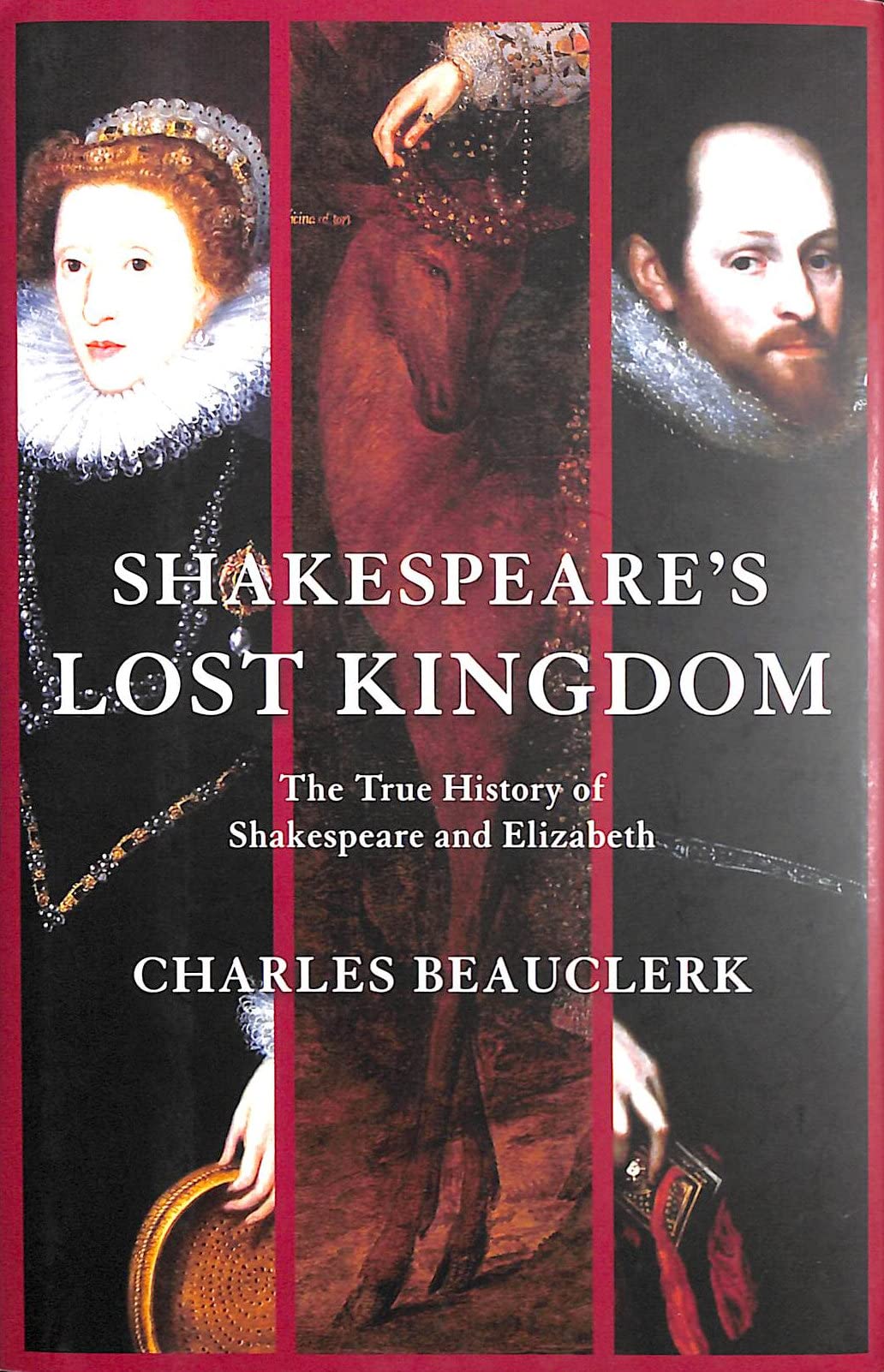
A book to change your life: Edward de Vere, the 17th Earl of Oxford, author of the Shakespeare plays
I've found that very few people can discuss this topic with any objectivity - some of the most learned and sophisticated people I know lose their critical intelligence and start spluttering invectives and insults when it comes up. So don't suppose this is one of those far-off metaphysical realms where gentle minds can ponder and dispute in serene, lofty contemplation.Far from it. No, this is going to be a knife fight - centuries of academic pedantry and the careers of legions of sacred-cow 'experts' at the top of the academic establishment are hanging in the balance, and believe me, they will go down swinging. Leading the charge is James Shapiro's ugly, distorted and intellectually dishonest op-ed piece in the New York Times (Oct. 16, 2011), anticipating the release of the new film on this topic, "Anonymous."But a closer look shows Shapiro - with two books and his reputation as a Shakespeare scholar to defend - coming off as just another puffed-up, academic bully headed for the dustbin of history. He's only the beginning, but it will be interesting, even something of a blood sport, to watch how many other so-called experts self-inflate with whining complaints, then go pop! Given the herd instinct of intellectual bureaucrats, who can't resist siding with centuries of received opinion and academic orthodoxy, no doubt many will.Because despite all the 'expert' noise, facts tell the obvious with embarrassing clarity: the Emperor has no clothes. Wm. Shakspere of Stratford was a nobody, a nothing, a nonentity who could not and did not write, as far as anyone can tell, anything. It may also be that Wm. Shakspere, grain dealer and house-owner, couldn't even *read,* as he certainly had difficulty spelling his name - his several scrawled signatures, the only evidence of any written legacy, are all spelled differently and may have been signed by others. Shakspere's father was illiterate and so was his daughter. He left no books, no letters, not a a scrap of writing of any kind, other than the few instances of his misspelled name, whatever it was.So of course, there is no evidence of any literary interest, talent, or activity.But what of the "Shakespeare" attribution handed down for four hundred years? The actual events are mysterious and raise suspicion: from 1594 the first quarto publications of the Shakespeare plays appear with no attribution at all - and keep appearing anonymously until 1598.A similar word, Shake-Speare, first appears on quartos from 1598 forward, and then on the sonnets published in 1609, but 'Shake-Speare' only appears as part of the title, which reads "Shake-Speare's Sonnets." Below on the title page, between printers' lines where an author's name normally goes, is a blank. As it appears on these publications, the word Shake-Speare is clearly written with an eye-wink, as both a pseudonym and a sly joke: the hyphen gives it away - no names were hyphenated in that era - while the word itself is a mildly obscene Elizabethan pun which contemporary Brits might translate 'wanker.' ...'Falstaff' is a similar jest.Beyond this, Mr. Shakspere never went to Italy - so accurately described in the Merchant of Venice and elsewhere it had to be written from first-hand observation. He had no social access to the closed, secretive world of the Elizabethan court. He could not have accessed the preceding literary works which several plays are based upon, and so on.Even if you assume "genius" (a crassly abused term, used to justify fantasy in this argument) the author still had to *acquire* knowledge, since even geniuses aren't born with it. Somehow, the acquisition of a vast education with vocabulary and expertise in a dozen specialist fields, plus literary sophistication in several languages, all have to be explained. But there's no evidence that Mr. Shakspere even attended grammar school, let alone any university, where he might have absorbed the deeply learned erudition found everywhere in Shakespeare's plays.But none of these obvious, common-sense facts ruling against Shakspere make a dent in experts such as Shapiro, who have built careers from their attempts to inflate a vacuum, recreating a ghostly portrait of an invisible man, then elevating it into false historical dogma.If you want to read a lexicon of weasel-words, trapdoor language and qualifications in the conditional and the subjunctive, just consult Mr. Shapiro's books, or the so-called biographies by Ackroyd, Stephen Greenblatt ("Will in the World") and others. The literary heavyweights in the arena, Harold Bloom and Helen Vendler, are no better - Vendler's nearly unreadable set of bloviations on the sonnets ignores the passionate, emotionally acute and even devastating human reality that the poems reflect, but these and other "scholars" in the field regard these intense documents, written with blood and fire, as mere art-pieces, demonstrations of virtuosity with no important human story underlying them.Same for the plays. Does any academic ask: why would anyone write these plays? Why did this author come again and again to the conflicts of royal succession, from every angle? Why the recurring themes of disinheritance, usurpation, false and secret identity, and a search for the basis of legitimate power? There is no answer from the Stratfordians, and can be none.On the other side, the answer in Charles Beauclerk's "Shakespeare's Lost Kingdom" is so powerful that, considered merely in human terms, it becomes overwhelming as all the pieces fall into place. Speaking personally, the Tudor Prince theory - found in both this book and mentioned in Emmerich's movie - is the key to unlocking the question posed here: if it's true that the 17th Earl of Oxford had a stronger claim to the English throne than any other living person after Queen Elizabeth herself, you can understand why, like Hamlet, he had to use the theater to tell this forbidden, secret truth, as making the claim in public would have been a clear act of treason - the highest crime against the state, and one punished by numerous executions throughout the era.Beauclerk's book is absorbing for the most part, skillfully written, but dense and ambitious - mixing Renaissance history, literary exegesis and detective work with a radical argument for the revaluation of the Shakespeare legend. Thankfully, Beauclerk isn't particularly combative: rather than argue, his book gracefully puts forth its premise, and then leads the reader thoughtfully through all its ramifications, allowing one to experience a new world with Edward de Vere at the creative center, accumulating evidence and ideas around the hypothesis until the accretion forms a staggering whole. Even then, you want more - more history, more insight into what really happened, and more on the plays from this radical new perspective, though several are discussed in detail. Hope arises that we can now look forward to a new wave of truly useful, fact-based scholarship from a new generation which tackles the questions and issues raised by Edward de Vere the man, by his life and work, through the rich historical record that suddenly becomes available.Some of most powerful revelations arise around the sonnets - clearly late works, the writing of an older man to his son and a lost love, not the fictional persona (this from Vendler!) of a 30 year-old doing some muscle-flexing as a demonstration of poetic technique. What a blind disservice! The sonnets are mysterious, the most personal, painful and emotional of all Shakespeare's works, written in crisis to those closest to the author, their poetry tightly controlled to keep identities and the events secret. All this is crucial to understanding the sonnets' emotional and aesthetic power, but it will remain forever out of reach for classroom Stratfordians, who are forced to reduce these great masterworks to a trivial display of poet-tasting, with a pedantic gloss that obliterates their human content and significance.While there are other, first-rate books in the field - Charlton Ogburn's "The Mysterious William Shakespeare" is a heavyweight but doesn't emphasize the Tudor Prince theory favored here - Beauclerk's "Shakespeare's Lost Kingdom" is perhaps the most daring in its argument and the most graceful from a literary perspective, its detailed exploration of the intimate points of contact between the poems, plays and de Vere's life weaving a rich, finely-drawn tapestry of historical and literary data, creating a whole world of connections too vast to ignore.That's the central point: Beauclerk's argument doesn't rest on a few isolated facts (nitpickers beware!) but on the accumulated totality of a life rendered in literature, with hundreds and hundreds of facts, details, events and literary allusions lining up to make the Oxfordian conclusion inevitable. Conversely, returning to the bloodless, dessicated and empty academic superstition of the Stratfordians just isn't an option any more. On one side, the life of an artist; on the other, the empty inflations of pedantic scholars, who offer little in explicating the relevance, background and meaning of Shakespeare's plays and poems.Once you experience the heightened dramatic intensity, passion, and spirituality - in fact, *the meaning* - of Shakespeare's works as finally expressing the life of a real human being, there is no going back. That's the best news - now human blood flows back into the Shakespeare canon, and we can read and see the plays and poems with a transformed vision, with a real man and a real artist standing behind them. The academics may hate this, but it's a tremendous breakthrough and a gift to everyone else - we can finally understand what the world's greatest writer was really saying, and why he was saying it.That in itself is a cause for great celebration. Five stars for Mr. Beauclerk, whose prodigious research and thoughtful writing make a strong, beguiling introduction to the most important literary and historical revelation of our time - and perhaps, of all time.
C**S
A Masterpiece though perhaps not for Beginners or the Squeamish!
This is a terrific book - my favourite amongst the now imposing library of works on the Shakespeare Authorship Question (`the SAQ'), the great majority of which now support Edward De Vere, the 17th Earl of Oxford as the true author of the Shakespearean canon of plays and poetry. When I gave this to an Oxfordian friend of mine to read he simply declared that "He's nailed it!" This was a person who had first introduced me to Charlton Ogburn (jnr's), 'Mysterious William Shakespeare' about 10 years ago and I think his pithy remark encapsulates what for those of us we have been looking for in the examination of the authorship question - and that is the deeper links between the life and the poetic drama and torments of the plays and the poetry. Beauclerk's literary analysis is simply the best thing I have read in decades.Yet as much as I love this book, I almost feel there needs to be a warning on the cover: NOT SUITABLE FOR BEGINNERS TO THE AUTHORSHIP DEBATE! In saying that I don't think that means that people who aren't beginners to the authorship question need to agree with everything Beauclerk has to say - indeed in the two years since I read this I am now less convinced on one of the key premises myself - however the danger with jumping into this without first absorbing some of the more `basic' works which challenge Stratfordian orthodoxy, is that the more fundamental `baby' of Oxford's authorship - first clearly identified in 1920 by Thomas Looney - will be thrown out by readers who can't see it for the more shocking bathwater! As 3 star review from open minded `newbie' Joe Keenan notes, Beauclerk doesn't seek to justify Oxford's authorship, and without this justification the reader who is as yet not totally convinced of Oxford's authorship may find Beauclerk fitting the facts backwards to match his thesis.This is the concern that many Oxfordians have had with the movie Anonymous. While movie makers, like Anonymous Director Roland Emmerich might like to shock, shouldn't we first get people to accept the reality of the baby first? Beauclerk and Emmerich probably reject this in principle. Part of Emmerich's motivations might have been to entertain but I expect Beauclerk (and possibly Emmerich) would also wish to argue that a pristine baby is less realistic - and thus ultimately less convincing - and that it is only with the bathwater that we can see the whole messy reality. The question that Oxfordians have struggled with is not any doubt about Oxford's authorship - Orson Wells famously summed up the attitude of all Oxfordians soon after he had read Looney's book, when he said that if you didn't believe that Oxford was the author there were an "awful lot of coincidences which needed to be explained". Nor is the key question related to the naive notion of Stratfordians that Oxford's authorship could not have been hidden from public view during the era of growing police-state power under Elizabeth. No, the key question is why it was hidden and hidden beneath the mask of another man, apparently with the intention that this anonymity and false identity should be forever. Oxfordians since Looney have grappled with this - Beauclerk is the latest and most compelling of the authors in this investigation.So, at the risk of stretching this metaphor too far, what's the bathwater? Readers of the earlier 5 star reviews will see that Beauclerk's book builds on the thesis of Paul Streitz in 2001 that Oxford is Elizabeth's son from an affair she had in her around the age of 16. Working backwards Streitz's work builds on the massive 1300 page tome of Dorothy and Charlton Ogburn (snr) 'This Star of England' (1952) that Oxford was Elizabeth's lover in the 1570s (but not her son) when he was about 24 and she was about 40, and that she had a child by this affair, one Henry Wriothesely, later known to history as the Third Earl of Southampton, the person to whom Shakespeare's two long poems 'Venus and Adonis' (1593) and 'The Rape of Lucrece' (1594) are dedicated (and who later was lucky not to lose his head as a result of his involvement in the Essex rebellion of 1601). The Ogburn's thesis is known as the Prince Tudor 1 (or Henry Tudor 1) thesis - Henry Wriothesely effectively being the future Tudor Prince Henry; and the Streitz's thesis which incorporates this, with Oxford being the Queen's son, is the Prince Tudor II thesis.Clearly, quite apart from the fact that the creaking Stratfordian orthodoxy won't even countenance talk of there being an authorship question, let alone that Oxford is the most obvious candidate, accepting PTII not only requires you to disagree with the English nationalist shibboleth that Elizabeth was a virgin (per PTI which the senior Ogburns were cruelly socially ostracised for, for the rest of their lives), the fact that PTII incorporates PTI requires that you also believe that Elizabeth and her son had incest is going to be quite a stretch for anyone who is new to the discussion! Could it be true? Well although these days I now believe that Streitz was right in concluding Oxford was Elizabeth's son, I'm less convinced that Oxford and his mother had sex together, and hence were Wriothesley's parents (per PTI). In other words, when he promulgated Oxford as Elizabeth's son Streitz would have done better, in my view, to jettison the validity of the senior Ogburn's PTI thesis; and to argue in effect that he had come to an alternative thesis not a complementary one. Could this be just because I am squeamish? Perhaps, but I don't really think so.It is actually amusing for me to recall that when I was in high school in the 1970s there was a lot of titillating speculation about the suggestion of incest between Hamlet and his mother, Queen Gertrude. One famous director of the play (I can't recall who) had Hamlet hovering sexually over his mother who was prostrate on her bed in their great scene together. Serious academic critics wrote deeply about the Freudian undertone to this powerful mother/son relationship. But you see that was in the day when most Shakespearean literary critics stuck to their knitting. Blissfully ignorant of the SAQ, these brilliant literary psychoanalysts of human drama - Jan Kott, Wilson Knight come to mind - delved deeply into the plays without any fear that they were about to lose tenure because they had transgressed from orthodoxy. That changed gradually over the 20th century however as authorship orthodoxy came under increasing challenge, initially in fits and starts but then with ever mounting pressure from time of Charlton Ogburn jnr's masterwork 'The Mysterious William Shakespeare'(1984). With the challenge initially coming from a bevy of `amateurs' from outside the academy - some admittedly a bit bonkers in the early decades - the academy saw a challenge to its credibility and funding from the Stratfordian Birthplace tourism funds, and have been mounting increasingly hysterical attempts to make the works fit the meagre and uninspiring profile of the Stratford man. This has not only been pathetic and outside the competence of literary critics - they are generally much less qualified in historical analysis than many of the authors they deride as amateurs - it has also led to a tragic abandonment of what had been their true area of expertise, namely insightful and fearless literary analysis based on the TEXT, not on biographical fictions about the Stratford man.Literary criticism and Shakespearean pedagogy has suffered terribly because nowadays there are no orthodox academics who have the courage to talk about the sexual tension between Hamlet and his mother, because to do so would be to invite the question: what could that possibly infer about the author and his relationship to his own mother? The only tenure-safe approach is to not touch the subject, or to argue pathetically that such tensions in the play have nothing to do with the psychology of the author - that great drama and poetry can be disembodied from the emotional being of the author who created them. (Oxfordian Steven McClarran, has thoroughly exposed this orthodox `murder' of the emotional life of Shakespeare in his big work 'I Come to Bury Shaksper'.)I don't know if Oxford and Elizabeth had sexual congress but I do know they had an extraordinarily intimate and tempestuous relationship. These days I am more inclined to believe that it is sufficient to explain their relationship, and Shakespeare's works, simply because they were indeed mother and son. On this score I think Streitz was right - 'Hamlet' is biography and once you see that, everything falls into place. However, unlike Streitz, Beauclerk and Hank Whittemore (the leaders of the Prince Tudor II thesis) I don't think Southampton has to be the progeny of the Queen. There is a case for it but it strikes me these days as less sure than the foundational realisation that Oxford is Elizabeth's son - the brilliant son of the brilliant mother. The problem as I see it is that the more speculative paradigm of them being lovers preceded in time the more credible paradigm of them being mother and son, and the acceptance of the one paradigm before the other has led much PTII analysis astray - or at least I am becoming suspicious of this the more certain the PTII adherents become in some of their interpretations of certain Sonnets. As such, I'm inclined now to opt for something like 'Prince Tudor 1.5' ! The brilliant young princess became pregnant (there are a couple of good candidates for the father, Seymour or De Vere senior), and she and her son (Oxford) have a highly tempestuous relationship which he writes about in plays and poems. When he is in his twenties he has an affair with the Countess of Southampton, which leads to the birth of Henry Wriothesely, his son and Elizabeth's grandson - no incest required.But isn't it possible that apart from just metaphorically 'hovering over her on the bed' they went all the way? Did the real Queen Gertrude, as it were, actually throw back the covers! Beauclerk's book provides a powerful narrative for how this could happen. I think he (and PTII generally) might be wrong on this one speculative issue but in challenging us to consider this he has produced a compelling narrative which can only make you think.As a precaution though, if you are new to the authorship debate I would recommend some 'primer' reading. While there are now dozens of possible recommendations, I propose the following basic reading list before tackling Beauclerk:1. Tony Pointon, 'The Man who Was Never Shakespeare' - destroys Stratfordianism and narrows the field of credible alternatives to three contenders Bacon, Mary Sidney, and Oxford.2. Mark Anderson, 'Shakespeare by Another Name' - the modern classic matching Oxford's life to the plays and Sonnets.3. Katherine Chiljin, 'Shakespeare Suppressed' - examines the Essex rebellion to explain why Shakespeare's works are caught in it and need to be suppressed.With these under your belt, you should have a confident hold of the 'baby' and be in a position to decide how much, if any, of the 'bathwater' in Beauclerk needs to be jettisoned.
M**G
A True Oxfordian perspective
Charles Beauclerk presents a very complete and well-written version of the life of William Shake-speare, aka the Earl of Oxford. It is carefully researched and vetted, but there are some squiggey bits, a little 'may have', 'probably', regarding his parentage.This is very very very inside baseball so if you are a casual reader looking for something different, this may be too much for you. If you are leaning towards Oxford as Shake-speare, this may be a little too much. But if you are a full-fledged Oxfordian or nearly there, this is great...it makes you think about those mays and probablies without having to commit to them.If you are a Shakespearian, dyed in the wool, then, this will give you hives at least. But it might make you rethink. Maybe.Liz7bee
M**T
Many breath-taking insights into "Shake-speare's" intended meaning.
I bought this book (soft-cover) two years ago, and after leafing through it, ended up lending it to a succession of friends and relatives (reading Chiljun's "Shakespeare Suppressed" was a priority at the time).Only now am I nearing the end of a cover-to-cover reading.Is the "Tudor Prince Theory" proven by Beauclerk? No - it remains a theory, but that is no put-down. It is still a plausible, fascinating, indeed truly exciting one.I will, however, nail my colours to the mast;as far as I'm concerned, that most of the 'body of work' referred to as "Shake-speare" [sic] was created by Edward de Vere, 17th Earl of Oxford **is as good as proven** (actual proof would be a manuscript in his hand, or a direct statement of fact by a contemporary).The very fact of the lengths that the authorities (and, it would seem, his own family and peers) went to during de Vere's life (and more significantly, after his death) to suppress the truth of his authorship bespeaks an imperative bordering on desperation, which in turn implies that state secrets (and family secrets, amongst the nobility), of the kind Beauclerk proposes, were - ARE - methodically revealed in the plays and poems.I've found that on multiple occasions Beauclerk comes up with truly dazzling revelations which cause me to read back over a paragraph several times, particularly during the later chapters on King Lear and The Winter's Tale.Post-medieval English history needs to be re-written, or rather, wrested back from the conniving hands of the Cecils and their confederates.ETA >> the descendants of the 'nobility' will also have to swallow their pride, and the mythological "history" of the "Elizabethan Age", fashioned so assiduously during and after her reign, comprehensively dismantled - daunting obstacles to be overcome before "the truth will out".ETA 2 >> the 'authorship question' is no less a potential bombshell of political fall-out in the present-day than when the works first appeared, on many levels.Whatever one's beliefs - a superbly well-written book.
A**R
An overreach
At a time when Edward de Vere needs carefully composed support, Lost Kingdom is an entertaining and annoying concoction of scholarship and flimflam.
D**S
Shakespeare in doubt and in depth
Purchased out of personal interest this item represents a remarkable breadth of research and offers a profound insight into the psyche of its subject.
A**T
Brilliant, even if no actual hard evidence
This is a great read. Literary history at its best. The thesis is simple, if shocking, to modern ears. The Earl of Oxford was not only the author of the Shakespeare canon but was also Queen Elizabeth's illegitimate son, lover and father of a joint child, the Earl of Southampton. It also helped shape the storyline of the film "Anonymous" recently released by Roland Emmerich.While I completely accept the notion of reasonable doubt over the man from Stratford's authorship, best summed up in Diana Price's brilliant "Shakespeare: The unorthodox biography", the case for Oxford as author remains circumstantial - even if quite plausible.Once over the Stratford-man hurdle, it is hard at first to get to grips with the idea of Oxford being the author, but how much harder to swallow is the tale of his relationship with Elizabeth. It is shocking to modern ears, but should it really be so given the long history of royal infidelity, carried on right up the present day with Prince Charles' relationship with Camilla, and given the somewhat dubious parentage of another famous current prince.Even if there is no actual hard evidence to prove the thesis, the use of the idea to interpret many of plot-lines and drama of Shakespeare's plays is very illuminating, daring and even thrilling.It is a cracking read, and far, far better as a literary biography of Shakespeare than the hundreds of tomes that pour from the presses about the frankly dull man from Stratford and his unlikely claim to be the author of the canon.
A**S
This is probably one of the best books to augment your power to think independently and ...
Thought-provoking book with important insights and revelations! It is a must read for curious minds!It will challenge settled ideas of who Shakespeare is and how his work was (still is) the alive-voice of his life and circumstances he lived in. Shakespeare's Lost Kingdom is for readers who desire to gain deeper understanding of Shakespeare's world beyond what the establishment insists in teaching us. This is probably one of the best books to augment your power to think independently and to deepen your knowledge. My view is that Shakespeare's art can't be really appreciated without learning about his motives and forces to speak up. I am not writing any specific revelation that this book presents because this should be read fresh by you, the interested reader.It also must be said that if you are searching for the entertainment of a fairy tale or a sort of fabricated story, especially one intended to deceive, this is not your book!! On the other hand, if you claim to like the works of Shakespeare and if you are willing to learn from a scholar (C.Beauclerk) who dedicates a good portion of his life to this matter then please lean back and enjoy readind this illuminating book!
Trustpilot
1 month ago
3 weeks ago