Some deliveries may take a little longer than usual due to regional shipping conditions.

DOWNLOAD THE APP


Customer Services
Copyright © 2025 Desertcart Holdings Limited
DOWNLOAD THE APP

Full description not available
A**I
Easy to use guide
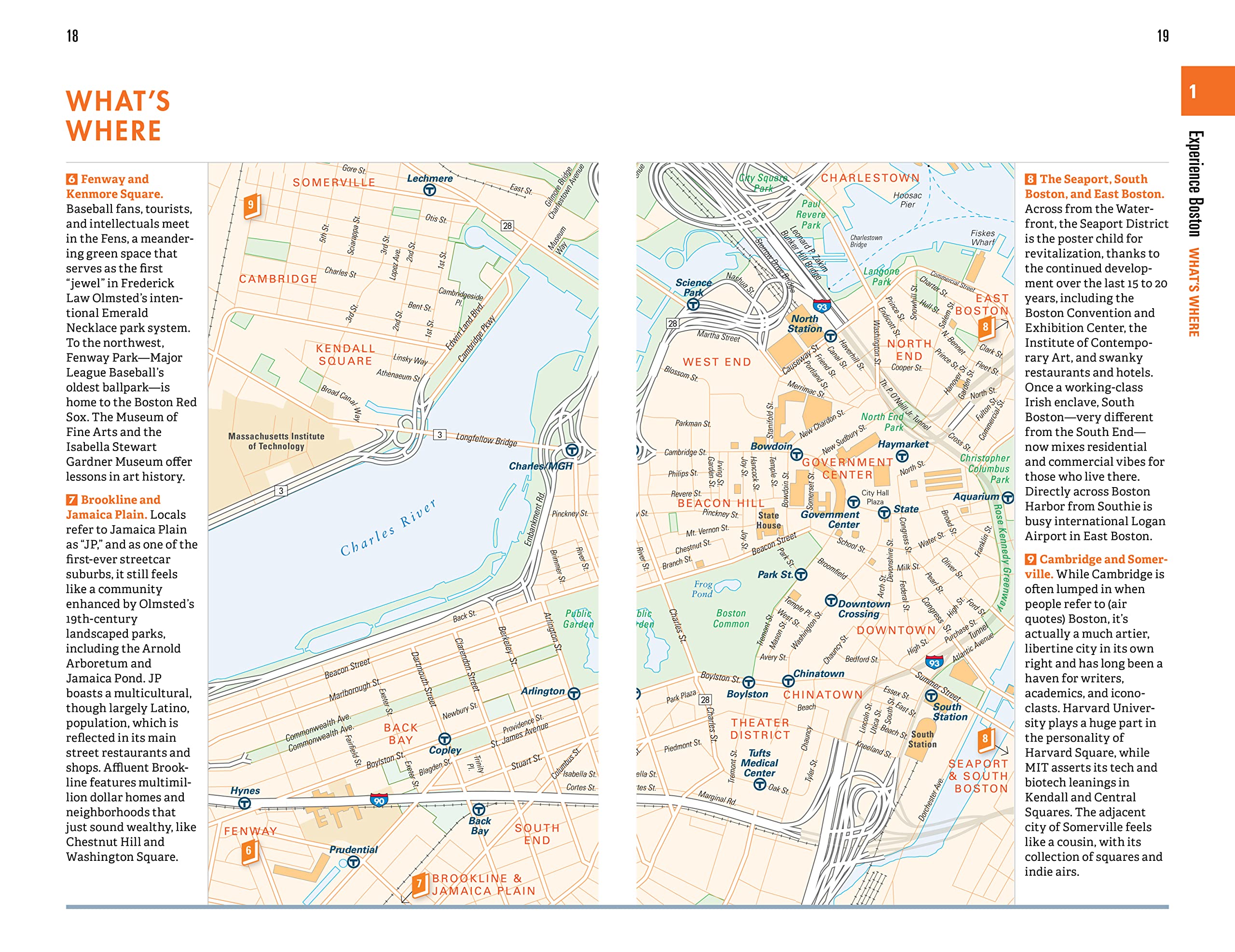
Planning a trip to Boston museums and this is very helpful with maps and transportation info. Excellent travel guide
J**X
Boston at your fingertips
This book is a great value for your money and if you’re planning on going to Boston you will be able to find your way around like a local resident. It has everything you will need to visit all the areas in and around Boston and will be able to guide you to all of the best known places in the area. Don’t leave home without it!
A**.
A MUST for travel!
Fodors is the best for ANYTHING travel!
A**R
Great book
It has great information. Seems to not be up to date on the sea port area. Good for a lot of the more established areas.
D**D
Dirty Water - the TRUTH!!!!!
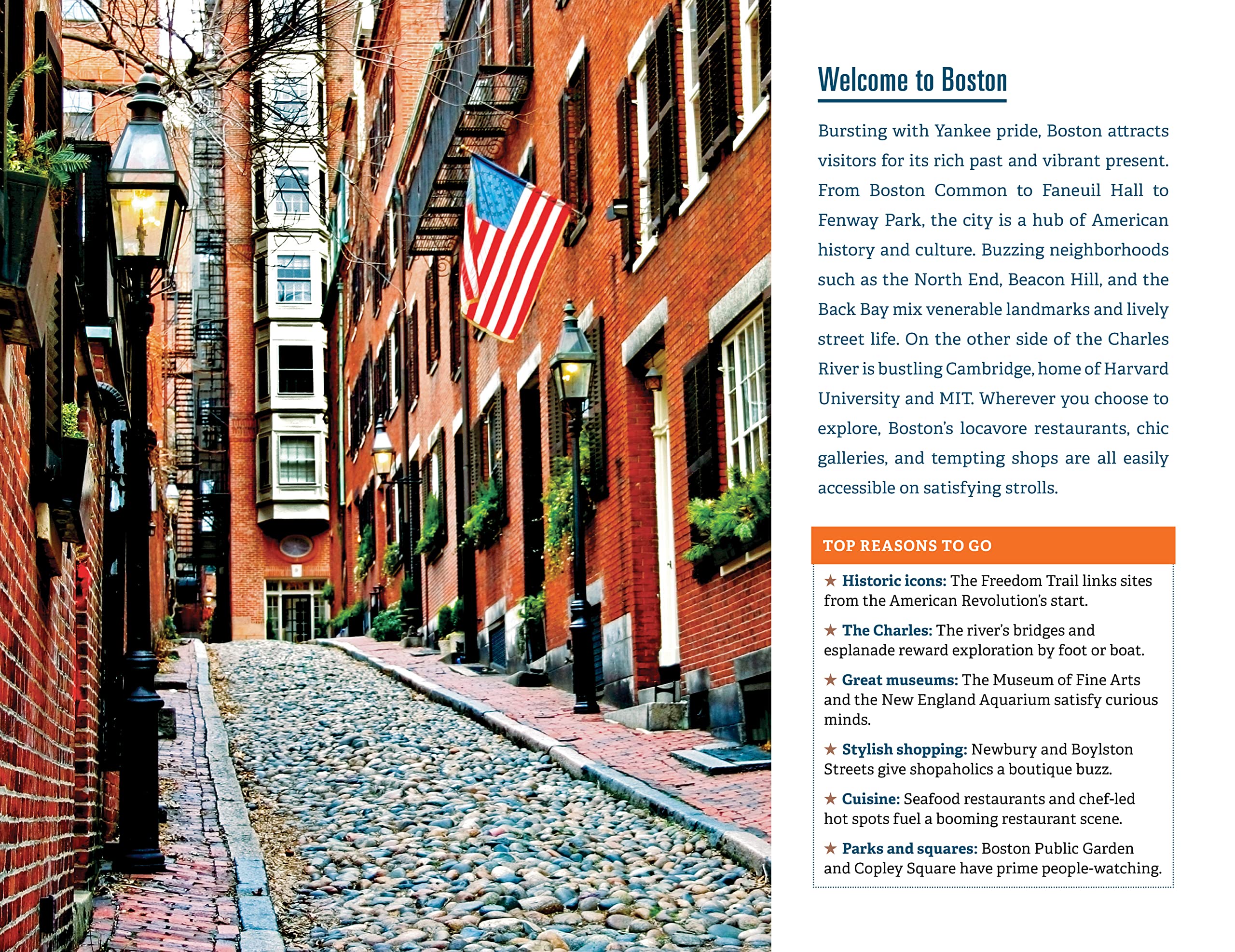
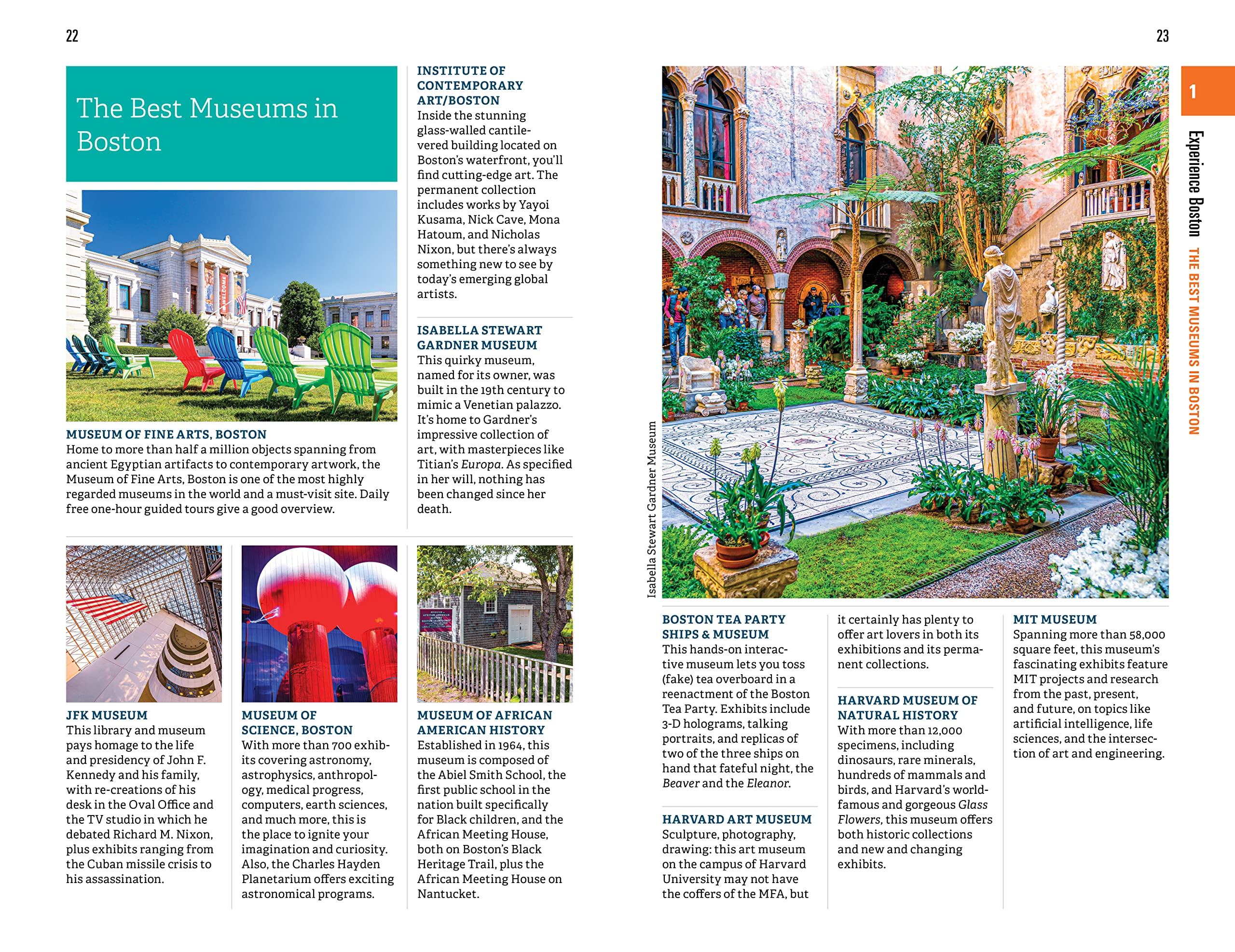
Oops. Busted.After reviewing half a dozen guides to places that I haven't been to, will probably never go to, and in one case didn't want to go to, I'm stuck with this Guide to Boston.A place where I've lived (in the suburbs of) for more than twenty years, so I should have something to say about it? But then I thought of what a travel guide is supposed to be - someone with just your interests and no more. And I thought that if I met a person just like me I probably wouldn't want to know him.And I'm sure you don't want a guide to the North Shore of Boston, but you'd rather know about the city. So here are my tips. Don't come in January through March - the place is covered in snow. And in July you'll probably get several days of high humidity. September and October are best. New Englanders are fascinated about things they do that other parts of the country don't - rather like Pig Rodeos in the Mid-West that don't happen elsewhere because no-one's interested.Come prepared to walk - there is this notion that you can see all of Boston by walking, but you'll collapse at the end of the day, and have to fly home to recuperate from your vacation. Luckily there is a subway system that goes to most of the interesting places, and a lot of uninteresting places as well. The roads are largely not laid out on the grid system but on old cow tracks.Go on the water. You can get trips on commuter ferries and even take a trip to Provincetown on Cape Cod. But the best water-related activity is a whale watch. I've been on half a dozen, and never had a disappointing trip, and in one instance was sprayed from a blow-hole from a whale underneath the boat. I've also seen whales breaching several times as they keep up with the whale watch boat. It's astounding to see these 75,000 pound beasts (probably the biggest example of sentient life you'll ever see) jumping out of the water ten to twenty feet clear.And if you're going to eat, go to Cambridge. Once home of Steve Herrel's Ice Cream (whose Chocolate Pudding flavor was the best I've ever eaten) it now has dozens of ethnic restaurants, plus the MIT food trucks. Bartley's Burgers is right next to Harvard University, where they've always done a reliable burger through the years. Close by is Border Café, my choice for Tex-Mex and Cajun. Pretty much my destination of choice for celebratory meals is Legal Seafoods, with branches throughout the city and suburbs. If you must eat "Lobsta" try Woodmans in Essex, up on the north shore. For clams, try the Clam Box nearby in Ipswich. And Boston was among the first cities famous for their microbreweries, with Sam Adams ale widely available and a cut above the national brands.I live in a little town called Groveland, about thirty miles North of Boston, with some 7,000 inhabitants. Recently one of the advice talk radio stations had a caller who had a choice of three jobs - two, near where he lived, and one in what he called "the back of beyond." The host told him to conquer his fears and move away from home and asked where was "the back of beyond" to which he replied "Somewhere called Groveland." Time has passed this little town by, and so should you.The book is a pretty good guide to Boston, though I was surprised that some of my favorite places weren't mentioned. It's sort of sad though expected that Quincy Market is on the cover, where there are numerous tourist traps. There's a tear-out map, and many ideas including kid-friendly places. You can also get rid of a lot of money by shopping on Newberry Street. And don't forget those museums - especially at times when they offer free admissions.So, after all this slagging off the local attractions, I suddenly feel motivated to go and see them, to eat at the restaurants. Can you love Boston by hating it? I guess you can.
T**Y
An inviting and informative guidebook, but the selection of photos could be improved.
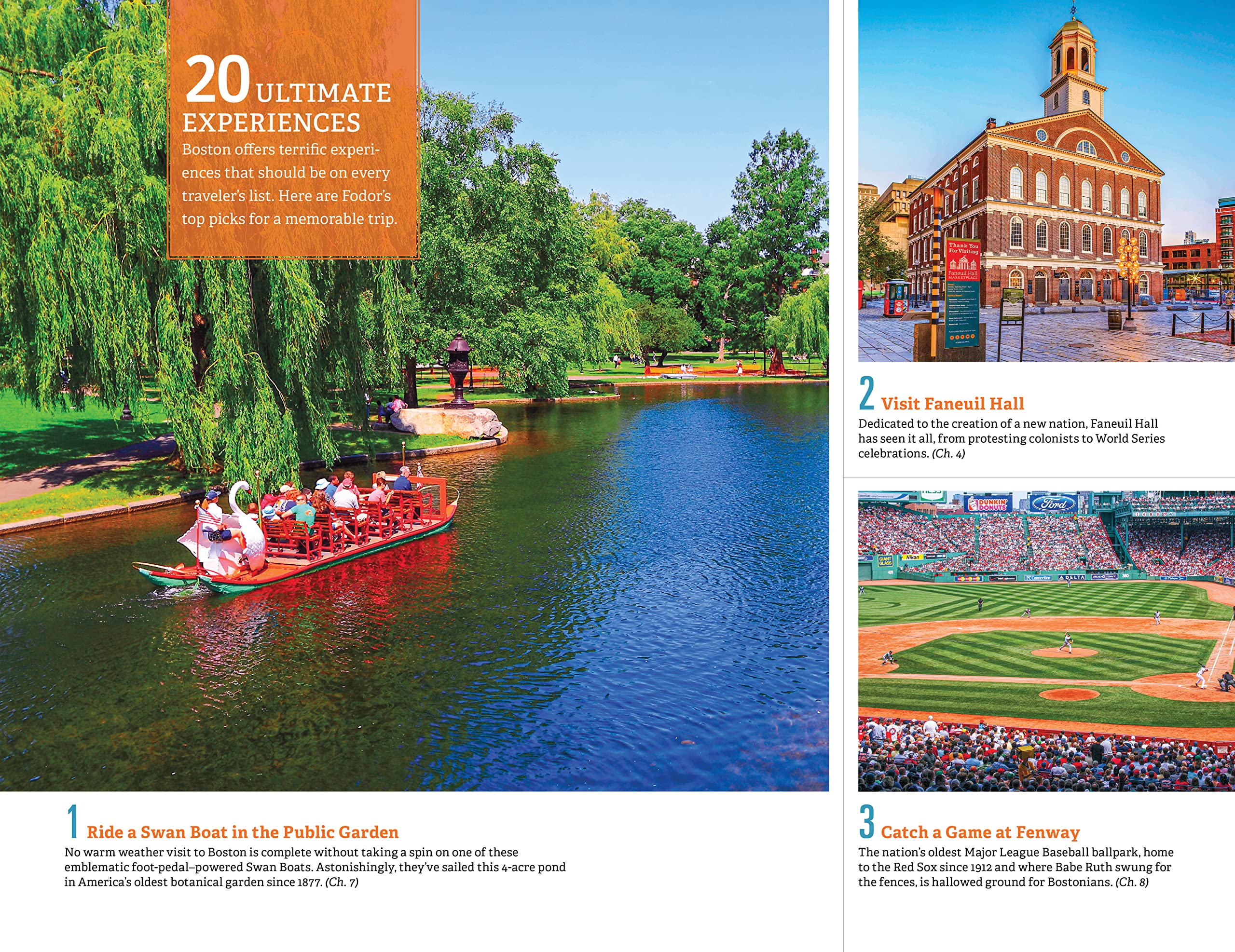
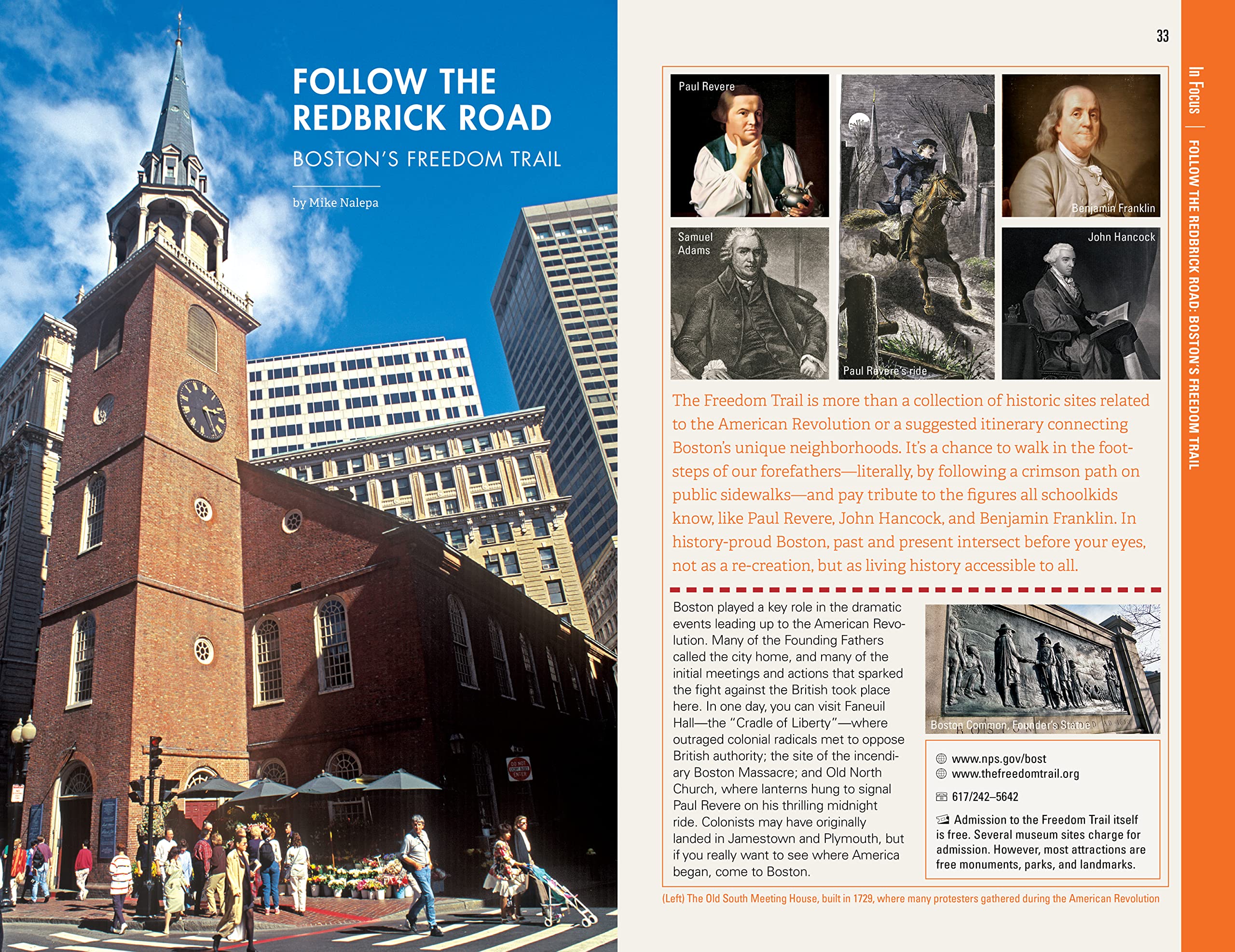
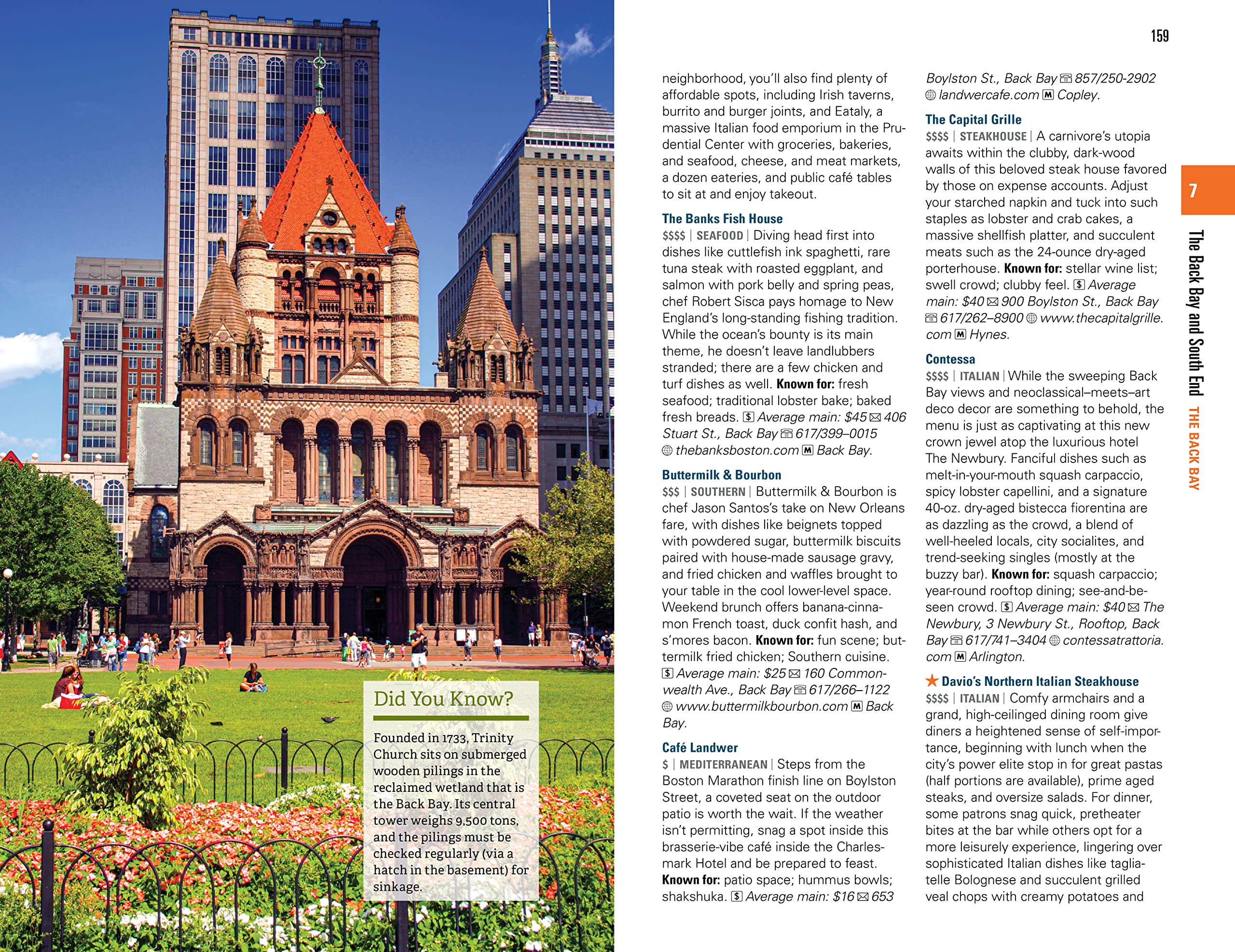
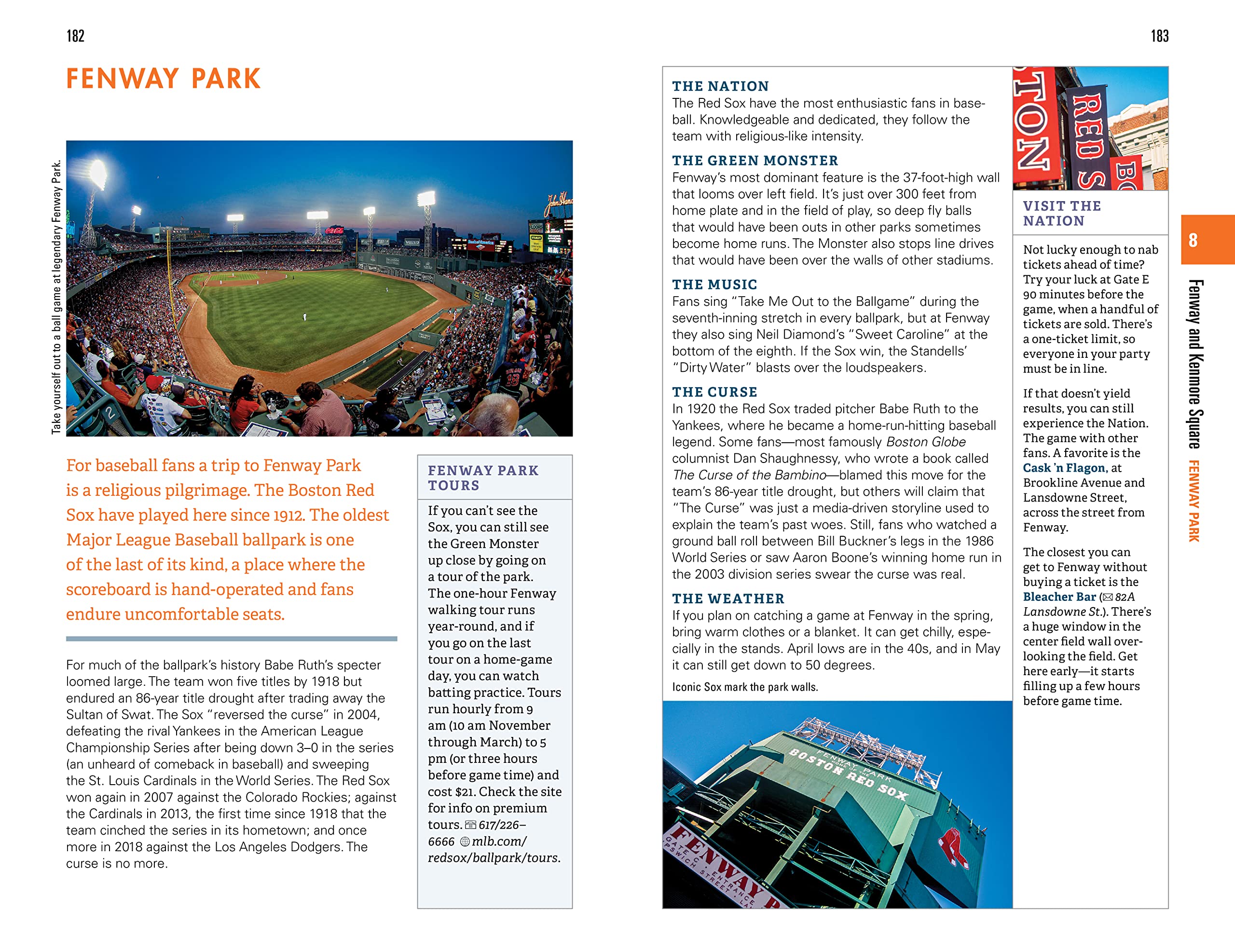
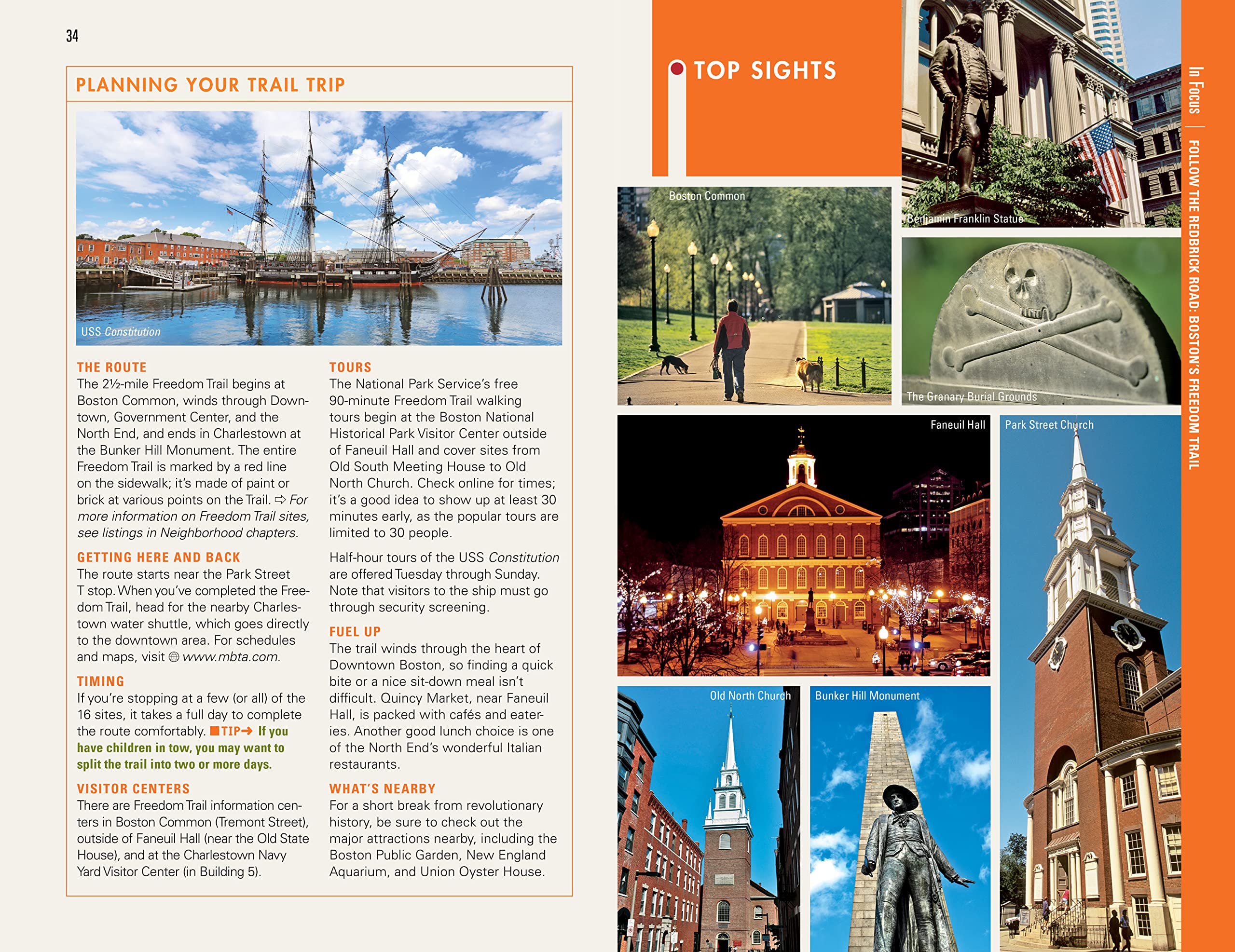
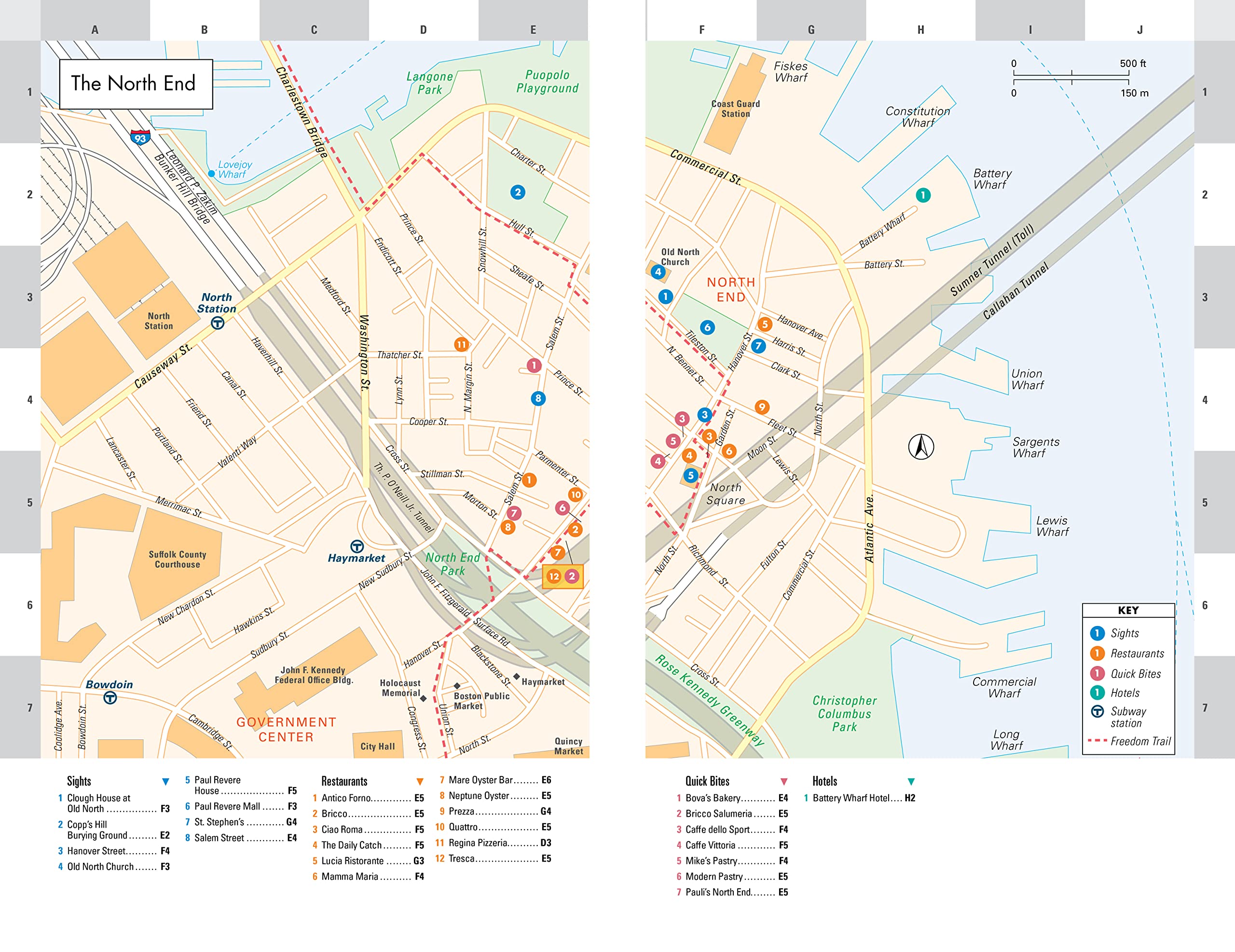
BOSTON 2012 by Beckerlegge, Knorr, MacCallum-Whitcomb, and Oppenheimer, is a 397 page guidebook of the city of Boston and outlying areas. These outlying areas, which are detailed in Chapter 15 (pages 323-370), include beaches, whale-watching expeditions, maritime museums, historic battlegrounds, restored colonial towns, the Woods Hole Oceanographic Institute, and cranberry bogs. Did you know that Massachusetts is the #1 grower of cranberries, with Wisconsin being #2? If you attend the annual cranberry festival in Warrens, Wisconsin, you can take an aerial tour by helicopter of the colorful cranberry bogs.BOSTON 2012 contains 15 chapters. Chapter 2 covers Beacon Hill, Boston Common, and Old West End. Chapter 3 covers Government Center, where you find Quincy Market, Faneuil Hall, and City Hall. City Hall, which has intriguing and unique architecture, was designed by Kallman, McKinnell, and Knowles (unfortunately, the book does not provide a photo). Chapter 4 concerns Charlestown. Chapter 5 covers downtown Boston. Chapter 6 is about Back Bay and South End. Chapter 7 informs the reader of Fenway, where one finds Fenway Park (baseball stadium) and two art museums, with art by Winslow Homer, Edward Hopper, Monet, and Titian. Chapter 9 features Cambridge, home of Harvard and M.I.T. Other chapters concentrate on restaurants, hotels, and theaters.Diving into the book, the more useful photos show Faneuil Hall, built in 1742, and used for political debates in colonial times, a statue of Paul Revere (page 63), and the U.S.S. Constitution, a battleship originally launched in 1797 that has been thoroughly restored and contains about 10% of the original wood. The swan boats in Boston Public Garden (page 95) are also shown in a splendid photo. These swan boats are my earliest memory, as I lived in Boston from 1951 to 1956. Other photos include Trinity Church (p. 48), a lighthouse on Little Brewster Island (p. 278), Harvard Square (p. 300), Mystic Seaport whaling museum (p. 362-363).Fifteen elegantly reprinted color maps are found in the book, for example, of Back Bay (p. 90), where dots show the location and names of interesting cafes, churches, and theaters. The book also has a pull-out map of Boston, printed on extra-sturdy paper.SAMPLES OF THE TEXT. Now, let's jump into the text. Page 37 tells us about "Acorn Street, surely the most photographed street in the city . . . the cobblestone street may be Boston's roughest ride." Page 62 tells us about "Old North Church . . . famous not only for being the oldest church in Boston, built in 1723, but also for housing the two lanterns that glimmered from its steeple on the night of April 18, 1775." Page 152 details Union Oyster House, which "almost every tourist considers a must-see . . . the rooms at the top of the narrow staircase are dark and have low ceilings -- very Ye Olde New England."Chapter 10 (pages 145-196), entitled, WHERE TO EAT, includes this inviting description of a restaurant called, Harvest. "The New England-inspired menu . . . is hedged with traditional regional favorites made with locally sourced ingredients. Starters include the seasonal mussel soup laced with saffron. Pennsylvania duck breast, and Berkshire pork loin are among the main plates. The open kitchen makes some noise but customers at the ever-popular bar don't seem to mind. Outdoor heaters and fireplaces beat back the elements." (As you can see, the writing is elegant, but does not digress.) The reviews of all most of the restaurants include the website. The web site of Harvest is [...].Chapter 11 (pages 197-232), entitled WHERE TO STAY, details nearly 50 hotels, and contains seven large photographs of beds. It was these seven large photographs of beds that led me to reconsider my thoughts on the photographs in the book.CRITIQUE OF PHOTOGRAPHS. In this reviewer's opinion, these seven bed photographs are somewhat redundant with each other, and redundant with the "life experiences" of most readers. First of all, everybody knows what a bed looks like. For those who live in a tent, you can easily go to Macy's or other department store and see what a bed looks like. Second, a related shortcoming of this book is that there are several generic photographs of children playing in generic locations. Pages 346 and 352 show generic children playing on a generic beach. The beach could be anywhere, for example, on some lake in Illinois. Page 122 shows a photo of three children sitting in the grass. We see the backs of their heads. The grass is colored green. But this scene could be anywhere, for example, in a suburb of St.Louis, MO. Now here are more thoughts about the photographs. Harvard University is covered on pages 132-137. Certainly, there must be plenty of architecturally important buildings, but there is only one photo of this campus (page 133). The book describes a "gravity-defying" building on the Harvard campus, designed by Le Corbusier, but there is no photo (page 135). Page 278 has a fine photograph of a lighthouse, but I would like an expanded section of a couple of pages, with photos of one or two additional lighthouses. In my opinion, this book could be improved by omitting the seven photographs of the beds, omitting the close-up photograph of ice cream cones, omitting the close-up photos of sandwiches, and omitting the three generic pictures of generic children in generic locations.
Trustpilot
1 month ago
1 month ago
2 weeks ago
3 weeks ago