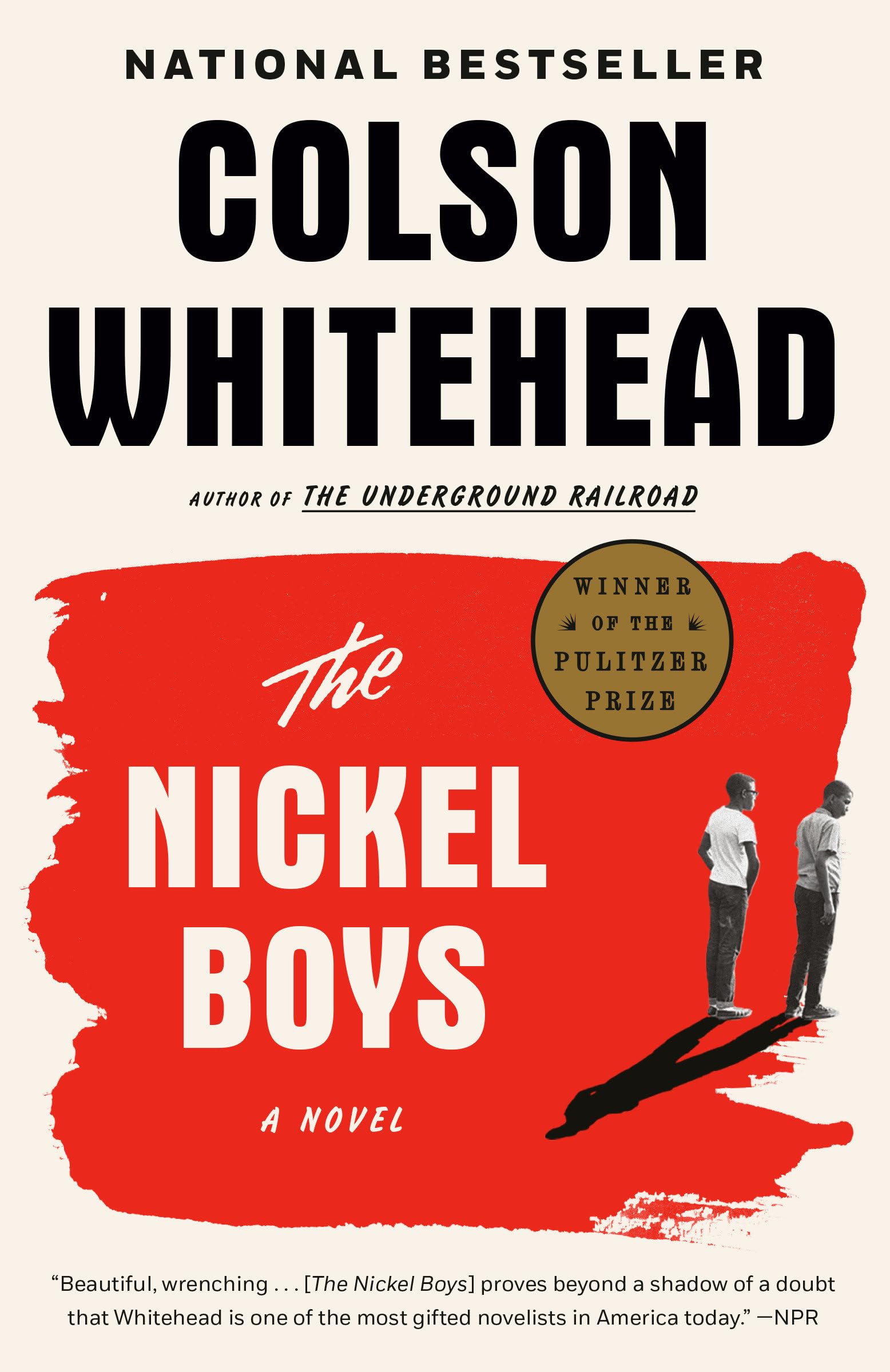
Full description not available

T**2
Beautiful plot twist!!!
Deep history that evokes intense research, gripping storyline and beautiful characters ( Turner and Elwood). Quite surprising end....its a good read
C**N
Intimate Look at Life On The Other Side
If my review were to confine itself to the first few chapters, I would be shouting from the rooftops in praise of an intimate look at life as experienced from a student in a reform school in the deep south during the 1960s. The genius of the writer was in getting me into the body shell of a survivor of a ‘school’ that got away with abuse and murder for more than a hundred years. Mind you, it is a novel of fiction, but is based on a real school and is told so well that many will forget it is a work of fiction.However, my review is based on the entire book. Bearing in mind that four stars is high praise, I don’t want you to get the impression that this is not a terrific read, because it is. For many readers, it will, or should become a transformational read. The author doesn’t bludgeon us with horror. Rather, he slips us into the scenes and memories. So, why lower the rating to four stars?It tends to get mired down into sadness and misery. Not in an especially depressing manner, though. Had it become depressing, I would have lowered my rating still further.I guess what I’m expressing is actually almost a confession. I grew up in Southern California in a small town that, during the fifties and sixties, boasted of its ‘success’ in remaining wasp. Most residents would have sworn that they had not a single racist bone in their bodies. They would have decried the segregation and inhumane treatment of blacks in the south. Yet, they took pride in a police force that boasted of picking up men passing through town after working at the local cement factory and releasing them at the town’s boundary with Watts. Yet, that very city went on to survive, even thrive, during integration once the real estate folks were forced to sell without discrimination. It even, for a second time in its history, became an “All American City.”So, what I am getting at is this: Colson Whitehead has put together a narrative, based largely on fact, and weaved us an intimate tale of life, and death, of young men who made mistakes in judgment while pursuing simple pleasures taken for granted by children in more affluent neighborhoods, and who were then punished more severely for their lapses in judgment than were white children guilty of equally poor judgment.Perhaps the brief excerpt will better explain my meaning…BLUSH FACTOR: The eff-word pops up now and then, so you may want to be choosy when deciding to whom you will share this novel. Still, the insight you will gain into life for a young black person growing up in America, especially during segregation will outweigh concerns for language.WRITING & EDITING: Mechanically, first rate editing and the writing is solid.EXCERPT‘…Flipping pages during lulls. Elwood’s shifts at Marconi’s provided models for the man he wished to become and separated him from the type of Frenchtown boy he was not. His grandmother had long steered him from hanging out with the local kids, whom she regarded as shiftless, clambering into rambunction. The tobacco shop, like the hotel kitchen, was a safe preserve. Harriet raised him strict, everyone knew, and the other parents on their stretch of Brevard Street helped keep Elwood apart by holding him up as an example. When the boys he used to play cowboys and Indians with chased him down the street every once in a while or threw rocks at him, it was less out of mischief than resentment.People from his block stopped in Marconi’s all the time, and his worlds overlapped. One afternoon, the bell above the door jangled and Mrs. Thomas walked in.“Hello, Mrs. Thomas,” Elwood said. “There’s some cold orange in there.”“I think I just might, El,” she said. A connoisseur of the latest styles, Mrs. Thomas was dressed this afternoon in a homemade yellow polka-dot dress she’d copied from a magazine profile of Audrey Hepburn. She was quite aware that few women in the neighborhood could have worn it with such confidence, and when she stood still it was hard to escape the suspicion that she was posing, waiting for the pop of flashbulbs.Mrs. Thomas had been Evelyn Curtis’s best friend growing up. One of Elwood’s earliest memories was of sitting on his mother’s lap on a hot day while they played gin. He squirmed to see his mother’s cards and she told him not to fuss, it was too hot out. When she got up to visit the outhouse, Mrs. Thomas snuck him sips of her orange soda. His orange tongue gave them away and Evelyn half-heartedly scolded them while they giggled. Elwood kept that day close.Mrs. Thomas opened her purse to pay for her two sodas and this week’s Jet. “You keeping up with that schoolwork?”“Yes, ma’am.”“I don’t work the boy too hard,” Mr. Marconi said.“Mmm,” Mrs. Thomas said. Her tone was suspect. Frenchtown ladies remembered the tobacco store from its disreputable days and considered the Italian an accomplice to domestic miseries. “You keep doing what you’re supposed to, El.” She took her change and Elwood watched her leave. His mother had left both of them; it was possible she sent her friend postcards from this or that place, even if she forgot to write him. One day Mrs. Thomas might share some news.Mr. Marconi carried Jet, of course, and Ebony. Elwood got him to pick up The Crisis and The Chicago Defender, and other black newspapers. His grandmother and her friends subscribed, and he thought it strange that the store didn’t sell them. “You’re right,” Mr. Marconi said. He pinched his lip. “I think we used toWhitehead, Colson. The Nickel Boys (pp. 22-24). Knopf Doubleday Publishing Group. Kindle Edition.BOTTOM LINEReaders who are open to a narrative that deals with sadness and hints of tragedy, but vacant violence and suspense, will probably find “Colson Whitehead’s “The Nickel Boys” to be an entertaining, educational, way to gain some understanding of life for your typical black kid during the sixties. The time spent will make the reader the richer for his/her investment.It might not change the world, but, for that reader, it might well change his view of the world.Four stars out of five.
A**T
Exquisite Experience
Amazing writer. Wonderful descriptions and narrative. Characters alive living in a world that Whitehead gives you.
F**G
Excellent book, Pulitzer Prize winner
Mind blowing book. Great read. Engaging from the first page. Heavey history from the 60's. Story of young black men and the effects of "reform" school on their lives.
J**N
Powerful, Uncomfortable, and Necessary
The Nickel Boys exemplifies literary artistry in so many ways that it’s difficult to know where to start praising this masterpiece.Shall I begin by admiring the expertly crafted story structure? Whitehead begins this tale with a snapshot of its gruesome and haunting historical legacy (it is inspired by the horrifying true story of a mid-20th-century Florida “reform school”), proceeds with the story of Elwood Curtis (a promising young Black man who is unjustly ensnared in the juvenile “reform” system and ends up at Nickel, where he suffers unspeakable brutality that is magnified by its banality), jumps forward in time, circles back to the main narrative, and concludes with a revelation that is both unexpected and completely logical.Perhaps I should also mention the superb characterization. Whitehead expertly creates and develops his characters with such deft strokes that even supporting characters become flesh within the space of a sentence or two.And then there’s the flawless prose. Whitehead possesses an almost preternatural command of the language and writes so beautifully of such ugliness that his skillfully ironic style becomes enmeshed in the novel’s themes of injustice, oppression, and astonishing faith in humanity despite all evidence to the contrary.One of the best novels I’ve read in quite a long time.
Trustpilot
1 month ago
2 months ago