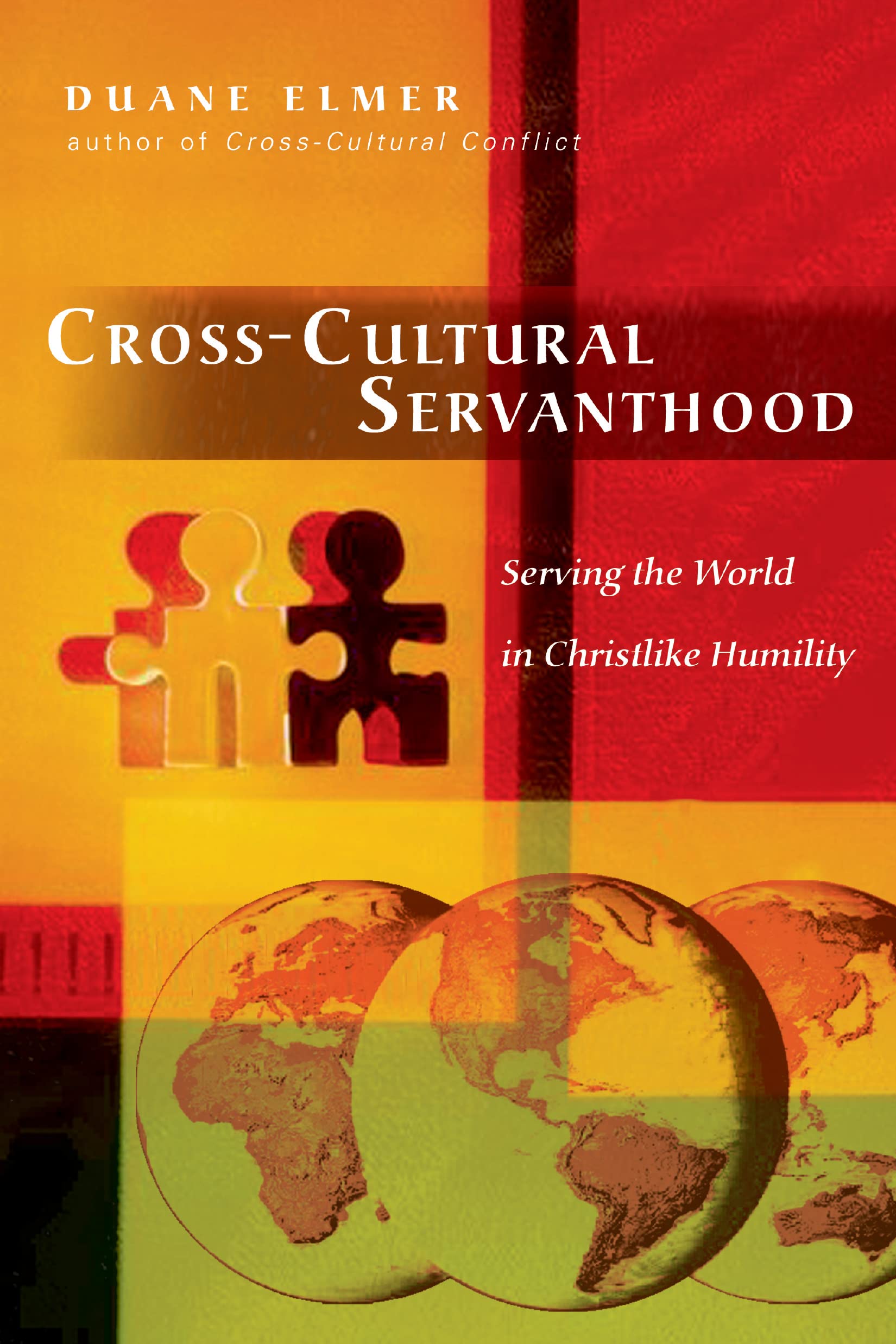
Cross-Cultural Servanthood: Serving the World in Christlike Humility [Elmer, Duane] on desertcart.com. *FREE* shipping on qualifying offers. Cross-Cultural Servanthood: Serving the World in Christlike Humility Review: “Serving with Humility: Duane Elmer’s Guide to Christlike Ministry Across Cultures” - In Cross-Cultural Servanthood: Serving the World in Christlike Humility, Duane Elmer presents a powerful challenge to Christians engaging in cross-cultural ministry: to approach service not with superiority or solutions, but with humility. Elmer highlights how cultural misunderstandings, ethnocentrism, and unintentional pride can hinder authentic witness and partnership. Drawing from Scripture, personal experiences, and global case studies, he emphasizes that effective ministry begins with listening, learning, and building trust. Christlike servanthood, he argues, means entering another culture not as a fixer but as a learner and guest. The book is both practical and deeply spiritual, offering insights into navigating cultural differences with grace. Elmer’s humility-centered model encourages readers to examine their attitudes, embrace vulnerability, and allow relationships—not agendas—to guide ministry. This is an essential read for missionaries, development workers, and any Christian seeking to serve across cultures in a way that truly reflects the heart of Christ. Review: Very useful! - Although the book is subdivided by several sections, there are really two concepts to this book: (1) See the image of God in others-- which encompasses the ideas of "welcoming others into our presence," "communicating respect for others, " "building confidence in relationships," and "seeking information that changes you;" and (2) Show Christ to others-- which involves "posture of the servant," "becoming like Christ to others," "biblical foundations for change" and "the servant and leadership/power." The section entitled, "Acceptance," basically suggests that Christians ought to see the image of God in others. Acceptance is "The ability to communicate value, worth and esteem to another person" (58). To illustrate the meaning of "acceptance," the author shares 1 Corinthians 8:13--"An accepting Christian values the other person so highly that he or she would rather sacrifice a personal preference, even a right, than risk losing the relationship or being a stumbling block to that person" (61). If a Christian believes that people are created in the image of God (Genesis 1:27), then there is "common grace" that is bestowed on all people. The author explains it in this way, "Acceptance of others is to proactively communicate respect and dignity to each human being based on the fact that each is an image-bearer of God" (75). In a similar way, acceptance of others as image bearers of God is found in Galatians 3:28--"There is neither Jew nor Greek, slave nor free, male nor female" (NIV). One does not need to be a Christian in order to bear the image of God as illustrated in this passage: "Yes, you must execute anyone who murders another person, for to kill a person is to kill a living being made in God's image" (Genesis 9:6). The author reminds the reader, "By virtue of being made in the image of God and God's common grace, every person can contribute to our learning" (109). He then shares a story about his wife, Muriel, who used the villagers' story about killing lice to help lower infant mortality in Mozambique (110). This type of humility helps Christians to become better servants (115). Colossians 1:16 says, "For by him (Christ) all things were created: things in heaven and on earth, visible and invisible, whether thrones or power or rulers or authorities; all things were created by him and for him" (NIV). If Christians truly believe this passage, then what the author says in page 119 makes sense: "For the priesthood of all believers to function properly, we must all nurture each other, listen to each other, see the beauty of Christ in each other and seek God's grace from each other." Elmer shares a story of missionary who set the example of true hospitality towards people in the area by inviting them through the front door to dine with him (183). This practice was unacceptable to the other missionaries so as a result he was ostracized by them. However, this act of showing Christ to others changed the way foreign mission was done in that country (184). The reaction that this particular missionary received from the other missionaries was very much like the reaction Jesus received from the Pharisees in Luke 15:2--"The Pharisees and the Scribes complained saying `This Man receives sinners and eats with them'." This is a good example to follow--invite the people in the area to eat with us. Extend the invitation for them to join us over a meal. The Book of Hebrews supports this idea, "Do not forget to do good and to share" (Heb. 13:16). The act of sharing a meal is what the author calls "openness," which is to "accept people as they are and build trust with them" (196). Elmer supports the idea of "openness" by stating, "This is the foundation for revealing Christ to others" (196). In fact showing Christ to others is a way of revealing the Gospel to unbelievers. It is having the light shine through us so that others are pointed to Christ (Matthew 5:14). In a way, it is doing what John the Baptist did--"God sent a man... to tell about the light so that everyone might believe because of his testimony... he was simply a witness to tell about the light... the One who is the true light... to all who believed Him and accepted Him, He gave the right to become children of God" (John 1:6-12). Christians are to be different--"If you love only those who love you, what good is that? If you are kind only to your friends, how are you different from anyone else?" (Matthew 5:46-47). The idea of being different is also expressed in Mark 10: "But among you it should be quite different. Whoever wants to be a leader among you must be your servant, and whoever wants to be first must be the slave of all. For even I, the Son of Man, came here not to be served but to serve others" (Mark 10:33-35). "Cross-Cultural Servanthood" is not only for international missions; it is very useful for pastors of stateside churches in rural or ethnic regions of the country. It supports the biblical fact that we are to see all people as an image of God and to be different in our expression of being "salt" and "light" to the community. The book made me realize that despite the criticism that we may receive from other churches for doing unconventional things, we must continue in our efforts. We must follow the example of Jesus and "dine" with sinners. Review by: M. Teresa Trascritti


| Best Sellers Rank | #51,316 in Books ( See Top 100 in Books ) #8 in Literary & Religious Travel Guides #45 in Christian Missions & Missionary Work (Books) #322 in Sociology Reference |
| Customer Reviews | 4.7 4.7 out of 5 stars (595) |
| Dimensions | 5.5 x 0.6 x 8.25 inches |
| ISBN-10 | 0830833781 |
| ISBN-13 | 978-0830833788 |
| Item Weight | 2.31 pounds |
| Language | English |
| Print length | 212 pages |
| Publication date | March 8, 2006 |
| Publisher | IVP |
S**H
“Serving with Humility: Duane Elmer’s Guide to Christlike Ministry Across Cultures”
In Cross-Cultural Servanthood: Serving the World in Christlike Humility, Duane Elmer presents a powerful challenge to Christians engaging in cross-cultural ministry: to approach service not with superiority or solutions, but with humility. Elmer highlights how cultural misunderstandings, ethnocentrism, and unintentional pride can hinder authentic witness and partnership. Drawing from Scripture, personal experiences, and global case studies, he emphasizes that effective ministry begins with listening, learning, and building trust. Christlike servanthood, he argues, means entering another culture not as a fixer but as a learner and guest. The book is both practical and deeply spiritual, offering insights into navigating cultural differences with grace. Elmer’s humility-centered model encourages readers to examine their attitudes, embrace vulnerability, and allow relationships—not agendas—to guide ministry. This is an essential read for missionaries, development workers, and any Christian seeking to serve across cultures in a way that truly reflects the heart of Christ.
F**I
Very useful!
Although the book is subdivided by several sections, there are really two concepts to this book: (1) See the image of God in others-- which encompasses the ideas of "welcoming others into our presence," "communicating respect for others, " "building confidence in relationships," and "seeking information that changes you;" and (2) Show Christ to others-- which involves "posture of the servant," "becoming like Christ to others," "biblical foundations for change" and "the servant and leadership/power." The section entitled, "Acceptance," basically suggests that Christians ought to see the image of God in others. Acceptance is "The ability to communicate value, worth and esteem to another person" (58). To illustrate the meaning of "acceptance," the author shares 1 Corinthians 8:13--"An accepting Christian values the other person so highly that he or she would rather sacrifice a personal preference, even a right, than risk losing the relationship or being a stumbling block to that person" (61). If a Christian believes that people are created in the image of God (Genesis 1:27), then there is "common grace" that is bestowed on all people. The author explains it in this way, "Acceptance of others is to proactively communicate respect and dignity to each human being based on the fact that each is an image-bearer of God" (75). In a similar way, acceptance of others as image bearers of God is found in Galatians 3:28--"There is neither Jew nor Greek, slave nor free, male nor female" (NIV). One does not need to be a Christian in order to bear the image of God as illustrated in this passage: "Yes, you must execute anyone who murders another person, for to kill a person is to kill a living being made in God's image" (Genesis 9:6). The author reminds the reader, "By virtue of being made in the image of God and God's common grace, every person can contribute to our learning" (109). He then shares a story about his wife, Muriel, who used the villagers' story about killing lice to help lower infant mortality in Mozambique (110). This type of humility helps Christians to become better servants (115). Colossians 1:16 says, "For by him (Christ) all things were created: things in heaven and on earth, visible and invisible, whether thrones or power or rulers or authorities; all things were created by him and for him" (NIV). If Christians truly believe this passage, then what the author says in page 119 makes sense: "For the priesthood of all believers to function properly, we must all nurture each other, listen to each other, see the beauty of Christ in each other and seek God's grace from each other." Elmer shares a story of missionary who set the example of true hospitality towards people in the area by inviting them through the front door to dine with him (183). This practice was unacceptable to the other missionaries so as a result he was ostracized by them. However, this act of showing Christ to others changed the way foreign mission was done in that country (184). The reaction that this particular missionary received from the other missionaries was very much like the reaction Jesus received from the Pharisees in Luke 15:2--"The Pharisees and the Scribes complained saying `This Man receives sinners and eats with them'." This is a good example to follow--invite the people in the area to eat with us. Extend the invitation for them to join us over a meal. The Book of Hebrews supports this idea, "Do not forget to do good and to share" (Heb. 13:16). The act of sharing a meal is what the author calls "openness," which is to "accept people as they are and build trust with them" (196). Elmer supports the idea of "openness" by stating, "This is the foundation for revealing Christ to others" (196). In fact showing Christ to others is a way of revealing the Gospel to unbelievers. It is having the light shine through us so that others are pointed to Christ (Matthew 5:14). In a way, it is doing what John the Baptist did--"God sent a man... to tell about the light so that everyone might believe because of his testimony... he was simply a witness to tell about the light... the One who is the true light... to all who believed Him and accepted Him, He gave the right to become children of God" (John 1:6-12). Christians are to be different--"If you love only those who love you, what good is that? If you are kind only to your friends, how are you different from anyone else?" (Matthew 5:46-47). The idea of being different is also expressed in Mark 10: "But among you it should be quite different. Whoever wants to be a leader among you must be your servant, and whoever wants to be first must be the slave of all. For even I, the Son of Man, came here not to be served but to serve others" (Mark 10:33-35). "Cross-Cultural Servanthood" is not only for international missions; it is very useful for pastors of stateside churches in rural or ethnic regions of the country. It supports the biblical fact that we are to see all people as an image of God and to be different in our expression of being "salt" and "light" to the community. The book made me realize that despite the criticism that we may receive from other churches for doing unconventional things, we must continue in our efforts. We must follow the example of Jesus and "dine" with sinners. Review by: M. Teresa Trascritti
P**G
Great thought provoked!
Bought mine preowned it was written in personal I loved it reading the thoughts of those before me. The book itself is good quality paperback and well written. Always pointing back to biblical basis while providing room for thought. Concepts are explained in wonder stories that are easy to understand.
R**R
Great work.
Duane Elmer's 'Cross-Cultural Servanthood' is a groundbreaking and deeply insightful book that serves as an essential guide for anyone seeking to engage in cross-cultural relationships and service. With a profound understanding of cultural dynamics, Elmer presents the concept of servanthood through a Christlike lens, emphasizing humility, respect, and openness as key components. His practical approach, combined with real-world examples, makes the complex subject of cross-cultural interaction both accessible and engaging. This book is not only informative but also transformative, encouraging readers to re-evaluate their approaches to cross-cultural engagement and to embrace a more empathetic and humble posture. Whether you are a missionary, a student of cross-cultural studies, or simply someone interested in understanding and serving others better, 'Cross-Cultural Servanthood' is an invaluable resource that will challenge and inspire you to make a meaningful impact in our diverse world.
W**M
How much humility has been lacking in me - something that Duane Elmer has gently taught. A riveting, interesting book with lots of examples in many contexts. Encouraging.
K**E
Duane Elmer has written a challenging and inspiring book for all who are seeking a better understanding of how to serve well cross-culturally. It’s not an instruction manual, but reaches into the heart to expose our attitudes towards others and our motivations for serving. Hard-hitting in places, Elmer is able to bring strong words without judgment, as he approaches the topic from a place of having made all the same mistakes himself. I felt that I had in my hand the wise counsel of someone who has gone before me and learnt all the hard lessons, and now graciously wants to save me from the same troubles. The overarching theme of the book is making yourself a student of the culture and the people, approaching your time in another culture with humility, rather than coming in with an attitude of superiority. This sounds obvious but it’s not easy to do, and Elmer offers some very practical tips on how to do this. One basic tool he gives us is to ask the question ‘why?’. When we encounter some behavior that seems strange or rude, he advises we withhold judgment and ask a local with whom we have a good relationship where this behavior stems from and what beliefs drive it. Having put this into practice now myself, I can say that I’ve developed a much deeper understanding of the culture I live in and a greater admiration for the people. I highly recommend this book to anyone serving cross-culturally, but especially those who don’t have access to an experienced missionary team who can support you as you integrate into the culture. Elmer’s book is like a mentor that is always available to offer advice when you’re struggling to adapt to your new culture. I’m deeply thankful for it.
A**N
The author is well-qualified for the subject, and shares excellent insights that will help any sincere Christian be more culturally sensitive. No matter how sensitive we *think* we are, we all have our blind spots, and this book helps us identify them and alter our behavior.
T**T
They were really easy to work with and the book is in amazing condition :D
J**E
This is written by an American who was an overseas missionary with his family. His has done a lot of research in terms of social science's findings on cross cultural communication and relationships as well as Biblical teaching on servanthood and relationships. He teaches Christians and non-faith groups on cross cultural communication. However this book is very specifically for Christians who want to be able communicate and develop relationships with people outside of your home culture. His writing style is very readable and Elmer comes over as humble in the sense that he is honest about his own mistakes and wrong attitudes. Whilst the main purpose of this book is to guide Christians in moving into relationships with people of other cultures where the new culture will be the majority culture and you will be the outsider, it also has much that is useful if you are seeking to form relationships with people of other cultures in our multi-cultural centres of our home countries and even in relationships with any others, since all of us think differently even within our own cultures. Elmer examines the various stages of developing healthy relationships using examples of each stage and looking at Biblical basis for those skills. He also offers suggestions of practial ways we can start to change our attitudes in our home culture. The six stages are openess, acceptance, trust, learning (about, from and with others), understanding and serving. Two points that stood out for me were how Elmer came to an understanding of God's general and specific grace and the way that we can learn of God even from those who do not share our faith or have no religious belief. Also towards the end of the book there is a short study on Joseph and his cross-cultural servanthood but also the mystery of God - not all that we experience is understandable now and some of it never in our lifetime - but God is part of the mystery. Given the way some Christians historically and today are seen as narrow minded and our tendancy to associate our culture with the "correct way" to do things, this is essential reading for any Christian wanting to relate to people of different backgrounds and see the amazing limitless of God in others.
Trustpilot
1 week ago
2 days ago