Desert Online General Trading LLC
Dubai, United Arab Emirates
Desert Online General Trading LLC
Dubai, United Arab Emirates


🎉 Elevate your 3D prints with precision and power—print like a pro, no compromises!
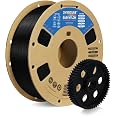
OVERTURE Nylon Filament 1.75mm is a high-strength, heat-resistant copolymer (Nylon 6/6.6) filament designed for FDM 3D printers. It offers exceptional dimensional accuracy (±0.02mm), odorless and warp-free printing, and user-friendly spool features, making it perfect for engineering prototypes and durable parts. Compatible with most FDM printers, it comes with dedicated support and a 1-year shelf life when stored properly.


| Manufacturer | OVERTURE |
| Brand | OVERTURE |
| Item Weight | 2.2 pounds |
| Package Dimensions | 8.9 x 8.15 x 2.95 inches |
| Item model number | OVA175 |
| Color | Black |
| Material Type | Nylon |
| Number of Items | 1 |
| Manufacturer Part Number | OVA175 |
J**R
Fantastic Easy to Print Nylon Filament.
I have tried many nylon filaments; this one was a nice surprise. It does print at a slightly lower temperature then most Nylons. I was very impressed with how tough this filament came out. It printed nicely, I did add tons of extra glue stick to protect my PEI sheet in advance, this you must do or use a blue painter tape to protect your PEI sheet is highly recommended. The final product looks absolutely fantastic, and the quality is amazing. No warping seen with this product, highly rated! I love Overture filaments, wish I had stock in their company, they make some amazing filaments.
E**N
Prints well from a dryer, run limited fan settings if printing hot.
Necessities: Filament dryer, PVA Glue (glue stick or elmers school glue), enclosure (for larger flat parts especially with sharp corners on the bed)Things to know: Does seem to ever so slightly shrink a bit (<1-2%) the further you get from the bed, I did notice one of my long rectangular parts had a slight taper to it as it got further from the heated bed. Wasn't worth doing anything about in my instance, but it would have to be accounted for in the design. I don't know of any slicer settings that would compensate the size of the part several millimeters of Z-height into the print.Printed well on a nearly bone stock MK3S. I am running a 0.6mm Bondtech CHT, which does put more heat into the filament, so you may want to run 5-10C cooler on the hotend temps. I modified the Ultrafuse PA profile a bit to have a starting point. Just threw some gluestick down on the bed and stuck my small Creality dryer in a simple foam mat square enclosure to prevent warping, I did try printing without an enclosure and it did come out warped the first go around. They say not to use a print fan, but I did turn mine on to prevent some overhangs that were curling. Dried it for 8 hours at 50C and it printed well right from the dryer. Zero stringing whatsoever. Color seems to be a nice true black, some other filaments I've printed have a green tint to them. I paid $32/kg for it and its still a decent deal at $37. Seems to have good mechanical properties, time will tell. I mostly print Overture PETG (my go-to filament). Seems pretty similar in mechanical characteristics. Changing your top and bottom infill pattern to Hilbert's curve also seemed to help. Only thing I might do is turn the fan up a bit more, it still ever so slightly curled on one overhang. Overall good experience with nylon and will be using it for more projects in the future.
M**S
Yet another great filament from Overture 3D
This is my first time printing with Nylon since I started with 3D printing. I usually print with Overture's PLA, PLA Pro and PETG, also great products.First thing I noticed is the new spool with 4x90deg holes on the sides to secure the filament while not in use. The original Overture spool had 3x120deg holes. The package is the standard Overture style: resealable bag, 200x200 print surface and a small ruler.After a few failed attempts, I finally managed to get a nice print, although I believe there is still room for further improvements.I did a lot of research on the web prior to start printing with Nylon and I got all sorts of directions, tips and tricks. However, this Overture Easy Nylon filament turns out to be very easy like the name says and requires little to none extra knowledge to print with if you are already familiar with PETG. However, whether you have a textured or smooth print surface, you will need to add water based glue (glue stick) to get proper adhesion. Interesting fact is that the first time I printed with Nylon, I did not use glue and the filament adhered to my textured bed quite nicely but after I removed the print, there was no way to get it to stick without applying a layer of glue on the bed surface. So save yourself sometime and apply the glue right from the get go.My printers are in the coldest room in the house (66F - 68F), so instead of setting the bed temperature to 50C as described in the spool, I set it to 65C and it worked just fine. Hotend temperature was set to 250C for all layers to make sure layer to layer bonding.For this review, I used this cooling duct as it turns to be a good test print (small parts, thin walls , overhangs and bridging).I started printing with my part cooling fan OFF as indicated in the spool but, I was not able to print small parts with overhangs nicely. Because of the combination of a high printing temperature (250C) and a short layer time, the overhangs were getting a droopy and deformed since there was not enough time to cool down a bit from layer to layer causing it to droop and look bad.Then I decided to go against the odds and I turned my fan ON at 50%. I use Prusa Slicer with my printers and its auto cooling feature is quite nice. All you need to do is to define the fan lower / upper limits and the slicer does the rest based on the layer printing time. I set them all to 50% after the first 3 layers (settings snapshot in the pics) and the part still came out still incredibly strong. I tried to snap the string test to check for layer bonding and I was surprised by the fact that the piece kind of bent a little but did not snap.Nylon can be sticky very sticky at 250C, so keep your nozzle clean always clean before printing (the same applies to every filament).Although some people here mentioned the smell, I leave in an apartment and I did not smell anything at all. It was like I was printing PLA. But, again, I only printed small parts. Perhaps it will start smelling when I start printing larger pieces.For this print, here are my basic settings:Printer: CR-10S modified to DD with a Prusa Bear X axis and extruder (basically a larger Prusa MK3S)Slicer: Prusa Slicer 2.3.0Hot end: 250CBed: 65C with a layer of glue (water based. Once the print is done, you just need to brush the part and bed surface off with warm water or IPA)Cooling fan: 50%Retraction: 1.4mm @ 38 mm/sPrint speed: 45mm/sBridge speed: 40mm/sBridge flow: 80%Other settings: Stock Prusa Slicer 2.3.0 MK3S profileOverall, the results were very satisfying and I highly recommend this filament. Don't be afraid of making mistakes. Give it a try and always pay attention to what your printer is doing so you can tweak and adjust your settings.UPDATE: I still need to tweak the overhang settings to avoid drooping. I tried to print a Benchy and the bow overhang was still coming out not too good with these settings.
A**N
Hardly odorless, but still quite easy to work with once you get the hang of it
First, I wouldn't say even "easy" nylon is for beginners - working with a PA-CF filament is going to be easier still because the carbon fiber mitigates a lot of issues nylon has on its own. That said, this is certainly easier than most, especially for pure nylon without any additional components.It's definitely not odorless (took off a star for this claim), but in my Bambu Lab X1C a very low chamber fan setting keeps the nasty stuff from going into the room. Don't try to print this quite as fast as PLA or anything, but you can get reliable results with excellent strength.The lack of CF also makes it tough to print with overhangs - part cooling can help but increases warping, and since most people who print nylon are quite concerned with dimensional accuracy, this can easily be a problem. Not the fault of this filament at all though. And as always, make sure it's dry - printing from a heated drybox is always a good idea and very necessary even in normal humidity, all nylon absorbs enough moisture to degrade your print within hours.
Trustpilot
1 month ago
3 weeks ago
3 weeks ago
5 days ago